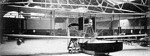
Sopwith Schneider

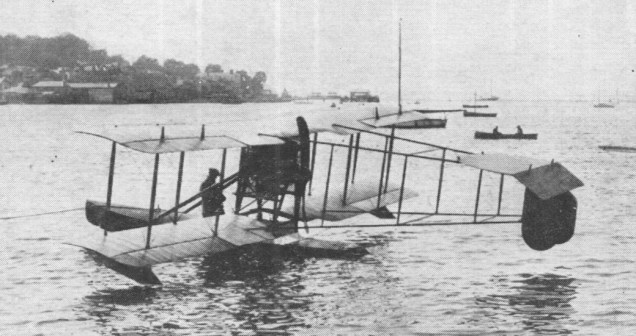
Derived from the Tabloid float seaplane which won the Schneider Trophy contest in April 1914, the Schneider, the single-seat twin-float seaplane ordered into production in November 1914 for the RNAS resembled closely the aircraft that had gained the Trophy at Monaco. Retaining the same 100hp Gnome Monosoupape nine-cylinder rotary – the upper half of which was enclosed by a ‘bull-nose” cowling – and wing-warping lateral control, the Schneider had a larger fin and rudder, reinforced float bracing and an aperture in the centre section for an upward-angled 7.7mm machine gun.

The RNAS ordered 136 Schneider floatplanes for reconnaissance and light bombing duties, the aircraft entering service in 1915.

Used for patrol duties against enemy airships from seaplane stations around the British coast, the Schneiders were provided with incendiary ammunition and operated against Zeppelins from early 1915. Schneiders were also carried aboard light cruisers of the North Sea Patrol for anti-Zeppelin operations, and served at the Dardanelles, in the Aegean and in the Eastern Mediterranean. Two Schneiders operated from the carrier Ark Royal in April 1915 at Mudros, and the type was still serving in the Aegean as late as November 1916, one shooting down an enemy aircraft which had attacked the airship shed at Mudros on the 21st of that month.

A total of 136 Schneiders is believed to have been built, progressive development resulting in the Baby.

Max take-off weight: 694 kg / 1530 lb
Wingspan: 7.82 m / 26 ft 8 in
Length: 6.90 m / 23 ft 8 in
Height: 2.97 m / 10 ft 9 in
Wing area: 22.30 sq.m / 240.03 sq ft
Max. speed: 143 km/h / 89 mph
Sopwith Special / Type C

Type C

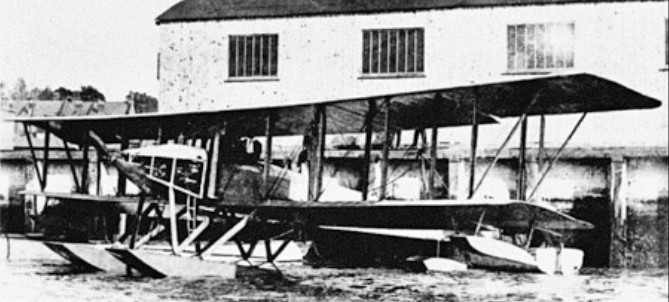
The Sopwith Type C and the Sopwith Special were actually two virtually identical designs built to two different contracts – the Type Cs were ordered in July 1914, whilst the ‘Special Tractor Biplane Seaplane’ was ordered first in February 1914. Despite appearing after the Special, the Three Type Cs were allocated the RNAS serials 157 to 159 and the Special received the serial number 170. The photo above shows the Sopwith Special number 170.

The Special and Type Cs were the first purpose built British aeroplanes capable of carrying a torpedo, unfortunately they were not capable of lifting said torpedo into the air! The design was generally considered a failure because of this rather embarrassing character trait. In 1914 commander of the Calshot naval air station Cmdr Arthur Longmore of the Royal Naval Air Service and other RNAS pilots carried out torpedo carrying practice with 14-inch weapons in what Longmore described as the Sopwith Canton-Unné seaplane in August 1914 during experiments at Calshot. Its name was derived from its powerplant.

Engine: 1 x 205hp Canton-Unne (Salmson) 14-cylinder water-cooled radial engine
Max take-off weight: 1963 kg / 4328 lb
Wingspan: 20.12 m / 66 ft 0 in
Length: 10.97 m / 36 ft 0 in
Wing area: 72.93 sq.m / 785.01 sq ft
Crew: 2

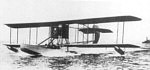
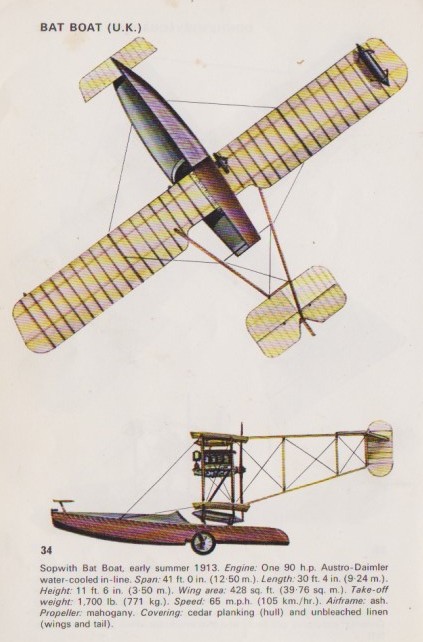
Sopwith Bat Boat

The first amphibian built in Europe circa 1913. A reconnaissance flying boat.

One Bat Boat and two Three-seaters were bought by Winston Churchill for the Naval Wing of the RFC.

Bat Boats Type 1
1913 Sopwith Bat Boats Type 1 amphibian version

1913 Bat Boats Type 1 BB1
Span: 41′
Length: 30’4″
Weight: 1540 lb allup
Speed: 60-65 mph

Bat Boat Type 1 BB2 and BB3 amphibian
Span: 41′
Length: 32′
dihedral 3 deg

Sopwith Bat Boat II
Engine: Salmson, 197 hp
Length: 35.302 ft / 10.76 m
Height: 11.909 ft / 3.63 m
Wingspan: 54.987 ft / 16.76 m
Wing area: 599.985 sqft / 55.74 sq.m
Max take off weight: 3184.0 lb / 1444.0 kg
Weight empty: 2302.0 lb / 1044.0 kg
Max. weight carried: 882.0 lbs / 400.0 kg
Max. speed: 61 kts / 113 km/h
Wing loading: 5.33 lbs/sq.ft / 26.00 kg/sq.m
Crew: 2

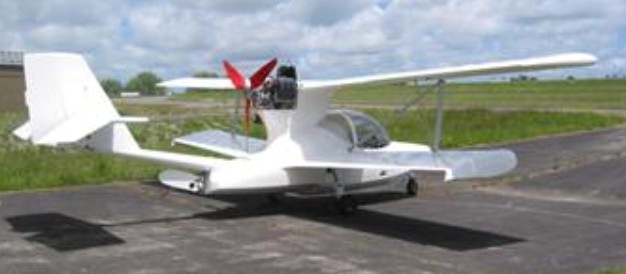
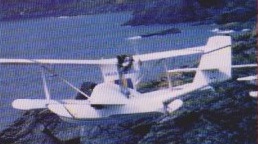
SMAN Petrel

A side by side two seat amphibious pusher biplane. A full detachable canopy that can be converted into an open cockpit with its own separate windshield.

The wings, boom and tail section detach for reduced storage and easy transportation.

Production of the Petrel was taken over by SMAN, who returned it to the market circa 1998.

Engine Rotax 618
Propeller Airplast 166DAS6275/3
Undercarriage retractable

Engine: Rotax 912, 80 hp
Wing span: 8.50 m
Wing area: 17 sq.m
MAUW: 450 kg
Fuel capacity: 53 lt
Max speed: 150 kph
Cruise speed: 130 kph
Minimum speed: 65 kph
Climb rate: 3.5 m/s
Seats: 2
Fuel consumption: 13 lt/hr
Price (1998): 245 000 F
Kit price (1998): 121 000 F sm

Sikorsky S-44 / PBS

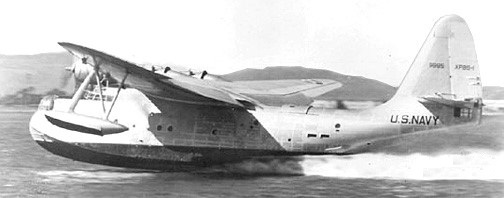
After a two-year construction period the Sikorsky XPBS-1 (Model S-44) 9995 first flew on 23 August 1937. Initial testing with 1050 hp engines revealed a top speed of 227 mph. Stability problems traced to turbulence generated by the wings resulted in the addition of dihedral to the horizontal stabilisers. After being delivered to the Navy in October 1937, the XPBS-1 began competitive trials with the Consolidated XPBY2-1 in mid-1938. Consolidated won a construction order and the XPBS-1 was assigned to Patrol Wing 5 at NAS Norfolk, Virginia, to evaluate long-range patrol-bomber operations until shortly after the US entered World War II. In the spring of 1942 the aircraft was reassigned to VR-2 out of California for transport duties between the West Coast and Hawaiian Islands. On 30 June 1942, while returning from Pearl Harbor, the XPBS-1 struck a log in San Francisco Bay and sank. All on board escaped safely, the passengers including Admiral Chester W. Nimitz, Commander of the Pacific Fleet.

Major elements of the design went into the VS-44A.

Engines: four 1200hp P&W Wasp
Wingspan: 124’0″
Length 76’2″
Max speed: 227 mph
Stall: 64 mph
Range: 4030 mi
Ceiling: 20,800′