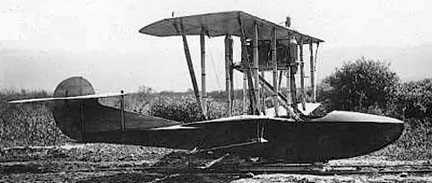
Built in 1912, the 2-3 seat B-3 and B-4 had a wooden hull covered with galvanized iron sheeting. A 1914 version incorporated streamlining, and 1915 model was a three place “luxury cruiser” with a mahogany hull.
In 1914, the Thomas Company advertised aviation for sport, war and business. Their earlier models, the B-4 and B-5 were used as trainers for civilian pilots seeking thrills, speed and fortune.
“Ning Hai” was the name of the Chinese Navy light cruiser that carried a floatplane. The ship’s name was painted on the sides of its aircraft, hence the confusion.
Originally, the Ning Hai carried a Japanese Aichi AB-3 seaplane. But the aircraft had to be disassembled and stowed after use, because it lacked folding wings. This limited the plane’s usefulness.
So Mar Te-Tsu of the Navy yard at Shanghai designed and built a replacement in the 1934-35 timeframe. The Hsin (Xin) was a twin-float, single-seater powered by the same 130-hp Gasuden Jimpu radial engine used in the Aichi AB-3. It generally resembled its predecessor except that the new airplane had folding wings.
The T2 flying-boat soon crashed, but with new funds from Dubonnet Tellier evolved the T3 two-seat bomber flying-boat of 1917 and its cannon-armed derivative, the TC6. Most were built by Nieuport and other manufacturers.
Re-formed upon outbreak of First World War, Tellier’s company flew a prototype of T2 flying-boat in June 1916. This soon crashed, but with new funds from Dubonnet Tellier evolved the T3.
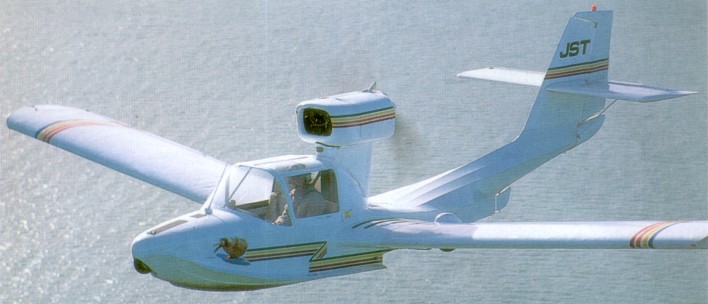
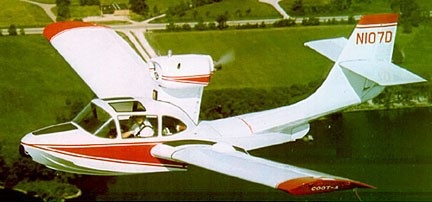
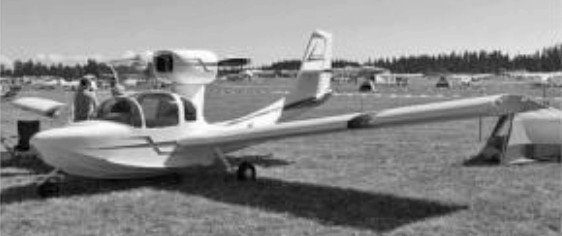
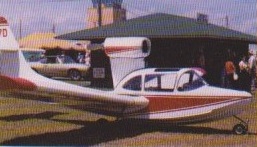
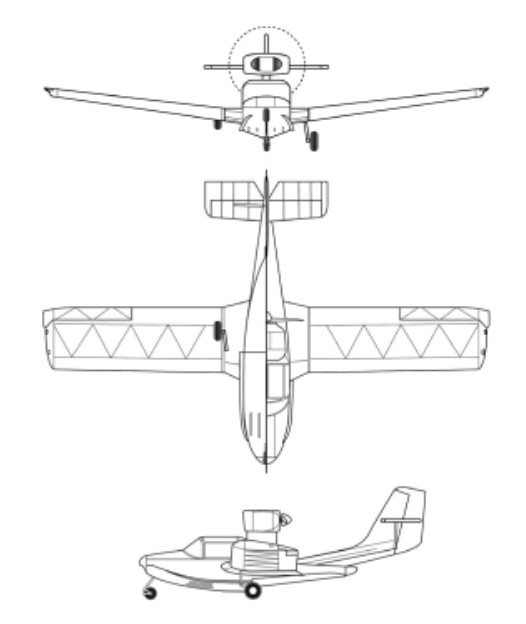
Molt Taylor developed his Coot Amphibian from a World War II Marine assault glider design that featured the unique low “Float-wing” common to both Coot A and Coot B models. The former features a fiberglass hull, the latter a twin-boom tail. Both prototypes have been flying for a number of years. The Coot Floatwing design eliminates the need for tip floats for lateral stability, provides a “deck” to step on for hand-cranking the propeller, protects the engine and propeller from spray, and provides ground-cushion effect for shorter takeoffs. Taylor considers the optimum engine to be the Franklin 180-hp Sport Six, which permits a smooth-water takeoff at 1950 pounds gross in six to eight seconds from a standing start though power can be supplied by any engine from 150 to 220 hp with a controllable propeller. A deep-V hull design permits rougher water operations than possible with twin-float designs, and a low thrust-line offers optimum elevator response for faster water liftoff. The Coot is a comfortable two-place ship with side-by-side seating and dual controls. The folding wings make road towing and home storage possible. With all his aircraft designs Molt Taylor emphasizes that performance and specification figures are greatly dependent on such variables as engine size, fuel capacity, etc.
The first Coot-A flew in 1969. Two prototypes were built, Coot A with a single tail, and Coot B with twin tail booms. Sooper-Coot Model A was a series version of the former.
Sooper-Coot A N1070
The Sooper-Coot-A two place amphibian price in 1982 was $12,000 (Excludes engine and instruments). Units delivered to June 1982: 100.
Coot A
Over 400 reportedly were being constructed by home-builders by 1977 with various 100-180hp engines.
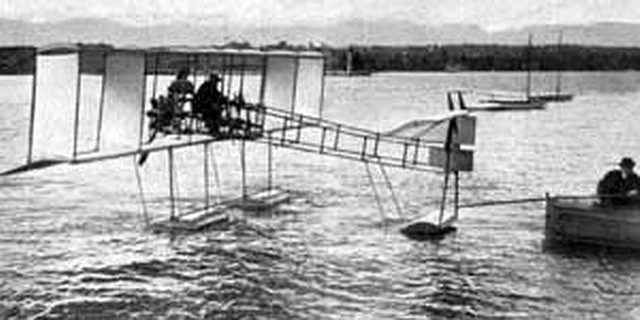
La Mouette seaplane of Emile Taddéoli on Lake Geneva in March 1912
Émile Taddéoli’s Gnôme-engined, Voisin-inspired canard float biplane “Mouette” was designed by his mechanic Prampolini and built at the Perrot & Cie workshop. It flew 80 meters during the first test flight on Lac Léman in March 1912, but sunk when landing, as the main floats got submerged instead of skimming the surface. After that, the project was abandoned.
 All Aero