Airship Club Bournemouth

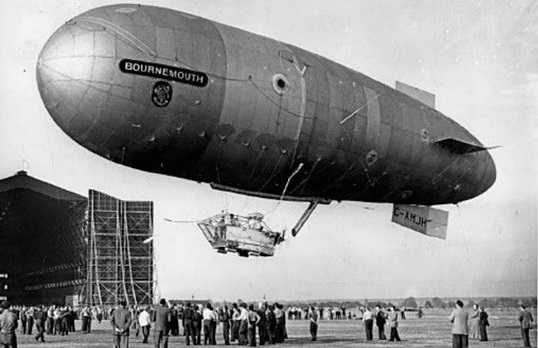
The “Bournemouth” was constructed by the Airship Club launched in 1951. As part of the club, Lord Ventry, Squadron Leader T.P. York-Moore and a small group of enthusiasts wanted to prove that airships could still return after the closure of the British Airship programme in 1932.

Plans were drawn up at Lord Ventry’s Poole home, Lindsay Hall. The little band founded the Airship Club of Great Britain, which they established at Wharncliffe Road, Boscombe. Their premises were formally opened early in 1951 by the Mayor of Bournemouth, Councillor Sydney Thompson. Numerous airship notables lent their support, including former Farnborough superintendent and engineer Major-General Sir John Capper, who had held the first British airship pilot’s licence ever issued. Past head of the Zeppelin company, Dr Hugo Eckener, also joined the club, together with several old airship hands.

The project was funded largely by private enthusiasm, however the Bournemout Corporation made a substantial grant from it’s “Festival of Britain” funds to assist with the completion of the craft and for it’s first flight. This is how the British south coast resort managed to have an airship named after it. The idea being that the completed ship would play a part in the local celebrations of the Festival of Britain year.

The first airship built in Britain since 1929, the Airship Club built their airship using a gas-bag converted from an old barrage balloon left over from the war. Acquired from the Air Ministry, it set them back £25. The finished airship’s length was just over a hundred feet. Hydrogen was used to inflate her gas-bag and provide lift; although helium was a far safer, non-inflammable gas, none was available. To power the craft through the skies a seventy horse-power Salmson engine from the 1930s was found, and with this it was hoped to achieve a flat-out speed of 35 mph. Suspended beneath the gas-bag by steel cables, the gondola in which pilot and passengers would travel was built from aircraft-gauge steel tube, with a covering of light alloy sheet and clear perspex. The engine was positioned at the rear, a small fuel tank sat on the roof, and four intrepid flyers could be carried.

Although the craft was constructed at Hurn Airport, her hangar there was not available long-term. Drawing on his experience, though, Lord Ventry assured a curious reporter from Flight Magazine that his airship could be safely picketed outside, ideally among trees to protect her from the wind. The plan for Bournemouth, as the craft had been christened, was that she be kept inflated and out-of-doors during all spells of operational activity – and for the flying Lord, this would be as often as possible. Assured by Lord Ventry that an airship is quite amenable to being tethered in the open, and that, with the aid of a protective screen of trees, a small non-rigid can safely ride out a 70 mph gale if properly picketed.

There was some confusion over who was actually allowed to pilot Bournemouth. The Ministry of Civil Aviation was clear on the qualifications for a full airship pilot’s licence, but unsure of the form a provisional licence should take. By 1950 trained airship flyers were very few; as things stood, just a handful of people would be permitted to take charge of Bournemouth, excluding most of the enthusiasts who had helped build her. Meanwhile the government’s Air Registration Board was pondering the safety requirements she should meet, and how to issue a Certificate of Airworthiness for an airship.

The ship was constructed at Cardington, and by mid-1951 the craft was complete, her engine tested in the Hurn workshop, the name and Bournemouth’s coat of arms painted on her gasbag. For flight trials, though, somewhere quieter than Hurn’s airspace was needed. Bournemouth was transported to an old hangar built especially for airships on an RAF base at Cardington in Bedfordshire. It was intended to bring her back to Bournemouth once tests were complete and various sites were considered as potential homes, among them King’s Park, where iron mooring stakes were set into the ground.
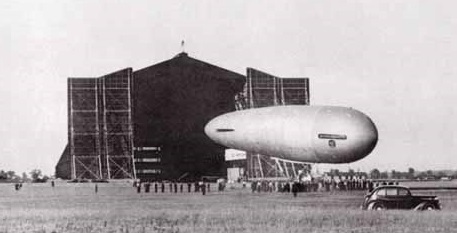
Red tape resolved, the airship received her Ministry registration, G-AMJH, which was painted on her fin. Two more helpers joined: engineers Arthur Bell and Joe Binks, both of whom had survived the 1930 R101 airship disaster. On 21 May, Empire Day, Bournemouth was inflated and it was hoped that the inaugural flight would be in time for Festival of Britain celebrations the following month. But the Salmson engine overheated and it was 19 July before a first flight was made.
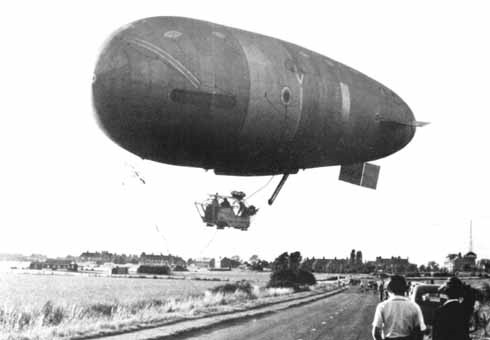
Lord Ventry was unable to ascend that day. With three crewmen he climbed aboard, but the machine refused to rise from the ground – he was simply too heavy. He removed duffle-coat and jacket and emptied his pockets but there was no improvement. Very reluctantly the Lord vacated his gondola, replaced by a slimmer man. He joined a small group of her builders who watched as Bournemouth made a decorous circuit of Cardington’s perimeter and returned safely.

The third flight was not overly successful as the ship crash landed on the hanger roof when a guy rope snagged when coming in to land. With Thomas York-Moore in command, Bournemouth crashed into a field near Cardington after suffering engine overheating and steering failure.
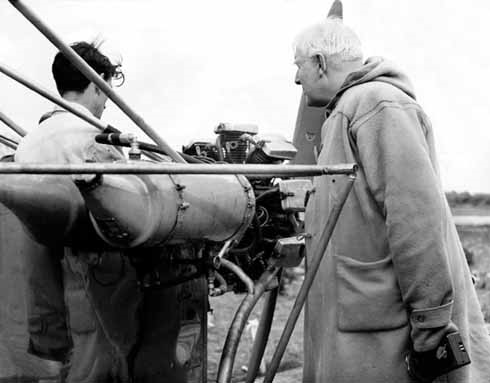
Lord Ventry examines Bournemouth’s Salmson engine

Having a gross lift 3,060lb and useful lift of 13,000lb, the Bournemouth managed three flights in 1951 and then put in for repairs and a chance for the improvements for stability following the crash landing. A further eight flights were managed in 1952. It was found that the first set of steering planes were too small and made her unstable and she had a top plane on the first two testing flights of in 1951, however this was removed. In 1952 a larger set of de Havilland planes were fitted and made the ship quiet controllable. Only eleven flights were made through lack of funds, the last flight made on 16th August 1952, Battle of Britain Day.
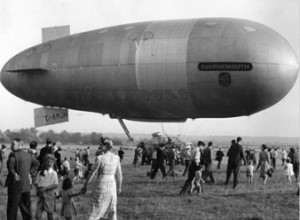
The first flight was shown in newsreels around the world and featured in many newspapers of the day. But Bournemouth’s flight had exposed tail-heaviness, together with steering problems. Following modifications, a second flight on 28 July was commanded by Thomas York-Moore. But again the engine grew too hot and to make matters worse, the steering-wheel mechanism failed. Bournemouth came down unexpectedly in a field near her hangar, but nobody was hurt. Adjusted once again, on 17 August she flew with Lord Ventry for the first time. After a 35-minute tour around the local area she returned to Cardington, although one crewman was hurt during her landing, which involved crashing onto the roof of the station’s gymnasium.

Following that episode Bournemouth was deflated. But repairs and more alterations were made and a Certificate of Airworthiness finally obtained. An ex-Bournemouth Royal Blue motor coach arrived, its job to provide a base for a mast to which the airship could moor.
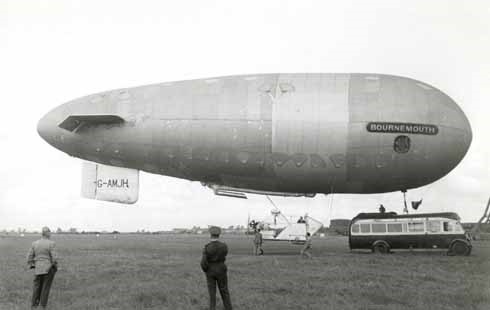
Winter weather interrupted but from spring 1952 several more flights took place. Dogged by incidents, an autumn accident on the ground caused permanent damage to Bournemouth’s gas-bag, which had to be scrapped. By then the Airship Club’s funds were low, and it was decided to wind up the scheme.

Engine: Salmson, 60hp
Length: 108 ft
Diameter: 27 ft
Volume: 45,000 cu.ft
Airship Club

Arthur Eveleigh-de Moleyns, later the seventh Lord Ventry, had a passion for airships and balloons which endured throughout his long life. Born in Ireland in 1898, Lord Ventry was educated at Langton Matravers and later Wellington College, Berkshire. Having spied his first blimp while still at prep school, he made several railway excursions to Britain’s military airship base at Farnborough, Hampshire. There he managed to talk his way past the sentries to admire the huge craft within.

During World War 1 he fought with the Irish Guards but was wounded; while recovering at Branksome Gate Hospital near Poole, he visited Upton’s naval airship station as often as he could. Later he joined the Royal Air Force, commanding No.902 (County of London) Balloon Squadron. Becoming a certified balloonist, Lord Ventry flew frequently, although as he was nearly seventeen stone, the craft had to be reasonably substantial. Lord Ventry flew balloons at home and abroad, studied airship development assiduously, and helped the Air Ministry test its new blimps.

During World War 2, propelled onward by his absorption, Lord Ventry joined the Balloon Command and Intelligence organisation, organising tethered barrage balloons used to protect targets from German bombers. Post-war, he continued to campaign for the use of airships in submarine-spotting and naval convoy protection, long after most people had lost interest in the idea. But in 1950 he hired a hangar at Hurn Airport and, with a small group of supporters, set out to design and construct an airship of his own. Part of his wartime work had been assessing various types of observation and barrage balloons, and he believed that such a craft could be adapted to become a motorised airship.

Among his colleagues in the venture was retired RAF officer Squadron Leader Thomas York-Moore, who had commanded airship units and flown such craft back in World War 1. Other helpers included engineer Eric Eveleigh-Smith, pilot Alec Leith and one-time airship coxswain Fred Twinn.

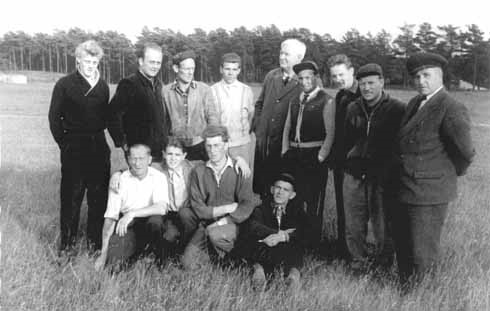
Lord Ventry (centre) with a group of fellow airship enthusiasts

Plans were drawn up at Lord Ventry’s Poole home, Lindsay Hall. The little band founded the Airship Club of Great Britain, which they established at Wharncliffe Road, Boscombe. Their premises were formally opened early in 1951 by the Mayor of Bournemouth, Councillor Sydney Thompson. Numerous airship notables lent their support, including former Farnborough superintendent and engineer Major-General Sir John Capper, who had held the first British airship pilot’s licence ever issued. Past head of the Zeppelin company, Dr Hugo Eckener, also joined the club, together with several old airship hands.

Encouragement came from the Royal Aeronautical Society and the Air League of Great Britain. Bournemouth Corporation brought more tangible support, in the form of a substantial grant toward the airship made from the town’s Festival of Britain funding. Lord Ventry also contributed, while the government’s Ministry of Supply lent equipment and tools.

Lord Ventry retained his love of airships until the end of his years. He died in 1987 aged 88, leaving a collection of airship-related written material assembled over nearly a lifetime, much of which is carefully preserved by the Royal Aeronautical Society. Among the papers is a booklet he wrote in 1953 entitled The Small Airship, describing his own craft.

Of Bournemouth herself, it seems nothing remains.

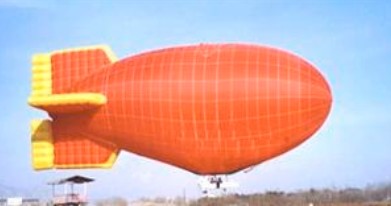
Airdriven AA-1 / AA-2 Airship

AA-1
Engine: Rotax 447, 42 hp
Total length: 33.8m
Maximum diameter: 12.6m
Envelope volume: 2600 cu.m
Maximum take-off weight: 650kg
Empty weight: 400kg
Payload: 250kg(2 seats)
Maximum level speed:
20km/h

AA-2
Engine: Rotax 582, 64hp
Total length: 33.8m
Maximum diameter: 13.2m
Envelope volume: 3000 cu.m
Maximum take-off weight: 800kg
Empty weight: 450kg
Payload: 350kg(4 seats)
Maximum level speed: 25km/h

Aircraft Investment Corp Ltd

UK
Formed 1929 to deal in or build lighter- or heavier-than-air craft. Technical advisor Sir Henry Segrave, pilot and sportsman. This group had interests also in Saunders-Roe Ltd. and Blackburn Consolidated Ltd. (founded 1929). Segrave designed twin-engined Segrave Meteor 1, built by Saunders-Roe, known also as Sara Segrave Meteor 1, and flown in King’s Cup Race 1930 by Major A. P. Holt. Segrave killed in Saro-built motorboat during speed record attempt in 1930, but development of Meteor 1 continued by Blackburn.

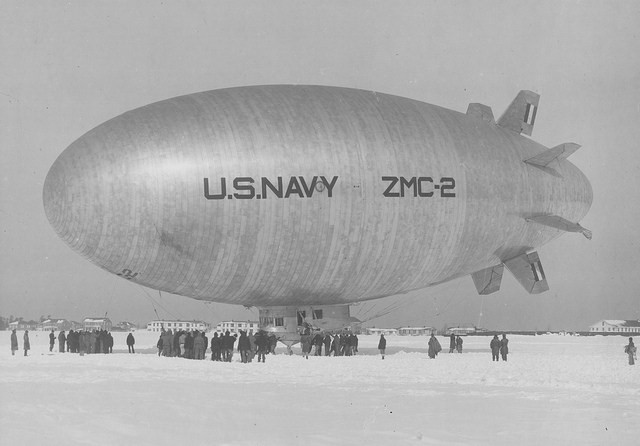
Aircraft Development Corp ZMC-2

ZMC-2 at Lakehurst, January 1935

Built by the Aircraft Development Corporation of Detroit in 1929, less famous and successful was the ZMC-2, world’s only successfully-operated metal-skinned airship.

She was operated by the U.S. Navy until 1941. Nicknamed “The Tin Airship”, the ZMC-2 was constructed out of Alclad, an aluminum alloy clad with a very thin layer of pure aluminum. The Navy dismantled her after 752 flights (2265 hours of flight time).

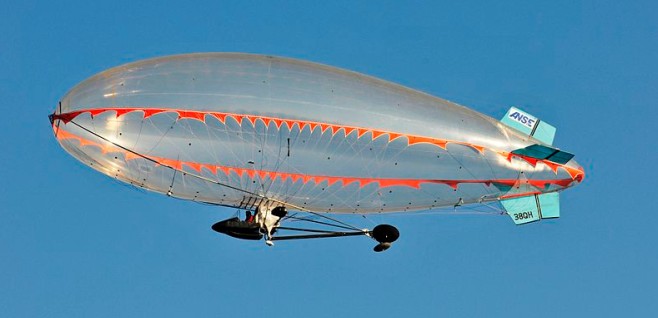
Aero-Nautic Services & Engineering A-N 400

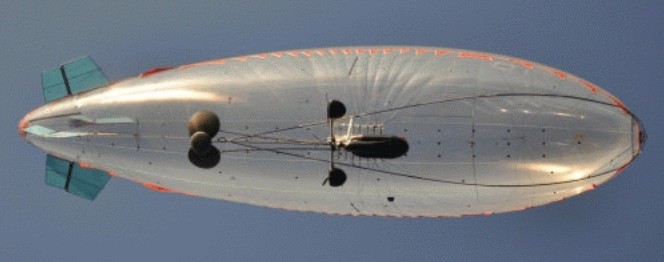
A-N400

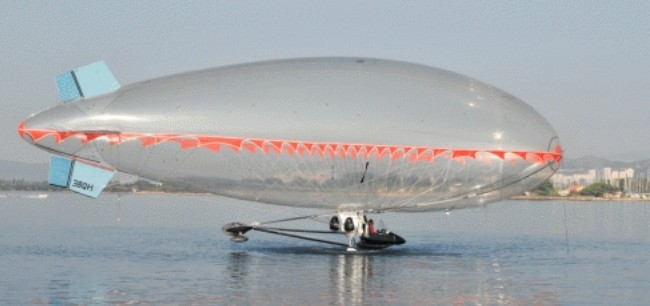
The French company Aero-Nautic Services & Engineering (A-NSE) tested in 2013 a demonstrator of an airship designed for marine surveillance missions. During the campaign carried out in Hyères, the data gathered by the airship was live-transmitted to the ground via a data link provided by Thales Communications Security.

The aircraft is raised by helium, the engine only being used to propel it, which makes it much more economical and gives it greater endurance than an aeroplane. Airships are very stable and manoeuvrable, and can hover if required. In technical terms airships have evolved considerably, with the use of new materials and the emergence of new technology making them cost-efficient and effective for civilian and military applications,” explains Baptiste Regas, Managing Director of A-NSE.

According to the young French company based in Montrouge near Paris, whose Angoulême site has produced the AN 400, the airship can complement the airborne resources currently in service. “Airships are much more economical and can be used as guards, thereby saving the potential of aeroplanes on certain missions. So, they could carry out marine surveillance up to one hundred nautical miles from the coast, extending the detection range of the network of signal stations on the coastline. In such cases, aeroplanes could be reserved for remote missions or operations requiring great speed, such as marine search and rescue. The idea is not to replace the aeroplane – it is a truly complementary resource to current capacities.”

Although certain countries, such as the United States and Germany, are showing a renewed interest in airships for the purposes of marine surveillance, the models currently being used are based on a traditional implementation design. As in the good old days, aircraft are launched from land and brought back to earth by means of ropes with 15 people involved in the landing procedure. This manual technique is potentially dangerous, but also costly in terms of personnel. Which is why A-NSE has developed and patented a new design, by means of which its airship can land on the sea. During the approach over the sea or a lake, a system of ballast located at the rear is deployed on each side of the aircraft and draws in water to add weight to and stabilise the airship. Then, once the machine is on the surface, it anchors to a mooring buoy. “This tested technique substantially reduces operating costs by eliminating the need for ground personnel.”

Gallery

Engine: 2 x 18 hp
Envelope volume: 400 cu.m
Max. diameter: 5,5 m
Length: 25 m
Max. weight at take-off: 400 kg
Empty weight: 240 kg
Payload: 160 kg
Min. speed: 0 km/h
Cruise speed: 65 km/h
Max. speed: 85 km/h
Climb rate: 5 m/s
Endurance at 0 km/h : 10 h
Endurance at max. speed : 6 h
Action range: 390 km
Max. wind at take-off: 45 km/h
Altitude: 100 to 3000 ft
AIS A & B (range): 210 km
Radar (range): 100 km
EO/IR (range): 30 km
Communication system: 50 km

Aereon 26

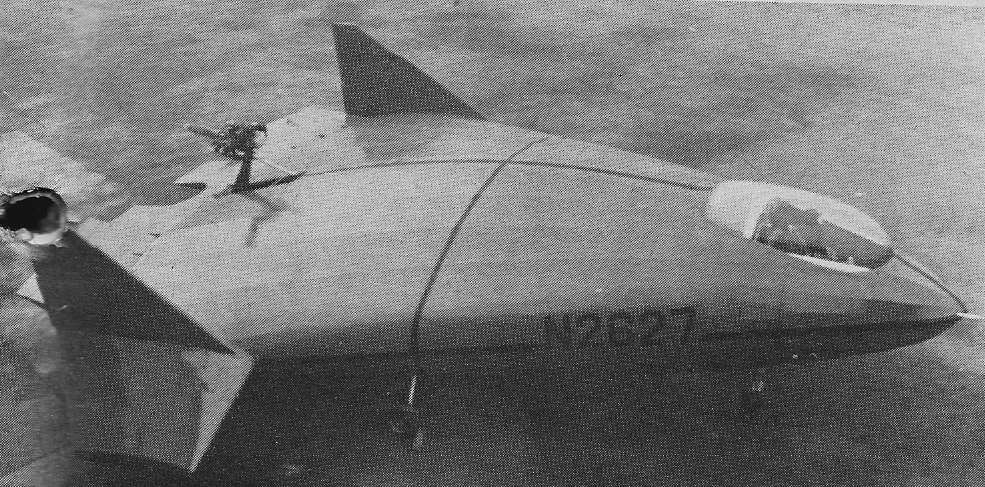
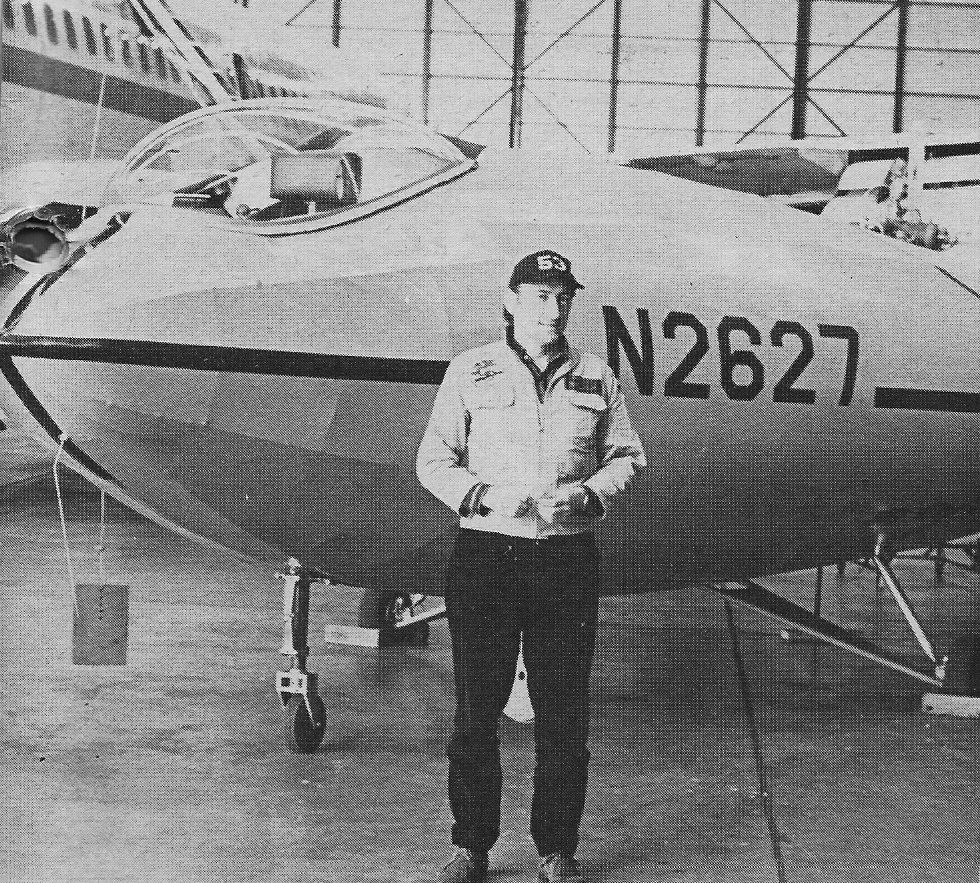
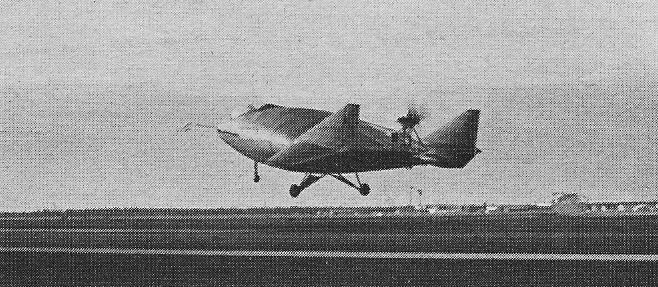
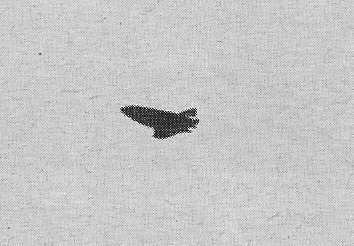
After testing of radio-controlled models, the 26 foot manned Aereon 26 was flown. The model designation indicated the length of the craft. The 26 was originally 26 feet long, but was extended to 27 ft 6 in when more area was added to the control surfaces. The FAA assignment of N2627 as a registration was a coincidence.

Built as a pre-prototype, the Aereon 26 is a hybrid vehicle combining aerodynamic and aerostatic lift.

Flying by December 1970.

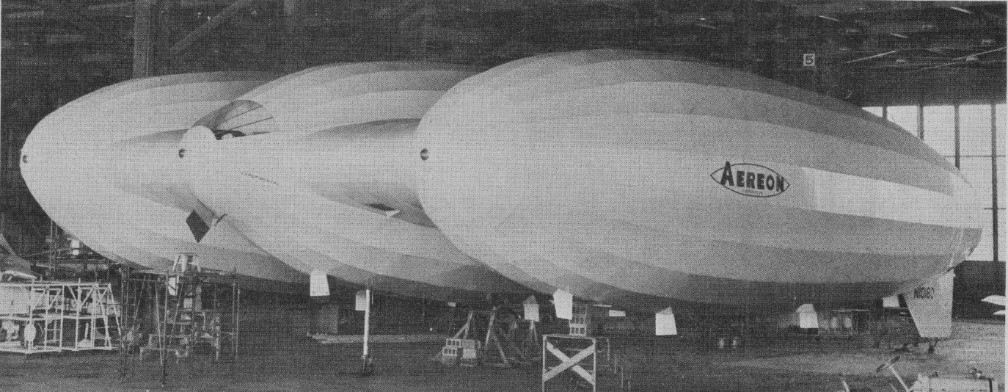
Aereon III

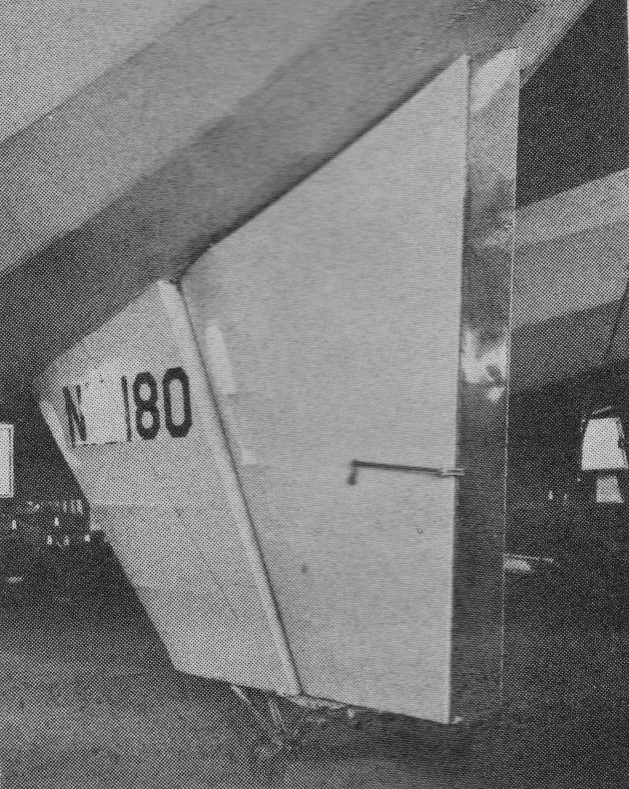
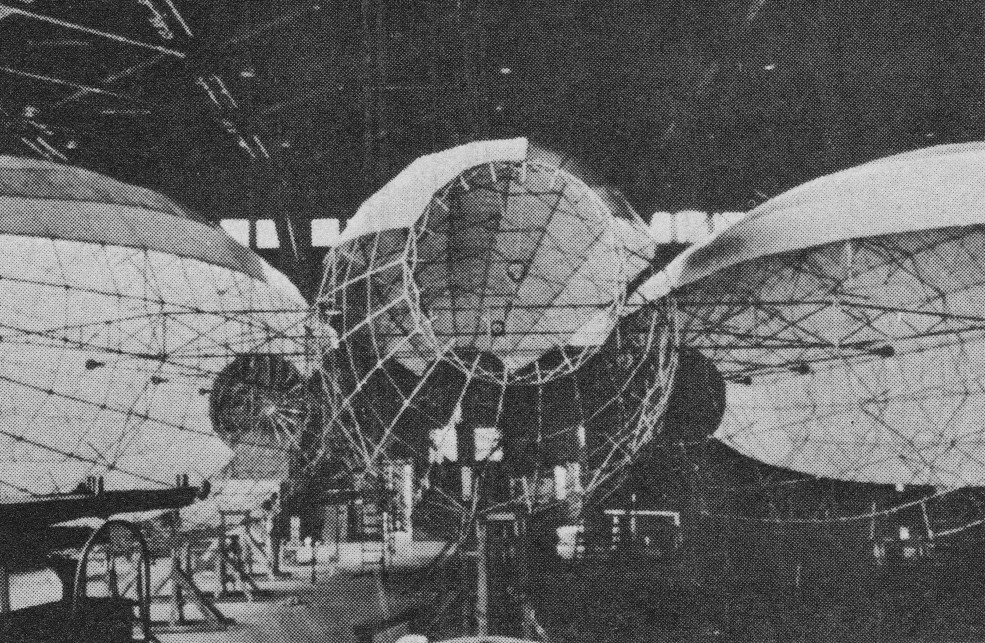
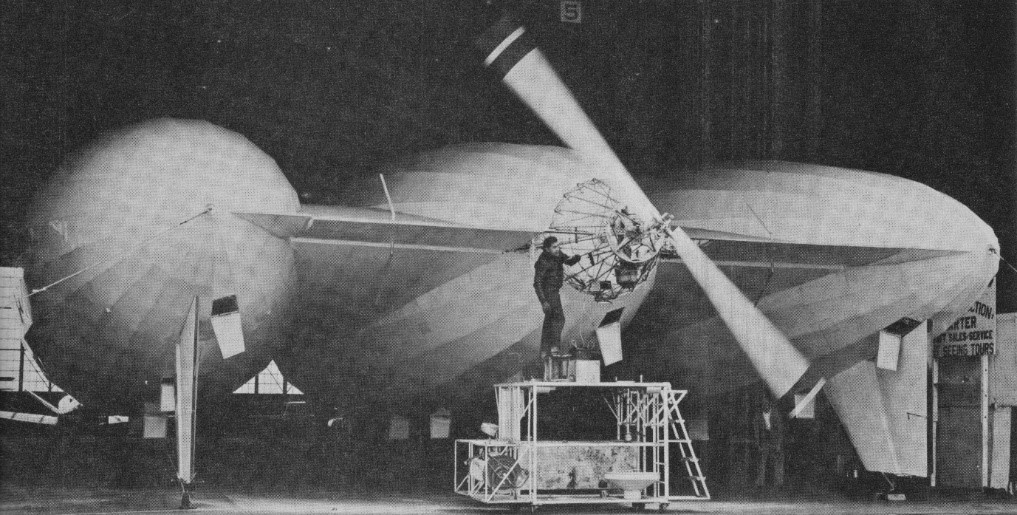
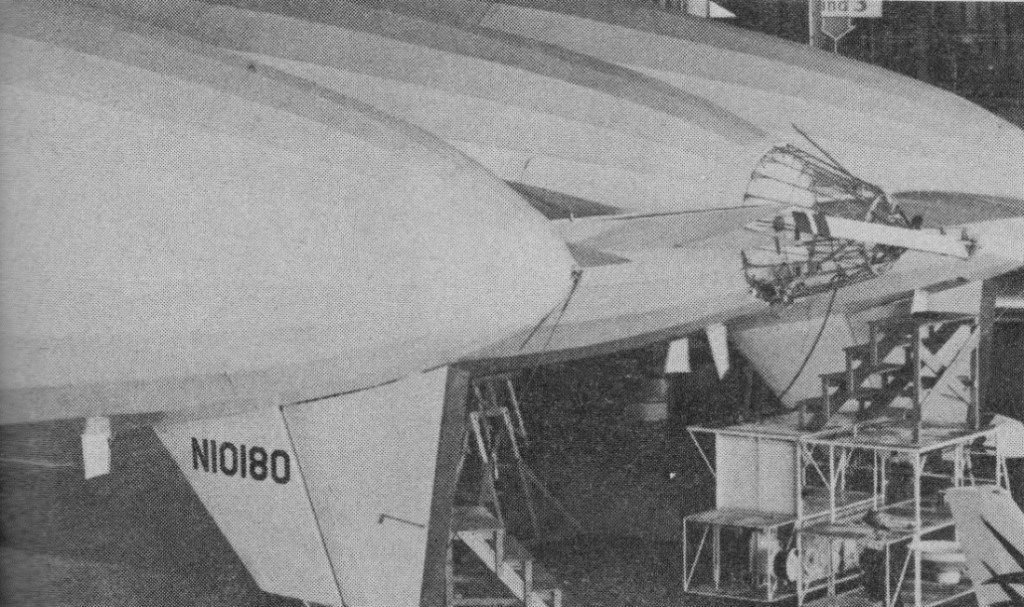
Built by Aereon Corp of Trenton, NJ, in 1964, the rigid lighter-than-air Aereon III is a flying test bed for bigger ships. It is the smallest that could be constructed to provide accurate flight data.

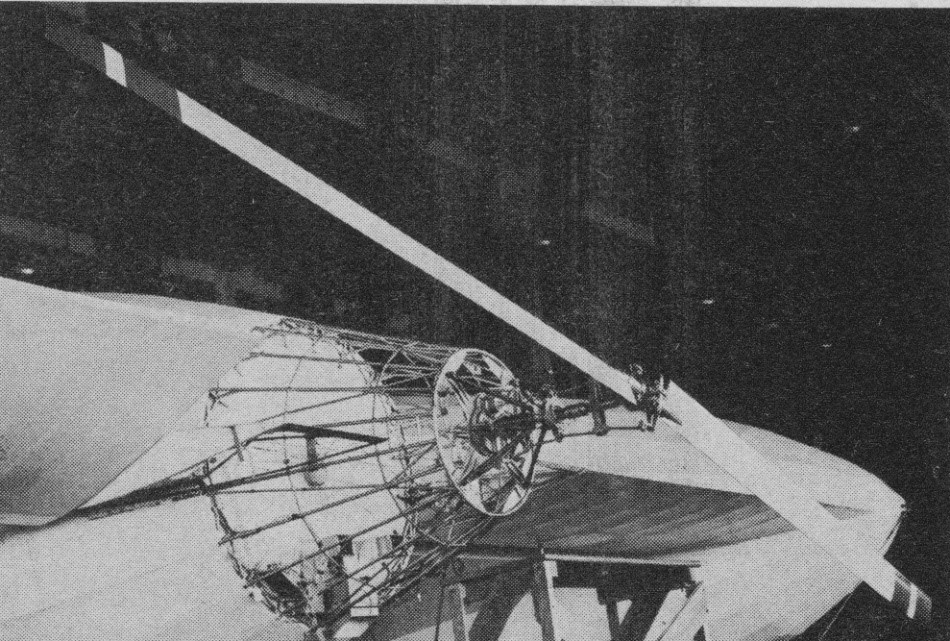
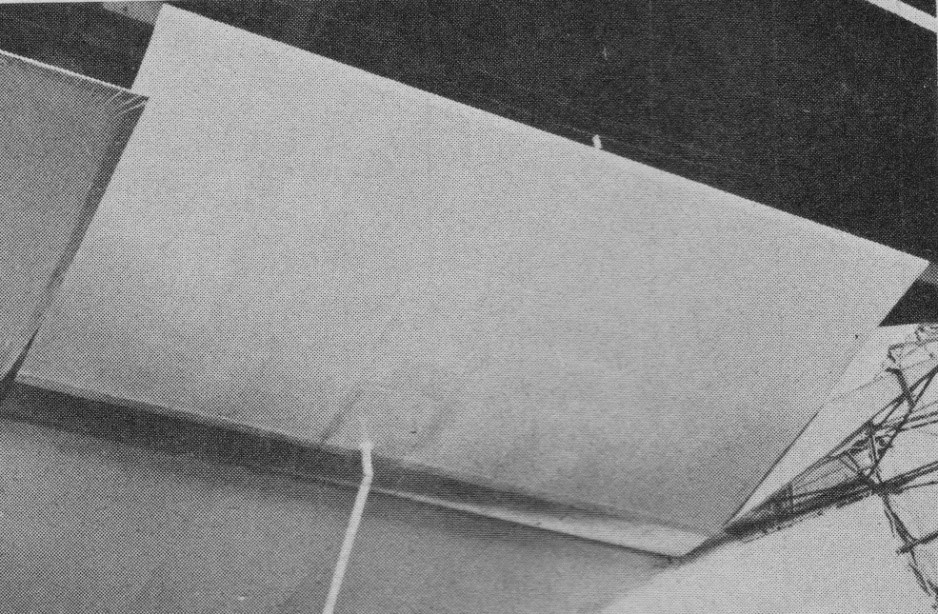
The Solar 70 hp Titan turboshaft engine drives a 8.1 ft diameter, 8 in chord Helicom rotor-prop. The syructure is welded aluminium alloys with an outer covering of Tedlar plastic 1/1000 inch thick. Airspace on 1 inch separates that from nylon covered inner wall. Eighteen Mylar cells hold 30,000 cu.ft of helium.

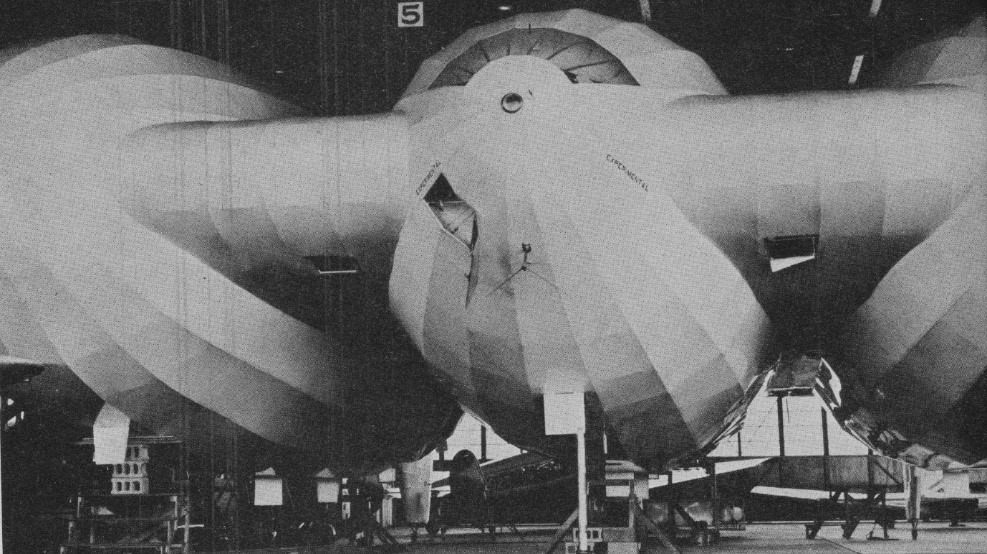
The cockpit, crew of two, is in the upper section of the centre hull nose. Vertical stabilisers and rudders mount steerable tailwheels acting as vertical struts and providing 35 ft tread for maximum ground stability.

The hulls are 20-sided, 18 ft diameter, joined by beams and aerodynamic fillets. Rotor-prop provides variable and reverse movement and thrust through cyclic/collective pitch.

Engine: Solar 70 hp Titan
Length: 85 ft
Width: 56 ft
Empty weight: 2800 lb
Gross weight: 3100 lb
Top speed: 65 mph
Ceiling: 8500 ft
Crew: 2