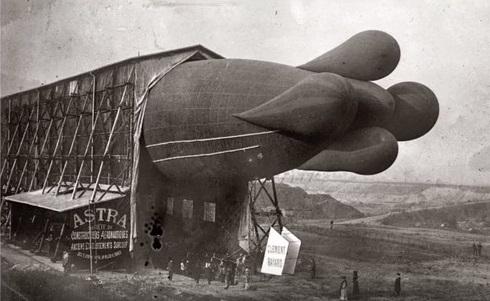
Astra XIII / Astra-Torres / Russian Empire airship Soviet B-3 Red Star

The 1908 non-rigid Astra-Torres (or Astra XIII), was purchased by the Russian Empire in 1913.

During WW1 “Astra” made six missions but was dismantled in 1915. From 1915 until 1920 “Astra” was kept at the Aeronautic school depot.

An attempt to revive aeronautics in the Russian Empire was made in 1920. Analysis of the legacy of the Russian Empire equipment and parts of old airships showed that at best hull at the time was the airship “Astra-Torres”, and it was decided to work on its recovery.

Following the production of individual suspension parts, the latest in autumn 1920 in the village of Salizi (near Petrograd), an aeronautic squad began to work on the assembly airship renamed Krasnaya zvezda (Red Star). The shell was made of three-layer rubberized material and has an inner wall that divided the volume of the two equal parts. This partition allowed to reduce transfusion of gas along the shell with trim of the aircraft. This work is finished in the middle of November. On 23 November 1920 the airship envelope filled with gas, and on January 3, 1921 it performed the first flight.
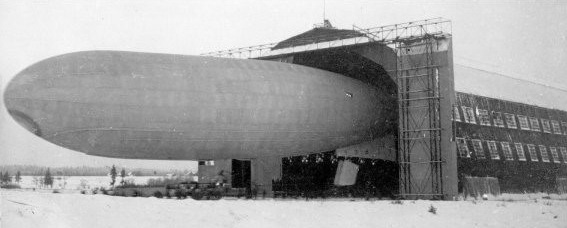
In total this airship performed 6 flights, the total duration of which was about 16 hours.

Volume: 10,500 cu.m
Length: 78 m
Diameter: 15 m
Engines: 2 x 197 hp
Max.speed: 59 km/h
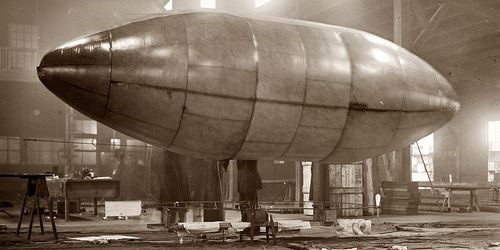
Andrews Aereon

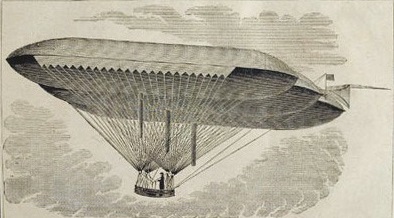
First American dirigible airship invented by Dr. Solomon Andrews of Perth Amboy, New Jersey. On August 9, 1862, Dr. Andrews wrote to US President Lincoln suggesting he could produce an aerostat to aid the armies of the Union. Constructed to demonstrate the capabilities of his invention, it was flown four times during the period from June through until September 4, 1963. Motor-less yet able to navigate against the wind using lift force and ballast to ascend and descend while traveling horizontally. To understand how the “Aereon” could have made a round trip of twenty or thirty miles to reconnoitre the Confederate army positions and report back to the Union army commanders, it’s necessary to understand that the “Aereon”, by compartmentalizing the gas and stiffening the three gasbags, was built into a gliding wing that could be tilted upwards and downwards slightly by moving the center of gravity in the car forward or aft. The flying ship “flew” by pointing it in the direction you wish to go and then dumping ballast, causing it to go shooting off on a flat trajectory as it ascends. By using this difference in specific gravity between the balloon and the surrounding atmosphere as its propulsion, once the “Aereon” reached its maximum allowable or favourable height, the pilot then vented gas causing the craft to glide downward. This could be repeated as long as the gas and ballast hold out.

Anders Kiev / Russian Empire Airship Kiev

Russian non-rigid dirigible “Kiev” «Киев» was designed and constructed by Fedor Ferdinandovich Anders [Федор Фердинандович АНДЕРС].

The first flight is given as August 6, 1911 in the city of Kiev. It is claimed that the non-rigid “Kiev” was the first Russian dirigible built with private funds that carried passengers commercially.

Engine: 1 x 50 hp
Envelope: 1000 cu.m
Length: 35.5 m
Diameter: 7 m

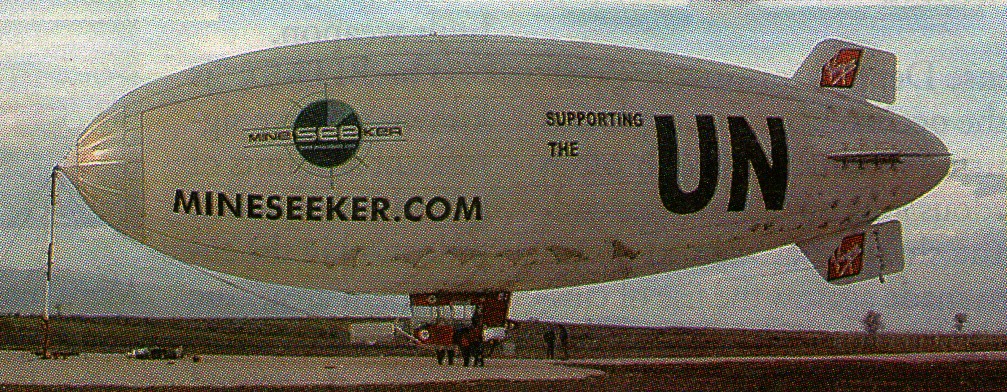
American Blimp A60+

The U.K.’s Defense Evaluation and Research Agency (DERA) cornpleted field trials in Kosovo of a prototype of an ultrawideband synthetic aperture radar being developed to detect mines and unexploded ordnance.
The project was run by Mineseeker, a joint venture between DERA and The Lightship Group, a company owned by Virgin Atlantic chief Richard Branson. Mineseeker aims to employ airships as mobile sensor platforms to detect and delineate mined areas and unexploded cluster bombs and other ordnance. In addition to serving as a realistic test bed for DERNs ultrawideband radar, the airship was also fitted with electro-optic sensors. The Kosovo deployment provided valuable imagery and data for the U.N.’s Mine Action Coordination Center (MACC) which is conducting mine clearance operations in the country.
Feasibility flight trials of the radar mounted on a helium-filled, nonrigid airship were conducted by DERA in January in the U.K. The same 40-meter-long A60+ airship, built by the American Blimp Corp., was used in Kosovo. Data generated from the ultrawideband radar deployment in Kosovo is being studied by DERA officials in the U.K. The sensor is intended to locate and differentiate metal and plastic mines.
The deployment began with the manned airship starting operations four days later, operating from bases in Kosovo and Italy. Over a period of six weeks, the Mineseeker team surveyed 30 sites in Kosovo, locating, identifying and mapping recorded minefields, as well as searching for unexploded ordnance from cluster bomb strikes.

American Blimp Corporation A-60+

Airship Industries Skyship

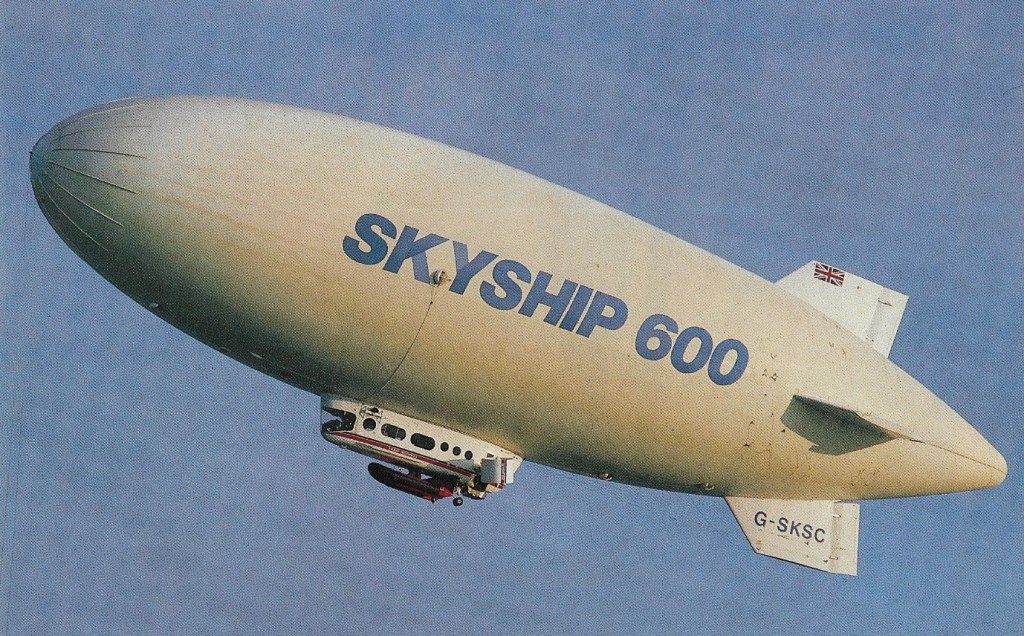
Skyship 600

A non-rigid airships designed by Roger Munk.
A successful first flight was made on 28 September by the Skyship 500, the prototype airship developed by Airship Industries and assembled at Cardington, Beds. It has a length of 164 ft (49,99 m), diameter of 46 ft (14,02 m) and a max speed of 63 kts (117 km/h) on the power of two piston engines driving variable pitch propellers in ducts. Airship Industries planed to build three more Skyship 500s, for civil certification and lease to interested operators.
Airship Industries (AI) in 1983 delivered a Skyship 500 to the Naval Air Development Centre at Warminster, Pennsylvania, for trials on behalf of the US Navy and US Coast Guard. After only a few days at the base, it was flown to Andrews AFB in Washington D.C. for a week of demonstrations to “senior staff”.
The Skyship 500 was assembled in Toronto by subsidiary LTA Systems, and is the second to be built. Reaction to the trials has been “uniformly good”, according to Airship Industries. Navy and Coast Guard interest is in using Skyship 500 for surveillance and maritime patrol.

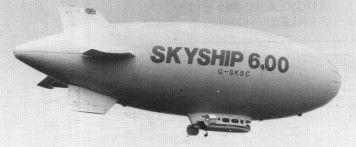
Skyship 600

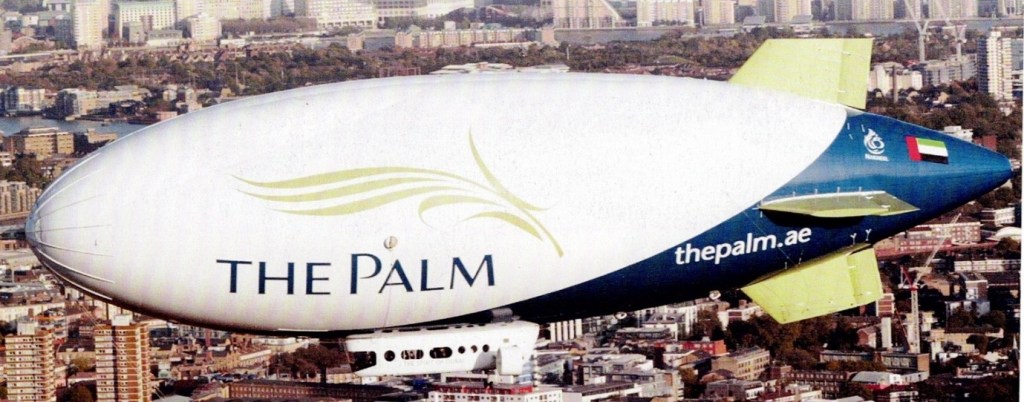
The first Skyship 600 made its maiden flight in November 1984. Similar in appearance to the Skyship 500, it is larger, being the world’s largest currently operating non-rigid airship (also called blimps). The envelope is made of Kevlar and the gondola of composite materials. Earlier models were propelled by two Porsche 930 turboshafts, but some have been modified with Textron Lycoming IO-540 engines.

Two pilots fly with the airship at all times and it can stay aloft, without refuelling, for up to 24 hours.

600

500
Length: 164 ft / 49,99 m
Diameter: 46 ft / 14,02 m
Max speed: 63 kts / 117 km/h

500HL

600
Length: 216 ft 5 in / 66m
Height: 72 ft 2 in / 22 m
Volume: 7,600m³
Cruising speed: 40 mph
Maximum speed: 65 mph
Weight: 5,500 kg when deflated

600B

Airship Industries No.1 / Thermo-Skyship

A major European car ferry operator financed the development of the British Thermo Skyship, a saucer shaped airship using helium and super heated air for lift and ducted thrust from turbofan engines for vertical take off and landing and for cruise flight. A 9.14 m (30 ft) diameter model of the ship has flown, from which will be developed a Skyship car ferry capable of carrying 60 passengers and their cars from England to France at 165 kph (103 mph), and 152 and 508 tonne (150 and 500 ton) cargo carrying saucers.

Airship Guarantee Company R-100

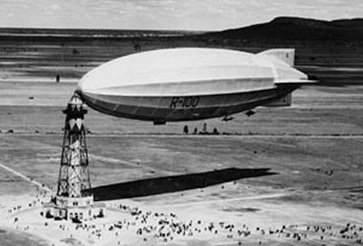
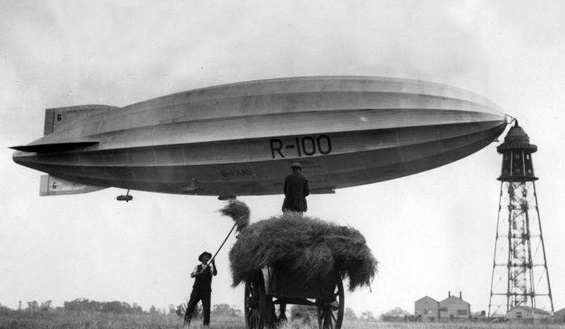
His Majesty’s Airship R100, built by the Airship Guarantee Company, a specially created subsidiary of the armaments firm Vickers-Armstrongs, led by Commander Dennis Burney, in 1929, first flew in November 1929. The R.100 left its shed at Howden and was moored at Cardington on 16 December 1929. It was powered by six 650 hp Rolls-Royce Condor engines.

On December 16, the R100 took off for commercial use on British Empire routes. In July 1930, the R100 made her Transatlantic flight, reaching the Canadian mooring mast at the airport in Saint-Hubert, Quebec in 78 hours having covered the great circle route of 3,300 mi (5,300 km) at an average speed of 42 mph (68 km/h).

The airship stayed at Montreal for 12 days and over 100,000 people visited the airship each day she was there. She also made a 24-hour passenger-carrying flight to Ottawa, Toronto, and Niagara Falls while in Canada. The R100 departed on her return flight on 13 August, reaching Cardington after a 57½ hour flight.

In October 1930 it was broken up for scrap.

Gallery