In Russia they built several small dirigibles including the “Mikst” in 1911. Built by A.I. Shabsky.
Airship
Russian Empire airship Krasnaya Zvezda / V-3
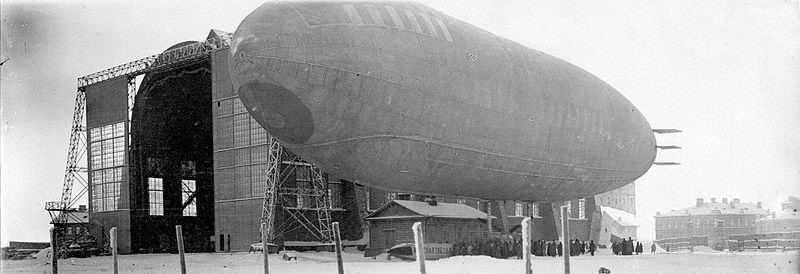
In fall 1920, in Salizi Village in the Leningrad Region, they began to assemble a French-produced airship they renamed into Krasnaya Zvezda.
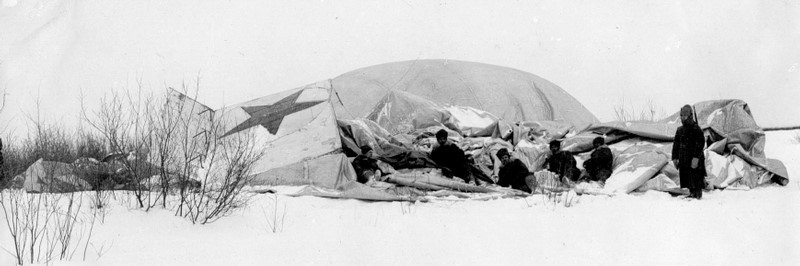
A flight of the airship ended with a crash because of the wind and defects in the airship construction. Its gondola tore off the airship hull.
It was disassembled in 1936.
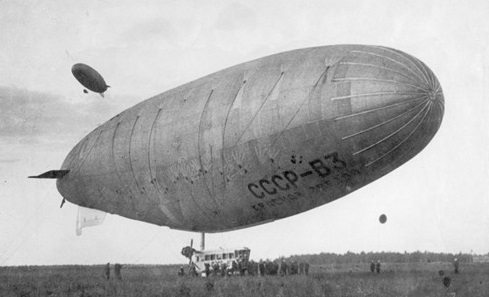
Russian Empire airship B-10 / B-12 Patriot / B-12bis Victory
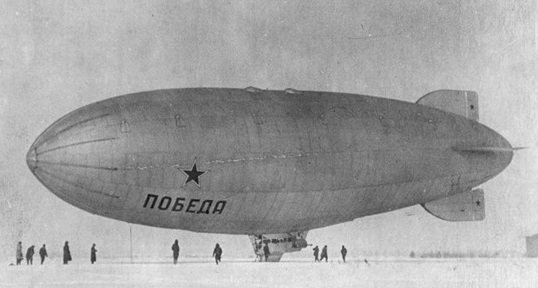
Four airships designed by Myagenkoy were built in the Soviet Union including B-10, B-12 Patriot, and B-12 bis Victory.
Airship Pobeda (Victory) was built in 1944 in 6 months. The volume was 5,000 cubic meters. The airship was designed to transport gas for barrage balloons and after the war it was used quite successfully to search for sunken ships. The Pobeda caught on a power line on 29 January 1947. They managed to tear off the wires by jettisoning its ballast. However, the airship was ascending so fast that the pressure inside the hull ruptured it, killing her crew of three airmen.
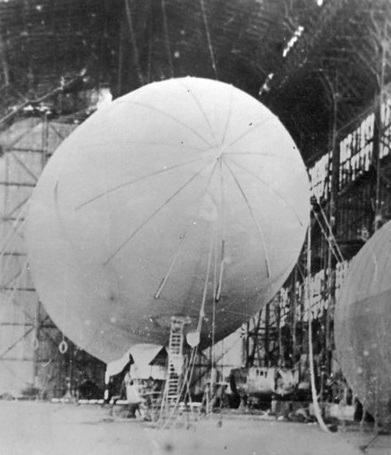
USSR-V10 first flight occurred in 1938.
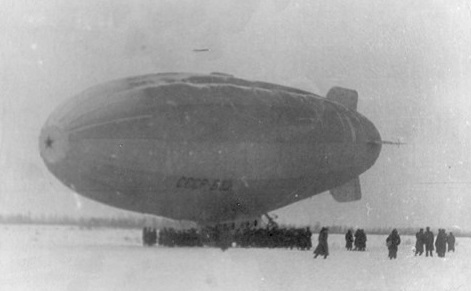
USSR-V10 crashed in August, 1938 killing 6 people. The cause of the crash was a mistake of its service crew who forgot to remove the caps from its exhaust valves which resulted in a rupture of the hull.
In 1946, the last passenger airship, the “Patriot”, entered service but by 1950 regular inland service had ended.
In 1943-44 the USSR V-12 airship made 969 flights. In 1945 USSR V-12 and Pobeda airships made 216 flights. 200 000 cubic meters of hydrogen and 320 tones of cargo had been delivered.
Russian Empire airship V-8

Following the B-7, the USSR V-8 was built in 1936 with an envelope volume of 10,000 cubic meters.
USSR-V8 airship was still operating in 1938.
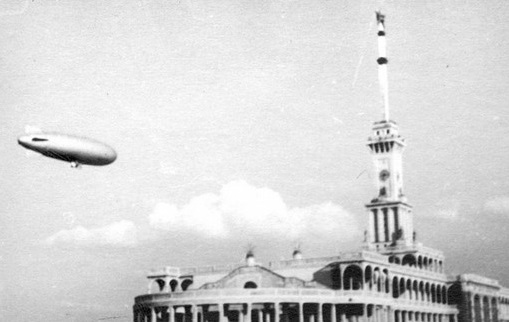
After the V-8 no semi-rigid airship were built in the USSR.
Russian Empire airship B-7 Chelyuskinets
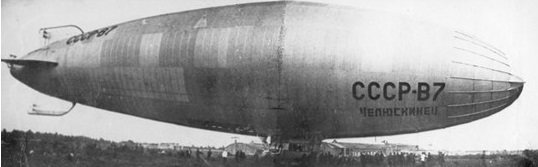
After the V-6 the Soviet Union built the Soviet B-7 airship, named “Chelyuskinets”.
The first flight was performed in 1934.
In 1935 was built a second, same airship, designated B-7 bis, after its predecessor USSR-V7 burnt in a fire.
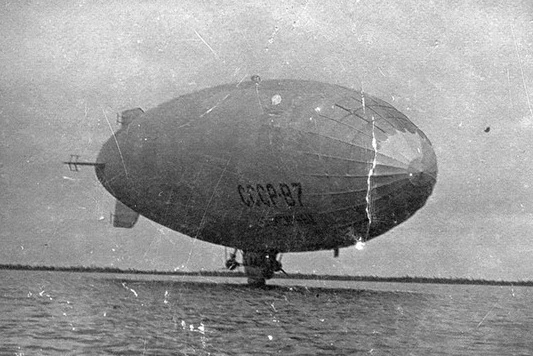
On the way from Petrozavodsk to Gatchina, it ran out of fuel when it was 100 m from the base so it had to waterland. However, the airship caught on powerlines and a fire broke out. Those who jumped out into the water stayed alive. The burning airship fell on a kennel killing over 100 shepherds. The commander of the airship was sentenced to two years in prison but was later released.
B-7
Envelope volume: 9,500 cu.m
Russian Empire airship USSR-4
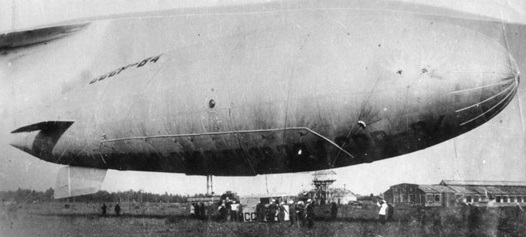
By May 1932, the Russian Empire had built three airship — the USSR B-1, B-2 USSR “Smolny” and the Soviet B-3 “Red Star”, which in the main have been set up to implement educational and propaganda operations. The B-1 envelope was 2200 cubic meters and B-2 5000 cubic meters. The airships had different engines. The envelope of all 3 airships was made of three-layer rubberized material and had an inner wall that divided the volume of the two equal parts. This partition to reduced transfusion of gas along the envelope for trim of the craft.
The Komsomolskaya Pravda gondola was enclosed.
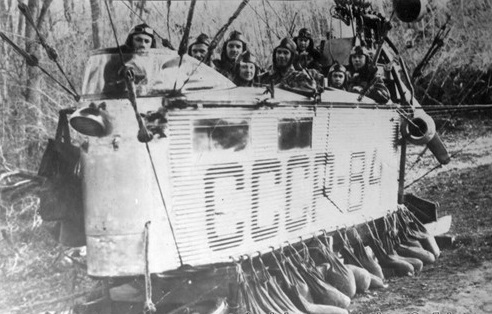
These three airships performed a series of successful flights on the routes of Leningrad — Moscow — Leningrad, Moscow — Kharkov, etc. The three airship were joined by USSR-4.
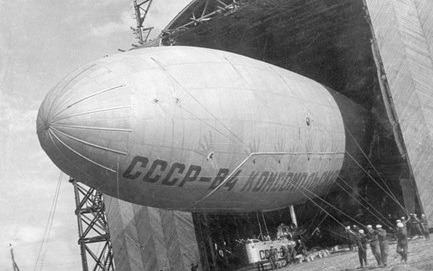
In 1934, V4 Komsomolskaya Pravda burnt after the boathouse where it was kept was struck with a lightning. However, some say that the real cause of the fire was violations of fire safety measures.
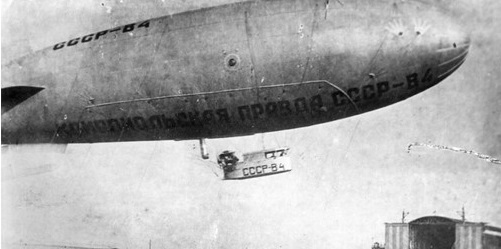
V-4
Envelope: 250,000 cu ft
Range: 750 miles
Russian Empire airship B-2 USSR Smolny
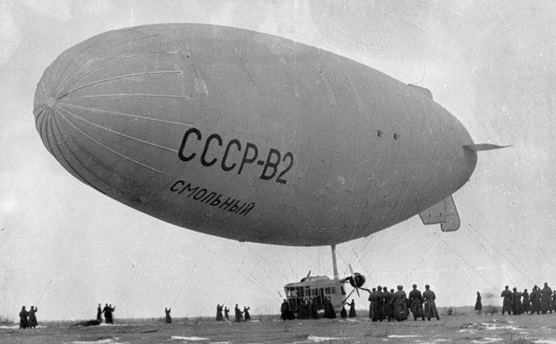
By May 1932, the Russian Empire had built three airship — the USSR B-1, B-2 USSR “Smolny” and the Soviet B-3 “Red Star”, which in the main have been set up to implement educational and propaganda operations. The B-1 envelope was 2200 cubic meters and B-2 5000 cubic meters. The airships had different engines. The V-2 had two 230 hp engines and could carry 8 passengers. The envelope of all 3 airships was made of three-layer rubberized material and had an inner wall that divided the volume of the two equal parts. This partition to reduced transfusion of gas along the envelope for trim of the craft.
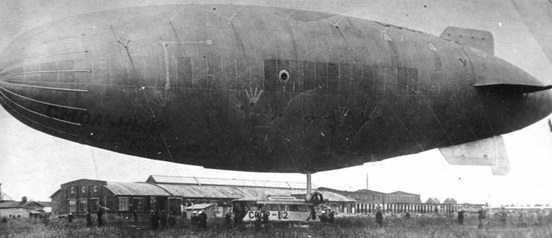
These three airships performed a series of successful flights on the routes of Leningrad — Moscow — Leningrad, Moscow — Kharkov, etc. The three airship were joined by USSR-4.
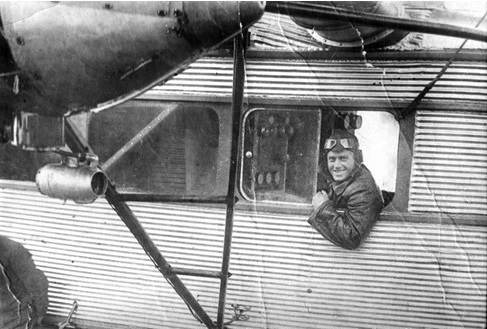
On September 6, 1935 USSR-2 Smolny was at the Stalino (Donbass) airport, when wind pulled out of the ground all 60 anchors that held it. Have seized on one of the cables commander of dirigible NS Gudovantsev managed at an altitude of 120 meters to get to the gondola, in which at that time were 4 crew members and 11 tourists. At an altitude of 800 meters the engines were running. After that, having waited for the adverse weather conditions to decrease, the airship landed safely after 5 hours and 45 minutes. For this heroic act Gudovantsev was awarded the Order of the Red Star.
The airship crashed in the Novgorod Region in 1933 when its engines failed.

The airship was disassembled in 1939.
Russian Empire airship USSR B-1
By May 1932, the Russian Empire had built three airship — the USSR B-1, B-2 USSR “Smolny” and the Soviet B-3 “Red Star”, which in the main have been set up to implement educational and propaganda operations. The B-1 envelope was 2200 cubic meters / 78,000 cu ft and B-2 5000 cubic meters. The V-1 was designed to pick up passengers without landing. The airships had different engines. The envelope of all 3 airships was made of three-layer rubberized material and had an inner wall that divided the volume of the two equal parts. This partition to reduced transfusion of gas along the envelope for trim of the craft.
These three airships performed a series of successful flights on the routes of Leningrad — Moscow — Leningrad, Moscow — Kharkov, etc. The three airship were joined by USSR-4.
During The Second World war SSSR-V1 was used for carrying supplies for captive balloon units of Red Army, making more than 900 flights.
Engines: 2 x 75hp
Envelope: 2200 cu.m / 78,000 cu ft a
Top speed: 55 mph
Endurance 12 hr
Crew of 7
Russian Empire airship Kobchik / Falcon
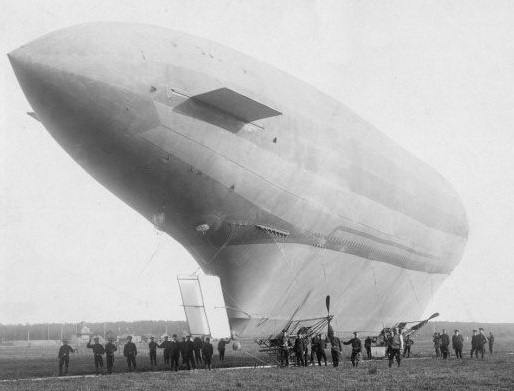
Designer by Nemchenko and built in 1912 at the plant “Duflon, Constantinovich and Co”, the semi-rigid Kobchik / Falcon airship was sent to the Far East, but not used. Builders S. Nemchenko and A.E. Garut.
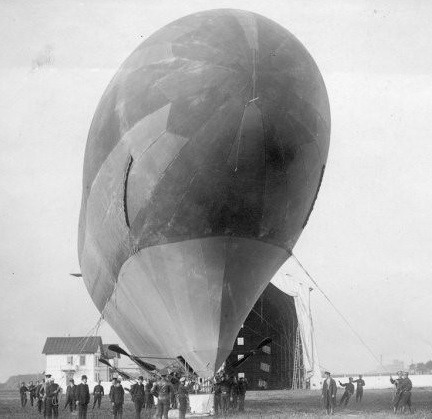
Engines 2 x 50 hp
Envelope: 2150 cu.m
Length: 48 m
Diameter: 9.5 m
Max speed: 50 kph
Russian Empire airship Golubj / Dove
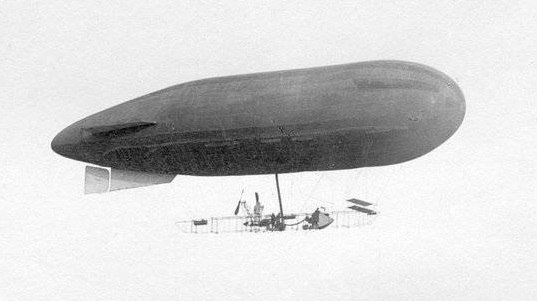
Before WW 1, Russia had constructed about 10 non-rigid dirigibles. There were 3 small dirigibles including the 1910 non-rigid Golubj (Pigeon). These ships had arms, but were out-of-date.
Airship Голубь / Dove was built in 1910 in Russia at the Izhora plant, located in Kolpino near Petrograd, according to the design of professors Van der Fleet and Konstantin Petrovich Boklevsky (Константин Петрович Боклевский), as well as engineer V.F. Naidenov with the participation of captain B.V. Golubova.
Their ceiling and speed did not meet the requirements, for a military dirigible. During the war the Голубь made several reconnaissance flights, but never crossed the front lines. They were used for training.
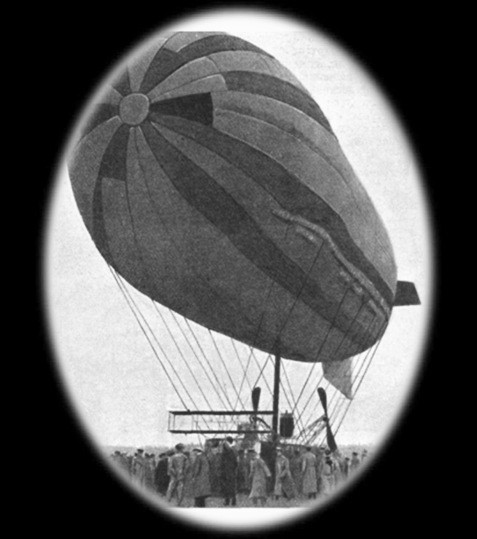
In October 1914 the Голубь was transported to Lida, 160 km west of Minsk and was taken down. In the Summer of 1916 the Голубь was assembled but as the dirigible stood in the open it was destroyed during a storm, which ripped the envelope.
Envelope capacity: 2270 cu.m
Engine 74 hp
Length: 42 m
Diameter: 9.8 m
Max speed: 50 km / h
 All Aero