The 1909 Lepin triplane was designed and built by Lepin in France
Triplane+
Legrand and Guillaume 1910 triplane
The 1910 Legrand triplane was designed by Jean Legrand and built by Voisin in France.
Span: 23′
Kreß Flugapparat / Drachenflieger
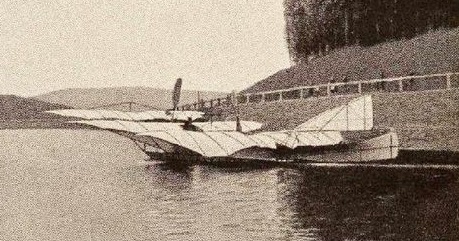
Also known as the Kreß (Kress) Drachenflieger, the Kreß Flugapparat 3-wing-in-tandem flying boat of 1901 was an effort of Austrian Wilhelm Kreß and only fell short of actually flying because of a too weak an engine.
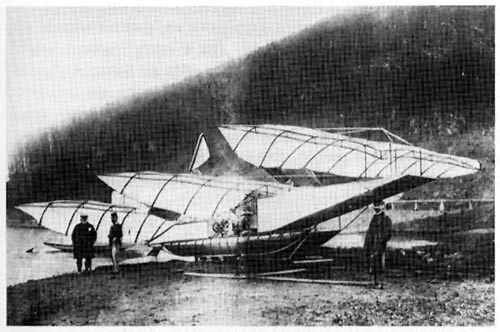
Kreß himself, then already at advanced age, intended to test fly the machine on October 3, 1901 but the machine capsized and sank in the Wienerwaldsee-Untertullnerbach.
Kondor Dreidekker
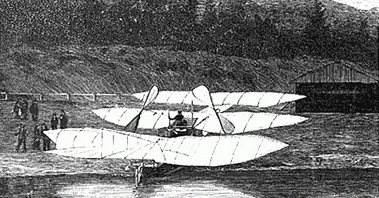
In the summer of 1917 Kondor followed the lead of Fokker’s Dr.I July 1917 triplane with one of their own. Known only as the Kondor Dreidekker this aircraft, first flown in October 1917, was not a success; its development programme was soon abandoned because of severe vibrational problems. Instead, Kondor used the fuselage, empennage and lower wing of the Dreidekker to produce a biplane or sesquiplane called the D.7.
The common fuselage was a tube steel internal structure with plywood skin, rounded in cross-section.
Komta Komta
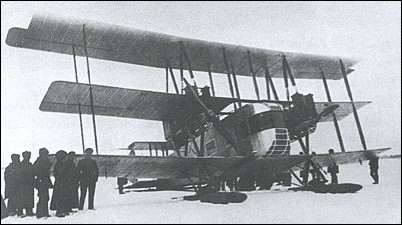
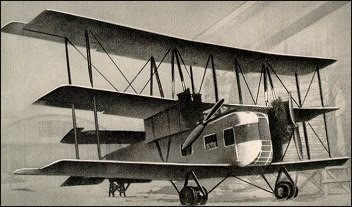
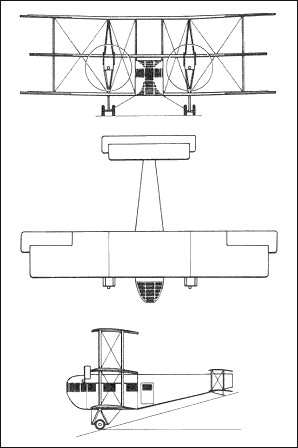
The Komta was not only the name of the aeroplane but also the name of the organisation set up to build it in the first place, under the chairmanship of Zhukovskii he of the ANT, Central Aero and Hydronamic Institute. The name comes from the “KOMissia po Tiazholot Aviatsii or the Commission for a Heavy Aircraft. The plane did not take to the air until late 1923 and by 1924 it had just about had it with the engines worn out. By this time Zhukovskii’s protogee, A.N.Tupolev, had taken over the design of large aircraft at the institute and so the Komta was no more.
Jacobs 1910 Multiplane
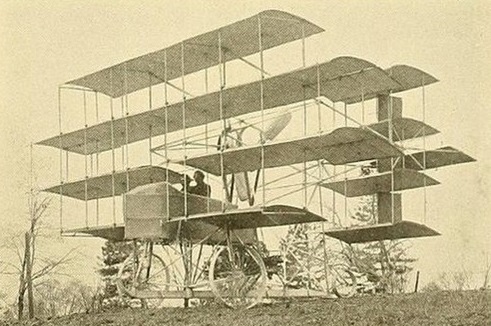
The 1910 Jacobs Multiplane [also identified as the Jacobs-Emerson multiplane] was the creation of Henry William Jacobs of Atchison, Kansas. It had quadruplane wings and tail and two engines, each driving a propeller.
Jacobs used two improved air-cooled 35hp engines he invented, to replace the two original underpowered engines [Emersons?], with which the plane flew in 1910.
It was displayed on the New York Aero Exhibition 1912. Jacobs had formed with others the firm “Multiplane Limited” in Kansas to build the machine and eventually sell it to the market and a brochure of 16 pages was produced.
Huntington Multiplane
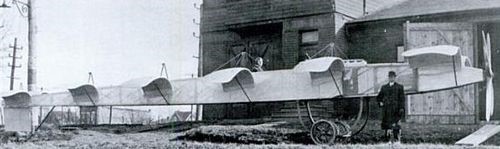
A multi-wing aeroplane designed and built by Howard Huntington sometime during 1912/1913. The photo shows Huntington in front of his house in Hollis, Queens, on January 22, 1914.
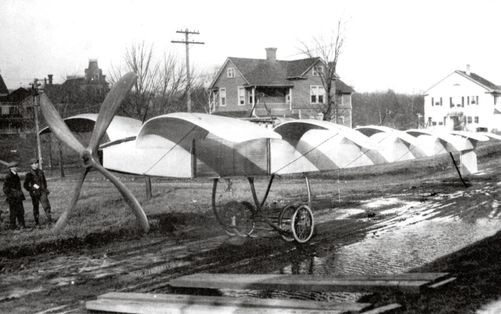
In June of 1914 Huntington constructed a single wing variant of his multiplane – the Huntington “Clam”.
Horgan 1903 Flying Machine
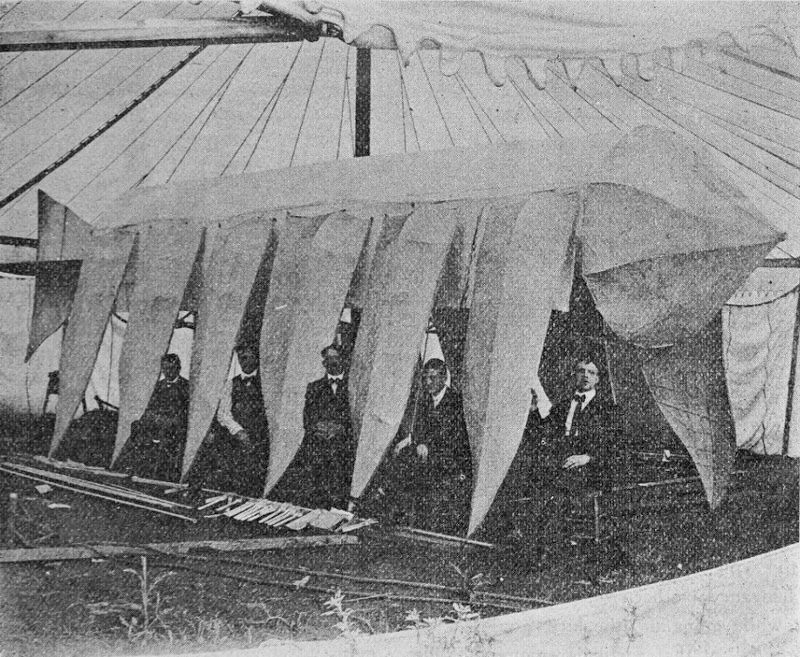
This unusual ornithopter was designed by William C. Horgan together with partners Theophilus Williams and M. Halsinger. It had six wings attached along each side of its five-foot diameter tubular fuselage, intended to make 90 beats per minute driven by a 3.5 hp vapour engine. The framework was made of aluminium and was claimed to weigh only 200 lbs, with the passengers intended to sit in a cage below the fuselage. The machine crashed during a test, putting an end to the Canadian-born Chicago inventor’s dreams of profitable passenger-carrying flights and his plans to participate in the 1904 St Louis Aeronautic Competition.
Hayot Multiplane

The tandem Hayot multiplane had divided tail surface in the foreground, preceded by five sets of small triplane wings going forward to the nose.
Hammond 1911 triplane
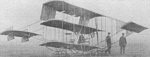
The 1911 Hammond triplane was designed and built by E. V. Hammond in the UK.
 All Aero