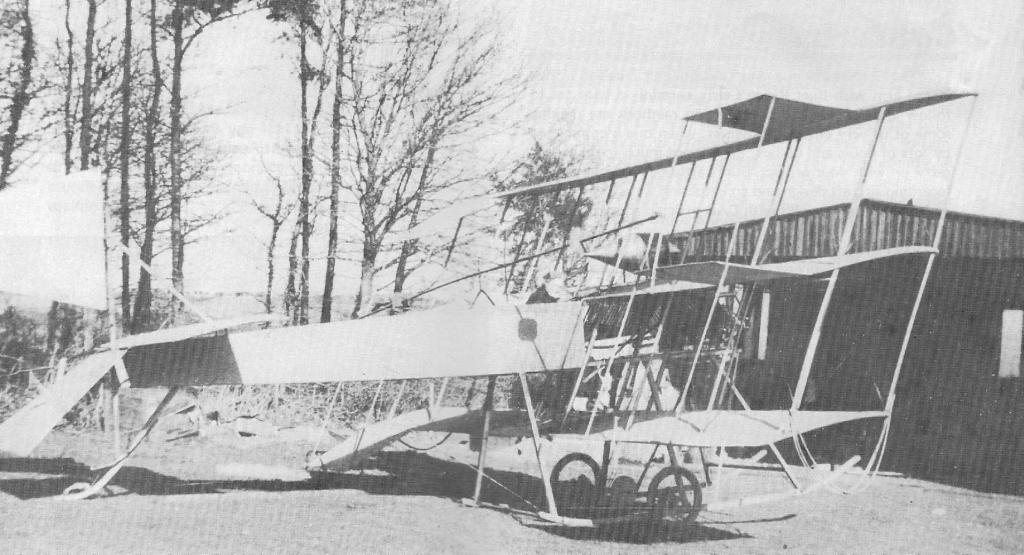
Ogilvie Triplane

The second machine of Bertram Ogilvie wa a larger triplane about 12 feet high at the upper mainplane. The success of this aircraft is reputed to have been no better than that of the first. But Bertram Ogilvie, and Arthur Pickard-Hawkins, his employer, who’s help and encouragement had been instrumental in construction of these first two machines, set about building a third, still with the intention of testing Ogilvies ‘briai child’ the aileron.

Prior to construction of his first aircraft, Ogilvie built a small wing of about 4 foot span, mounting it behind a motor vehicle, and had observed its reaction when, with the aid of cords, the ailerons were activated.

By all accounts, the third aircraft proved successful, and Lord Kitchener who witnessed flights at ‘Grafton’, the Pickard-Hawkins’ property at Maraenui near Napier, was so impressed that he undertook to arrange publicity for Ogilvie and his aircraft should he take it to England.
On arrival in the UK Ogilvie and Pickard-Hawkins assembled the aircraft at Aldershot. With top military personnel present in preparation for Oglvie’s display, difficulty was experienced in coaxing the engine into life and, in the ensuing confusion the throttle was left open. When the motor finally fired the aircraft careered across the airfield and was wrecked.

Arthur Pickard-Hawkins returned to New Zealand but Bertram Oglvie remained in the UK and became and aircraft designer with Handley Page Ltd.
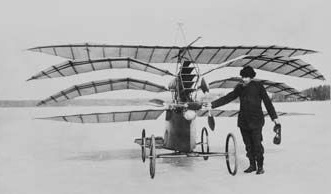
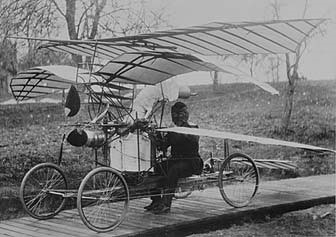
Nyberg Flugan / Fly

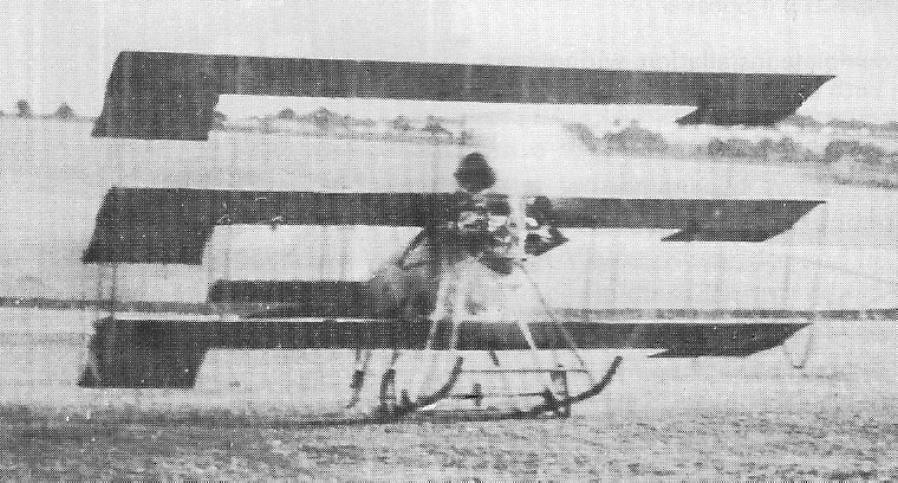
Carl Richard Nyberg (1858-1939) was a Swedish industrialist and the inventor of a successful blowtorch. He began work on this flying test-bed in 1897, with tests and alterations to the design of Flugan (The Fly) going on until around 1910. It had a wingspan of 5 meters, and the surface area of the wings was 13 m². It was powered by a steam engine heated by four of his blowtorches, producing 10 hp at 2000 rpm. The weight of the engine was 18 kg, giving a very good power-to-weight ratio for its time. The total weight of the plane was 80 kg, so the failure to fly was more related to poor propeller and wing technology. The challenge photo was probably taken in 1903 or later, when he started testing on the ice of the Baltic at his home on Lidingö outside Stockholm, rather than tethered around a circular board track in his garden.

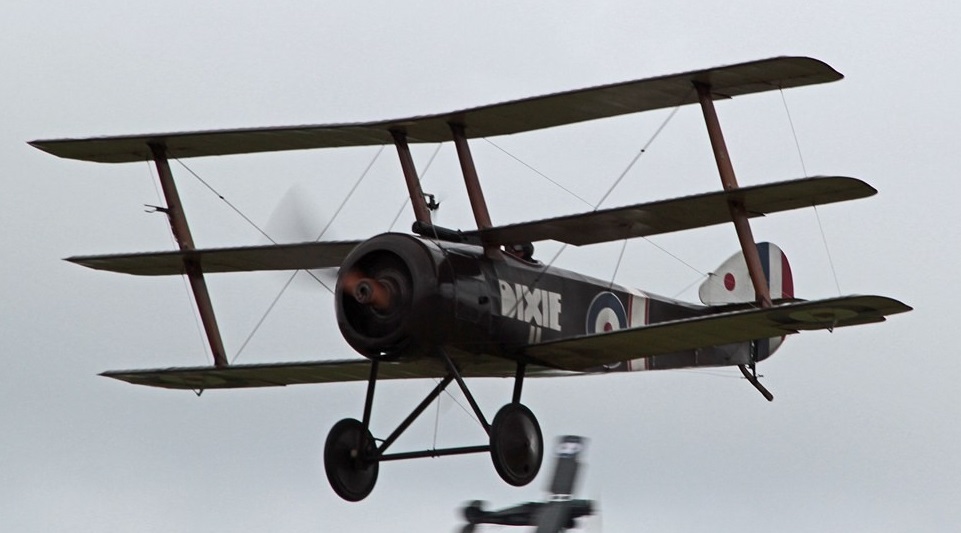
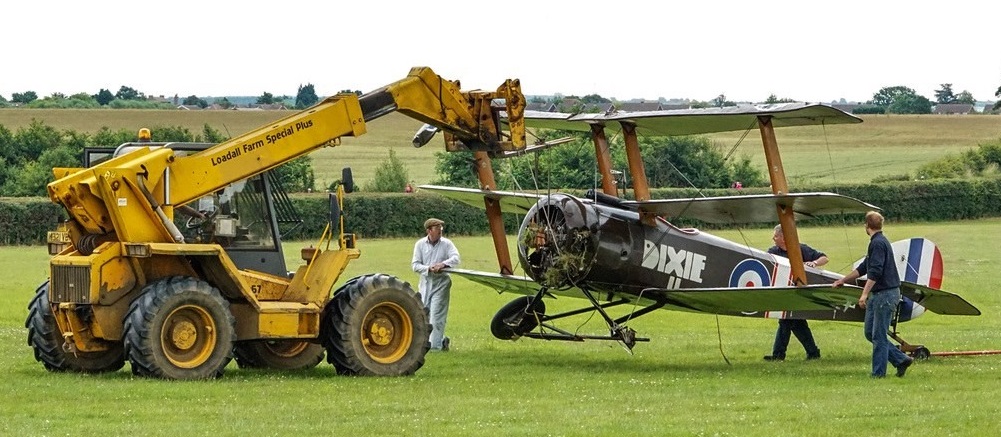
Northern Aeroplane Workshops Sopwith Triplane

Shuttleworth Triplane “Dixie II” serial N6290 (G-BOCK), was built by the Northern Aeroplane Workshops from the original drawings, it was seen by the original owner of the Sopwith Aviation Company, Sir Thomas Sopwith, before his death in January 1989 aged 101. He was so impressed with the standard of work that he declared it to be a “late production” machine, rather than a replica, it sports an official Sopwith serial number plate on the engine cowl in recognition of this fact.

Wing span: 26 ft 6 in (8.07 m)
Length: 18 ft 10 in (5.73 m)
Height: 10 ft 6 in (3.20 m)
Weight empty: 1,101 lb (499 kg)
Maximum Speed: 117 mph (188 km/h)
Service Ceiling: 20,500 ft (6,248 m)
Endurance: 2 3/4 hours

Naglo D II

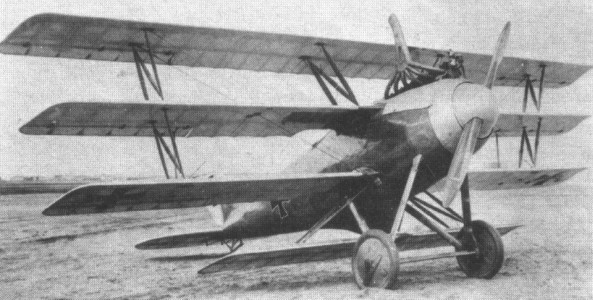
The DII quadruplane built by the Naglo Werft of Pichelsdorf, near Berlin, was designed by Ing Gnädig (who was, at the time, still in the employ of the Albatros Werke) and participated in the second D-type contest at Adlershof in the summer of 1918 (the debriefing minutes of which indicating that it was to appear for further testing after modification). Powered by a 160 hp Mercedes six-cylinder water-cooled engine and inten¬ded to carry an armament of two LMG 08,15 machine guns, the Naglo DII appears to have been based on an Albatros DV type fuselage. The bottom wing, completely independent of the three main lifting surfaces, being attached to an extruded keel and braced with splayed struts. Official type testing was undertaken on 24 May 1918, and during the D-type contest, evaluation pilots praised the excellence of the construction and workmanship of the D II while calling for an improvement in the flight characteristics.

Engine: Mercedes 6 cyl, 160hp
Empty weight: 1,596 lb (724 kg).
Loaded weight: 2,015 lb (914 kg
Span: 29 ft 6 1/3 in (9,00 m).
Wing area: 241.12 sq ft (22.40 sq.m).

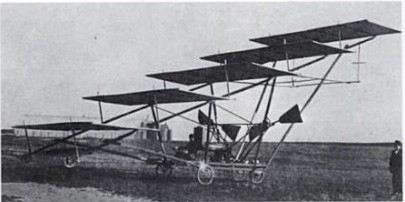
Merx Fünfdecker Himmelsleiter

Built and demonstrated at Flugplatz Johnannisthal in 1911, but apparently did not fly. Later, the machine was modified, and it appears questionable whether the revision flew either. The secretive Merx had the “Himmelsleiter” (sky ladder) built and kept in its shed – hidden from prying eyes. When the first flight test was to take place, it turned out that the apparatus was higher than the door and could not be pulled out of the shed. Also known as the Mehrdecker-Versuchsflugzeug von J. Merx, (multiplane-experimental).