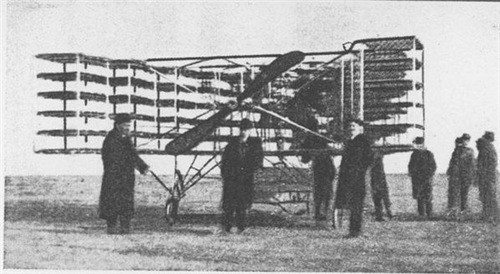
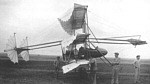
The Robiola Idromultiplano was built by Doctor Attilio Robiola in Turin in 1912-1913.
His aircraft was a V-shaped in terms of six-plane, inside which was located the 80 hp Gnome engine with a pusher propeller. On each of the wings were “ladder” blinds which were supposed to control roll, pitch and course.
When tested at the local Mirafiori airfield in November 1913, the craft could only run on the ground, but it never rose into the air.
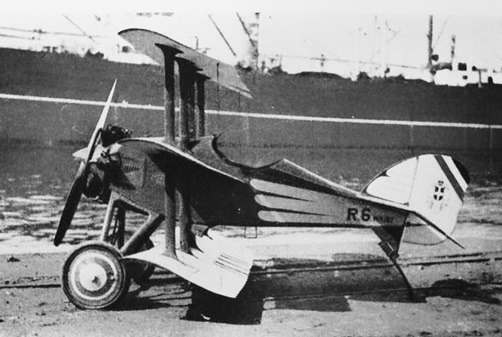
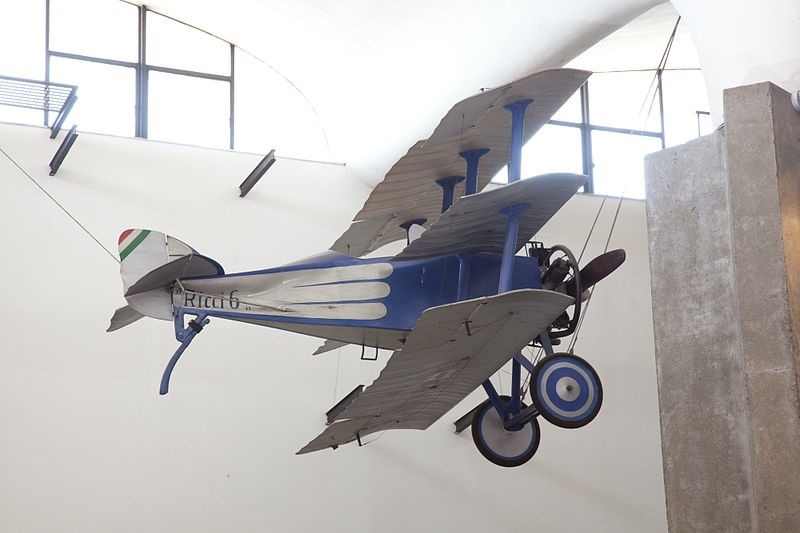
The Ricci 6 was a small triplane designed by Umberto and Ettore Ricci. It flew for the first time in 1918 in Bagnoli piloted by B. Albertazzi. It was simple and robust; it had a wingspan of just 3.50 m when it was first presented in 1920 at the Paris motor show. During the demonstration for the anniversary of the 1920 victory, he took off from the Pincio in Rome, throwing leaflets over the city. A second R 6 with Anzani engine was built with a 6-cylinder engine from the Bacini e Scali Company in Naples. Completing military tests, the R6 was delivered to the Air Force receiving the MM167 serial number.
A replica, made with original pieces of the first example in 1967, is exhibited at the Leonardo da Vinci National Museum of Science and Technology in the aeronaval pavilion.
Engine: 40 hp Anzani Wingspan: 3.50 m Wing area: 11 m² Length: 3.75 m Height: 2.4 m Empty weight: 150 kg Loaded weight: 260 kg Max speed: 150 km / h Endurance: 3 hr
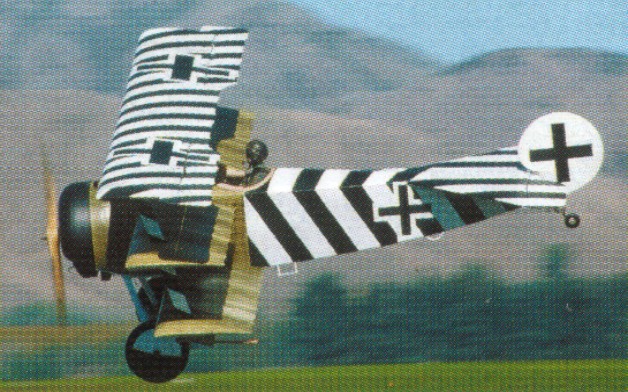
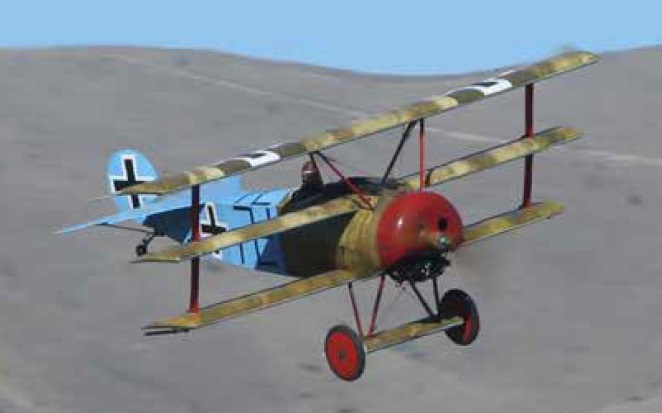
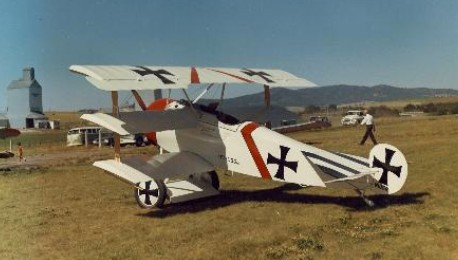
The replicas are built to the original 1917 pattern with small differences in the size of tubing used, and a few safety modifications like brakes and a steerable tailwheel. The aircraft has all the vices of the original poor ground visibility, and poor rudder control.
This replica of the Red Barons famed fighter is not one of the easier-to-build homebuilts. The fuselage is built from steel tube and plywood, then fabric covered. The wings are all wood and fabric covered. The engine usually recommended is a 145-hp Warner Radial.
Porte’s ultimate design was a triplane flying boat, unofficially nicknamed the ‘Porte Super Baby’, but officially designated Felixstowe Fury. With wings spanning 37.5 m (123 ft), the Fury was powered by five 360hp Rolls Royce Eagle engines, two as tractors and three as pushers. Flying controls, initially, were power assisted by servomotors. After successful flying trials, the Fury was in the last stages of preparation for a projected flight to South Africa on August 11, 1919, when it was wrecked in Harwich harbour. All work on a second Fury was then stopped and the Fury programme cancelled. In October 1919, John Cyril Porte, the man whose inventive genius had conceived the F series of flying boats, died in Brighton of tuberculosis.
Engines: 5 x 334 hp Rolls-Royce Eagle VII Span: 37.5 m (123 ft) Length: 19.2 m (63 ft 2 in) Height: 8.4 m (27 ft 6 in) Maximum speed: 156 km/h (97 mph) at 609.5 m (2000 ft)
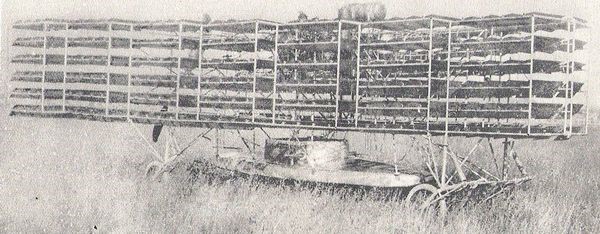
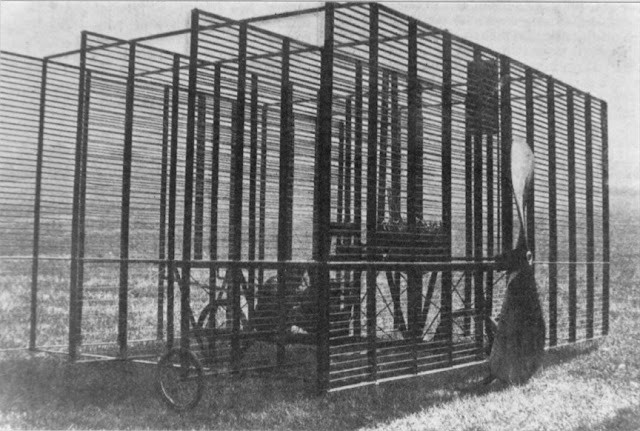
A second version of Horatio Phillips’ 1893 steam powered test-rig study model on its wooden 200 foot diameter circular test-track at Harrow, England, where, tied to a cable fixed on a central mast, its first test was made on June 19th. 9 ft 6 in tall and about 22 feet long, with 40 lifting surfaces arranged like Venetian blinds.
He continued to experiment with wing designs, and built another test rig in 1902, which had 120 wings and was powered by a gasoline engine.
The 1893 machine’s thin profile with one of Horatio Phillips’ sons.
Reaching a speed of 64 km/h with a total weight of 174 Kg, it rose to a height of 90 cm and covered a distance of 600 meters.
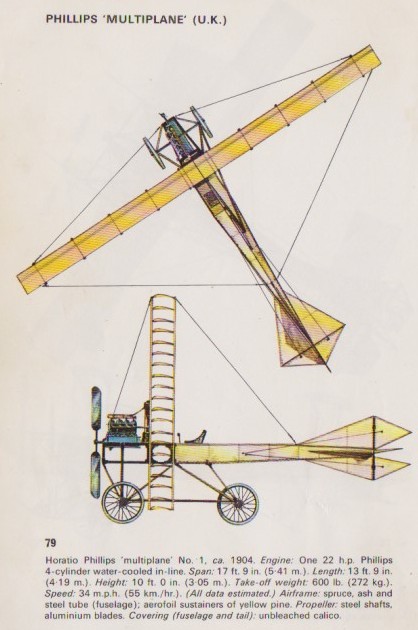
Phillips also built multiplane machines in 1904, 1907 and 1911; his elaborate multiwing approach – 40 double-surface airfoils grace this early example – is often referred to as the “Venetian Blind”.
The 1907 Phillips Multi-Wing Flying machine was designed and built by Horatio Phillips in the UK. It featured 20 rows of aerofoils and flew more than 500 yards.
Phillips built his first man-carrying machine, with 20 lifting surfaces, in 1904, and was able to make at least one short hop of 50 feet. His 1907 machine had four banks of 50 wings each and an eight-foot propeller. In this machine Phillips made a powered, although uncontrolled, flight of about 500 feet.
Philips Multiplane 1907
Engine: Phillips 4-cyl inline, water-cooled, 22 hp Wingspan: 17 ft 9 in / 5.41 m Length: 13 ft 9 in / 4.19 m Height: 10 ft 0 in / 3.05 m TO weight: 600 lb / 272 kg Speed: 34 mph / 55 kph
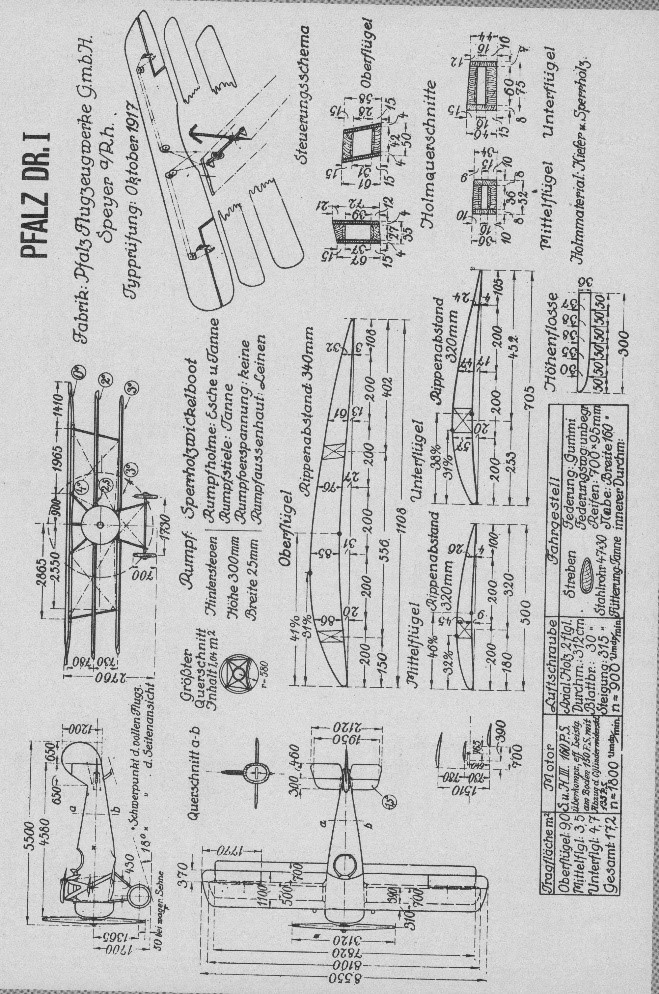
The Pfalz Dr.I was a German fighter prototype of World War I. Official interest in the potential of the triplane configuration for single-seat fighters prompted Pfalz to develop the Dr.I. It underwent initial testing in October 1917, and an initial batch of 10 aircraft were shipped to the Front and arrived in April 1918.
Service pilots involved in testing the Dr.I considered it too slow and its Sh III engine too unreliable for frontline use and no further examples were produced. Jasta 73 was equipped with this aircraft in 1918.
Powerplant: 1 × Siemens-Halske Sh.III, 119 kW (160 hp) Propeller: 2-bladed fixed-pitch Wingspan: 8.55 m (28 ft 1 in) Wing area: 17.2 m2 (185 sq ft) Length: 5.5 m (18 ft 1 in) Height: 2.76 m (9 ft 1 in) Empty weight: 510 kg (1,124 lb) Gross weight: 705 kg (1,554 lb) Maximum speed: 190 km/h (120 mph, 100 kn) at 4,000 m (13,123 ft) Service ceiling: 6,000 m (20,000 ft) Time to 1,000 m (3,281 ft): 1 minutes 42 seconds Time to 3,000 m (9,843 ft): 6 minutes 12 seconds Time to 5,000 m (16,404 ft): 13 minutes 30 seconds Armament: 2 x synchronised LMG 08/15 machine guns Crew: 1
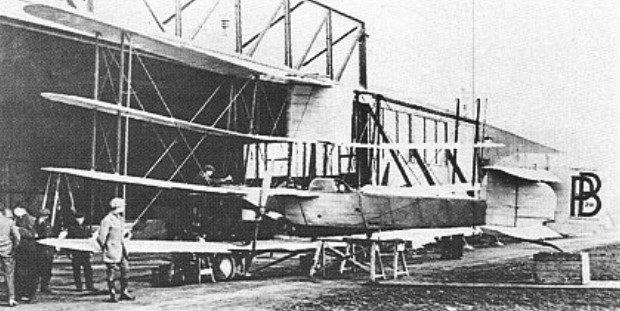
The 1915 P.B.29E twin-engined quadruplane interceptor fighter was conceived as an anti-airship aircraft. Intended to be capable of prolonged cruise at low speeds during the nocturnal hours, and built in seven weeks from beginning of design, the P.B.29E featured high aspect ratio wings with a pair of 90hp Austro-Daimler six-cylinder water-cooled engines underslung from the second mainplane and driving pusher propellers. The entire wing cellule was braced as a two-bay structure, the fuselage being attached to the second wing and accommodating two crew members, and a gunner with a single 7.7mm machine gun occupying a nacelle that filled the gap between the centre sections of the upper mainplanes. The P.B.29E was flown in the winter of 1915-16, and was destroyed comparatively early in its flight test programme, but aroused sufficient interest to warrant development of the P.B.31E of similar concept. No data relating to the P.B.29E are available.
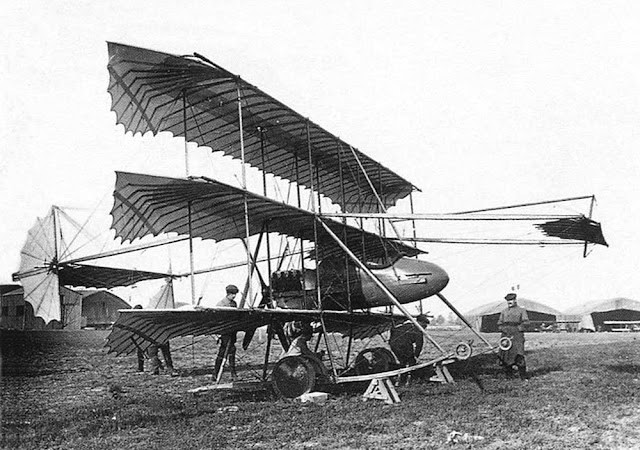
The Paulhan triplane was entered by Louis Paulhan for the 1911 military aircraft competition [Concours Militaire d’Aviation]. This Concours was the chance to get orders from the French Army. As a result the competitors entered in great numbers. 41 Aeroplane constructors entered, with a total of 138 (!) aeroplanes which were powered by 24 different engine constructors.
The Paulhan design was a mix of aluminium used for the nacelle and wood for the wings. The wing construction was elaborate as a form of wing warping was used which resembled somewhat the Taube way of wing warping. All wing tips on the three wings could be bent down almost 90 degrees. Almost always wing warping weakened the wing structure because of the regular bending of the wood in flight, making extra inspections and replacements necessary.
The engine fitted is a Renault of 80 hp driving a four-bladed propeller of 3,5 meter diameter.
Possum Engine: 1 x 450hp Napier Lion Max take-off weight: 2858 kg / 6301 lb Wingspan: 14.02 m / 46 ft 0 in Length: 11.89 m / 39 ft 0 in Height: 4.20 m / 14 ft 9 in Wing area: 72.20 sq.m / 777.15 sq ft Max. speed: 170 km/h / 106 mph Cruise speed: 142 km/h / 88 mph Armament: 2 x 7.7mm Crew: 3






 All Aero