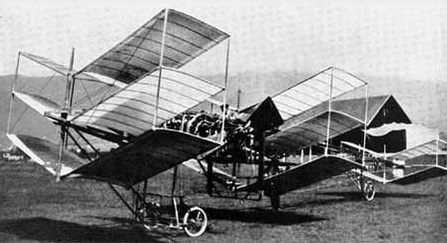
Built in Switzerland in 1909 by the Dufaux brothers. An ambitious concept for the time, the Tiltrotor was not successful.
Built in Switzerland in 1909 by the Dufaux brothers. An ambitious concept for the time, the Tiltrotor was not successful.
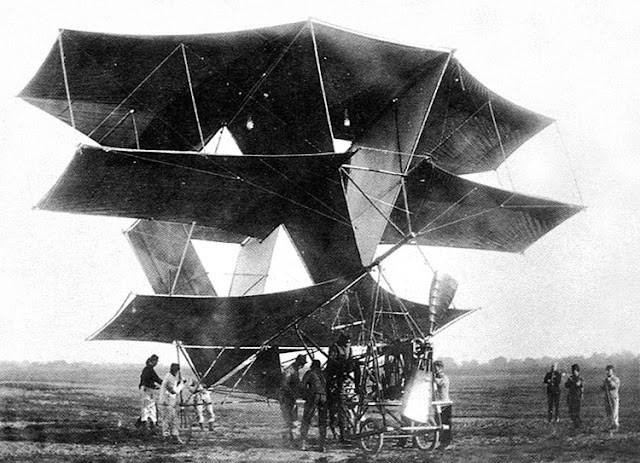
The first special military aeroplane ever built. It was specially designed by Capt. Dorand, for what were then held to be the aerial necessities of the French Army. The planes were placed well above the body, giving the pilot a very clear uninterrupted view.
It later appeared as a biplane
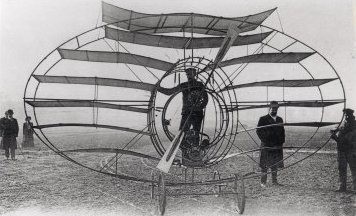
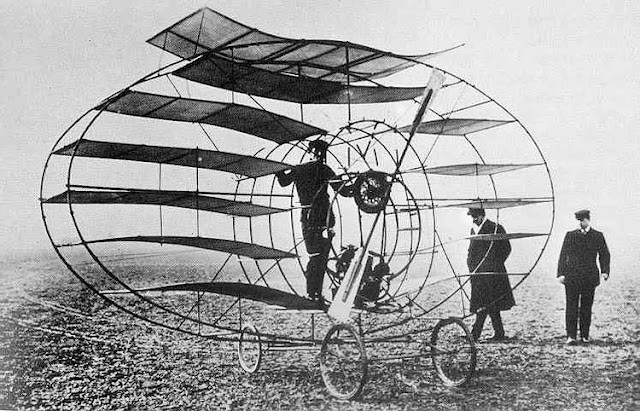
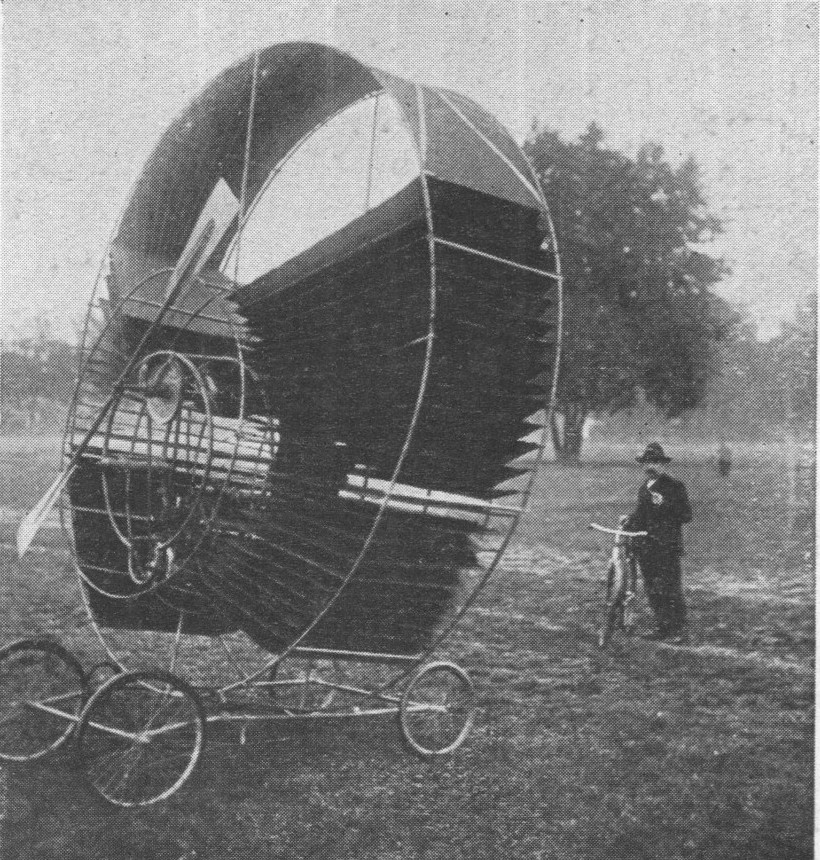
A 1908 patented multi-wing machine design by Raymond d’Equevilley-Montjustin – otherwise known as the Marquis d’Equevilley – very characteristic in its circular hoop construction and several levels of planes. The pilot was to stand in flight and direct the machine by leaning his body to the left or right, and although the machine was continuously developed adding or diminishing the number of “wings”, it failed to ever leave the ground. D’Equevilley, a quite capable engineer and designer, had nearly fifty patents to his name, and is often credited as the person who perfected the snorkel that is used on submarines.
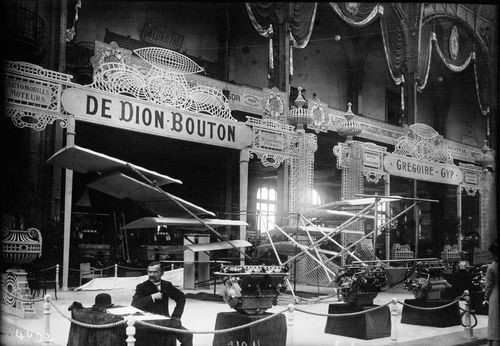
The first of two unsuccessful aeroplanes designed and built by Établissement de Dion-Bouton, the car and motor company. Remotely resembled a Wright Flyer, with twin rudders at the rear, a single small tailplane, and a triplane elevator in front, but instead of wings, each side had four wing-segments set at 30 degrees dihedral. Four propellers were to be employed, driven by a 100 hp engine. Displayed incomplete at the Première Exposition internationale de la locomotion aérienne at the Grand Palais in Paris during September 25 – October 17, 1909, construction and/or testing was likely halted afterwards as nothing more was heard of this flying machine of Jules-Albert de Dion and Georges Bouton.

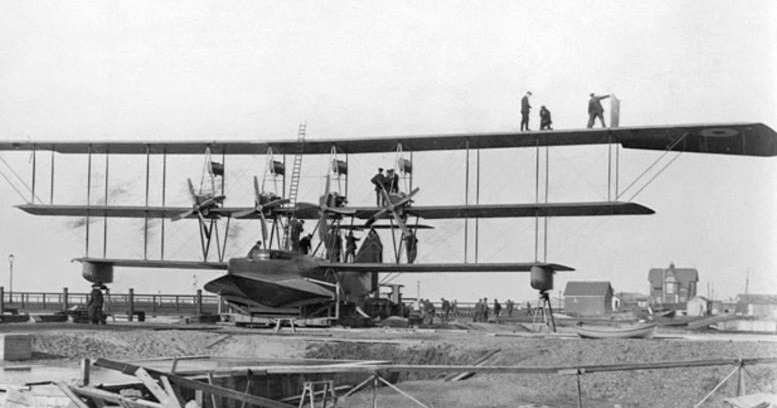
In 1915, the American businessman Rodman Wanamaker who, prior to the outbreak of the First World War commissioned the Curtiss Aeroplane and Motor Company to build a large flying boat, America to win the £10,000 prize put forward by the British newspaper Daily Mail for the first aircraft to cross the Atlantic, commissioned Curtiss to build a new, even larger flying boat for transatlantic flight that became known as the Wanamaker Triplane, or Curtiss Model T, (retroactively re-designated Model 3 when Curtiss changed its designation system).
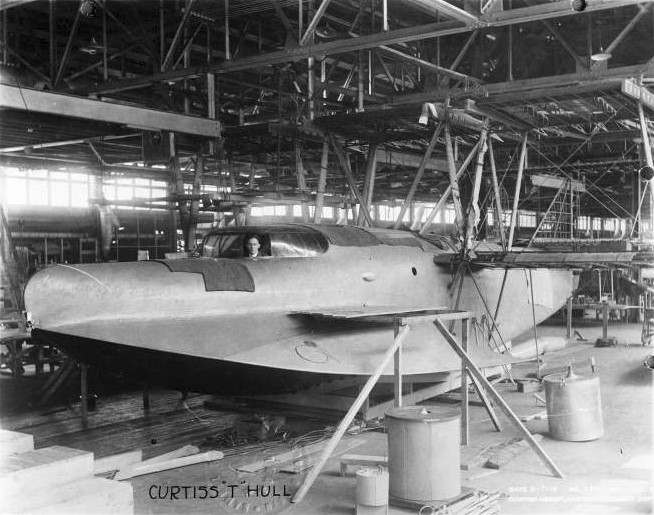
Early press reports showed a large triplane, 68 ft (17.9 metres) and with equal-span six-bay wings of 133 foot (40.5 metre) span. The aircraft, to be capable of carrying heavy armament, was estimated to have an all-up weight of 21,450 pounds (9,750 kilogrammes) and was to be powered by six 140 hp 104 kW) engines driving three propellers, two of which were to be of tractor configuration and the third a pusher.
The British Royal Naval Air Service (RNAS) placed an order for 20 Triplanes. The first one was completed at the Curtiss factory, Buffalo, New York in July 1916. This was the first four-engined aircraft to be built in the United States and one of the largest aircraft in the world.
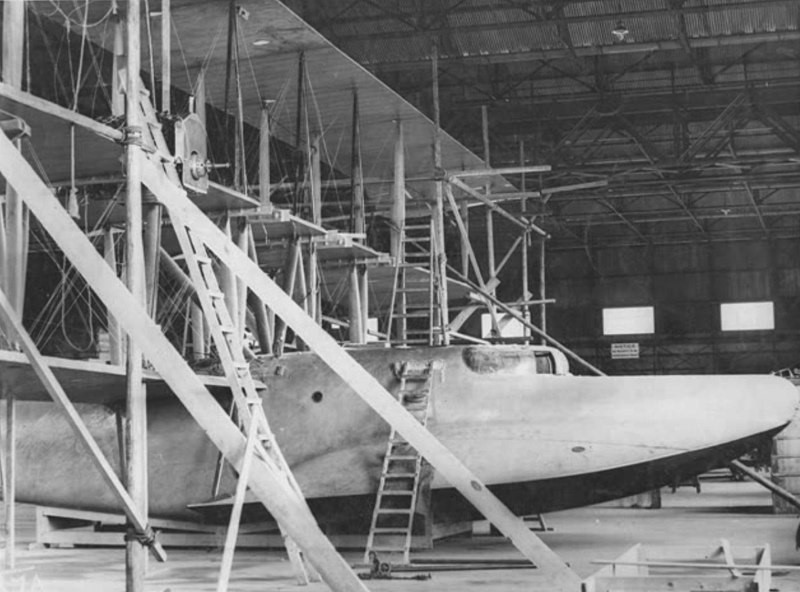
The finished Model T differed from the aircraft discussed in the press in various points. Size and weight were similar, with the upper wing having a span of 134 feet, but the other wings had different spans. It was planned to be powered by four tractor 250 hp (187 kW) Curtiss V-4 engines installed individually on the middle wing, which was unusual for the time. The crew of two pilots and a flight engineer were provided with an enclosed cabin, similar to the Curtiss Model H. To reduce the forces a pilot would need to use on the controls, small windmills could be connected to the aileron cables by electrically operated clutches to act as a form of power assisted controls.
As the planned Curtiss V-4 engines were not available when the prototype, 3073, was completed, it was decided not to fly the aircraft in the United States, but to take it to England by ship where it was reassembled at the naval air station Felixstowe. Initially it was fitted with four 240 hp (180 kW) Renault engines, but these were soon exchanged for four 250 hp Rolls-Royce Eagles.
As the aircraft was damaged beyond repair on the maiden flight it was considered unsuccessful, and the order for the remaining nineteen cancelled. The Wanamaker Triplane did however, provide the inspiration for John Porte of the Seaplane Experimental Station to build a massive five-engined flying boat of similar layout, the Felixstowe Fury.
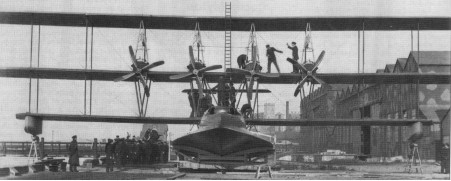
Although 20 Curtiss-Wanamaker triplanes were ordered by Britain, only one, 3073, reached the RNAS.
Engines: 4 × Renault 12F, 240 hp (180 kW) each
Upper wingspan: 134 ft (41 m)
Mid wingspan: 100 ft (30 m)
Lower wingspan: 78 ft 3 in (23.85 m)
Length: 58 ft 10 in (17.93 m)
Height: 31 ft 4 in (9.55 m)
Wing area: 2,815 sq ft (261.5 sq.m)
Empty weight: 15,645 lb (7,096 kg)
Gross weight: 22,000 lb (9,979 kg)
Maximum speed: 100 mph (161 km/h; 87 kn)
Range: 675 mi (587 nmi; 1,086 km) at cruise speed of 75 mph
Endurance: 7 hr
Time to altitude: 10 minutes to 4,000 ft (1,220 m)
Crew: 6
Engines: 4 x RR Eagle Mk1, 250 hp.
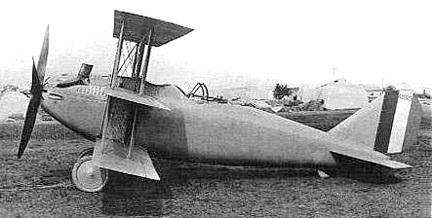
Designed by Charles B Kirkham, the Curtiss 18-T two-seat fighter triplane was ordered by the US Navy on 30 March 1918 when a contract was placed for two prototypes. The first (AS40065) was flown on 7 May 1918. Designed around the Curtiss-Kirkham K-12 water-cooled 12-cylinder engine of 350 hp and four-blade prop, the 18-T was a clean aerodynamic design by contemporary standards and featured a monocoque three-ply fuselage and side radiators positioned between the lower wings. The proposed armament was two forward-firing synchronized 7.62mm Marlin machine guns and two 7.62mm Lewis guns on a Scarff mounting in the rear cockpit.
The 18-T initially suffered some tail heaviness which was corrected by applying five degrees of sweepback to the wings for further trials. A max speed of 262km/h was achieved with full military load in August 1918, the 18-T being acclaimed as the world’s fastest aeroplane as a result.
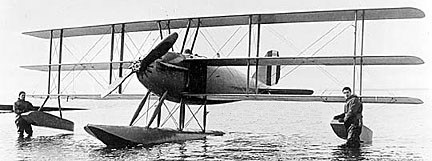
The US Navy promptly ordered two examples, the first (A3325) of which was delivered in February 1919 with a single float undercarriage.
In the summer of 1919, the first Army prototype (AS40054) was fitted with longer-span two-bay wings, these having a span and area of 12.38m and 37.16sq.m respectively and 5° of sweepback were added, and in this form the aircraft became the 18T-2 (A3326), the short-span version becoming the 18T-1 (AS40059). The 18T-2 established a world altitude record of 34,610 ft / 10640m on 18 September 1919 (pilot Roland Rohlfs), and a second 18T-2 was built by Curtiss for export to Bolivia, where it arrived in 1920.
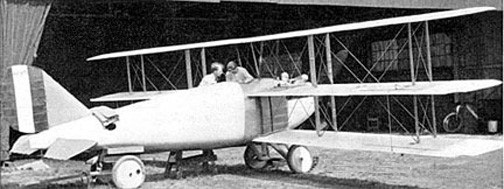
Both Navy ships, used as land racers, crashed at the 1923 NARs.
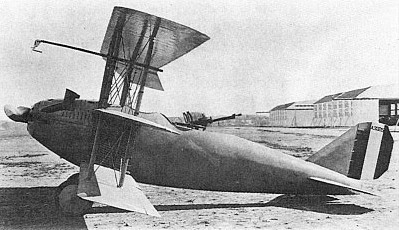
18T-1
Engine: Curtiss-Kirkham K-12, 350 hp
Wingspan: 9.70 m / 31 ft 10 in
Length: 7.11 m / 23 ft 4 in
Height: 3.02 m / 9 ft 11 in
Wing area: 26.76 sq.m / 288.04 sq ft
Take-off weight: 1383 kg / 3049 lb
Empty weight: 898 kg / 1980 lb
Max. speed: 265 km/h / 165 mph
Cruise speed: 145 mph
Stall: 58 mph
Ceiling: 22,000 ft
Seats: 2
18T-2
Engine: Curtiss D-12, 400hp
Wingspan: 40 ft 7 in
Length: 28 ft 3 in
Speed: 139 mph
Ceiling: 21,000 ft
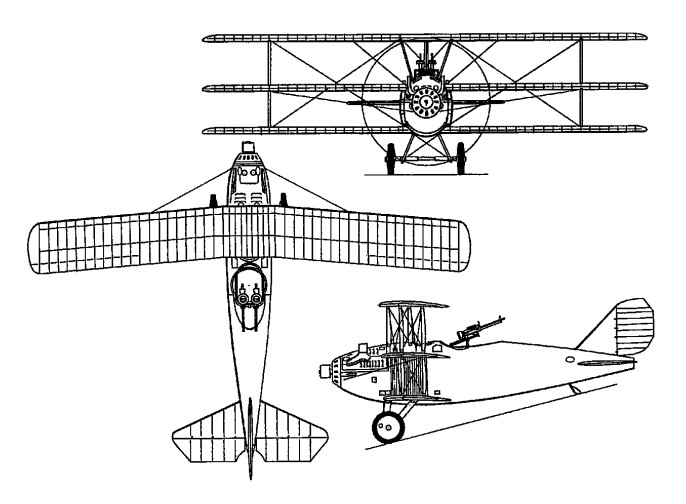

During 1917, the US Navy issued the Curtiss company with a contract for five single-seat fighting scout float seaplanes powered by a US-built version of the 100hp Gnome nine-cylinder rotary, the GS designation indicating “Gnome Scout”. These were completed under the designation GS-2 when a supplementary contract was issued for a sixth aeroplane which was assigned the designation GS-1. The GS-1 was a single-seat triplane with a single central float and outrigger stabilizing floats which drew heavily on Curtiss S-3 experience. The GS introduced shock absorbers in the struts between the fuselage and the central float. These resulted in the float angle changing at high speed on the water and producing an undesirable porpoising. Delivered to the US Navy early in 1918, the GS-1 was flown several times by US Navy acceptance pilots, but was eventually damaged beyond repair as a result of a heavy landing. The five similarly-powered GS-2s differed from the GS-1 primarily in being of biplane configuration, but little is recorded of these aircraft apart from the fact that they suffered from tail heaviness.
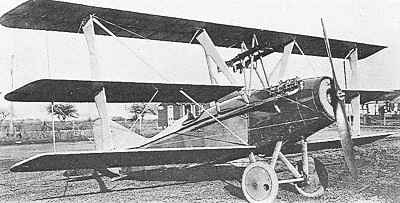
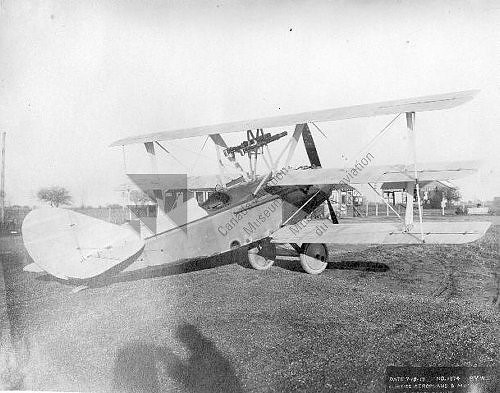
A refined version of the S-3 with revised strutting carrying the centre section of the upper wing and the root attachments of the centre wing, a modified undercarriage and other changes. The S-6 triplane of 1917 was the first US “scout” to be fitted with twin forward-firing machine guns, these being gas-operated Lewis guns (which were mounted side-by-side on inverted and inclined “V” struts immediately beneath the centre section of the upper wing and firing outside the propeller disc.
Only a single example of the S-6 was built and tested.
Take-off weight: 625 kg / 1378 lb
Wingspan: 7.62 m / 25 ft 0 in
Length: 5.94 m / 19 ft 6 in
Height: 2.62 m / 8 ft 7 in
Wing area: 13.25 sq.m / 142.62 sq ft
Max. speed: 177 km/h / 110 mph
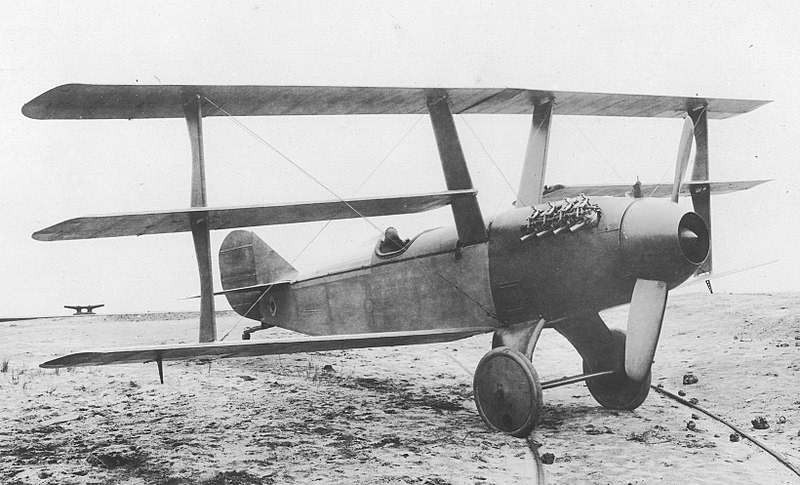
The only ‘production’ models of the S-series were four S-3 (Model 10) triplanes sold to the US Army early in 1917 (serial numbers 322 to 325). These used the basic fuselage, engine, and tail of the S and S-2 fitted with single-bay triplane wings using the RAF 6 aerofoil. These were the Army’s first single-seat Scouts, but they were still more than two years behind equivalent European types.
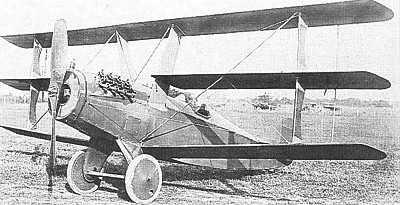
Essentially a triplane derivative of the S-2 “Wireless” (signifying lack of wing bracing wires) unarmed biplane “scout”, the S-3, or “Triplane Speed Scout”, possessed a similar fuselage and 100hp Curtiss OXX-3 engine, and initially retained the ducted propeller spinner featured by the biplane. Interplane bracing employed “K”-type struts and, on its second flight during the summer of 1917, the S-3 attained an altitude of 5030m, which was a record at the time. For initial trials, the centre wing was attached to the fuselage at low shoulder position, but the gap between all three wings was subsequently increased and the centre wing was raised above the fuselage.
Several modifications included smaller span, and all three planes equal. The body is of better streamline form, and the chassis struts are arched.
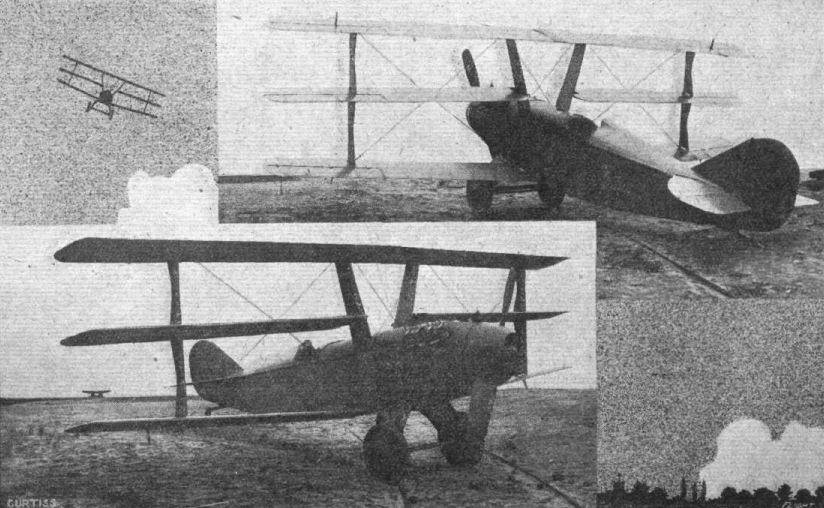
After redesign of the rudder and the discarding of the ducted spinner, the S-3 successfully completed evaluation trials and four were ordered during the course of 1917 for the US Army Signal Corps. It was proposed to arm the S-3 with two unsynchronised Lewis guns which were to fire over the propeller arc, but the S-3s were delivered to the Signal Corps without armament.
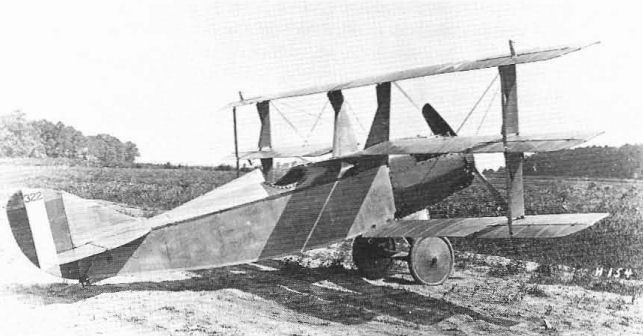
The four US Army Curtiss S-3s of early 1917 carried the new US national aeroplane markings but did not carry guns although they were classified as Scouts, which was synonymous with Pursuit at the time.
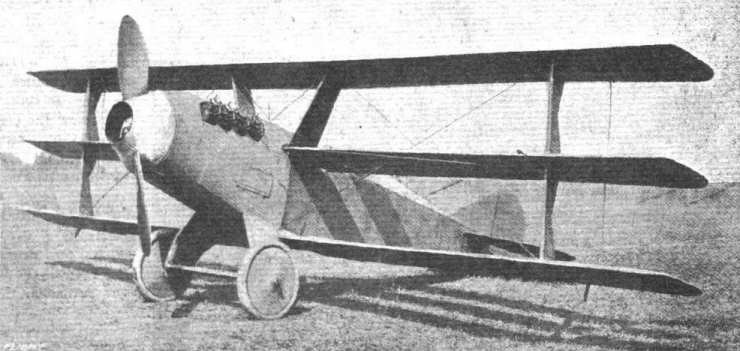
In 1918 and 1919, Curtiss experimented with seaplane versions of the S-3, designated S-4 and S-5.
The S-4 (Model 10A) was a triplane similar to the S-3 intended as a seaplane Scout for the US Navy (serial A149). Although tested as a land plane, the S-4 was intended to be a seaplane and had longer wings than the similar S-3 to carry the weight or the floats. This was Curtiss’s first experience with the twin-float configuration.
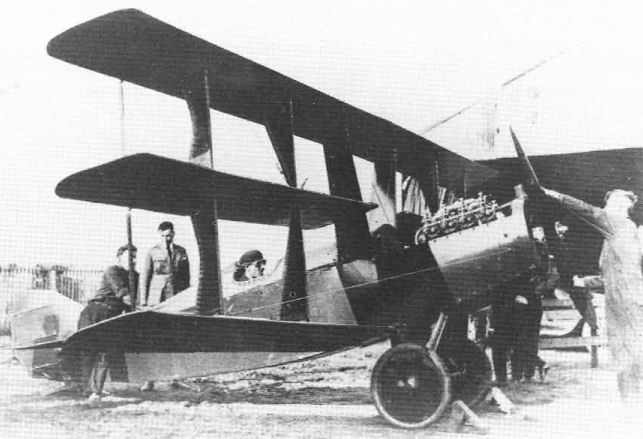
As with other Curtiss seaplanes, it became necessary to increase the span of the S-4 to carry the extra weight. The front float struts collapsed during a heavy alighting in January 1918 and the aircraft was struck off charge.
The S-5 Model 10B seaplane version was similar to the S-4 except for being fined with a single main float and small wingtip floats. Navy serial number A150, struck off on 6 August, 1919.
The S-6 (Model 10C) was an improved version of the S-3 and was the first American Scout fitted with twin forward-firing machine-guns. This may have been only an inoperative test installation intended to check weight, balance, and location, for the guns were gas-operated Lewis models which were not used for synchronized fire through the propeller. The sole Curtiss S-6 was flown in 1917 and was slightly larger than the S-3. The Army ordered twelve early in 1917 but only one, serial number 492, was delivered.
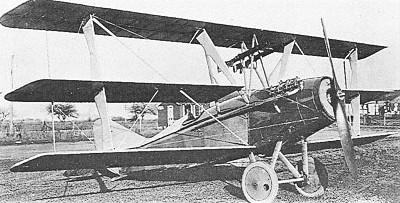
The S-6 triplane had revised strutting carrying the centre section of the upper wing and the root attachments of the centre wing, a modified undercarriage and other changes.
S-3
Engine: Curtiss OXX-3, 100 hp
Wingspan: 7.62 m / 25 ft 0 in
Wing area: 13.25 sq.m / 142.62 sq ft
Chord: 24 ins
Wing gap: 28 ins Length: 5.94 m / 19 ft 6 in
Length: 19 ft 6 in (5.94 m)
Height: 2.62 m / 8 ft 7 in
Take-off weight: 599 kg / 1321 lb
Empty weight: 440 kg / 970 lb
Max. speed: 185 km/h / 115 mph / 100 kn
Service ceiling: 16,500 ft (5,029 m)
Climb, 10,000 ft. in 10 mins
Crew: 1
S-6
Take-off weight: 625 kg / 1378 lb
Wingspan: 7.62 m / 25 ft 0 in
Length: 5.94 m / 19 ft 6 in
Height: 2.62 m / 8 ft 7 in
Wing area: 13.25 sq.m / 142.62 sq ft
Max. speed: 177 km/h / 110 mph
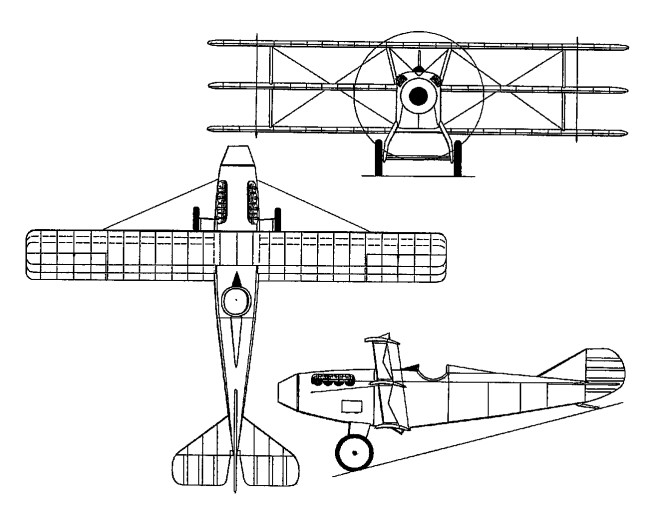
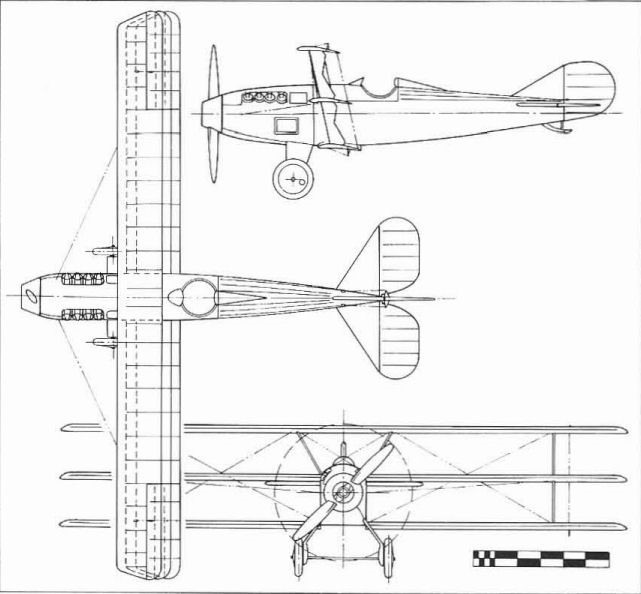

Four examples of the 1916 Model L-2 triplane were built, three for the US Navy and one for the US Army.
L-2
Engine: 1 x 100hp OXX-3
Wingspan: 7.62 m / 25 ft 0 in
Length: 5.49 m / 18 ft 0 in
 All Aero