1997: 920 Yarbrough Rd, Harvest, AL 35749, USA.
Established in 1994 in Huntsville, Alabama, home of Marshall Space Flight Center and Redstone Arsenal, Griffon has successfully built upon its pioneering tradition to become a technology leader in the small business arena. The President and CEO is Mr. Larry A. French, an Aerospace and Mechanical Engineer with more than three decades of design and management experience. Experiencing steady growth in sales, revenue, and personnel, the company is continually expanding and diversifying in both the private and governmental sectors of the market. We aim to provide superior services and value to our customers, advancement opportunities for our employees, and superior returns to our stockholders.
First flew in 1997 the seven-seat, reverse-stagger Lionheart cabin biplane, offered as a kit.
In 2009, Griffon was focused on three core businesses: defense and commercial composite specialty parts, air vehicle design, and manufacturing and prototyping. Each provides the company with the capabilities it needs to build on its strength as an innovator and to prosper in a highly competitive economy.
Aircraft
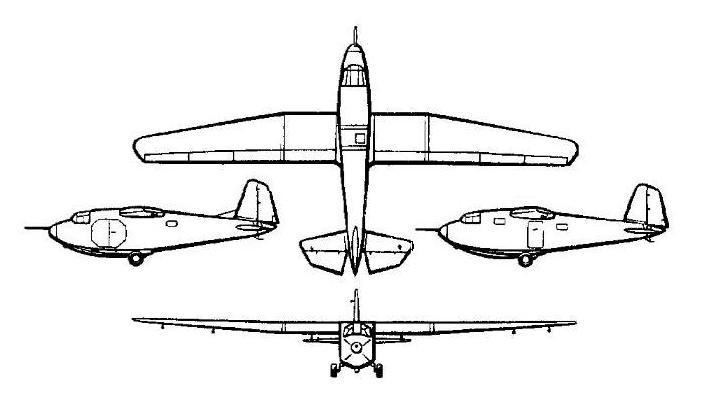
Gribowski G-11
Shortly after the German attack in 1941, the Soviet headquarters realized a need for transport gliders and ordered the development of several designs. Vladimir Gribovski agreed to design a light glider in two months and the tests of a prototype started on 1 September 1941. Given the Gribovsky designation G-29, it was accepted for production under the VVS designation G-11 (for Gribovski, 11-men including pilot).
G-11s were produced from late 1941 until mid-1942 in two factories: 138 were built in Shumerlya (factory no. 471) and 170 in Kozlovka village (factory no. 494), for a total of 308. Production restarted in 1944 at Ryazan remaining in production until 1948. From October 1944 the G-11U training glider with twin controls was also in production. There are no data for a total production number, but it is estimated that 500-600 were eventually completed.
A powered version designated G-11M by the VVS (Gribovsky designation G-30) had a M-11 radial engine mounted above the fuselage. It was tested from the Summer of 1942 but did not enter production.
Design
The G-11 was a high-wing, all-wooden construction, plywood-covered transport glider. The fuselage was rectangular in cross-section with a single-seat cockpit in the nose, accessed by an upward opening canopy. Behind the cockpit was the 3.24 m × 1.25 m × 1.36 m (10.6 ft × 4.1 ft × 4.5 ft) cargo hold / passenger cabin. There were two 1.2 m × 0.7 m (3.9 ft × 2.3 ft) doors on opposite fuselage sides. Later series had only one 1.4 m × 0.7 m (4.6 ft × 2.3 ft) hatch on the left side. Troops sat on folding benches along the sides, lit by two small rectangular windows on each side. Wings were three-part, fitted with flaps for landing and the landing gear was fixed, but could be folded by the pilot in order to shorten the landing, using the main fuselage skid for landing.
Operational history
G-11s, along with the Antonov A-7 constituted a majority of Soviet transport gliders. They were mainly used from mid-1942 for supplying Soviet partisans with provisions, weapons, equipment and trained men, towed mainly by SB or DB-3 bombers. Most intensive use was from March to November 1943 in Belarus, in the Polotsk-Begoml-Lepel area, on the Kalinin Front. Several hundred Soviet gliders (of all types) were used in night supply flights there. After landing, the gliders were destroyed and pilots were sometimes returned by aircraft. The only known instance of a glider returning from the field occurred in April 1943, when a famous glider and test pilot Sergei Anokhin evacuated two wounded partisan commanders in a G-11, towed by a Tupolev SB bomber, piloted by Yuriy Zhelutov, on a 10 m (33 ft) short towrope.
Gliders were also used to supply partisans in some areas in 1944 and to transport sabotage groups behind enemy lines. G-11 gliders were also used in at least one small-scale airborne operation, the Dnepr crossing, carrying anti-tank guns and mortars.
A less typical action was an airbridge from Moscow to the Stalingrad area in November 1942, to rapidly deliver anti-freeze coolant for tanks, during the battle of Stalingrad.
The G-11 enjoyed relative success as a light transport glider design, having more capacity than the Antonov A-7, and its transport compartment was a better fit for cargo, although light guns could only be carried in parts due to small hatches.
Wingspan: 18 m (59 ft 1 in)
Length: 9.8 m (32 ft 2 in)
Height: 2.7 m (8 ft 10 in)
Wing area: 30 m2 (320 sq ft)
Empty weight: 1,200 kg (2,646 lb)
Gross weight: 2,400 kg (5,291 lb)
Never exceed speed: 280 km/h (170 mph, 150 kn) (aerotow)
Aerotow speed: 146 km/h (91 mph; 79 kn)
Rate of sink: 2.2 m/s (430 ft/min)
Lift-to-drag: 16:1
Wing loading: 83 kg/m2 (17 lb/sq ft)
Crew: 1
Capacity: 10 troops or cargo / 1,200 kg (2,646 lb)
Greif II
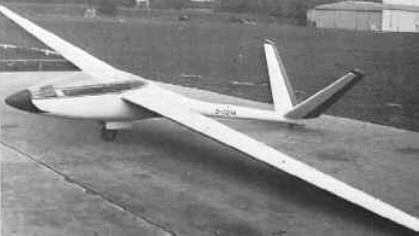
The metal Greif 2 was designed by Heinkel Speyer.
Span: 15m
Area: 13.7sq.m
Empty Weight: 216kg
Gross Weight: 326kg
Wing Load: 23.8kg/sq.m
Seats: 1
L/DMax: 32.6 85kph
MinSink: 0.70 m/s 75kph
Aspect ratio: 16.42
Greif I
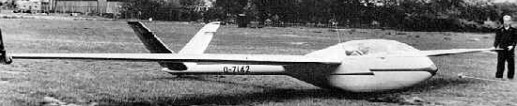
The Greif I was designed by Hans Hollfender.
Span: 13.6m
Wing area: 14.65sq.m
Empty Weight: 170kg
Gross Weight: 275kg
Wing Load: 18.8kg/sq.m
Aspect ratio: 12.63
Airfoil: Go 404
MinSink: 0.75 m/s 60kph
L/DMax: 23 75kph
Seats: 1
Gregoire Monoplane 3
The 1910 Gregoire Monoplane 3 was designed and built by Gregoire in France.
Gregoire Monoplane 2
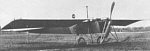
The 1910 Gregoire Monoplane 2 was designed and built by Gregoire in France.
Gregoire Monoplane 1
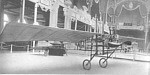
The 1909 Gregoire Monoplane 1 was designed and built by Gregoire in France.
Span: 36’1″
Weight: 660 lb
Grega GN-1 Aircamper
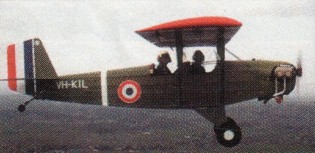
Designed by John W. Grega, as a modernized version of the 1920’s Pietenpol Aircamper two-seat parasol-wing monoplane, first flown 1963 and available in plans form (plus some components) as the GN-1 Aircamper.
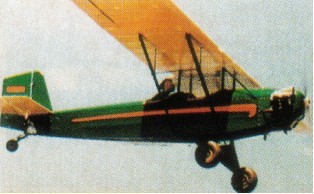
Engine: Continental C-65, 65 hp.
HP range: 65-90.
Speed max: 115 mph.
Cruise: 87 mph.
Range: 400 sm.
Stall: 25 mph.
ROC: 500 fpm.
Take-off dist: 300 ft.
Landing dist: 300 ft.
Service ceiling: 12,000 ft.
Fuel cap: 12 USG.
Weight empty: 650 lbs.
Gross: 1100 lbs.
Height: 6.8 ft.
Length: 18.1 ft.
Wing span: 29 ft.
Wing area: 145 sq.ft.
Seats: 2.
Landing gear: tail wheel.
Grega, John
Developed a modernized version of the 1920’s Pietenpol Aircamper two-seat parasol-wing monoplane, first flown 1963 and available in plans form (plus some components) as the GN-1 Aircamper.
1995: 355 Grand Blvd., Bedford, OH 44146, USA.
Greenwood Witch
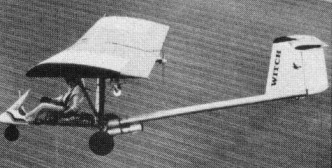
Centre mounted joy stick, rudder pedals, nosewheel steerable through rudder pedals.
Engine: Zenoah G25B1 (242cc) 22hp.
Static thrust: 160 lbs.
Empty wt: 248 lbs.
Wing span: 30ft.
Wing area: 150 sq.ft.
Height: 7ft.
Length: 18 ft 2 in.
Fuel cap: 5 USG.
Construction: Aluminium, Dacron, Steel.
Max wt: 494 lbs.
Stall speed: 26 mph.
Max speed: 63 mph.
Vne: 90 mph.
Climb rate: 500 fpm @ 35 mph.
Design limit: +3.8, -2g.
Glide ratio: 7.6-1.
Wing loading: 3.29 lbs/sq.ft.
Power loading: 22.45 lbs/hp.

