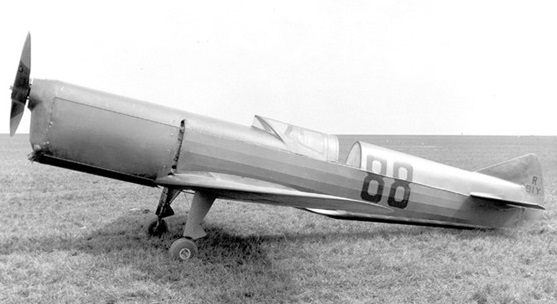
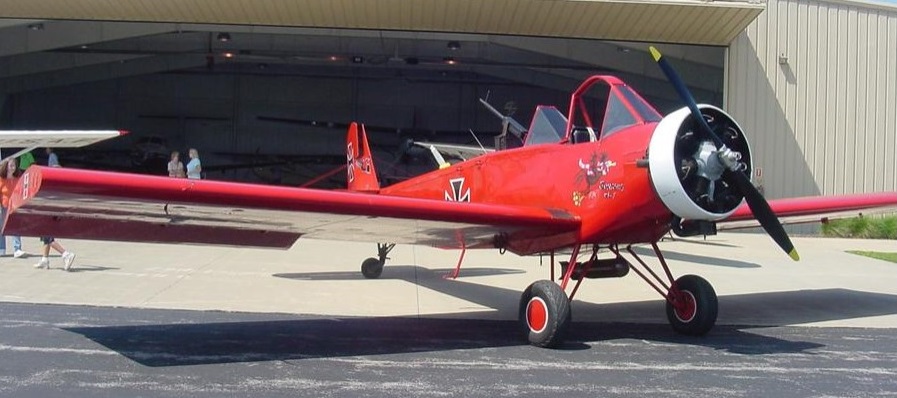
The Haines H-3 Mystery Ship (sometimes called the Special or Firefly) was designed and flown by Frank Haines in the 1937 Greve Trophy Races. The race was ten laps of a ten-mile course, with a $15,000 purse. The Haines H-3 was sixth and dead last.
Haines was killed in the H-3 on 3 December of 1937 in Miami as the race began. At virtually the same moment (but not a related incident) Rudy Kling, the 1937 Thompson Trophy winner lost control of his ship and was also killed. It was thought they were both caught by the same wake turbulence or downdraft. According to newspaper articles, both aircraft were set on fire at the end of the day to get rid of the wreckage.
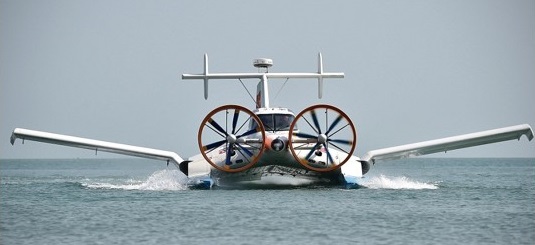
A development of TsKB Rostislav Alekseev went to China under a contract, to Hainan Yingge Wing who developed the modernized version of the Volga-2 ekranoplan. Hainan Yingge Wing conducted flight tests of CYG-11 (Oriole) vehicles on the coast of Hainan Island, near the city of Haikou.
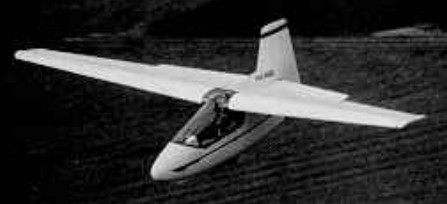
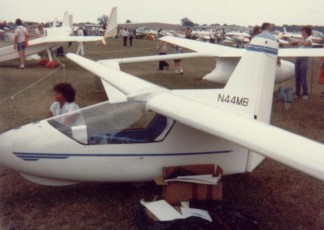
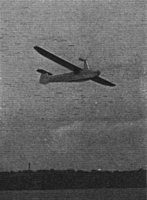
The “Minibat” ultralight single-seater glider was designed by Larry Haig of Muskegan, Michigan, over a three-month period at a cost of $3,500, and made its first flight on March 11, 1979. The Minibat had a cantilever, swept forward wing and used a reflex airfoil. It was constructed of Kevlar, carbon fibres and foam sandwich with glass fibre covering. The fuselage was made up of two halves joined by the metallic structure which formed the pilot’s seat. Wings were demountable in the same way as a conventional glider, and a peculiarity of this machine was that the two ailerons could be raised together to act as spoilers. Extended wing tips were also available, increasing span to 10 meters.
The Minibat was available as fast-build kits for the homebuilder, assembly was said to require only 5 – 10 days using moulded parts. A powered version was planned, using a 3 hp chain saw sustainer engine mounted behind the cockpit and driving a pusher propeller mounted in a slot between the fin and rudder. The Minibat was not a self-launching design but the engine was intended, after launch by auto-tow, winch or bungee, to provide a positive rate of climb.
By January 1982, four Minibats had already had accidents during take-off. It was concluded that this machine should not be made available to just anybody, as it was initially expected. It seems that the airfoil was the major cause for the bad handling characteristics. But yet the Minibat was a very interesting concept of a very light and efficient “minimum” glider.
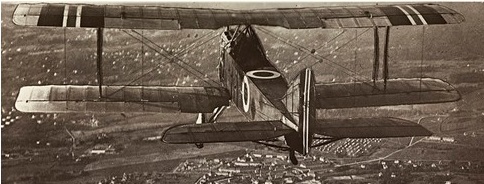
In 1986 Joseph Haig built a Junkers J8 replica in the U.S. This replica was based on a Snow S2A (s/n 1019, built in 1959). The replica was registered as N4976C in 1993 and was used on U.S. Airshows until 2005.
The replica was sold to T.Fissell Flying Service in Clarksville Texas.
The prototype of this tandem two-seat training sailplane flew on September 10, 1956 and at least eight more were flying by 1961. Construction is similar to that of the H-22B-3.
Span: 43 ft 2 in Length: 23 ft 4 in Wing area: 185 sq.ft Gross weight: 838 lb Empty weight: 463 lb Max L/D: 18 at 42.5 mph Min sink: 3.6 ft/min at 38.5 mph
Thirty of these tandem two-seat primary training gliders have been built by 1961, since August 1953, when the prototype made its first flight. Construction is conventional, with a fabric-covered steel-tube fuselage nacelle and fabric-covered two-spar braced wooden wing.
Horikaw A H-22B-3 Span: 40 ft l in Length: 23 ft Wing area: 181 sq.ft Gross weight: 661 lb Empty weight: 375 lb Max L/D: 14.2 at 41,5 mph Min sink: 3.8 ft/sec at 34 mph
Helmut Haessler and Franz Villinger, engineers from the Junkers company, built a sailplane like aircraft called the Muffi which had a footcranked pusher propeller. It flew 722 m (790 yards) after an elastic aided launch and was awarded a consolation prize by Flugsport magazine for the first man powered flight of 1 km (0.6 mile) around two pylons set 400 m (437 yards) apart.
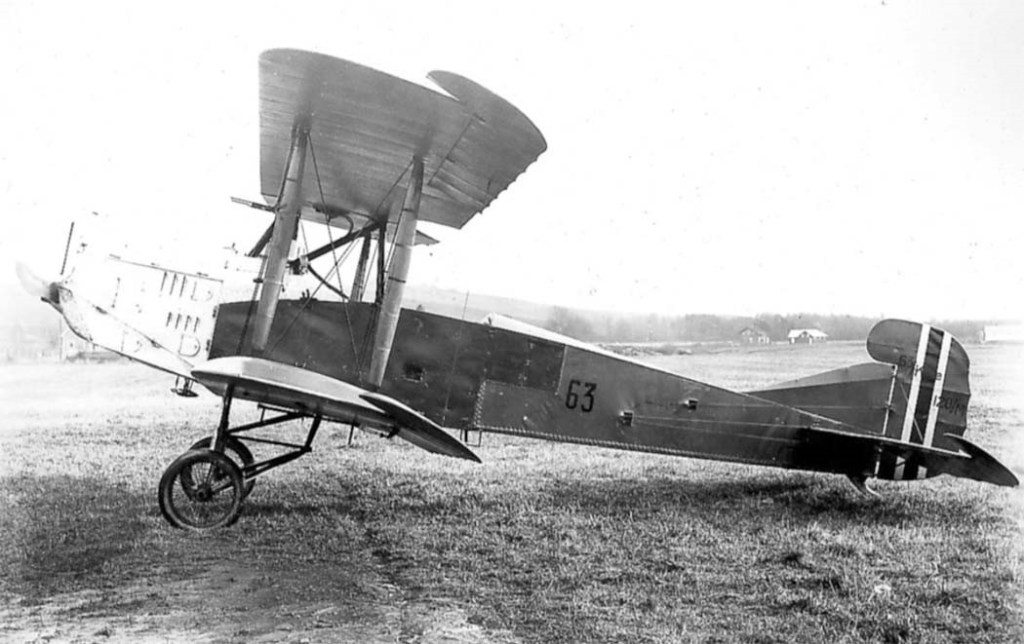
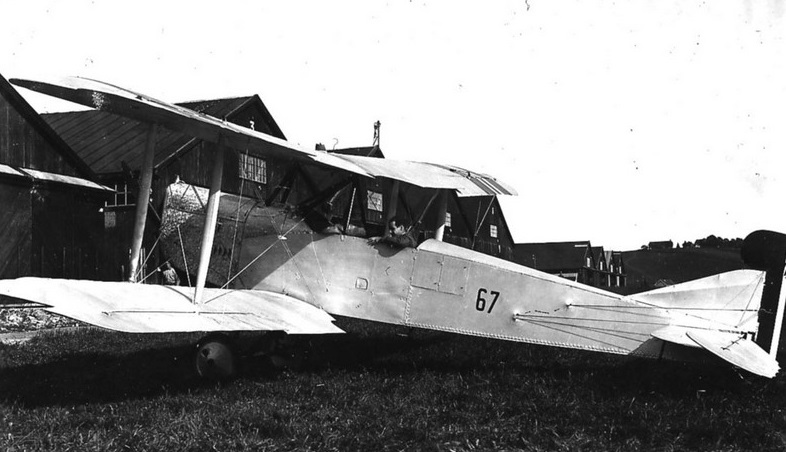
F.F.9 Kaje was the last in a series of own constructions in wood and canvas at Hærens Flyvemaskinfabrik at Kjeller. Designed and built by the Norwegian Army Air Service’s aircraft manufacturer Haerens Flyfabik, work on the FF9 Kaje trainer aircraft started in 1921. The aircraft body was designed in Norway, designed by Einar Sem-Jacobsen while the wing was licensed by German construction (Göttingen profile). The wings were made of wood paneling fabric covered.
The prototype was ready for test flight in November 1921.
Kjeller FF9 Kaje I in Bodø
The aircraft replaced older school aircraft and became a robust and reliable machine with good flight characteristics. Until June 1924, the designation was for the aircraft type F.F.9, when it was decided that the aircraft should be referred to as “Kaje”.
It was built in three series: the Kaje I of which ten were built in 1921 and 1922, the Kaje II of which four were built in 1925 and five Kaje III in 1926. The models differed slightly in wing profile, wingspan and rudder surfaces, based on experience with the previous model.
Although primarily used as a training plane and for reconnaissance, the aircraft could also carry arms and was tested with radio equipment.
FF.9 III
The aircraft was in use with the Norwegian Army Air Service from 1922 to 1935. A preserved example is at the Norwegian Aviation Museum in Bodø.
Kaje III Engine: 1 × Marabini 6-cyl, 89 kW (120 hp) (license built Mercedes D.II) Length: 8.4 m (27 ft 7 in) Wingspan: 9.5 m (31 ft 2 in) Height: 3.23 m Max weight: 1060 kg Maximum speed: 132 km/h (82 mph; 71 kn) Range: 375 km (233 mi; 202 nmi) Service ceiling: 3,200 m (10,500 ft) Crew: two Five built.
Kaje III Engine: 1 × Marabini 6-cyl, 89 kW (120 hp) (license built Mercedes D.II) Wing span: 10.37 m Length: 8.10 m Height: 3.30 m Max T O weight: 1080 kg Maximum speed: 135 km / h
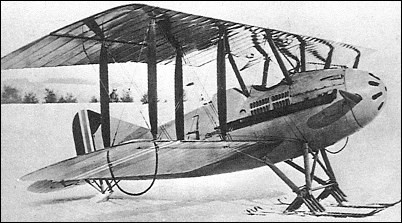
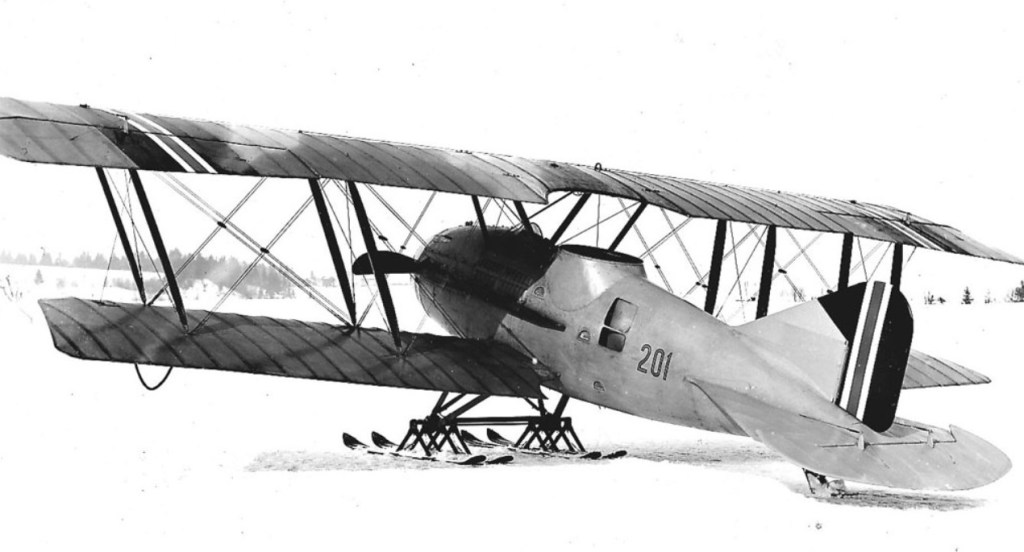
Acquisition from Spain of five 150hp Hispano-Suiza eight-cylinder Vee-type engines prompted the Norwegian Army Flying-Service (Haerens Flyvevaesen) to order the design of a single-seat fighter around this power plant.
Design was begun by Ing Hellesen at the Kjeller Flyfabrikk in the autumn of 1919, by which time the requirement had changed to that of a two-seat fighter-reconnaissance aircraft. Of wooden construction with a plywood monocoque fuselage and designated FF 6 by the factory and T.2 by the Army, the prototype was flown in 1921.
It immediately displayed unacceptable characteristics which were exacerbated by the fact that the Hispano-Suiza engine was found to develop only 103hp. A max speed of only 100km/h was attained compared with an anticipated maximum of 132km/h. Further development was therefore abandoned after the first test flight.
Engine: 150 hp Hispano-Suiza 8 Wingspan: 11.75 m / 39 ft 7 in Length: 7.25 m / 24 ft 9 in Height: 3.57 m / 12 ft 9 in