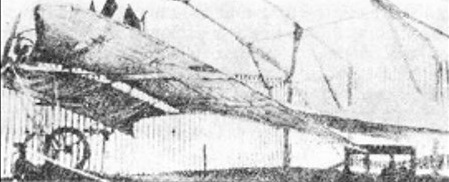
A certain citizen of Opole built an aircraft modelled after (German) plane by H. Grade, which made a series of flights during the spring of 1910.
A certain citizen of Opole built an aircraft modelled after (German) plane by H. Grade, which made a series of flights during the spring of 1910.

The Woody’s Pusher was designed by H.L. Woods, a former engineer at Bensen Aircraft Corp. The Woody’s Pusher is a tandem two-seater with a parasol-mounted wing. The engine, which may range in power from 65 to 85 hp, is carried on top of the wing in a pusher fashion and turns a wooden, fixed-blade prop. Originally the Pusher was designed with a fuselage of wood covered with plywood and fabric. Later models of the light open-cockpit feature a steel-tube, fabric-covered fuselage and metal leading edges on its wood and fabric wing assemblies. Later versions utilised a wooden framed fuselage with fibreglass covered wood panelling. The landing gear is the nonretractable tailwheel type.
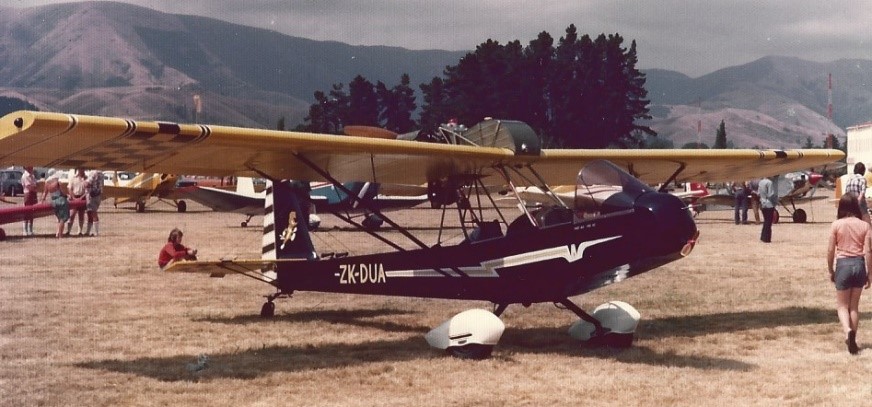
Engine: Continental A75, 75 hp
Wing span: 29 ft 6 in
Length: 20 ft 6 in
Empty wt: 830 lbs
MAUW: 1260 lbs
Wing area: 130 sq.ft
Fuel cap: 14 ImpG
ROC: 500 fpm
Seats: 2
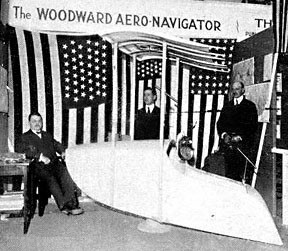
The Woodward Aero Navigator seaplane was displayed at the 1917 Aero Exposition.
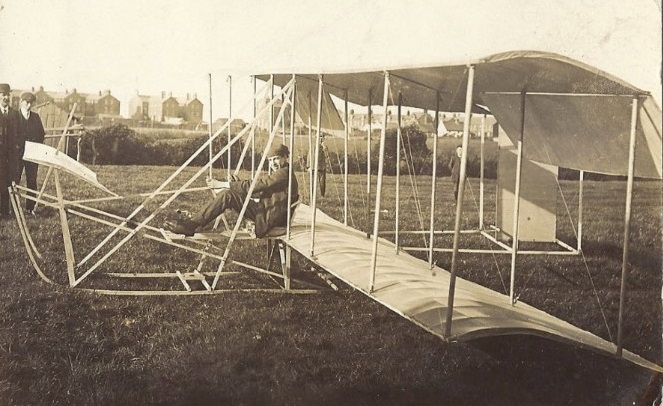
In 1912 Fred Woods built a Wright type biplane glider at Fleetwood, UK.
The 1973 SL-1 Formula V racer built by Stanley Wood was a single place cabin, mid-wing monoplane. First flying on 23 June 1973, the registration was N31549.
Engine: VW 1600cc, 65hp
Glendale AZ.
USA
Built the SL-1 Formula V racer in 1973.
The Woodson Aircraft Corp Transport 4-B of circa 1927 was a 5-7 place open cockpit biplane featuring DH-4 wings. It was advertised as not a regular production airplane, available only on special order, for $2,000. One is known to have been built.
Engine: Salmson 2A, 230 hp
Wingspan (upper): 39’0″
Wingspan (lower): 42’6″
Length: 28’6″
Useful load: 1620 lb
Max speed: 110 mph
Cruise speed: 92 mph
Stall: 32 mph
Range: 450 mi
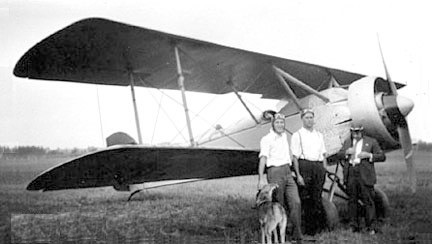
The 1926 Woodson Sport 3-A was an evolution of the Express 2-A. Selling for around $4,000, an unknown number were built with various engines. An unknown number were built, but included N7153 c/n 14 and N11193 c/n 141.
Engine: Wright, 200 hp
Wingspan: 32’1″
Length: 25’0″
Useful load: 1400 lb
Max speed: 135 mph
Stall: 45 mph
Seats: 5
Engine: Salmson 2A, 230 hp
Wingspan: 32’1″
Length: 25’0″
Seats: 5
Engine: Hisso A, 150 hp
Wingspan: 32’1″
Length: 25’0″
Max speed: 118 mph
Seats: 5
Engine: Hisso E, 180 hp
Wingspan: 32’1″
Length: 25’0″
Max speed: 122 mph
Seats: 5
The Woodson Aircraft Corp M-6 of 1927 low wing monoplane featured a two place side-by-side cockpit, and bonded plywood construction.
The number built is uncertain, but published production figures claim 14 in 1927, and 6 in 1929, including NX1556.
The basic design evolved into the Simplex Red Arrow.
Engine: Detroit Air Cat, 60hp
Wingspan: 28’0″
Length: 18’0″
Range: 800 mi
Seats: 2

The 1925 Express 2-A and 3-A had plywood veneer-covered fuselage and sold for $3,500.Five or six were built as mail and cargo carriers (N2593, N2647, N5859, and other), plus an unknown number of sport versions, including N3181-N391V, N4313, and N491M.
Express 2-A, 3-A
Engine: Salmson 2A-2, 260 hp
Wingspan: 32’1″
Length: 25’0″
Useful load: 600-1195 lb
Max speed: 138 mph
Stall: 40 mph
Seats: 1-3
 All Aero