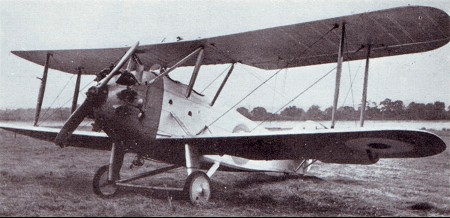
1924
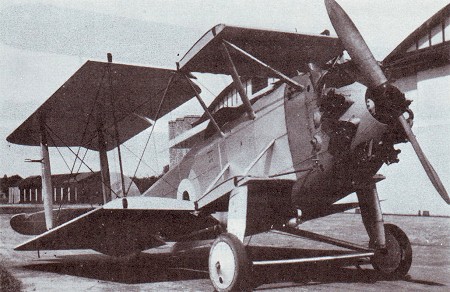
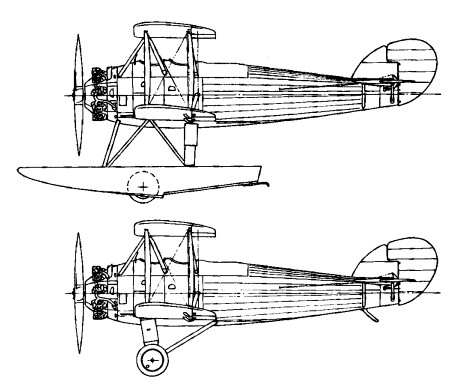
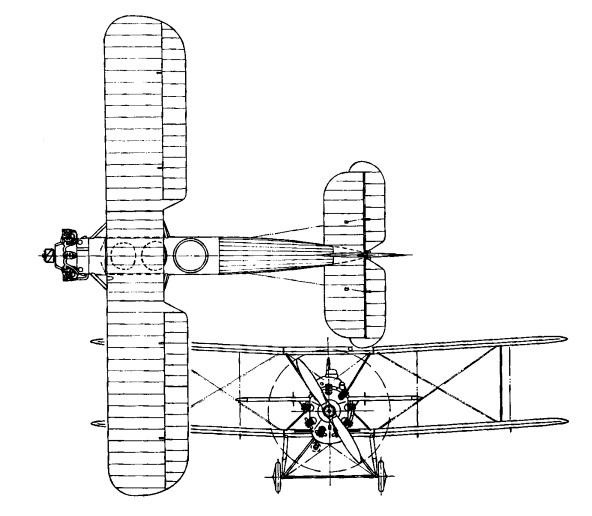
1924
A monoplane of 1923.
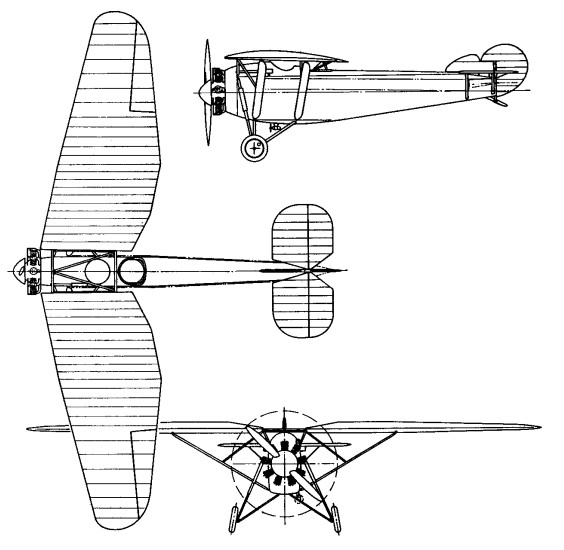
Sopwith started World War 1 building aircraft in a shed at Brooklands in Kingston and ended with an output of 90 ships a week at Kingston alone. Overnight it ended, so the busi¬ness had to liquidate and the Sopwith Company ended. Sopwith wanted to stay in aviation and couldn’t start a company with the same name. So he called the new company the Hawker Company, with a capital of 20,000 pounds.
In 1921 former Sopwith test pilot Harry Hawker took over the premises of the former Sopwith Aviation Company. Although he died that same year in a crash, the reestablished company began building a series of military aircraft, beginning with a single Duiker monoplane, followed by the Woodcock fighter.
Harry George Hawker, an Australian pioneer in aviation, won fame as a pilot and aircraft engineer during World War I. he founded the Hawker Engineering company, which became part of the Hawker Siddeley group; a leading British aircraft manufacturing company.
Hawker was born at South Brighton (near Moorabbin), in Victoria, Australia. He learned to fly in Britain in 1912, and soon became a leading test pilot. He was killed in an aeroplane crash near London in 1921.
Under the design leadership of Sydney Camm (later Sir), produced such aircraft as the Tomtit trainer biplane and the Horsley bomber/torpedo- bomber, Mk 1 versions of which were the last allwooden aircraft built by the company. Best known of all H. G. Hawker products were the Hart/Demon/Audax/Osprey two-seaters and the Fury single-seat fighter; all had entered production before the company reorganized and the name was changed to Hawker Aircraft Ltd. in 1933.
Following 1933, the concentrated on fighters, and the first production Hurricane, a monoplane development of the Fury, first entered service in late 1937. The Typhoon, initially none too successful, proved effective as a fighter-bomber and saw the peak of its development in the Tempest, Fury and Sea Fury which served with RAF and Fleet Air Arm during late 1940s and early 1950s, and with foreign air arms well into the 1960s. In early postwar period Hawker developed the Sea Hawk shipboard fighter, progressing to the Hunter, the single Mk 3 version of which, produced by modification of the original prototype, gained the world speed record at 1,170.96km/h in 1953. Such was the success of the Hunter that refurbished aircraft were later exported. Hawker’s greatest innovation was in the field of VTOL fighters, first with the experimental P.1127 Kestrel, which led to the Hawker Siddeley Harrier.
Scottish Aviation, British Aircraft Corp, and Hawker Siddeley Aviation joined British Aerospace in 1978.
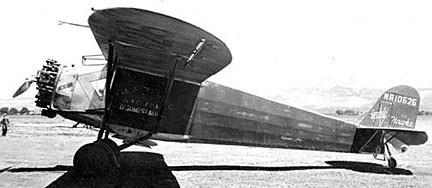
Designed by H Sherman Tharpe the Duster was modified from his 1929 Sierra BLW design and claimed to be the first airplane specifically designed as a duster (overlooking the Huff-Daland ag planes).
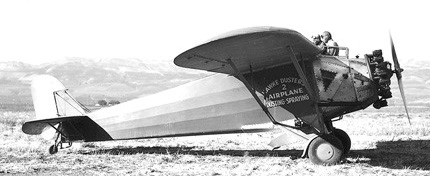
A single place monoplane, three were built: NR10609, NR10626 and NR10627.

NR10626 was scrapped in 1945 and the others were destroyed in crashes 1937 and 1945.
Engine: 220hp Wright J-5
Wingspan: 42’0″
Length: 30’6″
Useful load: 1225 lb
Hopper capacity: 1000 lb
Hawke Dusters was established in 1931 by Edwin R Hawke and John Cuneo in Modesto CA USA.
Built aircraft inter-wars.
After Hawke’s death in 1941, the company continued agricultural operations under this name with several new owners.
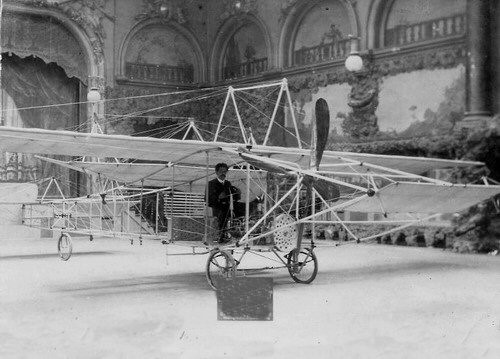
Designed by Ingenieur [Engineer] Paul Haves, and built by Automobilwerk Lauer in Halle a.d. Saale, Germany, in 1910. This was a 3-seater machine, 12m long, the main wing area was 24 sq.m. with various stabilizing surfaces, canard, etc., providing a further 15 sq.m. Weight with the pilot and two passengers was 500kg.
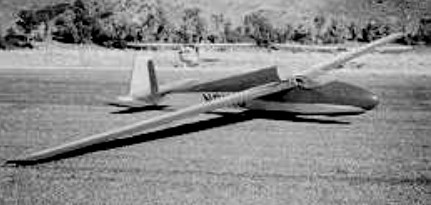
The Ha-S-3, designed by Bruno Haufe, which first flew in 1971, is a development of the HA-S-2 Hobby, which had wings of shorter span (12.86 m. / 42.2 ft) and cockpit 2 in/ 5 cm narrower. It has a fixed main gear, with approach control by spoilers.
Wing span: 13.1m / 43ft
Wing area: 10.41sq.m / 112sq.ft
Empty Weight: 187kg / 412lb
Payload: 85kg / 188lb
Gross Weight: 272kg / 600lb
Wing Load: 26.13kg/sq.m / 5.36lb/sq.ft
L/DMax: 28 85 kph / 46 kt / 53 mph
MinSink: 0.89 m/s / 2.92 fps / 1.73 kt
Airfoil: Clark Y
Aspect ratio: 15.9
Seats: 1
No. Built: 1

Designed by Leland Hanselman and Walter Haufe, the wood and fabric Hawk first flew in 1939, making a 9:50 hr. flight in 1940. After storage during World War II it was rebuilt and continued to fly until donated in 1969 to the Experimental Aircraft Association Museum. No spoilers.
Wing span: 12.19m / 40ft
Wing area: 13sq.m / 140sq.ft
Empty Weight: 136kg / 300lb
Payload: 86kg / 190lb
Gross Weight: 222kg / 490lb
Wing Load: 17.08kg/sq.m / 3.5lb/sq.ft
MinSink: 0.91 m/s / 3.0 fps / 1.78kt
Airfoil: USA 35A
Aspect ratio: 12.5
Seats: 1
Built: 1
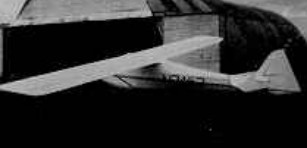
A development of an earlier Nelson powered motor glider, the Buzzer 2’s propeller is driven through a 2:1 reduction chain, running enclosed in oil, which brings propeller rpm down to 3,000. Designed by Walter Haufe for self launching, it features a single centerline fixed wheel and small wing outrigger wheels for taxiing, with a steel tube fuselage and tail, single-spar, single-strut wood wing, and fabric cover.
Engine: Curtiss snowmobile 2-cycle
Wing span: 10.36m / 34ft
Wing area: 11.52sq.m / 124sq.ft
Empty Weight: 177kg / 390lb
Payload: 95kg / 210lb
Gross Weight: 272kg / 600lb
Wing Load: 23.61kg/sq.m / 4.8lb/sq.ft
Water Ballast: 0
Aspect ratio: 8
Seats: 1
Airfoil: NACA 2412 modified
No. Built: 1
Designed and built by Walter Haufe, of Neenah, Wisconsin, this single-seater high wing motor glider is powered by a 40hp Nelson H-59 four-cylinder horizontally-opposed engine mounted in the nose. The engine, when stopped for soaring flight, swings back through 80° inside its cowling so that the two-blade fixed-pitch propeller, also designed and built by Mr Haufe, is stopped in the vertical position and lies flat along the top of the cowling to minimise drag. The cooling air intakes for the cylinders are open when the engine is running but are closed when the engine is stopped. The cantilever wooden wing is of semi-elliptical planform with upturned tips, the fuselage is a fabric covered steel tube structure and the tail unit is wooden with fabric covering. Landing gear consists of a fixed monowheel and a tailskid, plus an unusual skid with small balancer wheel just behind the engine cowling to prevent the prop from touching the ground. The pilot sits under a removable cockpit canopy set into the wing leading edge. The Hawk prototype, N1051Z, made its first flight in 1962.
Span: 40 ft 6 in
Length: 22 ft 6 in
Empty weight: 462 lb
Max speed: 40 mph
Min sinking speed: 3.0 ft/sec
Rate of climb: 500 ft/min

