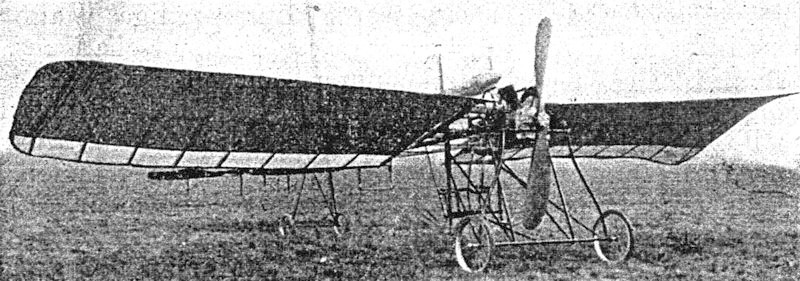
Heinrich Heitmanns company built his fourth monoplane as a Grade-like with a Delfosse engine. According to “Motorwagen” 1911, it flew successfully on the Wandsbecker Exerzierplatz.
Heinrich Heitmanns company built his fourth monoplane as a Grade-like with a Delfosse engine. According to “Motorwagen” 1911, it flew successfully on the Wandsbecker Exerzierplatz.
Heinrich Heitmann started gliding experiments in Bresleu, Germany, before moving back to Hamburg-Altona. His company built eight different types between 1909 and 1912

An American-designed and -built, two-seater mono-biplane, so called because it could be fitted with interchangeable wings and could be flown as either a biplane or a monoplane. It was the 1912 work of the Heinrich Brothers of Baldwin, Long Island, and was a conventional monoplane design, but had many original construction features.
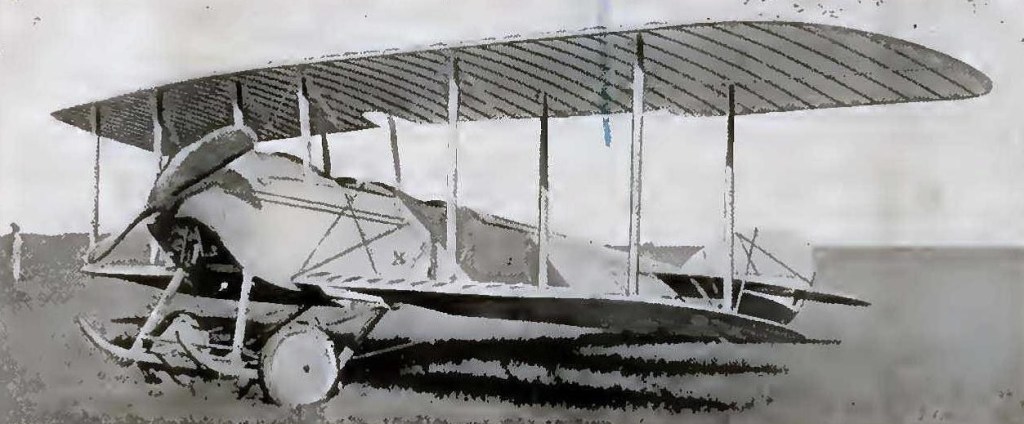
The Heinrich armoured Military Biplane was powered by a 9-cylinder 110 hp Gyro Duplex motor.
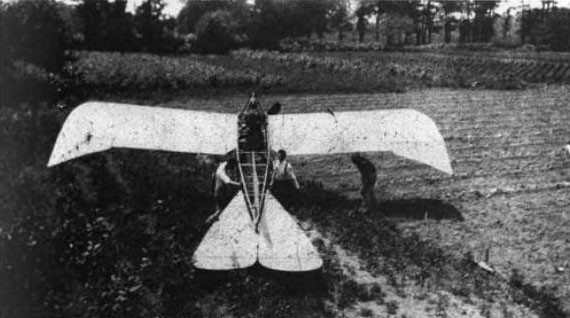
The Model A was the first monoplane of the brothers Albert & Arthur Heinrich from Baldwin, New York, on which both taught themselves to fly. Its maiden flight was made in May of 1910, and was powered by a 60 hp Emerson boat engine.
Brothers Albert & Arthur Heinrich from Baldwin, New York, were previously active in the boat business and both taught themselves to fly in their own Model A.
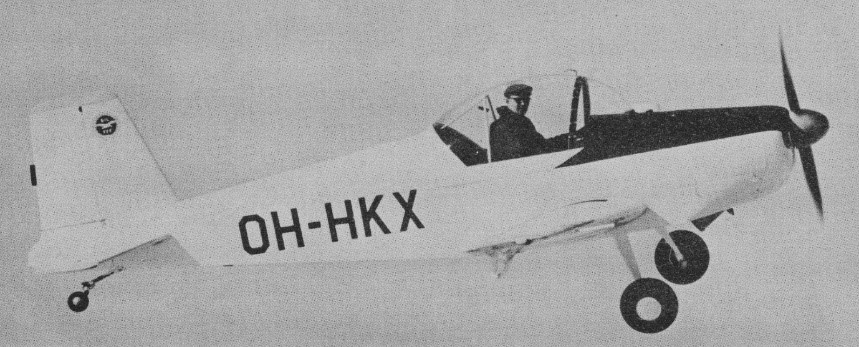
Juhani Heinonen produced the Heinonen HK-4 in 1964 for the Finnish Aeronautical Association.
Heinonen developed the two-seater with an all-wood wing, ailerons fabric covered. The all-wood fuselage has four main longerons and plywood covering. The tail is wood cantilever with fabric covered rudder and elevator. An elevator trim is adjustable from the cockpit.
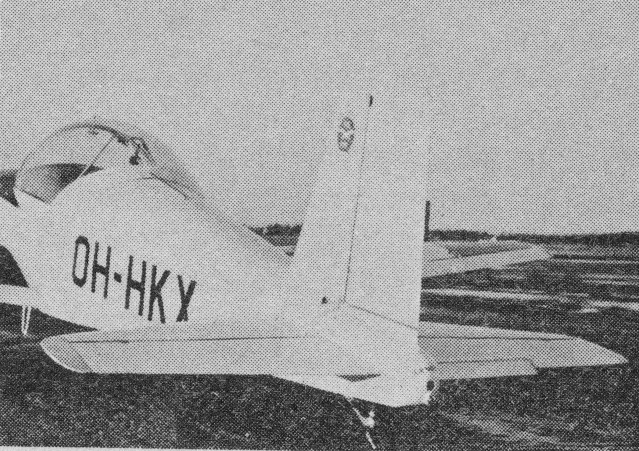
The landing gear uses cantilever spring steel main legs attached to the wing, and the tail wheel is steerable.
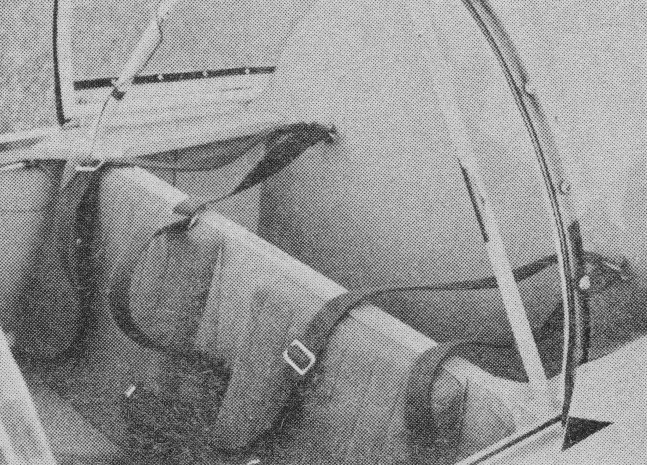
A baggage compartment is behind the seats.
Engine: Lycoming O-235-C1, 115 hp
Wing span: 26 ft 0.5 in
Lengt: 20 ft 2 in
Height: 7 ft 1.5 in
Empty weight: 870 lb
MTOW: 1323 lb
Top speed: 148 mph
Cruise: 127 mph
Service ceiling: 15,400 ft
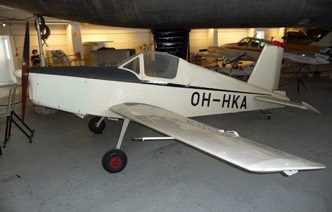
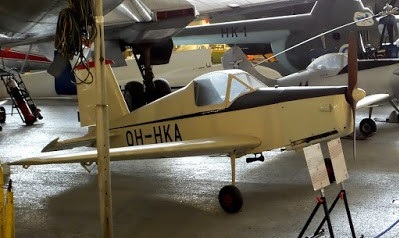
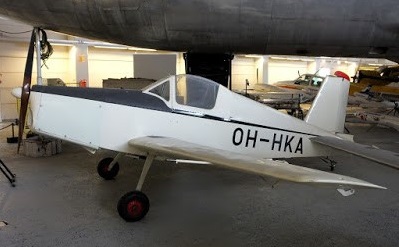
The HK-1 Keltiänen was designed and built by engineer Juhani Heinonen in 1954, registered OH-HKA.
The only Finnish aircraft which has achieved a world’s record. plane He made the record long distance flight on 10 July 1957, from Madrid to Turku nonstop, 2844 km in 17 hours 1 minute. This constituted a world’s record in category C-1.A; single-engine land planes with take-off weight max 500 kilos. The record stayed with this aircraft until 1974.
The aircraft was in use from 1954 – 1978.
Besides Bachem with the Ba-349 Natter, three other companies submitted proposals for the Jägernotprogramm (Emergency Fighter Program). The front runner was Ernst Heinkel A.G. with their P.1077 Julia which took off from a rail and landed on a skid like the Me-163, the runner up was the Junkers Flugzeug und Motorenwerke’s EF-127 Walli; the Messerschmitt A.G.’s P.1104 was also in the running. As expected, Heinkel won the contract; Heinkel was a preferred and established aircraft manufacturer and already had its own dedicated woodworking shop in Vienna, which could be geared up to build the Julia very quickly. In addition, the P.1077 was easy and cheap to build and had low running costs. The Heinkel project had been in development since August and was granted the point-defense commission on September 8th.
In 1943 the He 319 (project P1065 Ic) was proposed as a high-speed bomber or night fighter with a nose mounted armament of 4 x MK108 and powered by BMW801 radial engines. A mock-up was built the same year but destroyed during a RAF raid. All efforts converged immediately to a new program designated He 419. It consisted in a high-altitude fighter. The V1 (also A0 pre-series version) was actually built from a He 219 A-5 tail and fuselage with DB603G engines and a newly designed wing of 55 sq.m area.
The He 419 A1 was intended to be fitted with single fin unit for production simplification. To avoid production of newly designed pieces the A1 was overtaken by the He 419-B1/R1 version which featured the same fin unit of the He 219. The 2000 hp DB603G engines were fitted with a turbo system driven by exhaust, and an endurance of about 2 hours. The B1 had a larger wing of 59 sq.m. Armament consisted in 2xMG151 in the wing roots and 2 x MK108 in a ventral tray. Maximum speed reached was 670 km/h at 14.500 m; landing speed was 172 km/h; cruise speed was 650 km/h with a calculated range was 2.540 km.
Six finished He 419-B1/R1 were built in Marienehe utilizing He 219A 5 fuselages. The six were flown with the He 319 tail, very long-span wing of 59 square metres (635 sq ft), two 20 mm MG 151/20 in the wings and four 30 mm MK 108 in ventral housing. Speed was 422 mph (679 km/h) to 44,619 ft (13,600 m).

