A tandem-two-seat derivative of the Hendy 281 Hobo, was built by George Parnall and Co (with whom Hendy amalgamated in 1935) and was entered in the 1930 King’s Cup Air Race.
Aircraft
Hendy 281 Hobo
A small single-seater using Basil Henderson’s patented wing construction.
Hendy Aircraft Company
UK
This company’s first design was the Hendy 281 Hobo, a small single-seater using Basil Henderson’s patented wing construction. A tandem-two-seat derivative, the Hendy 302, was built by George Parnall and Co (with whom Hendy amalgamated in 1935) and was entered in the 1930 King’s Cup Air Race. The 1934 Hendy 3308 Heck was an advanced three-seater constructed by Westland Aircraft for Whitney Straight.
Henderson Aero Supplies Little Bear
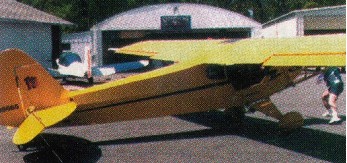
A Super Cub replica. In 1997 the kit price was US$24,500.
Engine: Continental C-65, 65 hp.
HP range: 65-100.
Speed max: 85 mph.
Cruise: 80 mph.
Range: 340 sm.
Stall: 38 mph.
ROC: 800 fpm.
Take-off dist: 400 ft.
Landing dist: 300 ft.
Service ceiling: 11,500 ft.
Fuel cap: 20 USG.
Weight empty: 649 lbs.
Gross: 1220 lbs.
Height: 6.67 ft.
Length: 22.34 ft.
Wing span: 35.21 ft.
Wing area: 178.5 sq.ft.
Seats: 2
Landing gear: tail wheel.
Henderson-Glenny Gadfly
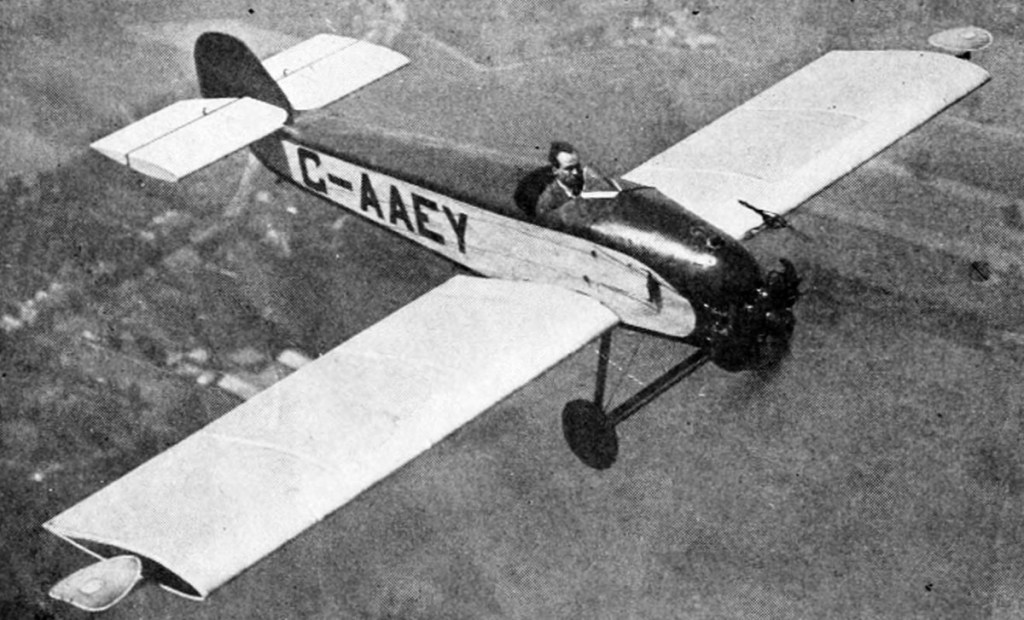
William A. Baker had undertaken the construction of the six seat Henderson HSF 1 (G ABVF) and all three of the Henderson Glenny Gadfly monoplanes which were also designed by K. N. Pearson, M.C., AFRAeS.
Glenny & Henderson company at Byfleet, Surrey, UK, built a Mk.I standard aircraft G-AAEY c/n 1. It was first flown in April 1929, at Brooklands. It was converted to Gadfly Mk.II statue later that year. It was scrapped in June 1934.
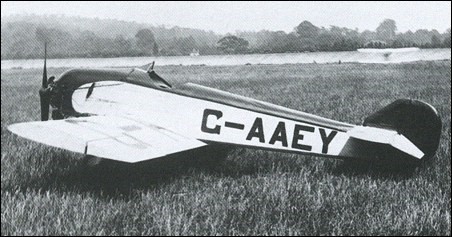
The second built was c/n 2 G-AARJ, built ads a Mk.II. This was as the Mk.I but fitted with Pearson rotary ailerons. It first flew in August 1929, from Brooklands. In 1930 it was sold in Canada as CF-AMG but was written off on 25 August 1931.
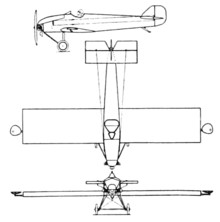
One aircraft was built as a Mk.III, like the Mk.II but fitted with a Salmson AD.9 radial engine. G-AARK was first flown in late 1929, at Brooklands. It was withdrawn from use in 1930 and put into storage at Brooklands until scrapped there in 1933.
Mk.I
G-AAEY c/n 1
Engine: A.B.C. Scorpion
Span: 25.10 ft
Length: 17.10 ft
Mk.II
G-AARJ c/n 2
Engine: A.B.C. Scorpion
Span: 25.10 ft
Length: 17.10 ft
Mk.III
G-AARK
Engine: Salmson AD.9
Henderson HSF 1
William A. Baker had undertaken the construction of the six seat Henderson HSF 1 (G ABVF) and all three of the Henderson Glenny Gadfly monoplanes which were also designed by K. N. Pearson, M.C., AFRAeS.
Helwan HA-300
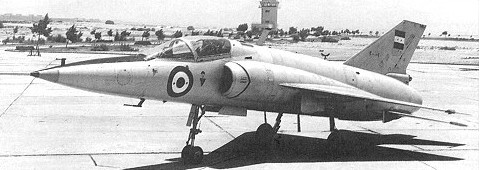
Originally conceived to meet a Spanish Ejercito del Aire requirement for a small M=1.5 interceptor and the design responsibility of a Germano-Spanish team supervised by Prof Willy Messerschmitt, the HA-300 programme was transferred to Egypt. Here development and construction was undertaken in Factory No 36 at Helwan, this being controlled by the Egyptian General Aero Organisation (EGAO). Originally designed for the proposed afterburning Orpheus BOr 12 turbojet, the HA-300 was modified for the Brandner-designed E-300 with a calculated afterburning rating of 4800kgp. The first V.1 prototype, powered by a 2200kgp Orpheus 703-S-10, was flown on 7 March 1964, a similarly-powered second V.2 prototype flying on 22 July 1965. The version flew supersonic.
The definitive third prototype with the E-300 engine commenced taxi trials in November 1969, but the HA-300 programme was then terminated without flight testing of this prototype being undertaken. It was anticipated that the E-300-powered HA-300 would be capable of attaining 12000m and M=2.0 within 2.5 min of take-off. The Orpheus-powered prototypes achieved approx M=1.13 during flight test.
Egypt’s HA-300 was test flown in the Spring of 1964 by an Indian pilot, showing no appreciable advantages over the MiG-21.
The HA-300 V.1 is displyed in the Deutsches Museum – Oberschleissheim and the Ha-300 V.2 and V.3 remained in Cairo.
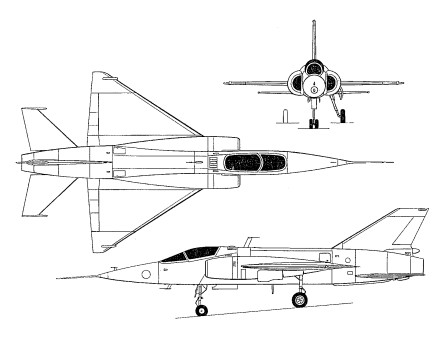
Wingspan: 5.84 m / 19 ft 2 in
Length: 12.40 m / 40 ft 8 in
Height: 3.15 m / 10 ft 4 in
Wing area: 16.70 sq.m / 179.76 sq ft
Max. speed: 1490 km/h / 926 mph
Helwan Air Works
Egypt
Inaugurated by President Nasser in 1962, Helwan’s first project was license-manufacture of the Spanish Hispano HA-200 Saeta jet trainer, known in Egypt as Al Kahira. German designer Willy Messerschmitt led a Helwan team to develop the HA-300 supersonic fighter, first flown in prototype form in March 1964.
Helve Classic
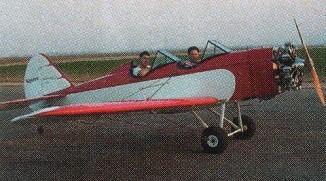
An LSA kit or plans built plane circa 2010. The kit, including engine, cost US$15,995.
Cruise: 105 mph
Stall: 45 mph
Range: 290 sm
Rate of climb: 1000 fpm
Takeoff dist: 400 ft
Landing dist: 500 ft
Engine: Rotec R2800, 110 hp
HP range: 85-150
Fuel capacity: 16 USG
Empty weight: 800 lb
Gross weight: 1320 lb
Length: 22 ft
Wing span: 28 ft
Wing area: 120 sq.ft
Cockpit width: 27 in
Landing gear: tailwheel
Helton Lark 95
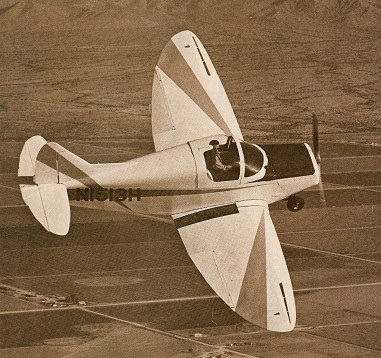
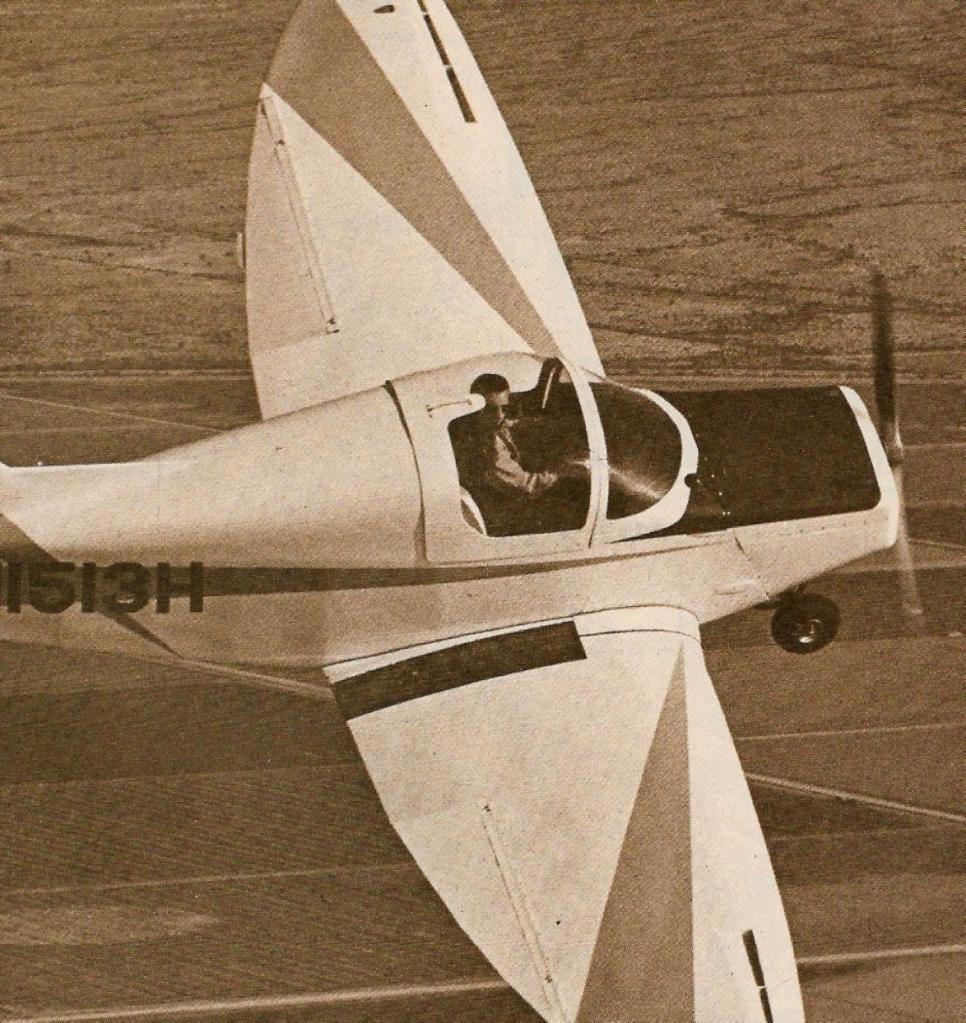
When Culver went out of business in 1946 the rights were bought by Superior Aircraft Co and then sold to California Aero Co of Tracy. They revived the model in 1966 as the Helton Lark 95 with a 90hp Continental C 90 16. Dimensions were similar to the Cadet, though the overall height was 6ft 10in due to the tricycle gear.
There is some doubt as to how many Larks were built, but seventeen constructor’s numbers were allotted and not all may have been completed. The last to be built, c/n 9517, was N5017J.
Further developments on the drone theme followed the PQ 8 and the NR D was built as the PQ 14A and PQ 14B for USAAF use and as the TD2CA for the Navy (which used a few TDCs from PQ 8 contracts). About 2,570 were built for use by the two services. Basic power was the 150hp Franklin O 300 11.
Post war limited type certificate LTC 28 was granted in December 1947 and a few were registered, there being eleven listed in the 1959 statistical survey, and one, N4744N was still in existence fairly recently There was a strong similarity with the Cadet, but the fuselage was lengthened and a larger fin and rudder fitted to counter increased power, plus tricycle undercarriage.

