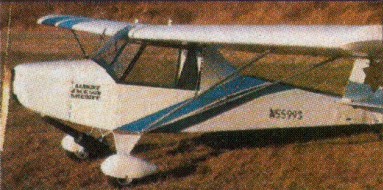
A single-seat, LSA legal high-wing microlight. With detachable wings, the J-3 Kitten first flew in 1986. The kit price in 1997 was US$6684 and plans US$100. By 2007 the kit price was US$10,893.
Speed max: 63 mph. Cruise: 59 mph. Range: 120-140 sm. Stall: 24 mph. ROC: 800 fpm. Take-off dist: 50 ft. Landing dist: 200 ft. Service ceiling: 12,000 ft. Engine: Rotax 277, 28 hp. HP range: 28-40. Fuel cap: 5 USG. Weight empty: 254 lbs. Gross: 500 lbs. Height: 5.25 ft. Length: 16.3 ft. Wing span: 30 ft. Wing area: 120 sq.ft. Seats: 1. Landing gear: tail wheel. Cockpit width: 23.6 in
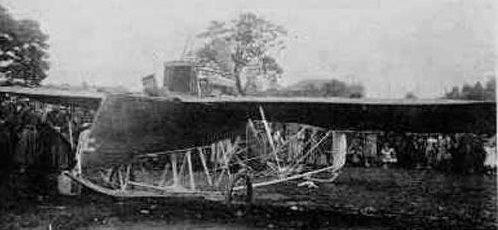
The Hino No.2 Monoplane of 1911 was designed by the Japanese captains Hino and Tokugawa. Its inline 4-cylinder pusher engine was by their own design and developed between 18 and 30 hp.
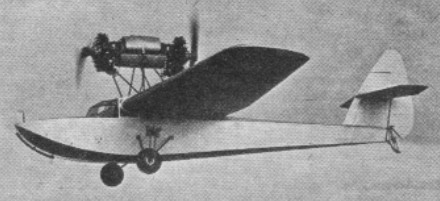
The Hinkler Ibis was a two-seat all wooden monoplane powered by two Salmson AD.9 radials mounted in an over-fuselage nacelle, one pusher, one tractor, Designed and built by H.J.Hinkler and R.H.Bound at Hamble in 1929. Construction of the wing was sub-contracted to Hendy Aircraft Ltd at Shoreham.
It was flown for the first time in May 1930 at Hamble. Registration was G-AAIS c/n 1.
It was put into store in Southampton until 1953 when it was displayed statically for a brief period until it was broken up at Lee-on-Solent in 1959.
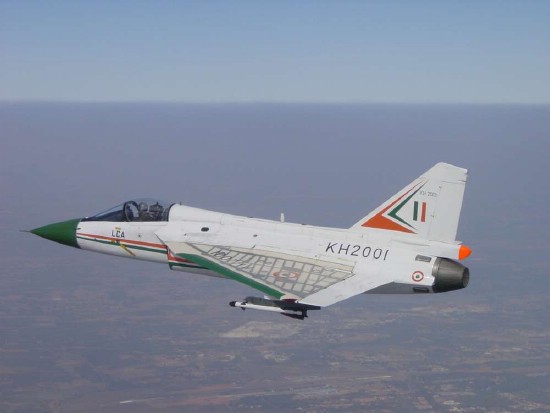
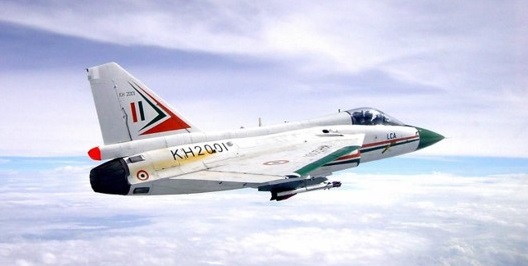
In 1983 the LCA, or Tejas as it was named, was conceived by the Indian Air Force to carry out frontline tactical missions and replace Indian Air Force MiG-21 jets. The first LCA prototype (Technology Demonstrator TD-1) rolled out on 17 November 1995. With the first flight of its Light Combat Aircraft (LCA) put back nearly four years after its roll-out, the program appears to be plagued with difficulties and delays. The prototype eventually first flew on 4 January 2001. The first flight of the LCA had to be postponed until Aeronautical Development Establishment (ADE) finished development of a new flight control system and system integration test were completed. After again much delay the second prototype (TD-2) made its maiden flight on 6 June 2002, also powered by the GE 404 engine.
The Hindustan Light Combat Aircraft (LCA) had two aircraft flying by the 2003 Paris Air Show and had complet¬ed some 80 flights with no major changes required to the airframe. Five prototypes were planned and eight limited series pro¬duction aircraft were to be delivered in 2006 for evaluation by the Indian Air Force. Despite major delays, the technology demonstration phase of the project has been completed and construction of further prototypes is underway. The first, Prototype Vehicle PV-1, joined the program in 2003. The fourth LCA, PV-2, was completed in 2005 and was first flown on 1 December 2005.
Built by partners Aeronautical Development Agency (ADA) and Hindustan Aeronautics Limited (HAL), the LCA design features digital fly-by-wire control system, multi-mode model, digital ‘glass’ cockpit, hands on throttle and stick (HOTAS), FLIR, and static instability. The aircraft has a delta wing design without any tailplanes or foreplanes and a total of seven external weapon stations. The two LCA technology demonstrators were powered by the US supplied General Electric GE F404-F2J3 turbofan. But because of the embargo placed in 1998 by the USA on the engine as a result of the nuclear tests conducted by India in 1998, the production aircraft were planned to be fitted with the Indian Kaveri GTX-35VS turbofan. The embargo included the Lockheed-Martin fly-by-wire flight control system. In May 2005, the Tejas flight, now consisting of TD-1, TD-2 and the first Prototype Vehicle PV-1, completed 400 sorties. A fourth prototype, PV-2, was scheduled to make its first flight in June 2005. It has reduced structural weight and new avionics and cockpit displays.
The Hindustan Intermediate Jet Trainer (UT or WT 36) took 18 months from metal cutting to roll out with a first flight three months later, on March 7, 2003.
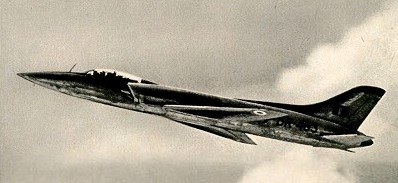
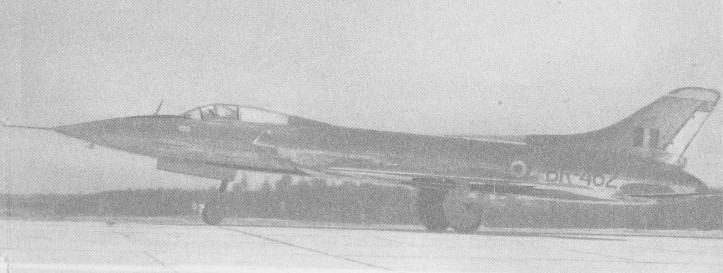
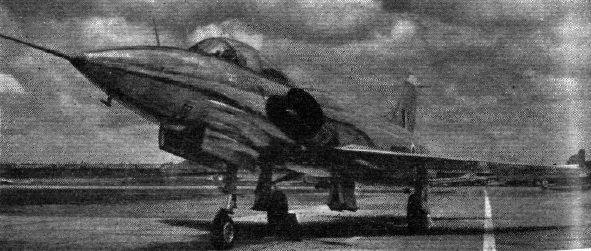
Designed by a team led by Kurt Tank, HAL produced the HF 24 Marut for the Indian Air Force as a single seat ground attack fighter with subsonic performance. Work on the project began in 1955, to meet an Indian Air Force requirement, and first flight tests of the aerodynamic envelope were made in March 1959 with a full scale wooden glider.
The prototype first flew on June 17, 1961 powered by two 4850 lb thrust Bristol Siddeley Orpheus 703 turbojets. The prototype has room for a second pilot, with dual controls, in the rear of the cockpit, but this space was to be normally occupied by armament, fuel, cameras or electronic equipment.
First prototype
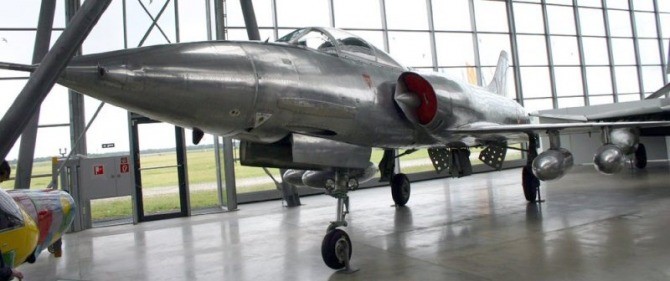
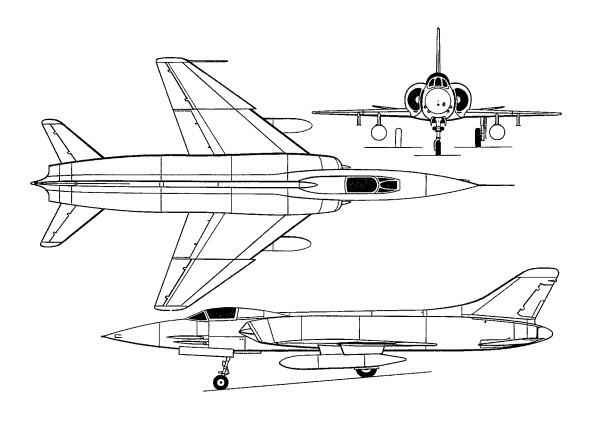
The airframe has sharply swept low wings, sweptback tail surfaces, and one-piece all-moving tailplane low-set on the fuselage. The fuselage is area-ruled and semi-circular engine intakes, with central shock body are on each side of the cockpit. The tricycle undercarriage has single wheels on each unit. The main units retract inward and nose-wheel retracts forward.
Hindustan HF-24 1st prototype
Production of 129 (plus 18 two-seat HF-24 Mk 1Ts two seat operational trainers) ended in 1977. Power for each production aircraft is provided by two 4,850 lb thrust Rolls Royce Bristol Orpheus 703 turbojet engines and armament comprises four 30 mm Aden cannon and 50 68 mm air to air rockets carried in a retractable pack in the lower fuselage. Underwing stations can carry the usual selection of bombs, rockets, napalm tanks, and drop tanks.
HF-24 Marut preserved at the Oberschleissheim museum near Munich.
Marut Mk.1 Engine: 2 x HAL/Rolls-Royce Orpheus Mk 703, 21.6kN Max take-off weight: 10908 kg / 24048 lb Empty weight: 6195 kg / 13658 lb Wingspan: 9.0 m / 29 ft 6 in Length: 15.87 m / 52 ft 1 in Height: 3.6 m / 11 ft 10 in Wing area: 28.0 sq.m / 301.39 sq ft Max speed: 1070 km/h / 665 mph Cruising speed: 486 kts / 900 km/h Ceiling: 12000 m / 39350 ft Range: 800 km / 497 miles Crew: 1 Armament: 4 x 30mm Aden cannon /120rds, 50 x 68mm missiles / 1816kg ext Hardpoints: 4
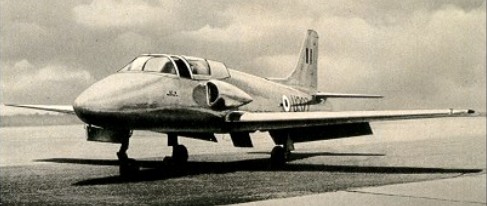
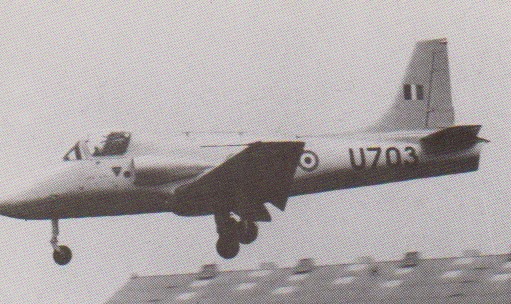
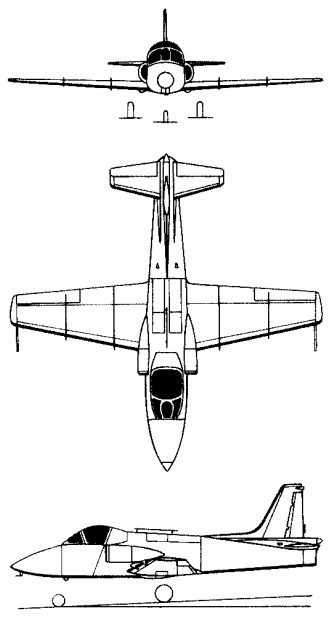
Hindustan Aeronautics Ltd. (HAL) constructed the Viper powered HJT 16 Kiran two seat jet trainer for the Indian Navy. The prototype HJT-16 flew on 4 September 1964. Deliveries began in 1968, and the Kiran I was superceeded by the IA with two weapons pylons for armament training.
The prototype (U738) of the Hindus¬tan Aeronautics HAL Kiran Mk II armament training and counter–insurgency aircraft was flown for the first time on 30 July 1976. The Kiran II side-by-side basic trainer/light attack aircraft differs from the Viper powered Kiran land IA in being fitted with a derated Orpheus 701-01 turbojet. The Kiran II has four underwing hardpoints and upgraded avionics. Deliveries began in 1984. By mid-1985 16 had been delivered, and the production rate was 18 per year.
By 1989 a total of 251 aircraft were built including 51 improved “Kiran II”s.
HJT-16 Kiran I/IA Engine: 1 x Rolls-Royce Viper Mk 11, 11.11kN Max take-off weight: 4235 kg / 9337 lb Empty weight: 2560 kg / 5644 lb Wingspan: 10.7 m / 35 ft 1 in Length: 10.6 m / 34 ft 9 in Height: 3.63 m / 11 ft 11 in Wing area: 19.0 sq.m / 204.51 sq ft Max. speed: 695 km/h / 432 mph Cruise speed: 9145 km/h / 5683 mph Armament: 2 x 227kg bombs or 14 x 68mm unguided missiles Crew: 2
HJT-16 Kiran II Engine: 1 x R-R Orpheus 701. Installed thrust: 18.68 kN. Span: 10.7 m. Length: 10.6 m. Wing area: 19 sq.m. Empty wt: 2995 kg. MTOW: 5000 kg. Warload: 1000 kg. Max speed: 672 kph. Initial ROC: 1600 m / min. Ceiling: 12,000 m. T/O run (to 15m): 730 m. Ldg run (from 15m): 1440 m. Fuel internal: 1345 lt. Range: 735 km. Armament: 2 x 7.62 mm. Hardpoints: 4
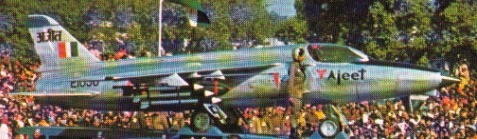
The Indian Air Force issued a requirement for an improved Gnat in 1972 as an interceptor and also have a secondary ground-attack role. The aircraft was given the name “Ajeet”, Sanskrit for “Invincible” or “Unconquered” and was to be manufactured by HAL. It was to have more hardpoints, wet wings and a Martin-Baker ejection seat. Hindustan Aeronau¬tics developed the Ajeet lightweight jet fighter from the Folland/ Hawker Siddeley Gnat which HAL license-produced.
The prototype Ajeet first flew in March 1975 and the first production aircraft (E1956) followed in September 1976.
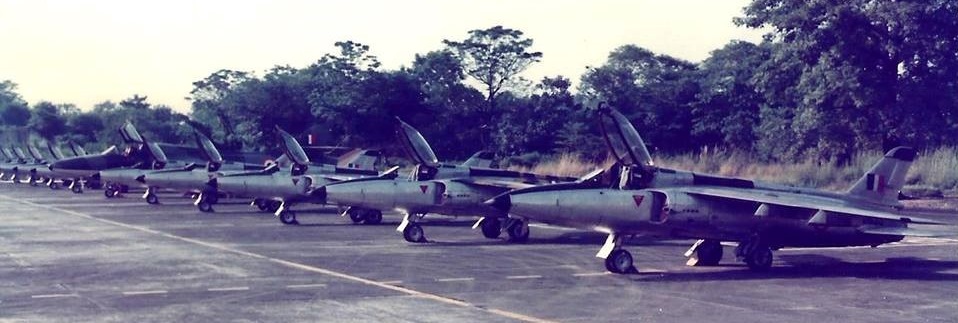
Ajeets of No.22 Squadron with a Hunter T.66 two-seater
The Ajeet aircraft was comparable to the Gnat in handling, albeit on the heavier side. A clean Gnat (without drop tanks) was significantly more agile and manoeuvrable than a clean Ajeet. The trainer on the other hand was even heavier. In the few 1vs1 sorties against the fighter, it was noticed that the trainer lost out while manoeuvring in the vertical plane. Another issue that one had to be careful of was while opening throttle and seeking full power as the engine took a long time to achieve 100%.
The main changes from the Gnat are improved navigation and communications systems and the use of new wing fuel tanks which replace the previous underwing tanks. The last feature allows an increased warload to be carried, although drop tanks can still be carried underwing on two of the four stations for longer range.
Armament comprises two 30 mm Aden cannon and rockets or bombs. Maximum speed with the 4,500 lb thrust Rolls Royce Orpheus 701 01 turbojet remains subsonic at Mach 0.96.
Deliveries began to the Indian Air Force in 1976. Of the total of 79 aircraft ordered for the Indian Air Force about one third had been delivered by early 1980 and operated between 1977 and 1991.
For nearly 30 years of its operational service in India the Gnat/ Ajeet did not have a type trainer. Pilots in India, after dual checks in the Hawker Hunter, were required to do the first solo on the Gnat directly. The dual checks were given on a Hunter trainer by simulating a Gnat approach (much shallower) by lowering flaps to only 15 degrees and not full flaps down. Once cleared after the mandatory dual checks, the pilots were shown the various attitudes of nose up and take off, strapped in the cockpit and two airmen sitting on the tail plane under the flight commander’s supervision. The cockpit was very cosy and seated at 20 degrees incline of the ejection seat. A taxi run with a full throttle roll on the runway got the pilot ready for his first solo in the Gnat.
The development of the HAL Ajeet trainer started in the late 70s. A proposal within a time frame of 54 months at an estimated cost of Rs.4.16 crores, put up by Hindustan Aeronautics Limited (HAL) in June 1975, was approved by the Government in February 1976. Government sanctioned in April 1980, procurement of 12 trainer aircraft from the HAL at a cost of Rs. 1 crore each. The aircraft were to be delivered at the rate of six each during 1982-83 and 1983-84.
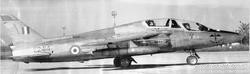
Developed from the single-seat Ajeet lightweight fighter, the prototype trainer version flew on September 20, 1982. The Ajeet trainer, had a lengthened fuselage (1.4 meters longer than the Ajeet fighter) with two seats mounted in tandem and two internal fuel tanks on the spine removed to accommodate the extra seat. The 30 mm cannon and four stores pylons were retained, although the cannon could be removed and replaced with additional fuel tanks (increase capacity by 273 Litres). The engine remained the same Orpheus 701. However, the trainer had an inferior Power/ weight ratio as compared to the fighter version and handled sluggishly.
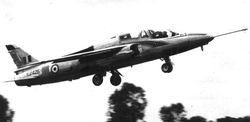
first prototype Ajeet Trainer E2426
In December 1982 Sqn Ldr DK Powar was flying the first prototype of the Ajeet Trainer (E2426), the 14th sortie the aircraft had undertaken. The unfortunate accident was probably due to differences in pre-flight inspection procedures of HAL and IAF ground crew, leading to the oxygen not being switched on. At higher altitudes, hypoxia set in, leading to disorientation and complete loss of consciousness and fatal crash. A second prototype flew in September 1983.
The program was put in abeyance, but over the next two years, the IAF had a re-think and it was revived in late 1984. However, in 1986, when IAF agreed on the withdrawal of the Ajeet Aircraft, the order for the trainer was in limbo again.
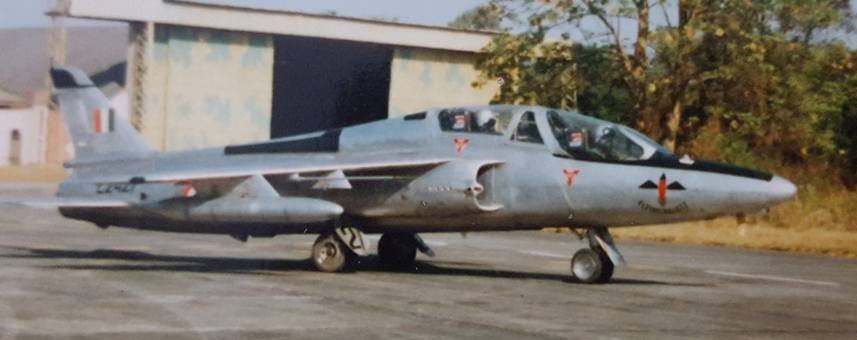
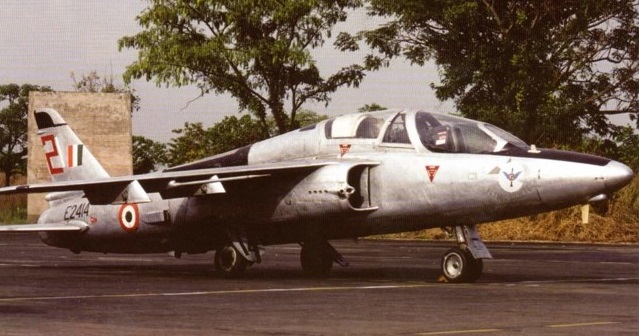
The first Ajeet Trainer induction at Sulur BRD. The aircraft was handed over to Wg Cdr Ranjith Tathgur of No.18 Squadron “Flying Bullets”
The order for full production of Ajeet Trainers having been withdrawn, two prototypes with HAL were inducted into the IAF finally in late 1987 (and early 1988) and were handed over to 18 sqn then based at Bagdogra. Two aircraft bearing serial numbers E2427 and E2414 were handed over to the squadron. The first aircraft delivered was a production aircraft while the other a prototype modified to production standard. These two were the only aircraft built (other than the one that crashed).
Their usage fell far short of the initial projected hours. The utilisation rate achieved by these trainer aircraft was poor as it ranged from 0.15 to 5.30 hours per month during January 1988 to May 1990. One cause of the low utilization could have been the limited utility of the aircraft as laid out in the syllabus. The aircraft was supposed to provide three dual check sorties with each having a laid down profile. It did not have the required instrumentation and lights for night flying as the Ajeet itself was day operational only. Further, with the Ajeet in winding down mode, the squadron pilot and aircraft strength was depleted.
When the Ajeets were finally phased out in March 1991, apparently the Ajeet Trainers were still serviceable and were flown to the BRD in Sulur. In all, the two Ajeet Trainers served the IAF for only three and a half years across two squadrons.
In December 1988, right after 18 sqn had wound up, the two trainers were ferried from Bagdogra to Kalaikunda.
Two Ajeet Trainers were the last aircraft in the 33-year successful legacy of the Gnat fighter and its variants that served the IAF until the early 90s. The Ajeet Trainers served the IAF for only three and a half years across two squadrons and flew little, remaining a footnote in the annals of Indian aviation history.
Engine: 4,500 lb thrust Rolls Royce Orpheus 701 01 turbojet Maximum speed: Mach 0.96 / 716 mph / 1,152 km/h Wing span: 22 ft 1 in (6.73 m)