Wright-Martin V

The sole 1916 Wright-Martin V, designed by Chance Vought, was built for military trials, but the project was never pursued. It was sold to a private party after WW1.

It has been reported as powered by a 150hp Hisso driving two tractor props.

Engine: Wright-Simplex A, 150hp
Wingspan: 39’9″
Length: 27’2″
Useful load: 595 lb
Speed: 90 mph
Range: 300 mi
Seats: 2
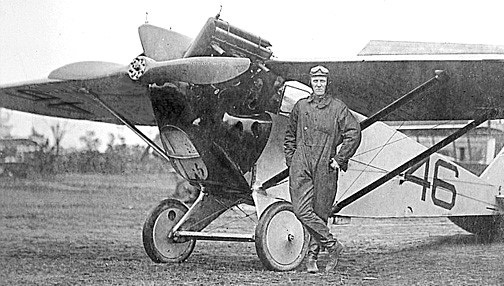
Wright-Martin R / Martin R

Wright-Martin R AS523

The two-place Wright-Martin R was built in 1917 as a landplane and a single pontoon floatplane. The land version was used briefly in the Mexican Border campaign, and seaplanes went to the Philippines.

Fourteen were built (AS108 and 109, and AS522-533) but some records show the total as 27, which might indicate prior production of 13 by Martin in 1916, before the merger.

Some versions had diagonal end-struts replacing the wire bracing.

Landplane
Engine: Hall-Scott A-5a, 150hp
Wingspan: 39’9″
Length: 26’7″
Speed: 93 mph
Seats: 2

Floatplane
Engine: Hall-Scott A-5a, 150hp
Wingspan: 50’7″
Length: 27’2″
Speed: 86 mph
Seats: 2

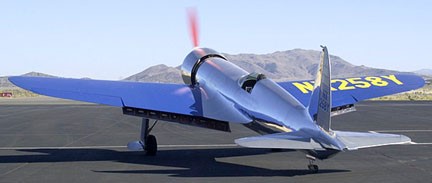
Wright Hughes 1B

Jim Wright built an exact replica of Howard Hughes’ first airplane, then set a world airspeed record for the plane’s weight class on 13 September 2002 at 352.38 mph.

His replica of the Hughes H-1 racer – a one-seater called the Hughes 1B, NX258Y – crashed and exploded in a fireball in Yellowstone National Park, eight miles north of Old Faithful geyser on 4 August 1003, killing the 53-year-old pilot and machine shop owner.