JAI JAI-2 P. P. Postyshev

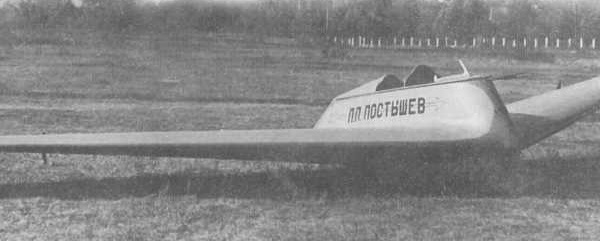
Two-seater glider “P. P. Postyshev” in Koktebel.

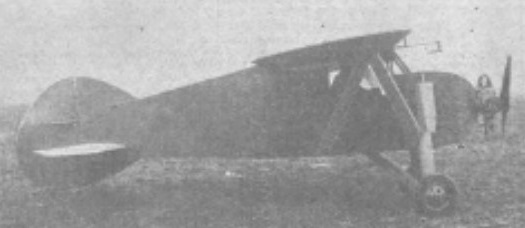
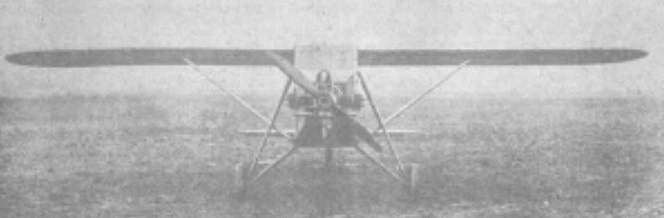
The JAI-2, or JAI P. P. Postyshev (In Russian: П. П. Постышев (ХАИ-2)) was created to study tailless design. The name was chosen in honour of the secretary general of the central committee of the Communist Party of Ukraine Pablo Petrovich Postyshev.

On February 6, 1934 at the GVF Aviation Repair Shops in Kharkov (JARM) the first flight of the Osoaviajimoviets JAI tailless glider designed by Bening was developed. This project was followed by a second model in a two-seater configuration, which received the official name P. P. Postyshev (JAI-2). The glider was designed and built at the JAI by Pavel Georgievich Bening.

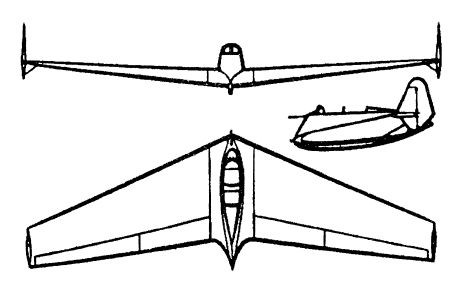
The two-seater JAI-2 P. P. Postishev was a tailless flying wing configuration. The construction was of wood with plywood coating.

The wing featured in-plane sagging and notable positive dihedral, ending in vertical surfaces that included the aerodynamically compensated rudders. The wing trailing edge incorporated full-span ailerons used to gain control of pitch and roll. The selected wing profile was M-12.

On the centroplane were the open tandem cabs, protected only by a small front windshield. The pilot was in the lead. The passenger was located in the rear cabin with his back to the pilot, a solution that was dictated by the need to achieve the least possible deviation of the aircraft’s center of gravity, characteristic for this type of airplane configuration.

A central wooden ski was used as the landing gear, supported by small skids under the vertical planes of the wing tip.

The construction of the glider was carried out at the GVF Aviation Repair Workshops in Kharkov (JARM) in 1934 and lasted a month and a half.

The glider tests took place in September 1934 in Kharkov.

Later in 1934 the model would participate in the X National Sailing Competitions held in Koktebel. The glider was aero-towed using a Polikarpov R-5 piloted by V. A. Keglevich as a tug. The glider had the pilot L. S. Ryzhkov at the controls and the constructor Pavel Bening as a passenger. Once at the destination the glider was improved with the addition of the front windshield and the rear upper fairing.
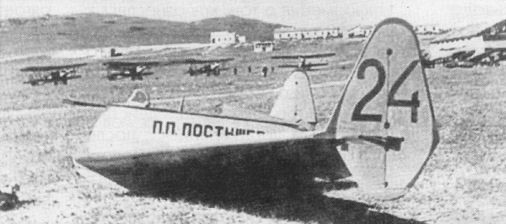
During the competitions the pilot L. S. Ryzhkov performed on the “P. P. Postyshev” flights over thermals. During the competitions, on October 2, pilot S. N. Anojin made the first experimental jump from the back seat of the glider while flying at 300 meters. Getting out of the back seat Anojin left the cabin and stood on the wing. To achieve the opening of the parachute, the glider began a dive until it reached a speed of 105 km / h. Upon reaching the height of 300 meters, he activated the ring and without jumping into the void, he detached himself from the device when he was dragged by the parachute.

The effectiveness of this test opened the possibilities of preparing paratroopers without the need for free jump in the air before proceeding to open the parachute. As a result, it was also proposed to modify the configuration of the rear cabin of the JAI-2 “P. P. Postyshev”, so that the skydiver, without getting up from the seat and without standing on the wing, could parachute.

The P. P. Postyshev proved to be more effective than the LAK-1, LAK-2, TsAGI-1 and TsAGI-2, also in the tailless configuration, and set a glide record for tailless models by staying in the air for 58 minutes.

According to the magazine “Samoliot” upon return from Koktebel on October 6, three gliders without a tail made a record-breaking flight without stops forming a tow “train” to the city of Kharkov. Towed by a Polikarpov P-5 piloted by the pilot Danilivtsiev, the TsAGI-1, piloted by Skorodumov remained in the center, to his left the “P. P. Postyshev” piloted by L. S. Ryzhkov with technician M. Lass in the back seat and on the right the TsAGI-2 with pilot Yudin. The gliders stayed in the air for 4 hours and 30 minutes, covering a distance of 620 km / h with an average speed of 145 km / h. During part of the flight the “train” was immersed in a cloudy area with turbulence, but the gliders passed this test.

Later the P. P. Postyshev glider (JAI-2) was used by the JAI athletes for towed aerobatic flights. On August 19, 1936 he was successfully shown in the Túshino air parade, performing high figures.

In August 1936 L. S. Ryzhkov began testing an improved version of the JAI-2, but on July 12, 1937 the model was destroyed.

Wingspan: 10.90 m
Wing area: 22 m²
Length: 3.75 m
Height: 1.1 m
Stabilizer surface: 1.17 m²
Area of the empennage: 1.54 m²
Aileron surface: 1.17 m²
Empty weight: 160 kg
Wing loading: 14.6 kg/m²
Accommodation: 2
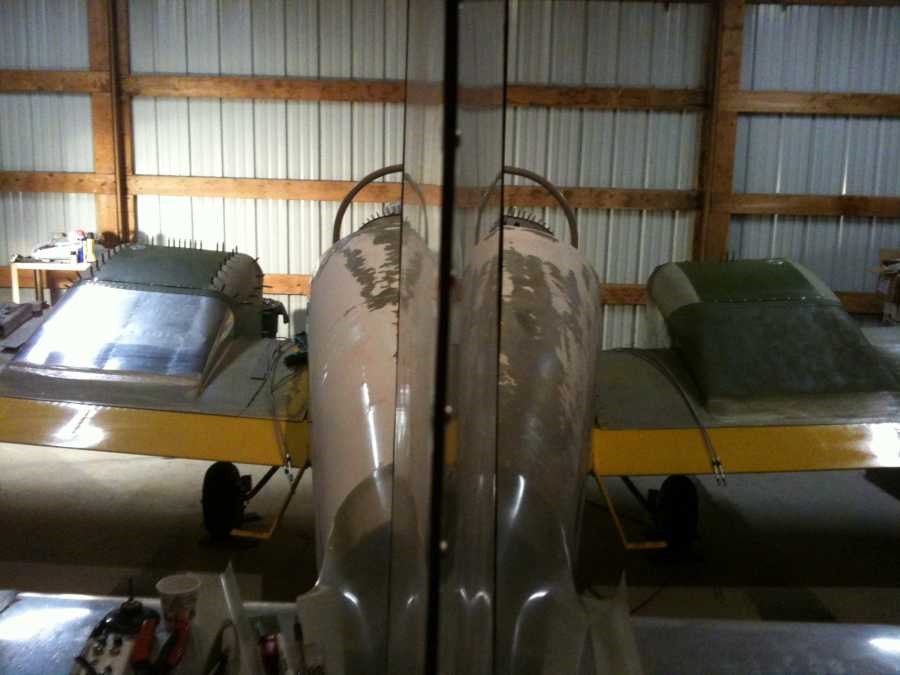
JAG Twin Jag

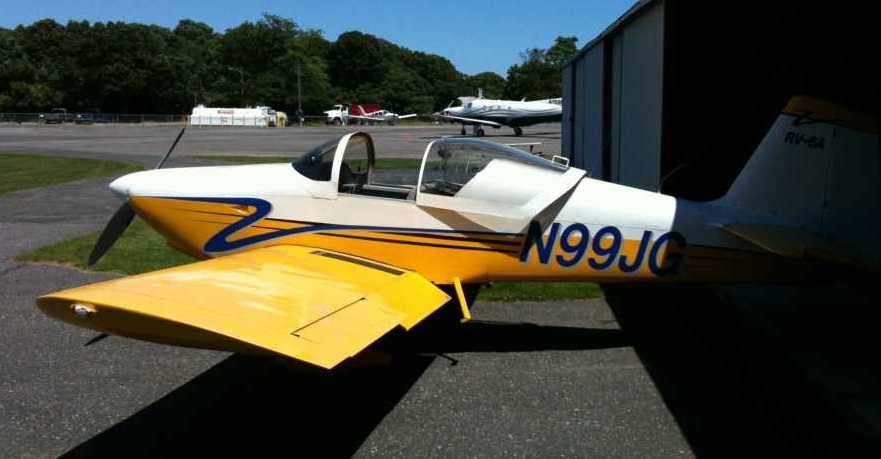
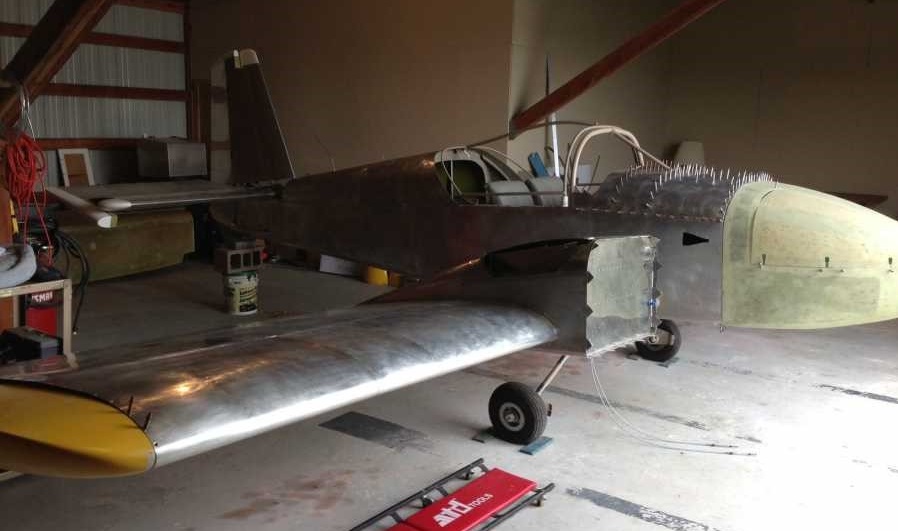
The Twin Jag project started life as a completed RV-6A, which was built and flew for 250 hours.
Some modifications include, but not limited to:

  1. Installing 2 Corvair 3000cc 120hp direct drive with Weseman 5th bearings. Weseman billet crankshafts.
  2. Custom made carbon fiber props.
  3. Unique prop brake system in lieu of constant speed feathering props.
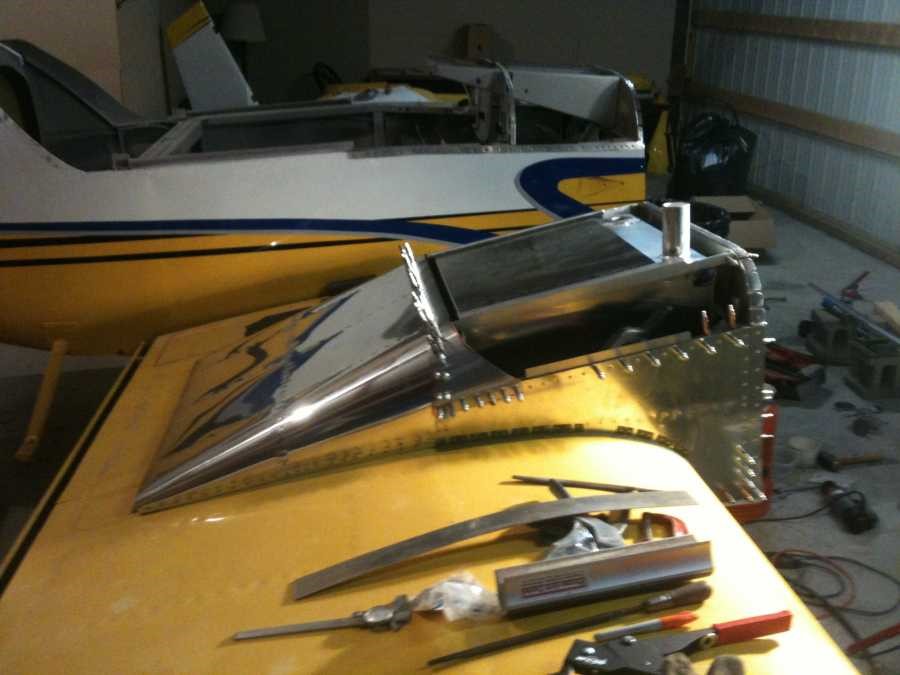
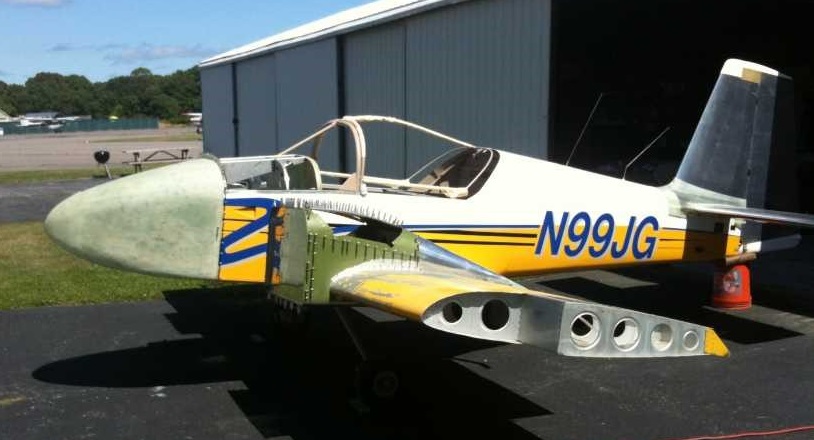
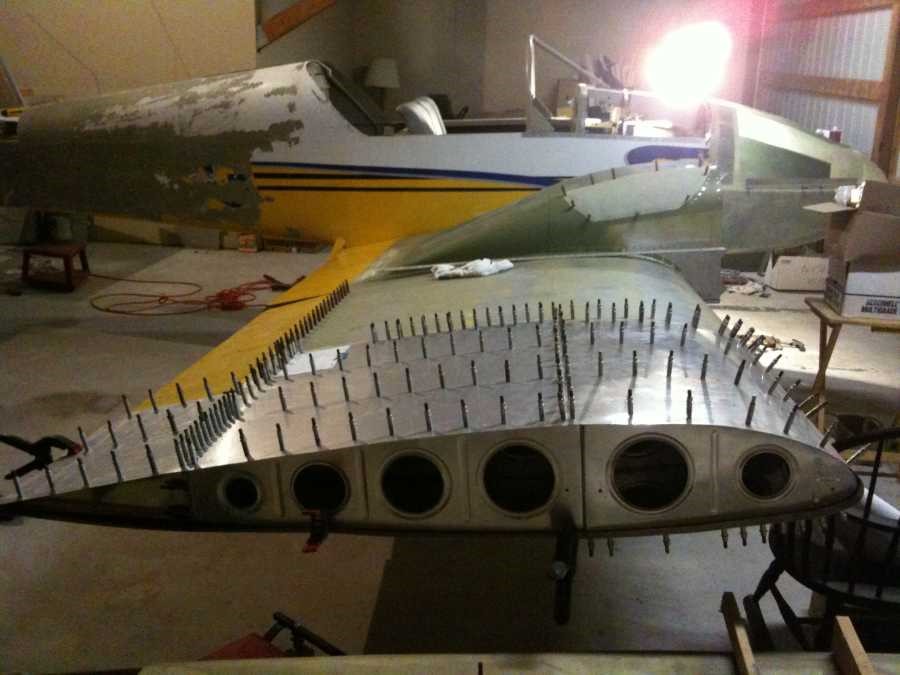
  4. Increased wingspan by 40″.
  5. Installed RV-9 tail.
  6. Re-designing nose gear with 4130 tubular gear & urethane dampening (similar to RV-10).
  7. Many more mods.

The Twin Jag is a side-by-side 2 seat twin-engine cross country aircraft. It will be IFR capable with dual Dynon Skyview EFIS.

By January 2013, both nacelles complete. Custom motor mounts being fabricated. Riveting right wing extension now, left wing extension riveting to follow. Center console 75% complete. Fabricating nose gear/baggage shelf in next few weeks. All fibreglass work still in rough stages of completion…lots of filling & sanding ahead.

Engines: 2 Corvair 3000cc 120hp

Jacobs 1910 Multiplane

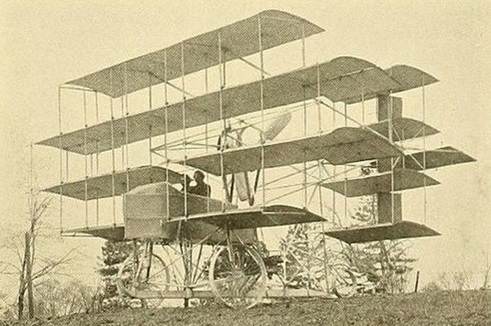
The 1910 Jacobs Multiplane [also identified as the Jacobs-Emerson multiplane] was the creation of Henry William Jacobs of Atchison, Kansas. It had quadruplane wings and tail and two engines, each driving a propeller.

Jacobs used two improved air-cooled 35hp engines he invented, to replace the two original underpowered engines [Emersons?], with which the plane flew in 1910.

It was displayed on the New York Aero Exhibition 1912. Jacobs had formed with others the firm “Multiplane Limited” in Kansas to build the machine and eventually sell it to the market and a brochure of 16 pages was produced.

Jackaroo Aircraft Thruxton Jackaroo

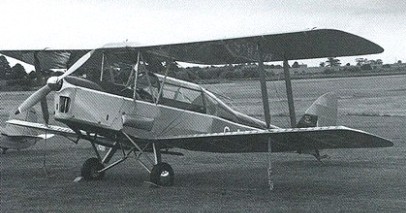
In the early 1950s Sqn Ldr J. E. Doran-Webb, managing director of the Wiltshire School of Flying at Thruxton, considered building a highwing four to five-seat touring aircraft using only Tiger Moth components. Contacts at the Royal Aero Club introduced him to Ronald Prizeman, who schemed a four-seater using the same biplane layout as a Tiger Moth but with a revised fuselage. This was accepted and formed the basis for certification as the D.H.82A (Mod) Jackaroo.
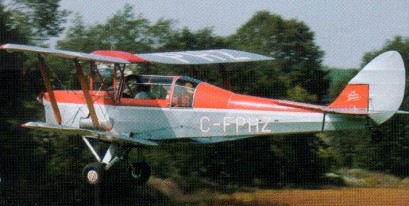
The front side frames of the Tiger Moth fuselage were moved apart by 12.5in within which four seats were installed, with the starboard pair staggered slightly forward. The basic structure and rigging of wings, tail and rear fuselage were not altered but it was necessary to increase the undercarriage track by designing a new W-shaped centre strut.
Two prototypes were built at Thruxton in 1956; G-AOEX was finished as a standard four-seater with cabin and known as a Series 1. It was test flown by Lt-Cdr Pat Shea-Simonds on March 2, 1957. The Series 2, G-AOEY, was conceived as a cargo carrier/cropduster. The cabin could be converted to carry a load of 5501b and a new low-profile superstructure neatly converted the Series 2 into a single-seater with open cockpit.

Jackaroo Aircraft Ltd was formed late 1950s at Thruxton, Hampshire, to produce the Thruxton Jackaroo widened-fuselage four-seat version of the de Havilland Tiger Moth. First “production” conversion flew on April 15, 1957, and quite a number of Tiger Moths were converted subsequently to Jackaroos. Company also designed a four-seat low-wing lightplane called the Paragon, being re-formed in early 1960s as Paragon Aircraft Ltd. to produce it under new name of Paladin.
Paragon was formed at Thruxton Aerodrome near Andover, Hampshire, from the earlier Jackaroo Aircraft Ltd., for conversion of standard two-seat Tiger Moth biplanes to four-seat configuration by inserting a new wider center fuselage and extending the top wing centre section. 18 Jackaroo conversions were carried out by the company.

By July 1957 the manufacturer was anticipating that production would reach at least six aircraft per month. An agricultural conversion kit was available at £150. Overseas owners were encouraged to convert their own Tiger Moths by purchasing a packaged kit at £600. Tiger Moths flown into Thruxton could be converted in ten days for £700.

Jackaroo Aircraft Thruxton Memories

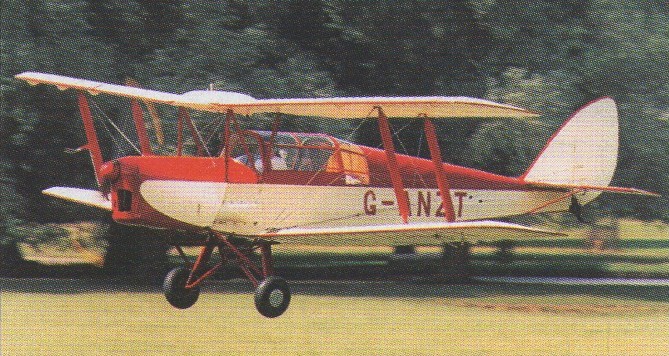
Rollason Aircraft at Croydon acquired Jackaroo G-ANZT in 1957, and incorporated a number of improvements. In April 1960 Rollason cornpleted a Jackaroo of its own, G-APOV, in which the rear fuselage faired smoothly from the wide cabin to the tail.
Although never certificated as aerobatic, the aircraft was spun on at least one occasion with all four seats occupied, an experience none of those on board ever wished to repeat.
The big prospective orders never came and import permits for five other Jackaroos already on the line at Thruxton were refused. Each was broken up for spare parts. Designer Ron Prizeman never complained however, despite never receiving his agreed royalty of £2 per aircraft

Assets acquired 1964 by Hampshire School of Flying.

Jackaroo Aircraft Ltd

UK
Jackaroo Aircraft Ltd was formed late 1950s at Thruxton, Hampshire, to produce the Thruxton Jackaroo widened-fuselage four-seat version of the de Havilland Tiger Moth. First “production” conversion flew on April 15, 1957, and quite a number of Tiger Moths were converted subsequently to Jackaroos. Company also designed a four-seat low-wing lightplane called the Paragon, being re-formed in early 1960s as Paragon Aircraft Ltd. to produce it under new name of Paladin.
Paragon was formed at Thruxton Aerodrome near Andover, Hampshire, from the earlier Jackaroo Aircraft Ltd., for conversion of standard two-seat Tiger Moth biplanes to four-seat configuration by inserting a new wider center fuselage and extending the top wing centre section. 18 Jackaroo conversions were carried out by the company, which also designed a light monoplane, the Paragon (subsequently Paladin), but this was not built. Assets acquired 1964 by Hampshire School of Flying.