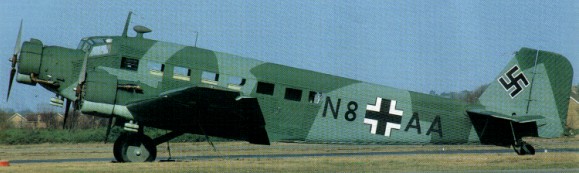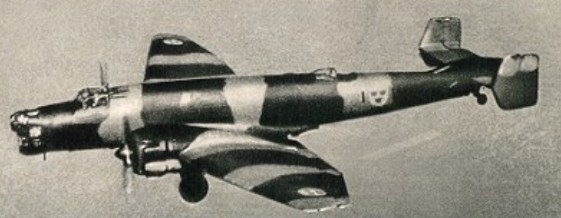
Junkers Ju.86

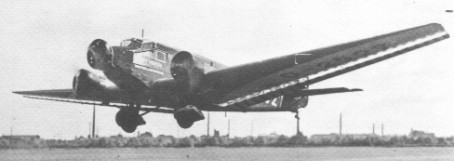
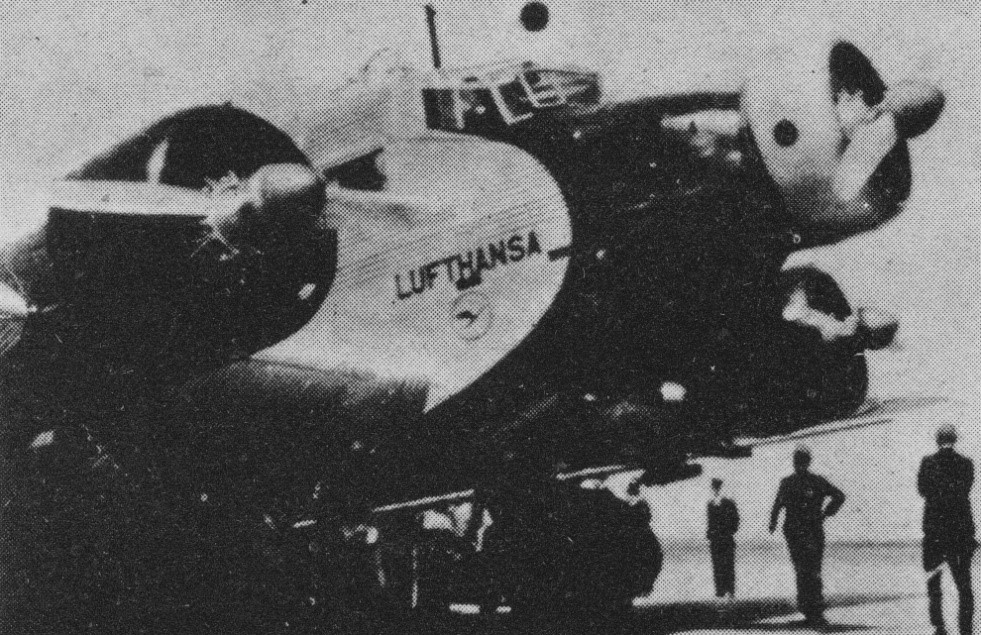
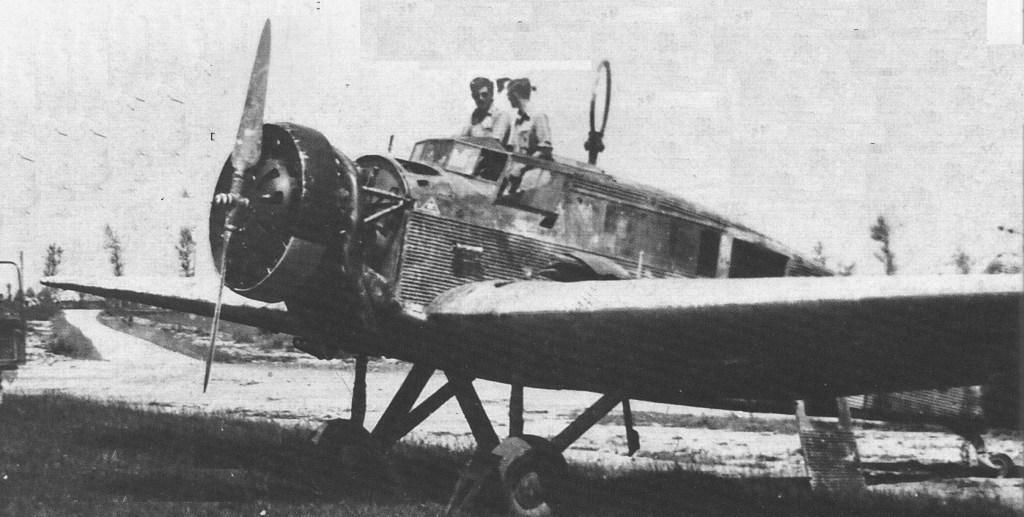
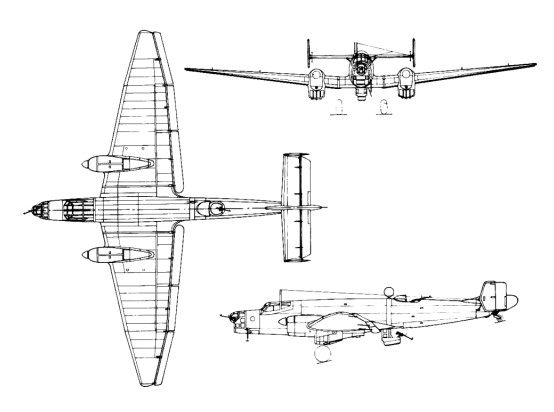
The Junkers Ju 86, developed as a 10-passenger airliner and four-seat bomber, was designed around the Junkers Jumo 205 diesel engine. The first of five prototypes was flown during 1934, its performance proving disappointing but, nevertheless, the type entered production as both airliner and bomber in late 1935. Initial deliveries of Ju 86A-1 pre-production bombers were made in February 1936 and the first Ju 86B pre-production transport for Swissair was delivered in April 1936.

Junkers Ju.86 Article

Five Ju 86D-1 bombers with improved Jumo 205C engines served with the Legion Condor during the Spanish Civil War, but the powerplant did not stand up well to combat conditions and the aircraft proved markedly inferior to the Heinkel He 111. Military export orders included the Ju 86K-1 for South Africa and Sweden, where Saab subsequently licence-built the type as the SAAB B3; the Ju 86K-2 for Hungary, which built 66; and the Ju 86K-6 for Chile and Portugal. The Ju-86 was also powered by 800 HP. Pratt & Whitney radial engines. They were used by S.A.A.
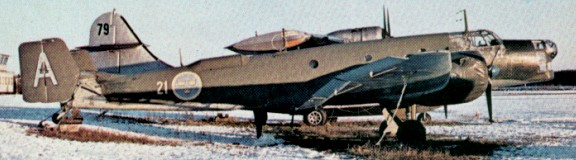
Ju-86K-5

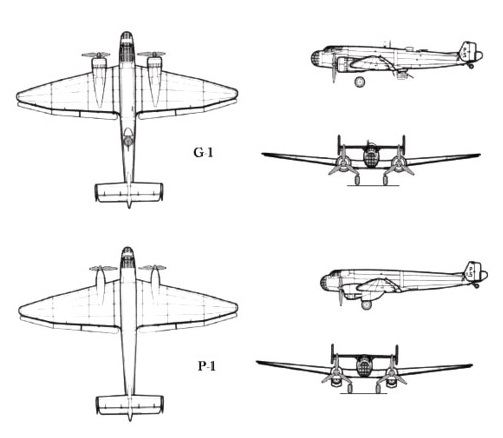
Luftwaffe dissatisfaction with the capability of the Ju 86D led to the far more reliable Ju 86E-1 with B.M.W. 132F radial engines and the Ju 86E-2 with B.M.W. 132Ns; improvements introduced during production brought re-designation of the last 40 Ju 86Es on the production line as Ju 86G-1 aircraft, with round glazed noses; production ended in 1938. However, in 1939 two Ju 86D airframes were used for conversion as the Jumo 207A-engined prototypes of a high-altitude version with a two-seat pressurised cabin. Successful trials led to two initial production versions, the Ju 86P-1 bomber and Ju 86P-2 reconnaissance aircraft. The latter had a ceiling of about 12800m, and in an effort to gain more altitude a high aspect ratio wing spanning 32.00m was introduced to produce the Ju 86R-1 reconnaissance aircraft and Ju 86R-2 bomber. Only a few reached service, but one demonstrated a ceiling of 14400m.

The Ju 86P high altitude reconnaissance variant modified from the Ju 86D by fitting a pressurised cabin for a crew of two. The cabin was a dry-air sandwich type, one wall construction of dural and one of Plexiglas. This could maintain internal pressure at 3000m. Crew entry was gained by a circular hatch which was controlled internally by a handle operating two geared arms in the belly framework of the cockpit. This variant was powered by two 950 hp Jumo 207 A-1 engines and fitted with new outer wing panels which enabled the type to attain altitudes in the region of 11,000m / 36,000 ft

Spitfires succeeded in shooting down at least two Ju 86 at extreme altitudes. In one example, a significantly lightened Spitfire Mk V shot down a Ju 86P at 41,994 feet (12,800 metres) near Cairo.

The Ju 86 R-1 was an improved version of the Ju 86 P with a wingspan of over 30m / 100ft which was powered by two 1000 hp Jumo 207 Diesel engines driving four blade propellers which gave it a service ceiling of around 14,500m / 47,500ft.

During the spring of 1942, conversion of a small number of Ju 86 Ps to R standard was begun at Junkers’ Dessau factory. The sub-type had new outer wing panels and Jumo 207 B-3 diesel engines with GM 1 power-boosting. Like many other Junkers designs of the period, the aircraft retained the distinctive trailling-ege slats in place of conventional elevators.

Development of the Ju 86R-3 with supercharged Jumo 208 engines and of the proposed Ju 186 four-engined high-altitude bomber based on the Ju 86 were abandoned. A six-engined Ju 286 high-altitude bomber did not progress beyond the initial planning stage.
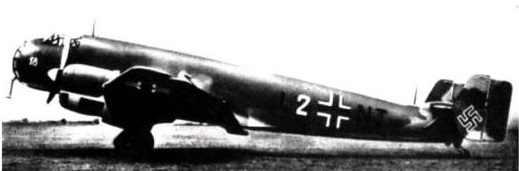
Ju.86P-1

The South African Air Force sent 17 Junkers Ju 86 bombers and 10 Junkers Ju 52 and 53m transport aircraft to intervene in the fighting in Italian East Africa in 1940. The SAAF won its first victory when it bombed the Italian air base of Yavello (southern Ethiopia) on 19 June 1940. Three Ju 86s, operated by 11 and 12 Squadrons, and two Hawker Hurricanes under Capt. Truter, successfully shot down a Fiat CR.42.
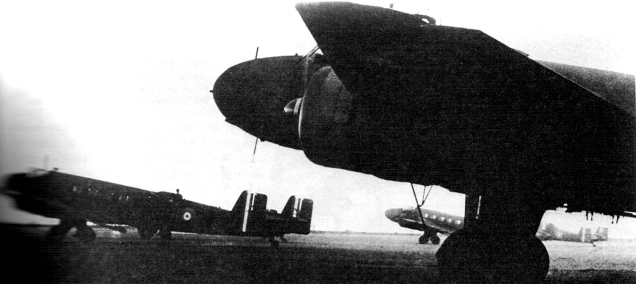
SAAF Ju 86 Z-7

Gallery

Variants:

A
Fuel capacity: 330 gallon

D
Fuel capacity: 360 gallon
Empty weight: 11,354 lb
Disposable load: 6416 lb

Ju-86D-1
Engines: 2 x Junkers Jumo 205C-4, 447kW
Max take-off weight: 8200 kg / 18078 lb
Loaded weight norm: 17,760 lb
Empty weight: 5150 kg / 11354 lb
Wingspan: 22.50 m / 73 ft 10 in
Length: 17.87 m / 57 ft 8 in
Height: 5.06 m / 16 ft 7 in
Wing area: 82.00 sq.m / 882.64 sq ft
Max. speed: 325 km/h / 202 mph
Cruise speed: 170 mph
Ceiling: 5900 m / 19350 ft
Range w/max.fuel: 1500 km / 932 miles
Armament: 3 x 7.92mm machine-guns, 800kg of bombs
Crew: 4

E
Range: 746 miles

E-1
Loaded weight max: 18,080 lb
Max speed SL: 202 mph
Cruise speed: 174 mph
Landing speed: 66 mph
Rate of climb: 918 fpm
Service ceiling: 22,310 ft

E-4
Empty weight: 11,464 lb
Disposable load: 6416 lb

G-1
Wingspan: 73 ft 9.5 in
Length: 56 ft 5 in
Length: 16 ft 7.25 in
Wing area: 882.6 sq.ft
Empty weight: 12,040 lb
Disposable load: 6416 lb
Loaded weight: 18,127 lb
Max speed SL: 205 mph
Max speed 13,120ft: 236 mph
Cruise speed: 210 mph
Service ceiling: 25,255 ft
Range: 870 miles

Ju.86H – A development of the D series as a high altitude bomber / reconnaissance type, which became the P series.

Ju.86K – Powered by two 905 hp Bristol Mercury XIX radials or Pratt & Whitney Hornet radials.
Forty for Sweden built by Junkers and sixteen built by Saab (first one delivered on 18 Dec 1936 and the last on 3 Jan 1941.
Armed with a 7.9mm manually operated mg in nose turret. Another mg in the open cockpit above the fuslage aft, plus another in a dust bin turret beneath the fuselage.
Bomb load: 2205 lb.

Engines: Junkers Jumo 205, 700 hp
Wingspan: 73 ft 8 in
Length: 57 ft 4 in
Height: 15 ft 7 in
Top speed: 224 mph
Range: 1500+ mi

Engines: BMW 132 DC, 880 hp
Top speed: 238 mph
Wingspan: 73 ft 8 in
Length: 57 ft 4 in
Height: 15 ft 7 in
Top speed: 224 mph
Range: 1500+ mi

K-1 – For Sweden (as the B 3) who built the type under licence.
Powered by two 875 hp Pratt & Whitney Hornet radials.
c/n 0856/131 – cn 0957/132, cn 0958/133

K-2 – For Hungary who produced 66, mostly powered by Gnome Rhone 14K Mistral-Major radials.
Serials HA-JBA to HA-JCA & HA-XIA / B 301 to B 362 & G 211 to G 213

K-3 – For South Africa Airways

K-4 – 20 licence built in Sweden, designated B 3A
Powered by two 820 hp Bristol Pegasus III radials

K-5 – 16 aircraft similar to the K-4, also Swedish built, designated B 3B
Powered by two 920 hp Bristol Pegasus XII radials
Serials 134 – 136 to 170

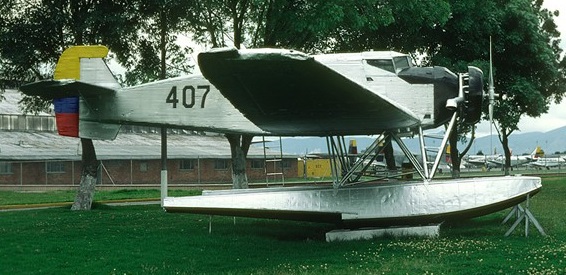
K-6 – For the Chilean Air Force (J-1 to J-12) and Portugal (cn 0960 to 0969 – 250 to 259)

K-9 – Powered by Gnome Rhone radials

K-13 – Bomber type built by Sweden with Polish and Swedish built Pegasus engines

K-16 – Built by SAAB for the Swedish Air Force (C 1 to C 16) and designated – B 3C powered by two 980 hp Bristol Pegasus XXIV or – B 3D powered by two 835 hp PZL engines

Ju.86P – high altitude pressurised bomber / reconnaissance type with a crew of 2

PV-1 – D-AUHB – prototype for the P serieswhich first flew during Jan/Feb 1940
Powered by two supercharged 900 hp Junkers-Jumo 207A diesel engines

PV-2 – Similar to the PV-1 and flew for the first time during Mar 1940

PV-3 – with a greater wingspan
Wingspan: 83 ft 11 7/8 in

P
Max speed 39,000ft: 242 mph

P-1 – As a reconnaissance / bomber type, powered by two 1000 hp Junkers Jumo 207
Later armed with one remotely controlled aft firing 7.92mm MG 17 and able to carry four SC 250 bombs internally
Wingspan: 74 ft 0 in
Length: 54 ft 0 in
Height: 15 ft 5 in
Wing area: 990 sq.ft
Empty weight: 14,560 lb
Disposable load: 6416 lb
Loaded weight: 22,930 lb
Max speed 19,685ft: 224 mph
Cruise speed: 160 mph
Service ceiling: 36,360 ft
Range: 625 miles

P-2 – As an unarmed two seat high altitude photo reconnaissance type, fitted with a pressurised cabin carrying three cameras

P-3 – One only – cn 561-V-37 – as a high altitude bomber type which first flew Nov 1941
Powered by two 1475 hp Junkers Jumo diesel two stage supercharged engines. The two stage supercharger was powered by a supercharged 1475 hp Daimler-Benz DB 605T engine within the fuselage
Service ceiling: 52,480 ft

Ju.86R – A higher altitude reconnaissance type, with greater wing span an increased fuel capacity. Prototype converted from a P type, flying February 1942

R
Height: 15 ft 5 in
Max speed: 261 mph

R-1 – Reconnaissance type
Wingspan: 104 ft 11.75 in
Length: 54 ft 0 in
Wing area: 1045 sq.ft
Empty weight: 14,950 lb
Disposable load: 6416 lb
Loaded weight: 25,420 lb
Max speed 44,935ft: 155 mph
Cruise speed: 205 mph
Landing speed: 63 mph
Rate of climb: 900 fpm
Service ceiling: 47,240 ft
Range: 980 miles

R-2 – Bomber / Reconnaissance type

R-3 – Proposed version to operate at even higher altitudes
Powered by two 1500 hp Junkers Jumo 208 supercharged diesel engines
The superchargers were powered by Daimler-Benz 605 engine inside the fuselage which was also supercharged.

Ju.86Z – Civil type
Mainly saw service on the Russian front and were usually unarmed.

Z-1 – c/n 0951 HB-IXE for Swissair – initially powered by Junkers Jumo engines.
c/n 0647 ZS-A for South Afrcan Airways.
Engines: Jumo
Range: 1555 miles

Z-2 HB-IXE – later re-engined with BMW 132 Dc radial engies and re-registered HB-IXA
HB-IXI also owned by Swissair.
Seventeen for the Manchurian Railways powered by BMW engines
Engines: BMW
Climb to 13,200ft: 16 min
Range: 935-1242 miles

Z-3 – Five aircraft for South African Airways SAA, powered by 750 hp Rolls-Royce Kestrel engine
‘Louis Trichardt’ ZS-AGE

Z-7 – Seventeen civil type for South African Airways (cn 0065 ZS-ANI) and one bomber for South African Air Force, during 1937
Initially powered by 745 hp Rolls-Royce Kestrel engines, but these were later changed to Pratt & Whitney radials.
The type was also supplied to Sweded – cn 0959 Svalan’ SE-BAE – powered by Bristol engines – later impressed into the Swedish Air Force as Tp 9 No 911 during 1940
Sweden also procuced a few manufactured under licence
Two for Lloyd Aereo Boliviano of Bolivia (cn 0013 ‘Illimani’ CB-23) during 1937, later impressed into the Bolinian Air Force during 1941
They also served with – Australia, Austria, Chile (3 – Z-1s), China (5), Germany, Hungary, Japan, Manchukuo, Portugal, Romania, Spain (2), and Switzerland.

390 were produced
Junkers Ju.60

Second Prototype

The Junkers Ju 60, which first flew in 1932, was a single-engined, low-wing monoplane high-speed airliner. Only two Ju 60s were built, but in 1934 an improved version, the Ju 160, made its appearance.
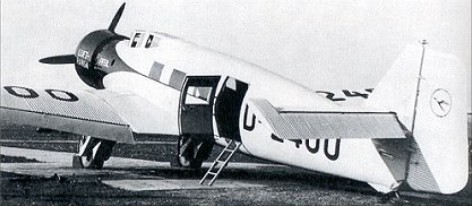
The second prototype (Werk Nr 4201) D-2400 (later D-UPAL) powered by a BMW licence built Pratt and Whitney Hornet. By the time this aircraft flew a forward retracting undercarriage had been fitted replacing the fixed undercarriage originally fitted to the first prototype (Werk Nr 4200) D-5, later D-URIM. D-UPAL was delivered to DLH shortly after completion and, named Pfiel (Arrow). It was used as a freighter on proving flights on the Berlin-Vienna-Budapest-Sofia-Salonika-Athens route until the summer of 1933. Subsequently it was converted to carry 6 passengers, as the Ju60cle, and flew on the Berlin-Breslau-Gleiwitz route and subsequently on the Essen-Dusseldorf-Cologne-Frankfurt-Nuremburg-Munich route. It was withdrawn from use in 1936 and transfered to the Luftwaffe where it was used as a liason aircraft at the Rechlin test centre.

Junkers Ju.52/3m

The original prototype (flown in May 1932) was a Ju 52 redesigned to be powered by three engines. Most early civil examples had the 447kW BMW Hornet engine, made under Pratt & Whitney licence; but the vast bulk of later sub-types had the derived engine known as the BMW 132, rated at 507-618kW.

Junkers Ju.52/3m Article

Like the original single-engined Ju 52, the tri-motor transport had a structure wholly of light alloy with corrugated skin and a very large cantilever wing-with patented ‘double wing’ flaps and ailerons giving great lift at low airspeeds. The fixed landing gear was almost unbreakable and on a few examples had spats; float-seaplane and ski versions were not uncommon.

The Ju 52/3m was by far the leading European civil airliner of the 1930s, seating 15 to 17 in single seats each side of the central aisle. It carried more than 75% of Luft-Hansa’s Europe-wide traffic in the 1930s, the airline using at least 120. Exported civil models had Wasp, Hornet and Pegasus engines, and a small number in Germany had Jumo diesels.

Thirty airlines in 25 countries made it their standard medium range airliner and it equipped the new Luftwaffe’s transport squadrons. Yet the Luftwaffe also adopted the Ju 52 as an auxiliary bomber (Behelfskampfflugzeug) in Octo¬ber 1933, and because of problems in the development of the Do 11 bomber, the Ju52 equipped many of the Luftwaffe’s bombing units as well as its transport squadrons in the mid 1930s.
Within a week of the Spanish Civil War’s start, 20 such aircraft were placed at the Nationalists’ disposal, being employed initially to ferry men and supplies from Morocco to mainland Spain. Nine aircraft were then diverted to form a bomber unit. From November 1936 the Legion Condor arrived in Spain, and its Kampfgruppe 88 bomber component had three Staffein each fielding 12 improved Ju 52/3m g4e aircraft. From February 1937 KG/88 received more modern bombers, and 55 Ju 52/3m g4e aircraft were passed to the Spanish, who used them as bombers up to the end of the war, when 23 remained on strength with 1- and 2-0-22.

In the Spanish civil war, Soviet planes went into action for the first time on 4 November 1936, repulsing Junkers 52 bombers attacking Madrid.

Based on reports that the Japanese Army used Ju.52 transports the allied code name ‘Trixie’ was assigned. Lufthansa Ju.52 3/M D-ANJH visited Japan in May 1939 to generate sales in Japan but the type was never selected for military service.

The Ju 52/3m first entered service with the Luftwaffe as the Ju 52/3m g3e bomber transport, a hybrid type providing the fledgling German bomber arm with a limited offensive capability and, more importantly, operating experience with modern multi-engined monoplanes. In 1935 the first 3mg3e bombers reached the Luftwaffe, with 1,500kg of bombs and MG 15 machine-guns in a dorsal cockpit and ventral ‘dustbin’. In 1936 about half the total production (450) of this model were serving as transports or bombers with the Condor Legion in Spain.

Total production of all models was about 4,845 on German account, 575 of which were completed before 1940. German plants then made a further 2,659, the rest comprising output by Amiot for the Luftwaffe. The latter was continued post-war by the AAC which delivered 400 by 1947 with the designation AAC.1. A further 170 were built by CASA in Spain as the C-352.

CASA C-352

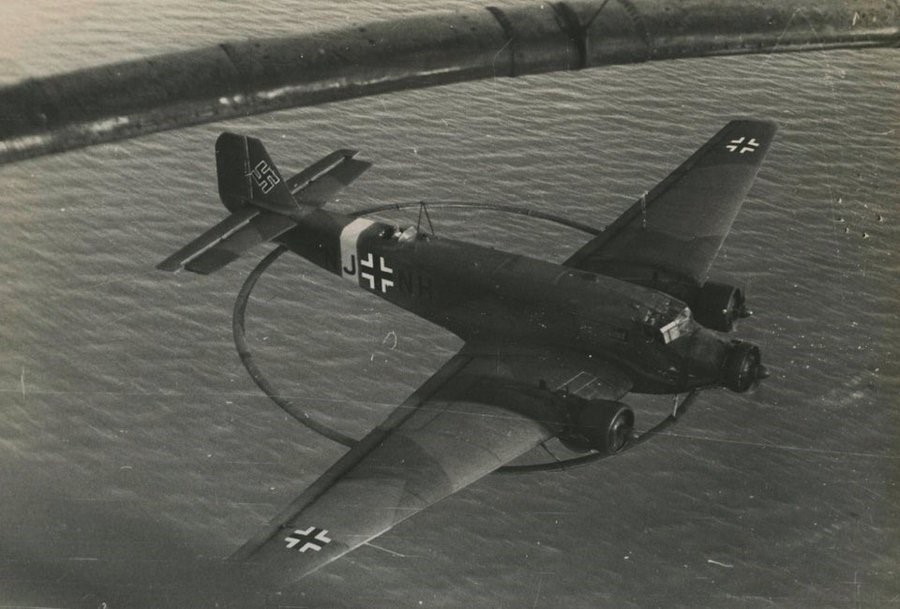
More than 3,500 served with the Luftwaffe, nearly all in the transport role with the popular names ‘Tante Ju’ (Auntie Ju) and ‘Iron Annie’. The most-produced wartime types were the 3mg5e, 7e, 8e and 14e, though differences were confined to such features as armament, loading arrangements, autopilot, glider couplings and crew armour. There were several non-transport versions, such as the g6eMS with a degaussing ring for exploding mines.

The Ju 52 ‘Minensuch’ variant had a 14m diameter current-carrying ferrous ring under the airframe, to create a magnetic field that triggered submerged naval mines.

After 1945 BEA used a fleet on internal services and the Spanish T.2B version was not withdrawn until 1975. One of the last, with the Swiss Air Force, was still active in 1979.

Ju.52/3m Recovery January 1984

Gallery

Ju 52/3
Engines 3 x 770 hp BMW 132H
Length 62 ft. (18.9 m.)
Wing span 95.9 ft (29.2 m)
Weight empty 14,325 lb. (6,500 kg.)
Armament up to 4 machine guns (Troop transport)
Max cruise 160 m.p.h. (260 kph)
Ceiling 19,000 ft. (5,800 m.) fully loaded
Range 550 miles (885 km)
Crew: 2.
Pax cap: 17 troops

Junkers Ju 52/3M Tante Ju
Engines: 3 x BMW 132 A/3, 819 hp
Length: 62.008 ft / 18.9 m
Height: 20.013 ft / 6.1 m
Wingspan: 95.965 ft / 29.25 m
Wing area: 1189.422 sq.ft / 110.5 sq.m
Max take off weight: 23152.5 lb / 10500.0 kg
Weight empty: 14531.0 lb / 6590.0 kg
Max. weight carried: 8621.6 lb / 3910.0 kg
Max. speed: 143 kt / 264 km/h
Initial climb rate: 787.4 ft/min / 4.0 m/s
Service ceiling: 16732 ft / 5100 m
Wing loading: 19.48 lb/sq.ft / 95.0 kg/sq.m
Range: 648 nm / 1200 km
Endurance: 7 h
Crew: 3
Payload: 17 Pax

Ju 52/3m g3e
Engines: 3 x BMW 132A-3, 541 kW (725 hp).
Span: 29.24m (95ft11.5in).
Length: 18.9m (62ft).
Height: 5.55 m / 18 ft 3 in
Wing area: 110.50 sq.m / 1189.41 sq ft
Max T/O weight: 10500 kg (23,146 lb).
Empty weight: 5720 kg / 12611 lb
Max speed: 165 mph at sea level.
Ceiling: 5900 m / 19350 ft
Range w/max.fuel: 1300 km / 808 miles
Operational range: 620 miles.
Crew: 3
Armament: up to 5×7.92-mm (0.312-in) mg plus 1500 kg (3,307 lb) bombs.

Ju 52
Engines: 3 x BMW 132D, 850 hp
Wingspan: 95 ft 11 in
Length: 62 ft 0 in
Height: 14 ft 10 in
Top speed: 165 mph
Range: 850 mi at 138 mph

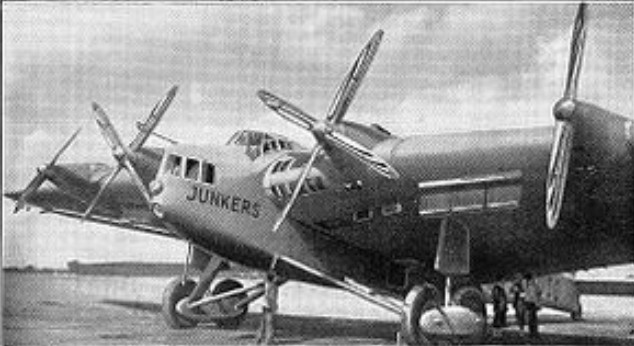
Junkers G.38 / K.51 / Mitsubishi Ki 20

As early as 1909 Junkers had been projecting aircraft capable of carrying as many as 1000 people. Recognizing, that his flying wings were over-ambitious, he started work in 1928 on a machine which incorporated much of his flying wing technology, but had a conventional fuselage and empennage.

Ju G38 powered by two L55 engines inboard and two L8a engines outboard

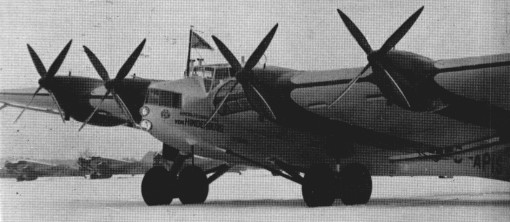
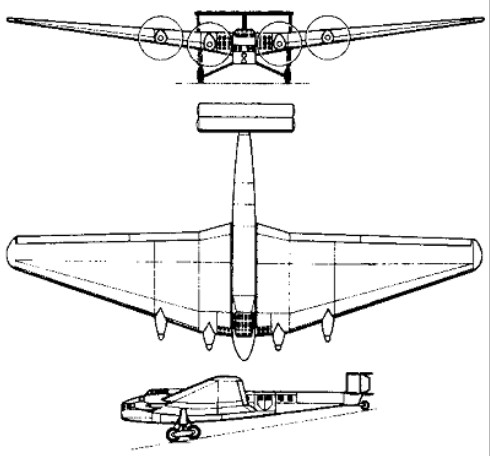
The Junkers G 38’s 44 m (144 ft) wing was 1.7 m (5 ft 7 in) thick at the root, enabling four passengers to be housed there, looking out through glazed leading edges, while the other 30 travellers sat in the fuselage. The thick wing also gave inflight access to the four engines, initially two each of 400 hp and 800 hp, but later changed to 800 hp Junkers L.88s, and finally to Jumo 204 diesel engines which left characteristic black trails.
The first flew on November 6, 1929. Production models carried 34 passengers (plus seven crew).

Two G 38s, named Deutschland and Generalfeldmarschall von Hindenburg, went into service with Deutsche Lufthansa in 1930 and 1931 on the important routes from Berlin to Copenhagen, Venice and Rome, bringing with them new standards of passenger comfort with two deck accommodation, smoking rooms and washrooms. One crashed in 1936; the second example was destroyed in a bombing raid.

Junkers G.38 Article

From the G 38, Junkers developed the K 51 military variant. It was this that the Mitsubishi works built under licence, and in conditions of strict secrecy, with the collaboration of Junkers engineers. Six Ki 20s were produced as the Army Type 92 Super Heavy Bomber between 1931 35, and the first one flew in 1931. The first two were assembled from materials imported from Germany, the third included only a proportion of imported components, but the remaining aircraft were of all Japanese manufacture. As a measure of its size, the Ki 20 had a wing area double that of the Boeing B 29 Superfortress first flown a decade later.

The Ki 20 was festooned with defensive armament and bombs. In the nose was an open bow gunner’s cockpit. There were two underwing gun turrets, with other guns located in the rear of the inboard engine nacelles, and two dorsal gun positions. The total armament, formidable for the period, consisted of eight 7.7 mm (0.303 in) machine-guns and one 20 mm (0.79 in) cannon. Bombs were carried under the fuselage on external racks. The standard bombload was 2000 kg (4400 lb) with a claimed maximum of 5000 kg (11020 lb). The bombardier, one of the crew of ten, sat in a glassed in nose position. The first four Ki 20s were powered by four Junkers 800 hp L88 gasoline engines, and the last two by 720 hp Junkers Jumo 4 diesels. The aircraft was also used as a testbed for the Kawasaki Ha 9 engine.
The performance of the ungainly Ki 20 fell far short of the expectations that the army had for a long range strategic bomber capable of attacking targets as far away as the Philippines. In squadron service great difficulty was found in maintaining the engines. Although the aircraft were flown in both Japan and Manchuria, they never saw action. The Ki 20’s main use, it would seem, was for domestic propaganda. To this end, three joined the formation fly past during the January 1940 military review in Tokyo, while another was the subject of a public exhibition.

Gallery

Junkers G 38
Engines: 4 x Jumo 204 diesel, 550kW
Max take-off weight: 24000 kg / 52911 lb
Empty weight: 14900 kg / 32849 lb
Wingspan: 44.0 m / 144 ft 4 in
Length: 23.2 m / 76 ft 1 in
Height: 7.2 m / 23 ft 7 in
Wing area: 305.0 sq.m / 3282.99 sq ft
Max. speed: 225 km/h / 140 mph
Cruise speed: 210 km/h / 130 mph
Ceiling: 6400 m / 21000 ft
Range w/max.fuel: 3500 km / 2175 miles
Range w/max.payload: 1000 km / 621 miles
Crew: 3-7
Passengers: 34

Ki 20
Engines: 4 x Jun¬kers 800 hp L88 gasoline
Wing span: 44m (144ft 4in)
Length: 23.2m(76ft 2in)
Gross weight: 25,448 kg (56 103 lb)
Speed: 200 km/h (124 mph).
Armament: eight 7.7 mm (0.303 in) machine¬guns and one 20 mm (0.79 in) cannon
Standard bombload: 2000 kg (4400 lb)
Claimed maximum: 5000 kg (11020 lb)
Crew: ten

Ki 20
Engines: 720 hp Junkers Jumo 4 diesels.
Wing span: 44m (144ft 4in)
Length: 23.2m(76ft 2in)
Gross weight: 25,448 kg (56 103 lb)
Speed: 200 km/h (124 mph).
Armament: eight 7.7 mm (0.303 in) machine¬guns and one 20 mm (0.79 in) cannon
Standard bombload: 2000 kg (4400 lb)
Claimed maximum: 5000 kg (11020 lb)
Crew: ten

Junkers W.33 / W.34

W.34

Flygindustri AB civil production included the single-engined, six-passenger W 34 built up to 1935.
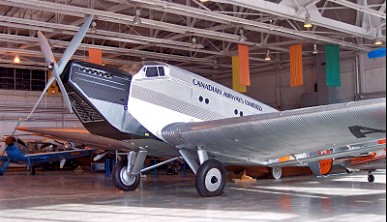
The W.33 and W.34 light transports were derived from the earlier F13. The prototype was a converted F13 with a lengthened fuselage and more powerful engine, but with the fixed undercarriage retained. The W33 and W34 came in ski and float versions and copious other variants. The W34 had a light bomber counterpart.
There were nearly 200 W33s built, but the W34 totalled nearly 1800 examples, which were extensively used by civil operators. A total of 900 saw service with the Luftwaffe as trainers and transports during World War II.
A W33 made the first east-west Atlantic crossing in 1928 from Dublin to Labrador.

Junkers W-34h

A Junkers W.34 set a world altitude record of 12,739 m / 41,795 ft on 26 May 1929.

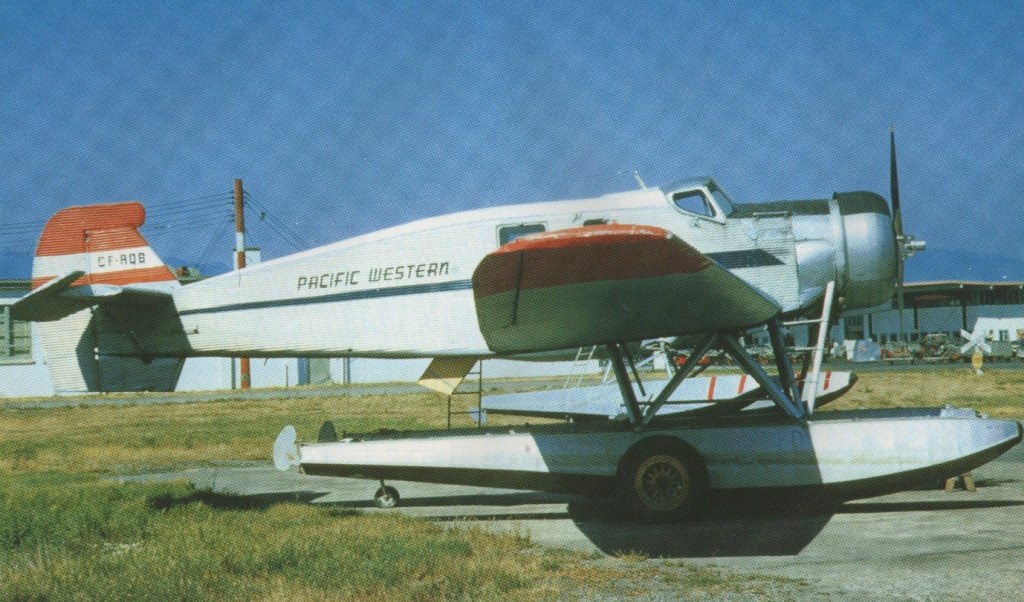
Canadian Junkers W 33

Gallery

W34h
Engine: 1 x 660hp BMW 132 radial piston engine
Max take-off weight: 3200 kg / 7055 lb
Wingspan: 17.75 m / 58 ft 3 in
Length: 10.27 m / 33 ft 8 in
Height: 3.53 m / 11 ft 7 in
Max. speed: 265 km/h / 165 mph
Ceiling: 6300 m / 20650 ft
Range: 900 km / 559 miles
Crew: 2
Passengers: 6

Junkers G.31

An early 1930s transport aircraft. The first prototype flew in September 1926. 13 built.

Gallery

G.31
Engines: 3 x Bristol Jupiter 420 hp
Passenger seats: 12

Engines: 3 x BMW Hornet-A, 385kW
Max take-off weight: 8500 kg / 18739 lb
Empty weight: 5250 kg / 11574 lb
Wingspan: 30.3 m / 99 ft 5 in
Length: 17.3 m / 56 ft 9 in
Height: 6.0 m / 19 ft 8 in
Wing area: 100.0 sq.m / 1076.39 sq ft
Max. speed: 211 km/h / 131 mph
Cruise speed: 180 km/h / 112 mph
Range w/max.fuel: 1050 km / 652 miles
Crew: 2
Passengers: 16

Junkers G.23 / G.24 / F.24

G.23

Flygindustri AB civil production included the G 23/G 24 three-engined nine-passenger airliners in 1924/25

G.23

The G23 was another first for Junkers – the world’s first all-metal three-engined passenger/transport aircraft. Only nine were built before the G24, with more powerful engines, was introduced in 1925. It was intended for new long-range Deutsche Luft Hansa services.

G.24

Eleven of the 56 examples built were converted for single-engined operation, their wing-mounted engine units removed. These were redesignated F24 (circa 1928).

The G24 trans¬port had a bomber version built in Sweden.

Gallery

G24
Engine: 3 x 310hp Junkers L.5
Max take-off weight: 6500 kg / 14330 lb
Wingspan: 27.76 m / 91 ft 1 in
Length: 15.70 m / 51 ft 6 in
Max. speed: 200 km/h / 124 mph
Range: 1300 km / 808 miles
Crew: 3
Passengers: 9