Kellett KH-17A

Experimental conversion of a standard Kellett KD-IB Autgiro into a convertiplane, for the U.S. Navy. Chief external changes are addition of wings and two wing-mounied engines. Was due to fly in 1955.

Engine: 1 x 275 hp Jacobs and 2 x 140 hp Lycoming
Rotor diameter: 40 ft
Rotors: 3-blade main; 3 propellers
Length (blades folded): 25 ft 11 in
Loaded weight: 3,400 lb
Seats: 1.

Keli SkySpark

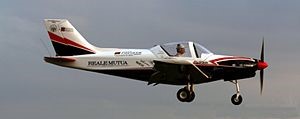
This aircraft was designed and built by the Italian astronaut Maurizio Keli (Italian: Maurizio Cheli), with the assistance of the Turin Polytechnic Institute, DigiSky and several other companies (Sparco, Sicme Motori). As a prototype, an Alpi Pioneer 300 aircraft was used. June 10, 2009 made the first flight. The main design feature is electric traction. A battery pack weighing more than 70 kg is installed on the machine. The power of this electric motor is 75 kW.

SkySpark June 12, 2009 set a world speed record for this type – 250 kilometers per hour.

Keleher Lark-IK-1

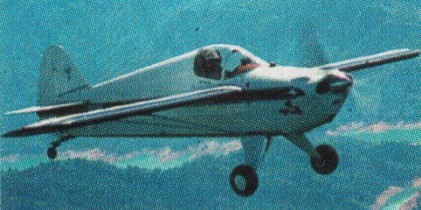
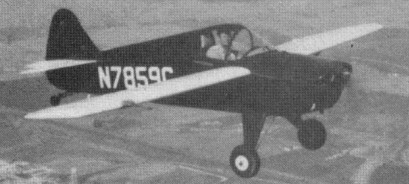
The Lark is an enclosed cabin cockpit midwing monoplane. This single-seat taildragger is relatively unusual with its strut-braced mid-wing configuration. The fuselage is of steel-tube construction, and the wing uses wood spars and ribs. The whole aircraft is fabric covered. Engines vary from 65 to 100 hp.

Gross Wt. 855 lb
Empty Wt. 555 lb
Fuel capacity 12 USG
Wingspan 23 ft
Length 17 ft
Top 135 mph.
Cruise 122 mph
Stall 55 mph
Climb rate 1000 fpm
Takeoff run 550 ft
Landing roll 700 ft
Range 300 miles

Kébouroff-Vasiliev 1912 Monoplane

Vissarion Kébouroff

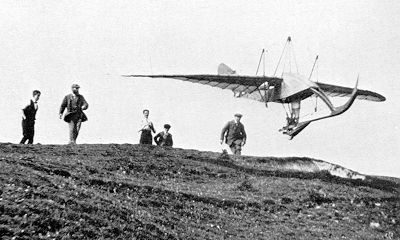
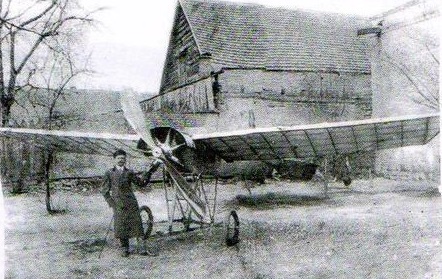
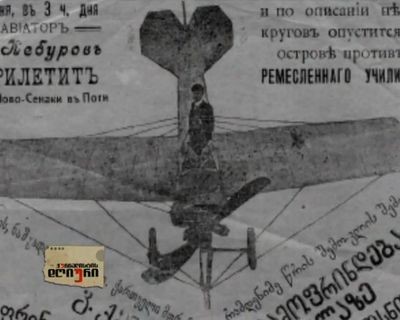
The second monoplane design of Kébouroff and Vasiliev, built in 1912 in Georgia (part of Russia). In 1910 Vissarion Kébouroff took flying lessons from Blériot at his flying school in Pau, France where he obtained a brevet from the Aero Club de France. On his return to Russia he brought back two Blériot monoplanes which he flew there frequently. As these machines were rapidly worn out and in need of repair, Kébouroff worked together with Alexander Vasiliev to design and built a new monoplane to replace the aging Blériots. Kébouroff and Vasiliev actually built a pair, where the second (1912) is given as the same construction as the first but fitted with a 50 hp Gnôme rotary engine. Later a third monoplane was built by the two which was designed somewhat along the lines of the Nieuport IV monoplane.

Kébouroff-Vasiliev

Vissarion Kébouroff (ბესარიონ ქებურია / Виссарион Савельевич Кебуров) took flying lessons from Blériot at his flying school in Pau where he obtained a brevet from the Aero Club de France on August 29, 1910, No.209, becoming the first licensed aviator from Georgia. On his return to Russia he brought back two Blériot monoplanes which he flew there frequently. As these machines were rapidly worn out and in need of repair, Kébouroff worked together with Alexander Vasiliev to design and built a new monoplane to replace the aging Blériots. Kébouroff and Vasiliev actually built a pair.

Kearney & Trecker

Kearney & Trecker Milling Machine Company was — probably still is — located in Milwaukee, Wisconsin. In the 1950’s and 60’s they leased 2 hangers on the west side of General Billy Mitchell Field in Milwaukee next to the Air National Guard with it’s F-86’s. The north hanger housed the business aviation division of the milling machine company. They had a DC-3, a Cessna 182, a Piaggio Royal Gull, and an aero-coupe.

I was 10 years old in 1958 and my dad (Brian Heath) was the mechanic for the operation, co-pilot on the DC-3, and pilot on the others. They flew milling machine sales people and maintenance people around the eastern U.S. And they often flew the company owners and brass on vacations and fishing trips.
The south hanger housed Kearney & Trecker’s other business investment — a contract with Piaggio in Italy to assemble and sell Royal Gulls. Later the P-166 executive plane was added. The first P-166 at Mitchell Field was a prototype. It was the only one I ever saw, but I did ride in it several times. While the two businesses were legally separate, the mechanics/pilots often consulted with each other.
Brian Heath