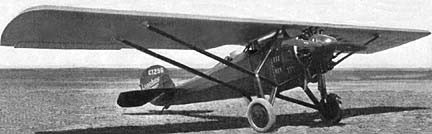
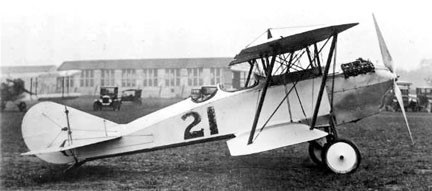
Yakolev AIR-5 / Ya-6 / AIR-6

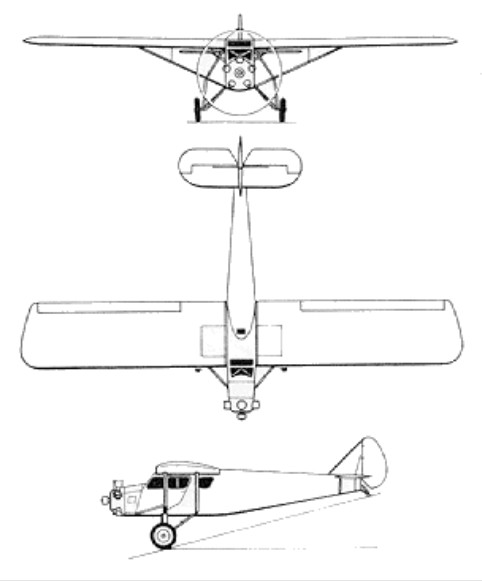
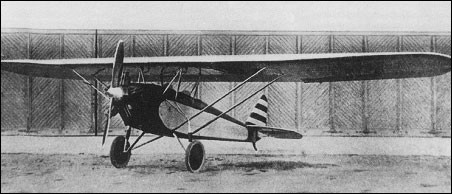
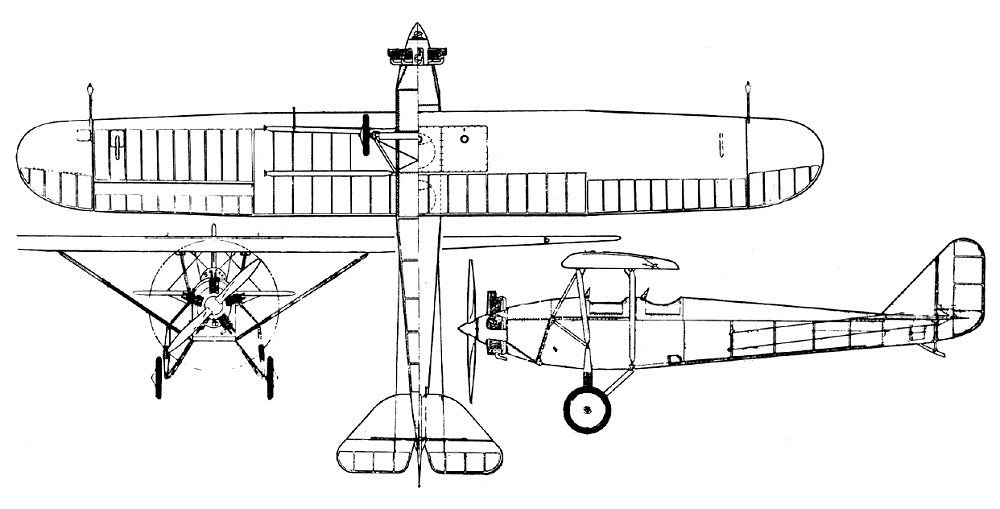
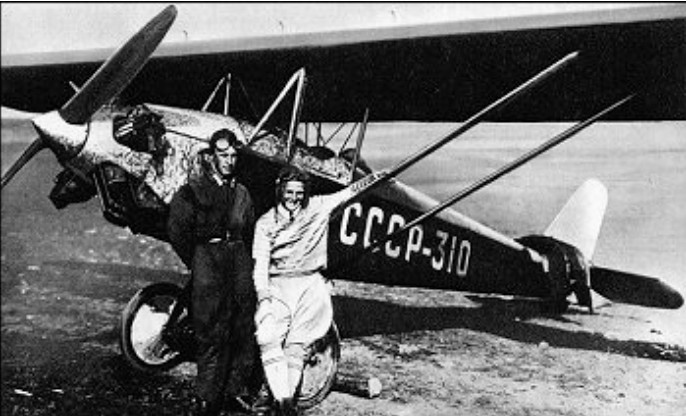
AIR-6

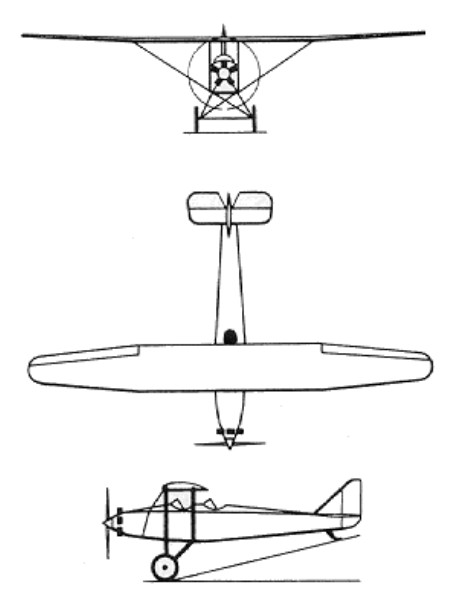
An AIR-5 adaptation for the domestic M-11 engine, designated AIR-6, was ready in May 1932, flew on September 8 and passed all trials easily. Adopted as short range liaison aircraft.
In 1934 a group of AIR-6 performed flight Moscow-Irkutsk-Moscow (with refuel landings), covering more than 10,000km.
During 1934-36 a total of 486 AIR-6 were built. Twenty of them were modified as air ambulance with room for a stretcher and doctor.

Engine: 1 x M-11, 81kW
Max take-off weight: 993 kg / 2189 lb
Empty weight: 620 kg / 1367 lb
Wingspan: 12.1 m / 40 ft 8 in
Length: 8.0 m / 26 ft 3 in
Height: 2.3 m / 8 ft 7 in
Wing area: 19.8 sq.m / 213.13 sq ft
Max. speed: 166 km/h / 103 mph
Cruise speed: 140 km/h / 87 mph
Ceiling: 4500 m / 14750 ft
Range: 650 km / 404 miles
Crew: 1
Passengers: 2

Yakolev Ya-6 (AIR-6)

Yakolev AIR-4 / AIR-8

AIR-4

With his next design, the “AIR-3” of 1929, Yakovlev chose to go to a monoplane configuration, resulting in a tidy parasol-winged aircraft powered by a five-cylinder radial Czech-made Walter NZ engine; the AIR-3 had additional fuel tanks for long-range operation. A handful of “AIR-4” machines was built, featuring various improvements such as doors to make it easier for the two crew to get in and out.

The AIR-4s were used for various tests and trials, including one in which the aircraft was given translucent skinning as something of a “visual stealth” measure as the Kozlov PS.

Yakovlev also designed a specialized trainer version of the AIR-4, the “AIR-8”, very similar to the AIR-4 but with various tweaks, particularly reinforcement of landing gear and the like to tolerate the blunders of trainee pilots. Only one was built, the VVS (Voyenno Vozdushniye Sily / Red Air Force) evaluating it, then forgetting about it.

Variation: Kozlov PS

AIR-4
Engine: Walter NZ
Wingspan: 11.1 m / 36 ft 5 in
Wing area: 36.5 m2 / 392.88 sq ft
Length: 6.94 m / 23 ft 9 in
Empty weight: 395 kg / 871 lb
Take-off weight: 630 kg / 1389 lb
Max. speed: 150 km/h / 93 mph
Ceiling: 4000 m / 13,100 ft
Range: 500 km / 311 miles

Yakolev Ya-3 Pionerskaja Pravda

A development of the AIR-2 in parasol monoplane configuration, it used an identical fuselage, powerplant, landing gear and tail. Finance for construction was provided by Osoaviakhim.
The aircraft was ready in the Summer of 1929 and on September 6 pilots Filin and Kovalkov (at the time students of the VVA, as well as a designer), flew nonstop from Mineralnye Vody to Moscow covering 1835km with average speed 166.8km/h, setting another International Record for Yakolev’s aircraft.

Engine: 1 x Walter, 44kW
Max take-off weight: 762 kg / 1680 lb
Empty weight: 392 kg / 864 lb
Wingspan: 11.0 m / 36 ft 1 in
Length: 7.1 m / 23 ft 4 in
Height: 2.4 m / 8 ft 10 in
Wing area: 16.5 sq.m / 177.60 sq ft
Max. speed: 146 km/h / 91 mph
Cruise speed: 125 km/h / 78 mph
Ceiling: 4200 m / 13800 ft
Crew: 2

Yakolev Ya-3 Pionerskaja Pravda

Yakolev AIR-2 / Ya-2S

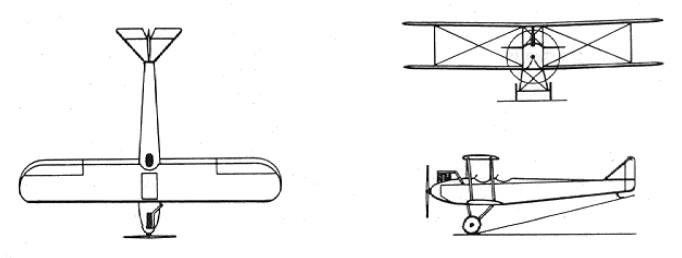
A development of the AIR-1, with a radial engine, the Air-2 was built in two versions with size and construction almost identical to the predecessor.
The first one was powered by M-23 engine. It had a plexiglas canopy covering both cockpits and opening sidewards. But the aircraft was too slow to show advantage of a canopy. In addition. engine vibration was above acceptable level.
A second version with a 60hp Walter engine had performance slightly worse (due to engine drag) than the AIR-1. Four were built and used for training.
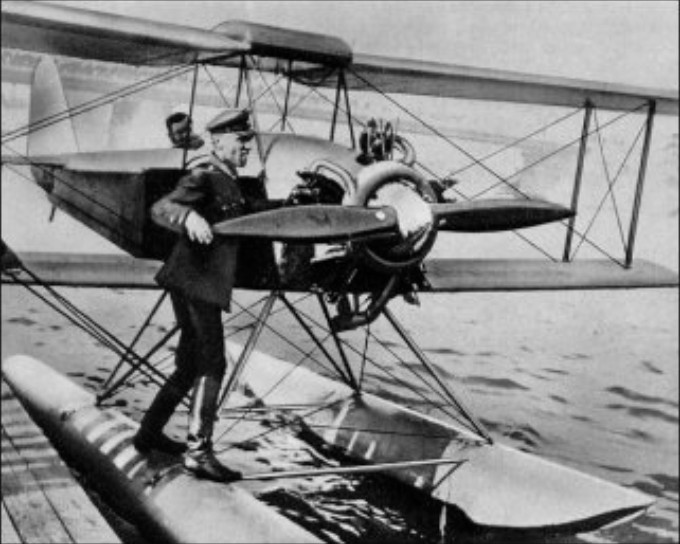
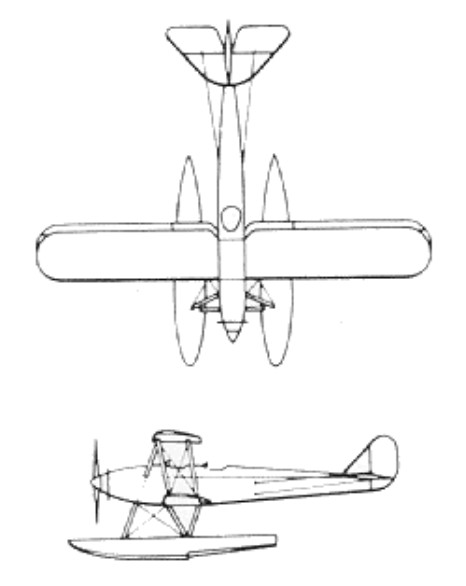
A version of the AIR-2 with a more powerful Siemens engine was designated Ya-2S. Performance was improved substantially and it became possible to install the AIR-2S on floats designed by V.B.Shavrov. The floatplane version was flown on May 18, 1931. Transition from wheels to floats took as little as 1hour 10minutes. Pilot B.L.Bukhgolts and passenger V.B.Shavrov performed a short straight flight, and without stopping the engine another 10 minutes of circle flight. Next crew to fly were Ju.I.Piontkovskij and A.S.Yakolev.
The aircraft was flown many times on Moscow river (Moscow) without any problems.

Engine: 1 x Siemens Sh13A, 62kW
Max take-off weight: 710 kg / 1565 lb
Empty weight: 470 kg / 1036 lb
Wingspan: 8.9 m / 29 ft 2 in
Length: 7.7 m / 25 ft 3 in
Wing area: 18.7 sq.m / 201.28 sq ft
Max. speed: 140 km/h / 87 mph
Cruise speed: 120 km/h / 75 mph
Ceiling: 3350 m / 11000 ft
Range: 500 km / 311 miles
Crew: 2

Yakolev AIR-2

Yakolev AIR-1

After success with the glider young designer decided to build single-seat ‘flying motorcycle’ with 18hp engine. But consultations with his advisor and good-wisher Vladimir Pyshnov changed Yakolev’s plans. There was a need in two-seat trainer with much more powerful engine. A 60hp ‘Cirrus’ was chosen. Wood-and-fabric construction was common for light trainers, with front and upper parts of the fuselage covered with plywood.
Finally the project was approved by Osoaviakhim, and Yakolev received money collected by Moscow Pioneers. After day’s work on the airfield he turned into designer, treasurer and administrator at the same time. Among his backers at this critical time was S.V.Ilyushin.
But some ill-wishers were around too. They not just expressed their skepticism. One of students at the Academy handed in a report about errors in Yakolev’s calculations. Yakolev was summoned by the Osoaviakhim executives and was examined on aircraft airworthiness. He was discouraged and almost lost trust in his project. But V.Pyshnov checked his calculation and gave Yakolev written certificate with his personal approval.
AIR-1 was finished on May 1, 1927 and performed its maiden flight on May 12 with Yu.I.Piontkovsky at the controls. It was a complete success. All test requirements were fulfilled within the following two weeks, without serious rebuilds. The aircraft was approved for a trial flight Moscow-Kharkov-Sevastopol-Moscow. It was piloted by Yu.I.Piontkovsky, A.S.Yakolev participated as a passenger. They took off early on June 12, 1927 from Moscow. After landing and refueling in Kharkov they touched down in Sevastopol in the evening of the same day.
The return leg was made by Piontkovsky alone. He flew non-stop for 15h 30min and covered distance 1420km, creating two records in the aircraft class: for distance covered and time being airborne. Designer and test-pilot were given money rewards and diplomas. But the greatest reward was Yakolev’s acceptance by Air Force Academy (VVA).
During the fall of 1927 AIR-1 participated in military exercises of Odessa military district, serving as communication aircraft. It proved to be superior over other presented light aircraft (powered by 18-20hp engines). Later AIR-1 was operated by flying clubs.

Engine: 1 x A.D.C. Cirrus I, 44kW
Max take-off weight: 535 kg / 1179 lb
Empty weight: 335 kg / 739 lb
Wingspan: 8.9 m / 29 ft 2 in
Length: 7.0 m / 23 ft 12 in
Height: 2.7 m / 9 ft 10 in
Wing area: 18.7 sq.m / 201.28 sq ft
Max. speed: 140 km/h / 87 mph
Cruise speed: 120 km/h / 75 mph
Ceiling: 3800 m / 12450 ft
Range: 480 km / 298 miles
Crew: 2

Yakolev VVA-3 / AIR-1

Yakolev

While working as a mechanic at Khodynka airfield, Yakolev had access to an aircraft graveyard in a ravine next to the flight area. In the course of a dozen years it was filled with wrecked airframes from all over the world, and Alexandre Sergeevich fully used his chance to study variety of construction methods, examine the nature of breakdowns and to discover the weak points in damaged parts.
Aieksandr Sergievich Yakolev won a design competition for lightplanes even before entering an engineering academy in 1927. His design bureau was established 1935, and first military design was the Yak-4 twin-engined fighter, completed 1939. The Yak-1/3/9 series of single-seat fighters served the Soviet Union well in combat during Second World War and were built in larger numbers than any other Soviet wartime fighter. A Yak-3 airframe was modified to produce the Yak-15 jet fighter in 1945, developed subsequently as the Yak-17. The Yak-23 of 1947 was a complete redesign, resembling the earlier fighters only in fuselage configuration.
Other post-war Yakolev designs included the Yak-12 high-wing utility aircraft, produced also in Poland and China, Yak-11 and Yak-18 trainers, Yak-28 twin-jet bomber and reconnaissance aircraft (production began 1960) and related Yak-28P radar-equipped all-weather interceptor (first flown 1960), and Yak-40 (first flown October 1966) and Yak-42 (first flown March 1975 and still in production) short-range transports. The important Yak-38 operational VTOL combat aircraft (first flown January 1971 for Russian naval use) was followed by a new VTOL prototype known as the Yak-41 (first flown March 1987) which was subsequently abandoned, as was the projected next-generation STOVLYak-43 and the Yak- 44 shipborne AEW&C aircraft. The Yak-142 transport is a new variant of Yak-42D, featuring mostly US digital avionics and other improvements. Projected airliners include the short-range twin-turbofan Yak-46-1 for 126 passengers, short-range Yak-46-2 with propfan engines, and Yak- 242138-180 passenger short-range airliner.
In the field of general aviation, Yakolev developed the Yak-18T 4-seat multipurpose lightplane development of Yak-18 (first flown 1967 and still available), Yak-50 aerobatic sporting aircraft (first flown 1972), Yak-52 tandem two-seat piston trainer (first flown 1974 and still built in Romania), Yak-54 two-seat aerobatic trainer (first flown December 1993), Yak-55M single-seat aerobatic aircraft (first flown 1989), Yak-58 six-seat business transport with a pusher piston engine (first flown April 1994), and Yak- 112 four-seat light aircraft (first flown October 1992). General aviation projects include Yak-48, thought to be derived from the Israeli-designed Galaxy, Yak-56 piston-engined primary trainer and Yak-57 single-seat aerobatic competition aircraft. Yakolev is also a partner with Aermacchi of Italy in the Yak/Aem-130 and Yak-131 jet trainer and light combat aircraft program. In total, Yakolev has produced over 70,000 aircraft of more than 100 types since 1927, and the present Design Bureau is joined by the Saratov and Smolensk manufacturing facilities under Yak Aircraft Corporation.

On 22 August 1989, Alexander Yakovlev died at age 83.
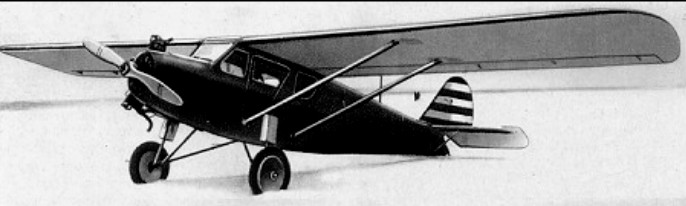
Yackey BRL-12

Yackey BRL-12 on expedition

The 1926 Yackey BRL-12 Transport was a conversion of war surplus Breguet 14.B2 with corrugated-metal fuselage.

One was converted for Dr Matthew Stirling 1926 New Guinea expedition, as “The Ern” for $7,500. When glue on the wooden floats deteriorated after two months, the plane was abandoned on the Mamberamo River.

On river bank after one pontoon failed – courtesy Howard Hamer

Engine: Liberty 12, 420hp
Wingspan: 48’3″
Length: 29’1″
Useful load: 2400 lb
Max speed: 120 mph
Cruise speed: 114 mph
Stall: 32 mph
Seats: 3

Yackey Thomas-Morse TM-1

Yackey Prototype C1296

The Yackey Aircraft Co was involved in converting surplus Thomas-Morse TM-1s into 2-3p civil models in 1923 for $1,275-1,475, as well as surplus Renault-powered Breguets into transports for $4,750 and up. Designed by Art Chester, two were completed; C672 and C1296.

Engine: Wright J-5, 225hp
Wingspan: 41’2″
Length: 26’2″
Max speed: 140 mph
Cruise: 115 mph
Stall: 40 mph
Seats: 3