
A 1959 modified Auster J5G fitted with a 180hp Lycoming O-360 engine
A 1959 modified Auster J5G fitted with a 180hp Lycoming O-360 engine
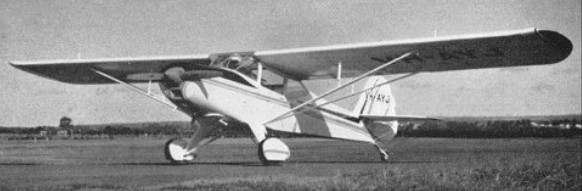
An Auster Autocrat J1 conversion with the 150hp Lycoming O-320 engine
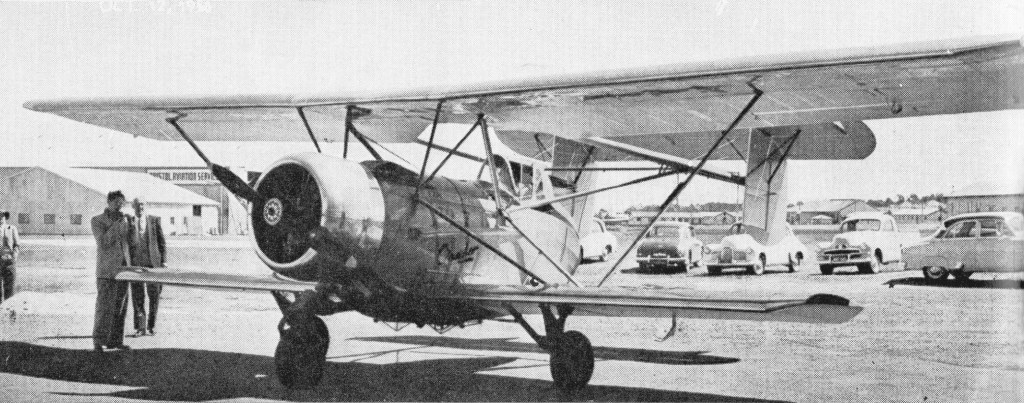
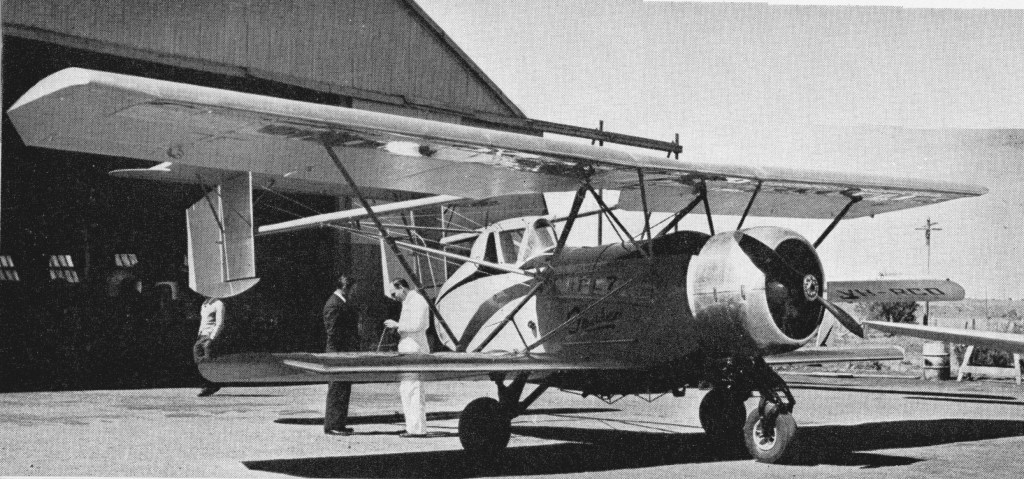
In 1955 Kingsford Smith began design of special agricultural type which materialised as the PL-7 Tanker biplane. Fuselage was mild-steel tank, tail carried on tubular booms, tricycle landing gear. Flew September 1956.
Australia
Formed in 1946 from Kingsford Smith Air Service. Undertook sales, servicing and overhaul of light and medium aircraft, and in 1955 began design of special agricultural type which materialised as PL-7 Tanker biplane. Fuselage was mild-steel tank, tail carried on tubular booms, tricycle landing gear. Flew September 1956. Later Cropmaster was entirely different low-wing monoplane, and special Auster conversions were offered. To these were added (1959/1960) E.P.9 conversion, details of which were supplied to Lancashire Aircraft. Company sold out in 1963 to Victa Ltd. of Milperra, Sydney.
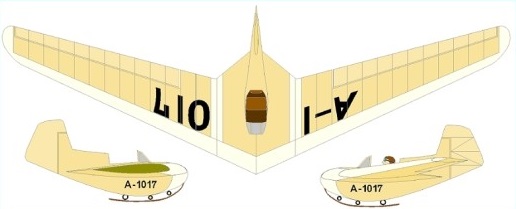
The Kimura HK-1 was a glider designed by Hidemasa Kimura and built by Ito Airplane Works in Japan in 1939 to investigate the possibilities of tailless aircraft. It was a single-seat design with an open cockpit, swept wings, and a single tail fin. The HK-1 made a total of 169 test flights between 15 December 1939 and 7 March 1940, towed aloft behind a car.
By this time, the glider’s success had attracted the attention of the Army, which arranged to purchase the aircraft. It was taken to the Tachikawa factory for testing, but was crashed after only 13 flights, on 16 April 1940. The design proved sufficiently interesting for the Army to commission further research into the tailless concept, which would lead to the Kayaba Ku-2.
Wingspan: 10.00 m (32 ft 10 in)
Length: 3.50 m (11 ft 6 in)
Height: 1.80 m (5 ft 11 in)
Wing area: 14.0 m2 (151 ft2)
Maximum speed: 85 km/h (53 mph)
Crew: One pilot
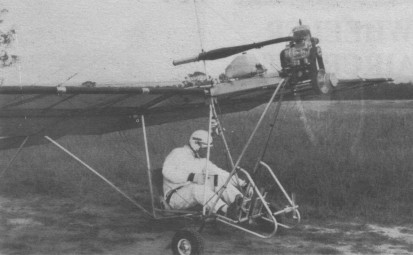
Single seat single engined high wing mono¬plane with conventional three axis control. Wing has unswept leading edge, swept for¬ward trailing edge and tapering chord; flaps fitted. Cruciform tail. Pitch control by fully flying tail; yaw control by fully flying rudder; roll control by half span ailerons; control inputs through stick for pitch/roll and pedals for yaw. Wing braced from above by kingpost and cables, from below by cables; single surface. Undercarriage has three wheels in tail dragger formation. Ground steering by differential braking; castoring tailwheel. Brakes on main wheels. Aluminium tube framework, without pod. Engine mounted at wing height driving tractor propeller.
The original Sky Rider was built purely as a one off experimental machine, but aroused so much interest amongst enthusiasts worldwide, not least because of its ‘outstanding individual achievement’ award from the EAA in 1978, that Gary decided to market the design.
Conceptually the design is a fairly straight forward high wing tube and Dacron machine, using a single surface wing (in standard form at least) and fully flying cruciform tail. The engine is hung out front with a tractor propeller, a position which allows easy fitment of a number of different power plants up to a recommended maximum of 50 hp. The most popular among Sky Rider builders are McCulloch Mc101, Robin EC25PS and Cuyuna 430.
Quite the most unusual aspect of the design is its use of flaps, which are more normally found on aircraft with much higher landing speeds, at the top end of the microlight category. Fitted to the trailing edge of the wing, the flaps give stalling speeds as low as 18mph (29kph) on the McCulloch engined version.
Ground steering arrangements are also unusual. The tailwheel is castoring rather than steerable, while the main wheels can be braked independently, allowing the aircraft to be steered effectively on the rudder.
Engine: McCulloch Mc101, 12hp.
Propeller diameter and pitch 54 x 27 inch, 1.37 x 0.69m.
Chain reduction, ratio 4.0/1.
Power per unit area 0.08hp/sq.ft, 0.9hp/sq.m.
Standard fuel capacity 1.2 US gal, 1.0 Imp gal, 4.5 litre; 3.6 US gal, 3.0 Imp gal, 13.6 litre tank optional.
Length overall 19.0 ft, 5.79 m.
Height over¬all 7.8 ft, 2.38 m.
Wing span 32.3 ft, 9.85 m.
Chord at root 5.0ft, 1.52m.
Chord at tip 4.0ft, 1.22m.
Dihedral 2 deg
Sweepback 0 deg
Elevator span 10.3 ft, 3.14 m.
Rudder height 5.0ft, 1.52 m.
Total wing area 144 sq.ft, 13.4 sq.m.
Total aileron area 17.5 sq.ft, 1.63 sq.m.
Rudder area 9.5 sq.ft, 0.88 sq.m.
Total elevator area 20.0 sq.ft, 1.86 sq.m.
Wing aspect ratio 7.1/1.
Wheel track 4.5 ft, 1.37 m.
Wheelbase 13.0 ft, 3.96 m.
Tailwheel diameter overall 4 inch, 10 cm.
Main wheels diameter overall 12 inch, 30 cm.
Empty weight 195 lb, 88kg.
Max take off weight 400 lb, 181 kg.
Payload 205 lb, 93 kg.
Max wing loading 2.78 lb/sq.ft, 13.5 kg/sq.m.
Max power loading 33.3 lb/hp, 15.1 kg/hp.
Load factors +3.0, 1.0 design limit; >+4.5, > 1.0 ultimate.
Max level speed 43 mph, 69kph.
Never ex¬ceed speed 65mph, 105kph.
Cruising speed 40 mph, 64 kph.
Stalling speed (flaps up) 25 mph, 40 kph.
Stalling speed (ground effect) 18 mph, 29 kph.
Max climb rate at sea level 150ft/min, 0.8m/s.
Min sink rate 300ft/min at 28mph, 1.5m/s at 45 kph.
Best glide ratio with power off 6/1 at 33 mph, 53 kph.
Take off distance 250 ft, 75 m.
Landing distance 160 ft, 50 m.
Service ceiling 5000 ft, 1520 m.
Range at average cruising speed 40 mile, 64 km.
Engine: Robin EC25PS, 20hp.
Belt reduction, ratio 2.5/1.
Power per unit area 0.14hp/sq.ft, 1.5 hp/sq.m.
Standard fuel capacity 1.2 US gal, 1.0 Imp gal, 4.5 litre; 3.6 US gal, 3.0 Imp gal, 13.6 litre tank optional.
Length overall 19. 0 ft, 5. 79 m.
Height over¬all 7.8 ft, 2.38 m.
Wing span 32.3 ft, 9.85 m.
Chord at root 5.0ft, 1.52m.
Chord at tip 4.0ft, 1.22m.
Dihedral 2 deg
Sweepback 0 deg
Elevator span 10.3 ft, 3.14 m.
Rudder height 5.0ft, 1.52 m.
Total wing area 144 sq.ft, 13.4 sq.m.
Total aileron area 17.5 sq.ft, 1.63 sq.m.
Rudder area 9.5 sq.ft, 0.88 sq.m.
Total elevator area 20.0 sq.ft, 1.86 sq.m.
Wing aspect ratio 7.1/1.
Wheel track 4.5 ft, 1.37 m.
Wheelbase 13.0 ft, 3.96 m.
Tailwheel diameter overall 4 inch, 10 cm.
Main wheels diameter overall 12 inch, 30 cm.
Empty weight 210 lb, 95kg.
Max take off weight 400 lb, 181 kg.
Payload 190 lb, 86 kg.
Max wing loading 2.78 lb/sq.ft, 13.5 kg/sq.m.
Max power loading 20.0 lb/hp, 9.1 kg/hp.
Load factors +3.0, 1.0 design limit; >+4.5, > 1.0 ultimate.
Max level speed 50mph, 80kph.
Never ex¬ceed speed 65mph, 105kph.
Cruising speed 45 mph, 72 kph.
Stalling speed (land flap) 21 mph, 34 kph.
Max climb rate at sea level 300ft/min, 1.5m/s.
Min sink rate 300ft/min at 28mph, 1.5m/s at 45 kph.
Best glide ratio with power off 6/1 at 33 mph, 53 kph.
Take off distance 200 ft, 60 m.
Landing distance 200 ft, 60 m.
Service ceiling 10,000 ft, 3050 m.
Range at average cruising speed 30 mile, 48 km.
Engine: Cuyuna 430, 30hp.
Power per unit area 0.21hp/sq.ft, 2.2 hp/sq.m
Standard fuel capacity 1.2 US gal, 1.0 Imp gal, 4.5 litre; 3.6 US gal, 3.0 Imp gal, 13.6 litre tank optional.
Length overall 19. 0 ft, 5. 79 m.
Height over¬all 7.8 ft, 2.38 m.
Wing span 32.3 ft, 9.85 m.
Chord at root 5.0ft, 1.52m.
Chord at tip 4.0ft, 1.22m.
Dihedral 2 deg
Sweepback 0 deg
Elevator span 10.3 ft, 3.14 m.
Rudder height 5.0ft, 1.52 m.
Total wing area 144 sq.ft, 13.4 sq.m.
Total aileron area 17.5 sq.ft, 1.63 sq.m.
Rudder area 9.5 sq.ft, 0.88 sq.m
Total elevator area 20.0 sq.ft, 1.86 sq.m.
Wing aspect ratio 7.1/1.
Wheel track 4.5 ft, 1.37 m.
Wheelbase 13.0 ft, 3.96 m.
Tailwheel diameter overall 4 inch, 10 cm.
Main wheels diameter overall 12 inch, 30 cm.
Empty weight 220 lb, 100kg.
Max take off weight 400 lb, 181 kg.
Payload 180 lb, 82 kg.
Max wing loading 2.78 lb/sq.ft, 13.5 kg/sq.m.
Max power loading 13.3 lb/hp, 6 kg/hp.
Load factors +3.0, 1.0 design limit; >+4.5, > 1.0 ultimate.
Never ex¬ceed speed 65mph, 105kph.
Cruising speed 48 mph, 77 kph.
Max climb rate at sea level 400ft/min, 2m/s.
Min sink rate 300ft/min at 28mph, 1.5m/s at 45 kph.
Best glide ratio with power off 6/1 at 33 mph, 53 kph.
1983: Gary Kimberley, 255 Woniora Road, Blakenhurst, NSW 2221, Australia.
Built the UL Skyrider
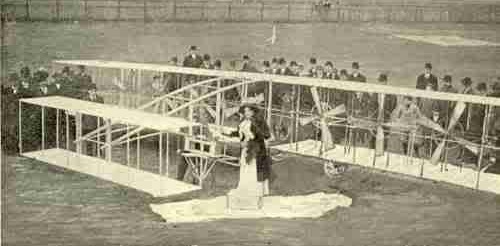
Wilbur R. Kimball’s 1909 aeroplane “New York No.1” at Morris Park, New York, during its christening by the well-known Ziegfield Follies showgirl Anna Held on March 12, 1909. With eight 4-bladed propellers driven by one engine; the machine was built at Morris Park under the direction of the American Aeronautic Society but appears not to have flown with any great success.
Turboprop two-seater.
Six-seat executive transport

