Kosch Ornithopter

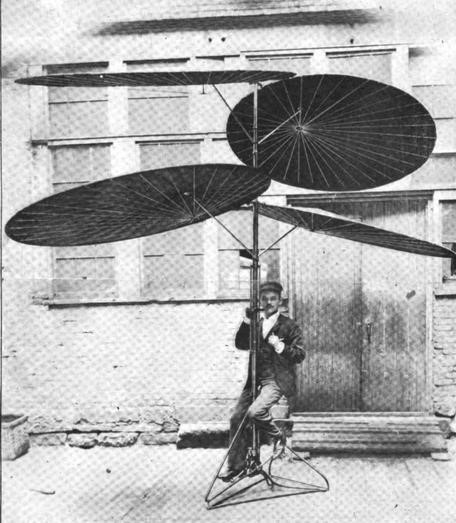
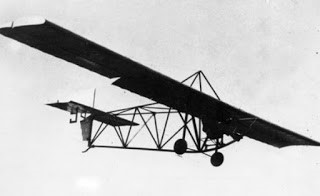
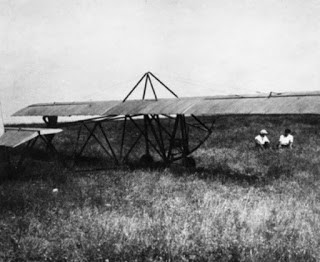
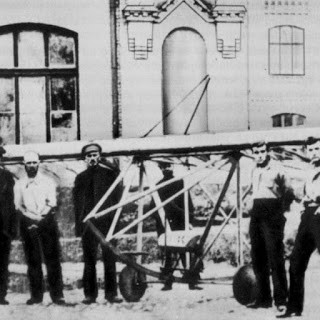
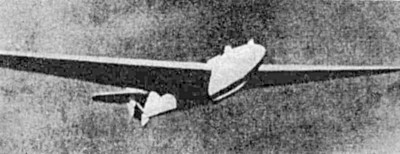
A patented experimental human-powered machine for aerial navigation built in Cleveland, Ohio, by Rudolph Kosch. The machine was published in the USA and in several magazines in Europe. In a French article from October 1896 the machine was identified as “un hélicoptère à ailes battantes” – a helicopter having flapping wings.


Kortenbach & Rauh Kora 1

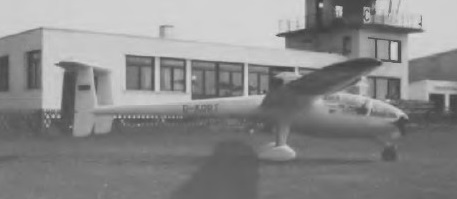
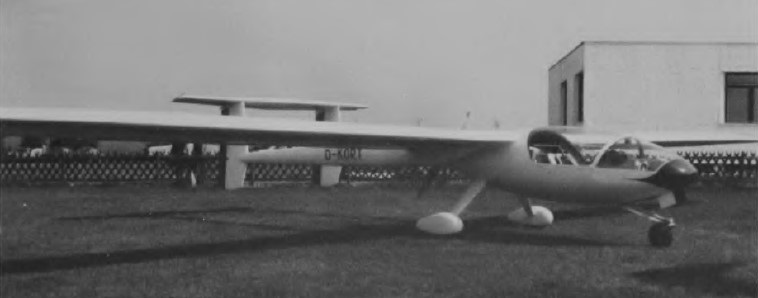
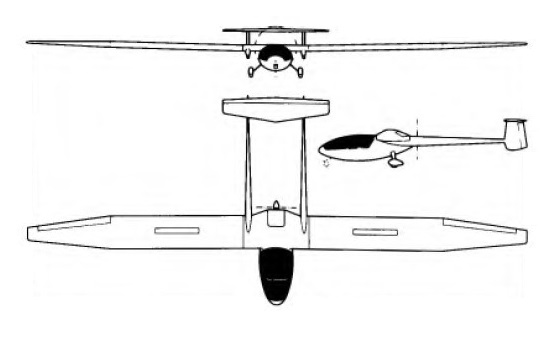
Having a twin boom pusher configuration and (on the second prototype) a conventional fixed, spatted main undercarriage, the Kora 1 is a side-by-side two seater intended primarily for training; it was designed by Messrs Schultes, Seidel and Putz, and the firm of Kortenbach & Rauh is best known for its range of furniture and other products for the garden and household.

The prototype Kora 1 made its maiden flight on 13 September 1973 and had a forwards-retracting nosewheel and the main wheels retracting backwards into the tail booms. The second prototype, which first flew on 9 April 1976, had a fixed main undercarriage to save weight and complexity, and was still undergoing flight testing at the beginning of 1978, at which time it had not yet been decided whether to start production, although orders had already been received for about a dozen Koras.

The power plant is a 65hp Limbach SL 1700EC1 air-cooled ‘flat four’ driving a Hoffman two-blade variable-pitch feathering propeller. The Kora is of all-wood construction, with cantilever high wings which have Schempp-Hirth air brakes in the upper surfaces. The pod-type fuselage nacelle has roomy side-by-side seating in a cockpit 47in wide, the canopy opening sideways to starboard. The twin tail booms end in twin fins and rudders which have the tailplane mounted on top of them. The fixed main undercarriage units on the second prototype consist of two spatted main wheels set on thin steelsprung legs cantilevered from the fuselage underside.

Second prototype
Engine: Limbach SL 1700 EC1, 48.5 kW / 65 hp
Span: 18.0 m / 59 ft 0.75 in
Length: 7.4 m / 24 ft 3.25 in
Height: 1.85.m / 6 ft 0.75 in
Wing area: 19.44 sq.m / 209.25 sq ft
Aspect ratio: 16.65
Wing section: Wortmann FX-66-S-1967161
Empty weight: 510 kg / 1,124 lb
Max weight: 750 kg / 1,653 lb
Water ballast: None
Max wing loading 38.58 kg/sq.m / 7.9 lb/sq ft
Max level speed at S/L: 110 kt / 205 km/h / 118 mph
Stalling speed: 35 kt / 65 km/h
Max rate of climb at S/L: 180 m/min / 590 ft/min
Min sinking speed: 0.85 m/sec / 2.79 ft/sec at 53 mph / 51 kt / 95 km/h
Best glide ratio: 30:1 at 59 mph / 54 kt / 100 km/h

Korolyev KPIR-3

Sergei Korolyov decided to enrol in the Kiev Polytechnic Institute, where at that time it was supposed to begin training aviation engineers at the mechanical faculty.

There was a globular circle at the institute. His work was monitored and helped by many prominent scientists who taught at the KPI. Sergey Korolev became a member of it. He worked, as all are many and enthusiastic. Often at night. Korolev slept sometimes in the workshop on the shavings. He loved to work and was a master of all trades. After that, they never altered anything. Gliders built in the institute workshops, participated in international competitions, receiving the highest marks. At circles there was a rule: who built a glider, he flew it.

A training glider KPIR-3 was built, he contributed a share of his work and Korolev. Sergei flew on it. One of the flights almost cost him his life. On the border of the site – wasteland, where the gliders were tested, from a pile of garbage a water pipe was sticking out. Sergei did not notice and planted a glider on it. The blow was strong enough and Korolev lost consciousness for a while.

In 1926, after two years of studying at the KPI, Sergei Korolyov was transferred to Moscow for a special evening group on the aerodynamics of the Moscow Higher Technical School.

Korolyev S.K.9

The two-seat SK-9 was designed by S.P.Korolev in 1934 – 1935 and was built at Osoaviakhim’s Planernyi Zavod (“Glider factory”, Tushino, near Moscow) in the Fall of 1935. The glider was built as a two-seater and had an unusual for sailplanes airframe: SK-9 had very high wing load and was capable to withstand loads up to 7g.

Chosen parameters were based on earlier experiments with BICh-11 glider, which was never flown with rocket engine just because light wooden airframe “expired” prior to arrival of the powerplant.

The SK-9 was an all-wooden aircraft. Box-type spars, ribs and 1mm plywood skin formed rigid box with strong resistance against bending and twisting. Fuselage of the oval crossection had 1mm to 1.5mm external skin and internal 1mm plywood skin for extra rigidity. Wing carried 2-section slotted ailerons covered with fabric.
Landing gear included a ski and fixed tailskid. The wooden ski was covered with steel and linked to the fuselage by set of rubber rings protected with fabric cover.

Pilot’s and passenger cockpits – of the open type. Pilot is protected by small plastic windshield. Rear cockpit had a removable set of controls.

During the Fall of 1935 the SK-9 passed factory trials at Tushino airfield, performing number of flights both towed by the airplane and in free flight.

It was flown (towed by an R-5) from Moscow to Koktebel for participation in the XIth All-Union Glider Convention (September 6 – October 6, 1935) in Koktebel (it flew there from Moscow on tow, as part of an “aerotrain”, with Korolev onboard as a passenger). During overflight and at the Convention SK-9 proved its high performance and good handling at speeds up to 180km/h even in “rough air” conditions. During flight from Moscow to Koktebel and back the SK-9 was piloted by glider-pilot Romanov and S.P.Korolev himself (he was a licensed pilot too).

The SK-9 was designed to be converted into a Rocketoplane – aircraft propelled by a rocket engine, and was later converted into the RP-318-1 rocket-plane.

The SK-9 fuselage and leading edges of the wing were painted bright-red. Wing, tailplane, rudder and nose section of the fuselage – ivory. Landing ski – black.

SK-9
Wingspan: 17.0 m
Wing area: 22 m2
Wing aspect ratio: 13.1
Length: 7.33 m
Height: 2.64 m
Empty weight: 300 kg
Loaded weight: 4605 kg
Wing loading: 23 kg/sq.m
Takeoff speed: 71-76 kph
Tow speed: 130-140 kph
Min glide: 85 kph
Normal glide: 100 kph
Max glide: 200 kph
Glide ratio: 19:1 (23:1 by another source)
Landing speed: 70 kph
Minimal descent: 0.94 m/sec
Normal descent: 1.4 m/sec
Crew: 2

Korolyev KL-5 / SKL-5 / SK-5 / Koktebel

The Korolev SK-5 Koktebel single-seat, high-perform sport glider. Designed together with Sergei Lyushin; sometimes mentioned as KL-5. Built in 1929 in Moscow, took part in 6th (October 6-23, 1929) and 7th (1930) All-Union gliding contests. The glider was named after a town in Crimea where all gliding contests until 1935 were held (in 1944 this gliding center was even renamed into Planerskoye – “Glider Town”; it regained name “Koktebel” in 1991).

Among contemporary gliders, SK-5 was unusual with its long fuselage and robust design; but it had excellent aerodynamics (for that time of course) and flew as well as the better of its much lighter counterparts.

Wing span: 17.0 m
Length: 7.75 m
Wing area: 16.4 sq.m
Wing aspect ratio: 17.6
Empty weight: 230 kg
Flight weight: 300 kg
Glide ratio (L/D): 25:1

Korolyev S.K.4

After attending the Kiev Polytechnic Institute, Korolev went on to the Moscow Higher Technical University (MVTU). There he was involved in design and construction of an increasingly ambitious series of gliders, culminating in the powered SK-4, designed for record duration flights in the stratosphere.

The student of the graduate course of the Bauman Moscow Technical University Korolev passed the production practice at the Central Aerohydrodynamic Institute (TsAGI), at the Tupolev Design Bureau. At this time, he was already working at the aircraft factory in Fili. At the same time, in 1929, he was preparing a thesis project, deciding to design a light-engine twin aircraft SK-4 (his advisor was Andrei Tupolev).

The design of the SK-4 aircraft, designed for a record range of flight, turned out to be original, detailed and well designed. The project manager was Tupolev himself, signing it with the first presentation. This is not the case in the practice of students. The Tupolev approved single-engine two-seater SK-4 project was then built and tested.

The aircraft was designed for a 100-hp Shvetsov M-11, but it had just came to production and Korolev couldn’t obtain one. As an alternative one Walter NZ-60 engine, 5-cylinder radial, of 60 hp was used.

The SK-4 could be used as liaison and trainer aircraft, but Korolev planned to use it also for long-range air raids. He wanted to surpass the achievement of the Yakovlev AIR-3 in which pilot Filin, with journalist Koval’kov onboard, performed a non-stop flight from Minvody to Moscow on September 6, 1929 (during 10 hours 23 minutes they covered 1750 km – a world record for this category of aircraft, unregistered officially because USSR wasn’t FAI member that time).

The SK-4 was tested in late 1930 – early 1931 by Korolev’s good friend Dmitry Koshitz, and Korolev himself also participated in the tests. During one of test flights, the engine failed and the SK-4 crashed (Koshitz wasn’t seriously injured, and Korolev wasn’t onboard that time). The record flight was never attempted.

Engine: one Walter NZ-60, 60 hp
Wingspan: 12,2m
Wing area: 15.36 sq.m
Length: 7,15m
Height: 1,88m
Empty weight: 500 kg
Takeoff weight: 690 kg
Maximum speed: 160 km/h
Landing speed: 68 km/h
Service ceiling: 4000 m
Ceiling: 4000m
Seats: 2
Flight endurance: 2 hours
Korolyev SK-3 Red Star / Krasnaya Zvezda

The S.K.3 Red Star (Krasnaya Zvezda, SK-3) glider was designed by Soviet engineer Sergei Korolev (1907-1966). Korolev began his first full-time paid position at Factory 22 Design Bureau in 1929, and was assigned a glider project.

It had a wingspan of 12.2 metres and was designed for aerobatic manoeuvres (safety factor of 10). It was built in 1930 in Moscow during only 47 days.

Its pilots included Vasily Stepanchonok. Photographed in October 1930, in Koktebel, the Crimea region, Ukraine, taking part in the 7th All-Union (USSR) glider competition.

The SK-3 participated in 7th (October 1930) and 8th (October 10 – November 10, 1932) All-Union gliding contests in Koktebel. On October 28, 1930 Vasily Stepanchonok (later renowned test pilot) during one flight made three loops with it. This was world’s first successful attempt to perform such manoeuvres on a glider which climbed on thermals (shortly before an American pilot made four loops on a glider, but he used assistance of towing airplane for climbing).

Not only a successful glider design, it was accepted for production and demonstration, flown by S.V.Ilyushin.

Wing span: 12.2 m
Length: 6.79 m
Wing area: 12 sq.m
Wing aspect ratio: 12.4
Empty weight: 189 kg
Flight weight: 270 kg
Glide ratio: 20:1
Rate of sink: 0.9 m/s