
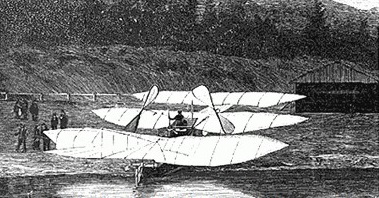
Designed by Karl Kretzschmar, a Dresden engineer, in 1911, it was to have been fitted with a gas turbine engine that would power the tractor propeller.
Designed by Karl Kretzschmar, a Dresden engineer, in 1911, it was to have been fitted with a gas turbine engine that would power the tractor propeller.
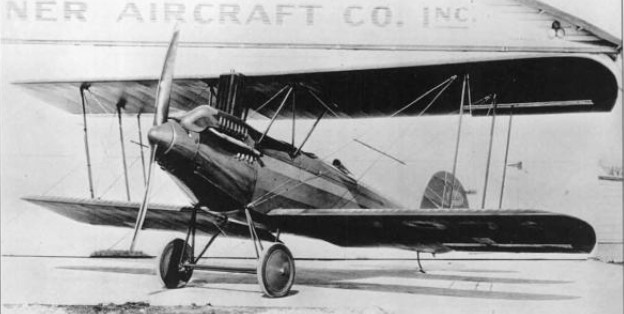
Following the original Challenger, the C-2 launched Kreider-Reisner as a legitimate aircraft manufacturer.
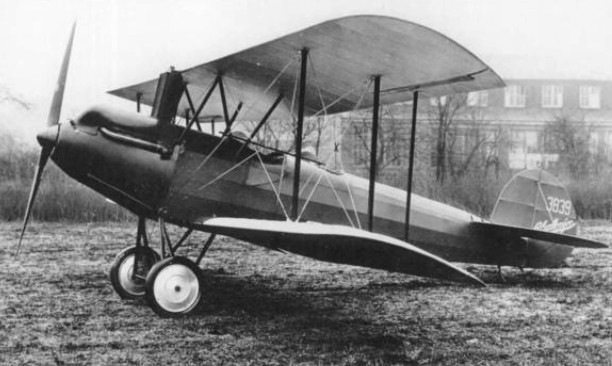
In 1926 Kreider-Reisner built a Challenger, designated the KR-31, a three seat biplane. The open cockpit plane was used for sport flying, using the cheap Curtiss OX-5 (or other) engine
The original Challenger flew in a promotional tour in 1927.
In 1926 the Kreider-Reisner Aircraft Co built the KRA Midget, a small racing plane that won the Scientific American Trophy Race held in Philadelphia in September 1926.
As a result of the recognition achieved with the KRA Midget, Kreider-Reisner began manufacturing the Challenger, which became a popular sport plane in the 1920s.
In 1921, Lewis Reisner, who had worked with Bellanca at Maryland Pressed Steel, founded Reisner Aero Services, a company that serviced and sold aircraft. Four years later in 1925, Reisner and Ammon Kreider, a local shoe manufacturer, formed the Kreider-Reisner Aircraft Company on Pennsylvania Avenue in Hagerstown.
In 1926 the Kreider-Reisner Aircraft Co built the KRA Midget, a small racing plane that won the Scientific American Trophy Race held in Philadelphia in September 1926. In 1927 built the Challenger three-seat open-cockpit biplane using the cheap Curtiss OX-5 (or other) engine. Smaller two-seater also made. In April 1929, Fairchild acquired 82% of the common stock in Kreider-Reisner, making the Hagerstown company a subsidary of the Fairchild Aviation Corporation, which eventually became Fairchild Aircraft Company. The Kreider-Reisner types were added to the Fairchild series, the Challengers then being known as Fairchild KR biplanes (Challenger C-6 was KR-21; C-4 was KR-34). As a division of Fairchild Aviation Corporation in the mid-1930s Kreider-Reisner built the Fairchild 22 two-seat open-cockpit monoplane and the Fairchild 24 cabin type, also producing the Fairchild 71 amphibian.
While attending the Second Aircraft Show in Detroit, Michigan, Kreider was killed when his plane collided with another aircraft at Detroit Ford Airport on 13 April 1929.
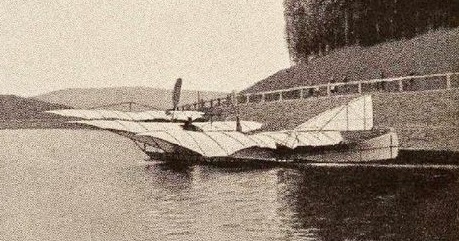
Also known as the Kreß (Kress) Drachenflieger, the Kreß Flugapparat 3-wing-in-tandem flying boat of 1901 was an effort of Austrian Wilhelm Kreß and only fell short of actually flying because of a too weak an engine.
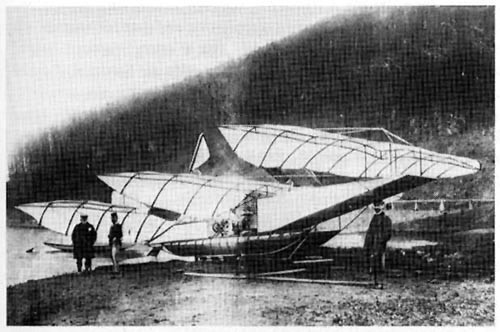
Kreß himself, then already at advanced age, intended to test fly the machine on October 3, 1901 but the machine capsized and sank in the Wienerwaldsee-Untertullnerbach.
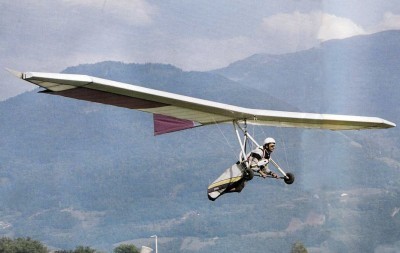
The construction was foam and glass D cell straight D cell wing. The nice feature is it allows the use of ailerons with differential throw as the lever arm from the ailerons to the CG is too short to give much pitch change – so no need for spadds, spoilerons, tip rudders or other complicated devices.
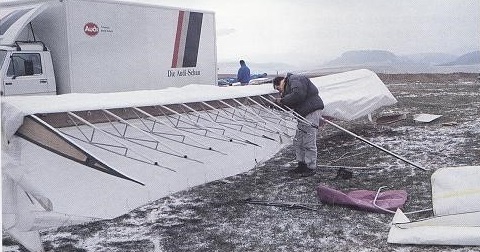
The 1982 Kratzner Plank was for advanced pilots.
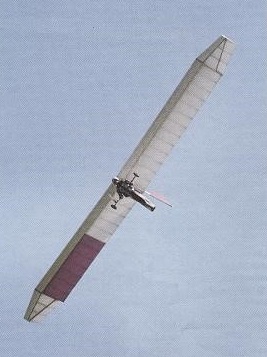
proto unique
Wing area: 17 m²
Wing span: 12.78 m
Aspect ratio: 9.6
Hang glider weight: 59 kg
Minimum speed: 29 km/h
Maximum speed: 100 km/h
Max glide ratio (L/H): 16
Minimum sink rate: 0.78 m/s
Nose angle: 180°

The SAI KZ X was a light aircraft produced in Denmark for army co-operation duties in the early 1950s. It was a strut-braced, high-wing monoplane of conventional design with fixed tailwheel undercarriage and was derived from the KZ VII.
First flown on 29 September 1951, deliveries to the Danish Army commenced in 1952, but by the summer of that year, two had already crashed.
The investigations of these crashes were conducted with technical assistance from Britain’s Royal Aircraft Establishment, but no underlying defect in the aircraft design was uncovered and the KZ X was returned to service. However, when two more crashes took place in 1954, the type was withdrawn from service. Of the 12 built, most KZ Xs were scrapped, with the only surviving example now in the Danmarks Flymuseum

Engine: 1 × Continental C145, 108 kW (145 hp)
Wingspan: 9.41 m (30 ft 11 in)
Wing area: 13.0 sq.m (140 sq.ft)
Length: 6.50 m (21 ft 4 in)
Height: 2.20 m (7 ft 3 in)
Empty weight: 529 kg (1,160 lb)
Gross weight: 860 kg (1,890 lb)
Maximum speed: 215 km/h (134 mph)
Range: 800 km (500 miles)
Service ceiling: 4,400 m (14,400 ft)
Crew: One, pilot
Capacity: 3 passengers
The Skandinavisk Aero KZ (IX) Ellehammer was 1950 replica of a 1909 Ellehammer aeroplane.
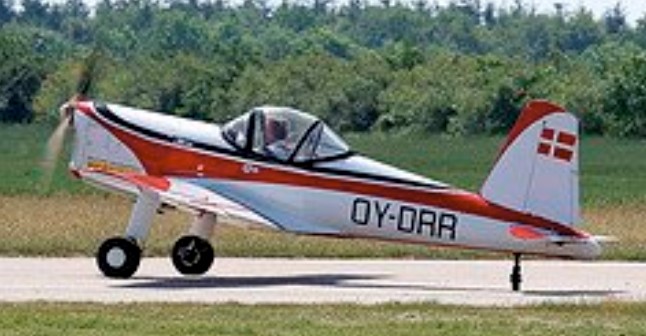
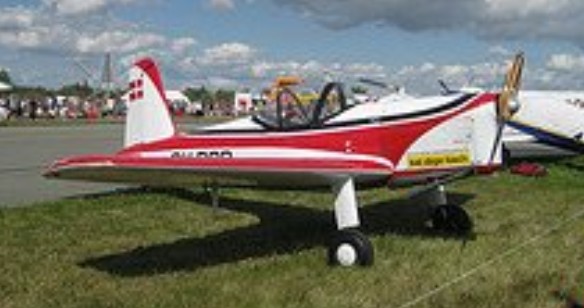
The SAI KZ VIII was an aerobatic sport aircraft first built by Skandinavisk Aero Industri in Denmark in 1949. It was a low-wing cantilever monoplane of conventional configuration with fixed tailwheel undercarriage and a single seat. The KZ VIII was custom-built by SAI for the Danish aerobatic display team Sylvest Jensen Luftcirkus, in which Peter Steen piloted the aircraft in some 50 performances in summer 1950. At the same time, a full set of parts for a second aircraft was produced, but this was not assembled until 1959.
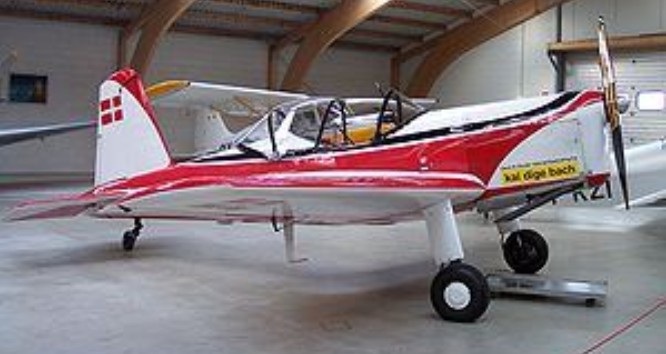
A third machine has been built as a replica.
Engine: 1 × de Havilland Gipsy Major, 108 kW (145 hp)
Wingspan: 7.20 m (23 ft 8 in)
Wing area: 8.6 sq.m (96 sq.ft)
Length: 19 ft 2 in
Height: 5 ft 11 in
Empty weight: 407 kg (895 lb)
Aerobatic weight: 1265 lb
Gross weight: 650 kg (1,430 lb)
Maximum speed: 300 km/h (190 mph)
Service ceiling: 5,000 m (16,400 ft)
ROC: 480 fpm
Crew: One, pilot
Loading: 12G

