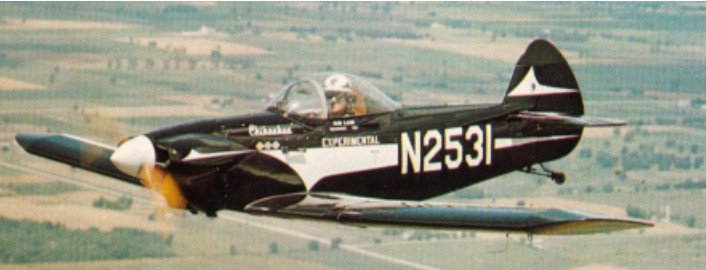
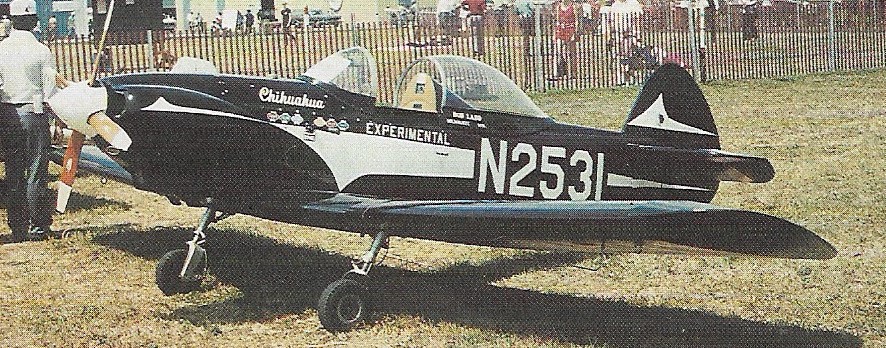
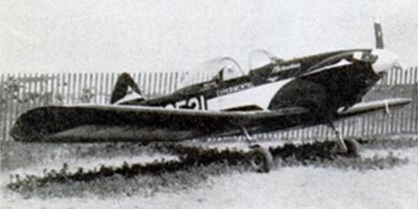
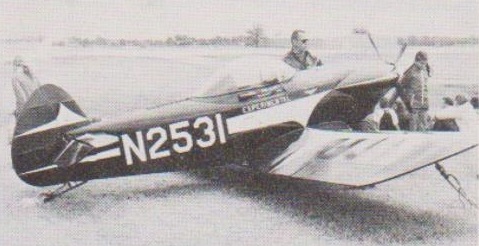
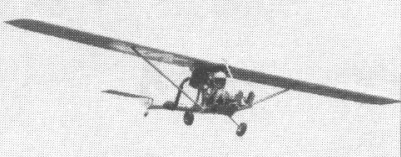
Built by Robert Ladd in 1967, the Taylor Chihuahua single place, enclosed low wing monoplane, was developed from the British John Taylor monoplane. One was built, N2531, was first flown in September 1967.
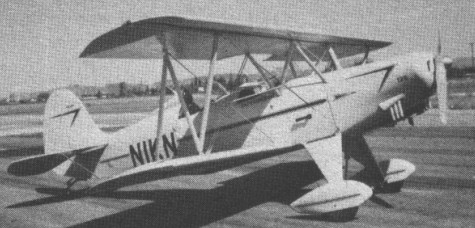
The LACO-125 is a sturdy two-seat biplane that is easy to fly yet very agile. To aid the builder, there are no castings, forgings or other difficult-to-build or obtain parts. The fuselage is a Warren truss type of chrome-moly tubing with wood formers and stringers. The wings are conventional two-spar construction with wood ribs and chrome-moly fittings for strength. This homebuilt derives its designation from the use of a 125-hp Continental in the prototype which is interchangeable with the 145-hp engine. The weight distribution of the LACO-125 is such that larger four-cylinder powerplants can be substituted.
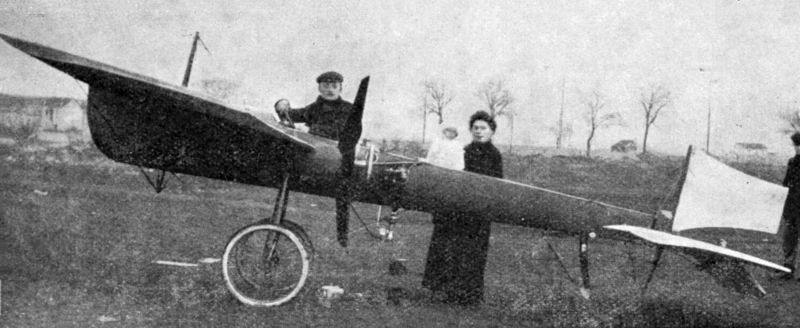
The first design of Adolphe-Étienne Lachassagne was this 1912-1913 tandem wing monoplane. The front and the tail wings could be adjusted. The two propellers were fitted at the trailing edge of the front wing, and were adjustable together with the wing. The engine was mounted in the fuselage and drove the two propellers via a rod. As Lachassagne had no funds to acquire a new and powerful engine he had to do with second hand engines. Lachassagne started to study a new aeroplane with tandem wings. The AL-2 airplane was never built in full size, only as a model. He was creative inventor and kept developing and building variable wing profile aircraft at least up to WW2. He also tried to develop a small affordable “peoples airplane”.
The first design of Adolphe-Étienne Lachassagne was a 1912-1913 tandem wing monoplane. As Lachassagne had no funds to acquire a new and powerful engine he had to do with second hand engines. Lachassagne started to study a new aeroplane with tandem wings. The AL-2 airplane was never built in full size, only as a model.
Lachassagne was creative inventor and kept developing and building variable wing profile aircraft at least up to WW2. He also tried to develop a small affordable “peoples airplane”.
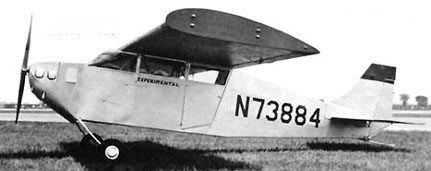
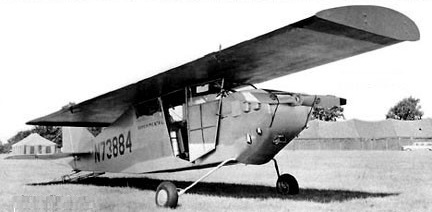
Built by Joseph L Lacey in 1962, the the two place Lacey M-10 had a pivoting unbraced wing stowed fore-and-aft for trailing or hangaring. One was built, N73884, first flying on 7/6/62.
The Lacey is one of the simplest designs for the homebuilder to construct. In the words of its designer, “There are no com¬pound curves and very few simple ones. The wing has no wash-in, no washout, no dihedral, and no incidence angle (the bottom is flat, and fits flat on top of the fuselage). It has no taper, no slots, no flaps, no spoilers, no wingtips, no struts, no wires, no braces, no spars.” The two-place, towable Lacey is propelled by a 90-hp Continental.
The Hitchiker is the third ultralight design from Robert Labahn and it is designed for cross-country and short field operations. With a rigid wooden wing sporting full span flaperons having both positive and negative selling, the light weight Hitchiker easily fits the bill. The pilot’s seating is reclining, glider like, to present the smallest possible frontal area. A streamlined pod will be fitted in the colder months for pilot protection.
Engine: Rotax 277 geared drive. Prop: 127 cm x 96cm pitch. Wing span: 8.05 m. Weight: 100 kgs. Fuel capacity: 27 ltr. Econ cruise speed: 43 kts. Stall: 23 kts. Construction time: Ready to fly.