In 1931 C R Lansing built a two place open cockpit monoplane powered by a 40hp Ford engine, registered N12830.
Aircraft
Lansing, C R
C R Lansing
Warren OH.
USA
Circa 1931 airplane builder
LanShe Aerospace
LanShe Aerospace in Florida bought the Lake Aircraft Company in 2002.
Lanser 1909 biplane
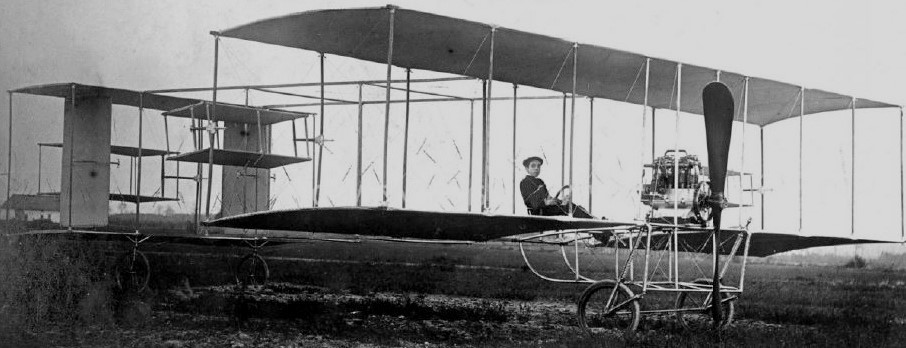
After studying mechanics, Alfred Lanser (1886-1960), like a lot of young men of the time was attracted by aviation. In 1909, he found an adequate engine and began to build a plane around it, a big tractor biplane. He tested it at the Kiewit airfield north of Hasselt, Belgium, but didn’t manage to make it fly. In 1910 Lanser bought a Farman and was granted Belgian license number 16. After frequent appearances at aviation meetings in 1910-1912 he started building planes of his own design, but he also invented self-sealing tanks for airplanes, before a long career in industry and business in several countries.
Lanier LVF / XL-5
The 1932 LVF (XL-5) open-cockpit mid-wing monoplane NX12865 c/n XL-5 was stable enough not to slip or dive in a stall. In landing it had a tendency to favour a steep descent with control maintained at minimum forward speed.
Engine: 36hp Aeronca
Wingspan: 14’4″
Useful load: 225 mph
Max speed: 96 mph
Cruise speed: 80 mph
Stall: 30 mph
Range: 250 mi
Take-off run: 90′
Seats: 1-2
Lanier XL-4
The 1931 XL-4 single-place cabin, high wing monoplane N11512 c/n X-141 was the XL-3 modified with stabilizing wingtip “winglets”. The wing was mounted as a parasol on top of a central pillar which also housed the pilot.
Engine: LeBlond
Max speed: 110 mph
Stall: 25 mph
Lanier XL-3
The circa 1931 XL-3 single-place cabin, high wing monoplane could take-off in about 50′.
Wingspan: 13’10”
Max speed: 90 mph
Stall: 25 mph
Lanier XL-2
The 1930 XL-2 NX816Y c/n XL-2 had the vacuum cell mounted as a separate box on top of the fuselage. The full-cantilever mid-wing had a span of at least 25′, reportedly a modified Durand 13 airfoil. The tail consiste of twin fins and rudders. The pilot was in an enclosed cabin under the wing.
Engine: 85hp LeBlond 5DF
Lanier XL-1
The 1928 XL-1 N3505 c/n 1 was a single-place, open cockpit low-wing monoplane powered by an Anzani engine. The apprimately 8’10” span wings were spaced away from the fuselage to allow the air to flow against the vacuum cell.
Lanier 443 Paraplane
The 1949 443 Paraplane was apparently a larger, possibly high-wing, reconstruction of the Lanier Paraplane with a 180hp Lycoming O-320, again registered N9060H. The project was abandoned circa 1955 after failing to attract a market.
Engine: 180hp Lycoming O-320
Max speed: 171 mph
Stall: 30 mph

