Formed 1958 as an associate of Kingsford-Smith Aviation Service to specialise in development of agricultural aircraft. First prototype Yeoman YA-1 conversion of Commonwealth CA 6 Wackett trainer flew in 1960, followed by production versions: KS.3 Cropmaster 250 and Fieldmaster 285.
Aircraft
Yates Bi-Motor / Bi-Craft
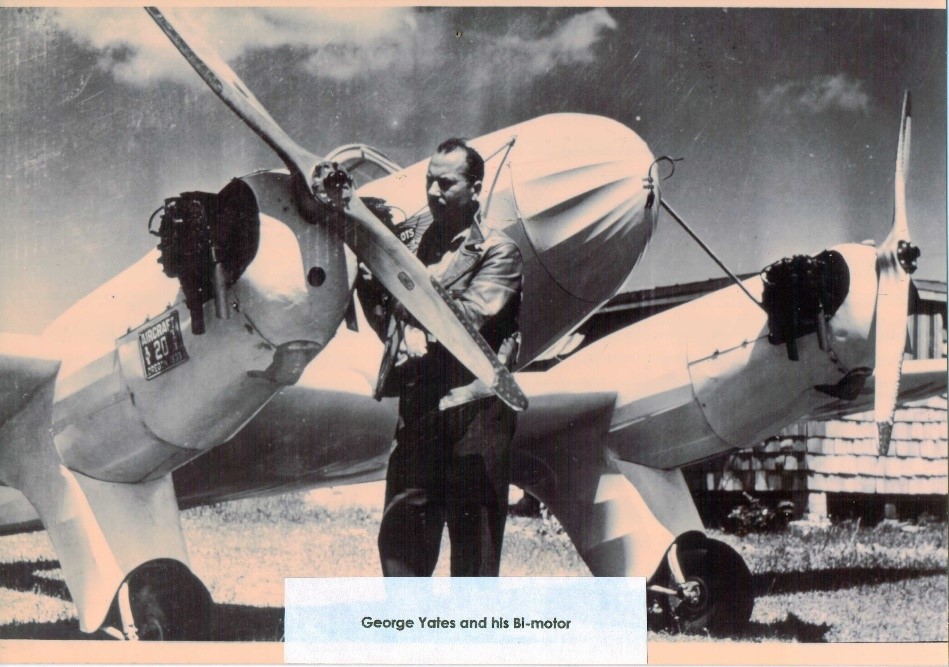
The George Yates of Beaverton, Oregon, Oregon O was developed into the 1935 twin-engined Greenwood-Yates Bi-Craft (NC15546) with 50 hp engines.

Yates and partner Allan D. Greenwood (a pilot and Oregon state aircraft inspector) formed the North Pacific Aircraft Corp. to market the Bi-Craft geodetic-construction light twin design.
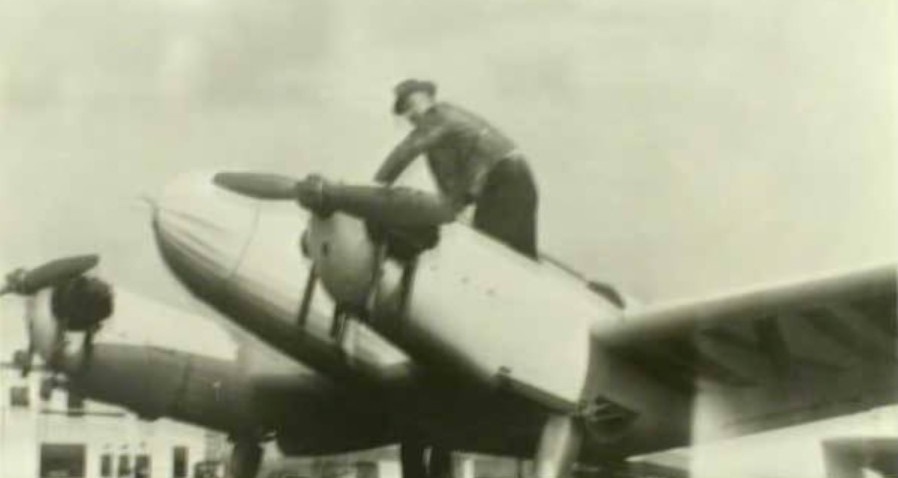
Yates Gilbert Experimental
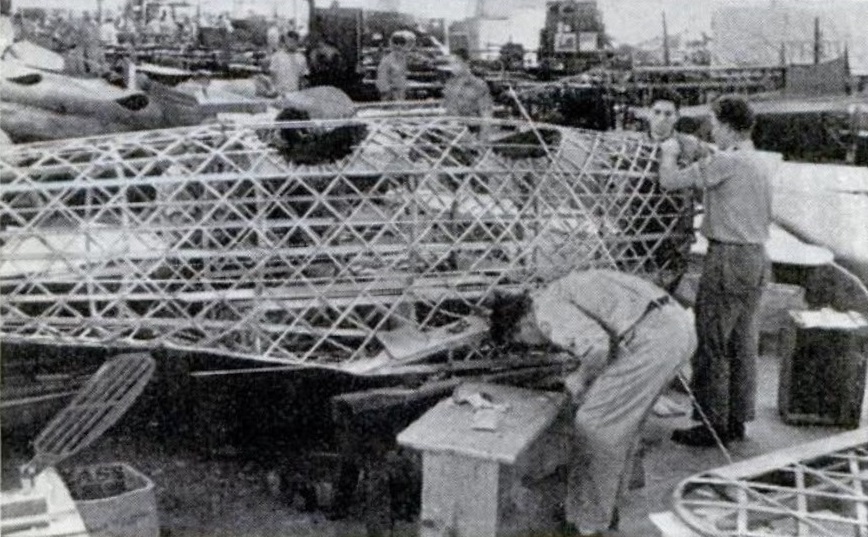
In 1945, an updated Oregon O parasol was built. An open cockpit, midwing monoplane Oregon O was powered by a 125 hp Martin 4-333 inverted 4-cylinder, it had wooden geodetic basket-weave construction.
One was built, N15508, and possibly one other.
Yates Oregon O
Circa 1932 George Yates built the single-place, open cockpit, midwing monoplane Oregon O. Powered by a 40hp Salmson AD-9, it had wooden geodetic basket-weave construction. One was built, N15508, and possibly one other.
Yates Stiper

The two-place Yates Stiper of 1930 was built for Elmer Stipe. Registered N10657, it was originally powered by a 125hp Martin 333 and later refitted with a 90hp Cirrus.
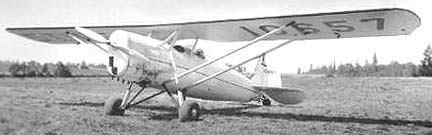
The plane had two seats and a parasol wing.

It eventually flew 4,000 hours, carrying passengers.

Yates, George
Beaverton OR; St Helens OR.
USA
Airplane builder 1930-45.
Yakolev Yak-141
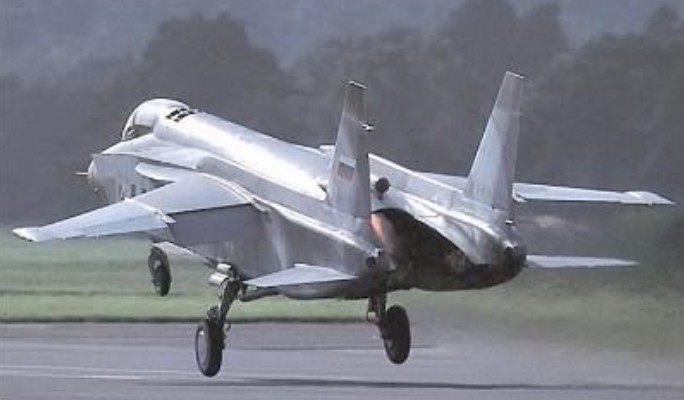
The Yak-141, being the world’s first supersonic STOVL (short take-off/vertical landing) aircraft, has three engines: one lift-cruise R-79 with a thrust of 15500kg and two small-sized RD-41 of 4100kg each. The powerplant allows the plane to lift off vertically with a weight of up to 15,800kg. Alternatively, the Yak-141 can perform short take-offs (60-120m) with a weight of up to 19,500kg. In the latter case the combat radius increases by 1.5-2 times and patrol time in the combat zone by two times. The pilot can use afterburner even when the nozzles are deflected. The Yak-141’s integral flight-control system sets power and deflection of the nozzles so as to optimise making vertical/short take-offs and landings.
The Yak-141 first flew in March 1989, piloted by Andrei Sinitsin.
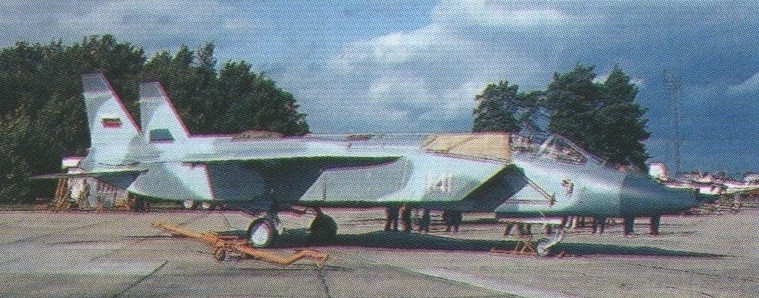
The Yak-141M was meant primarily for ground-basing. Introduction of new flight regimes, as well as new take-off/landing techniques, has entailed changes in the airframe, leading to a new design, the Yak-141M.
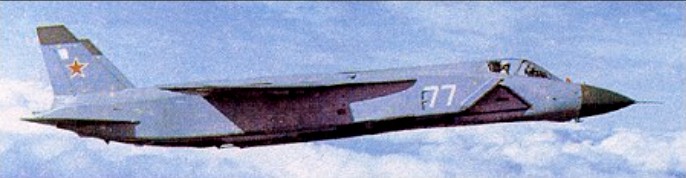
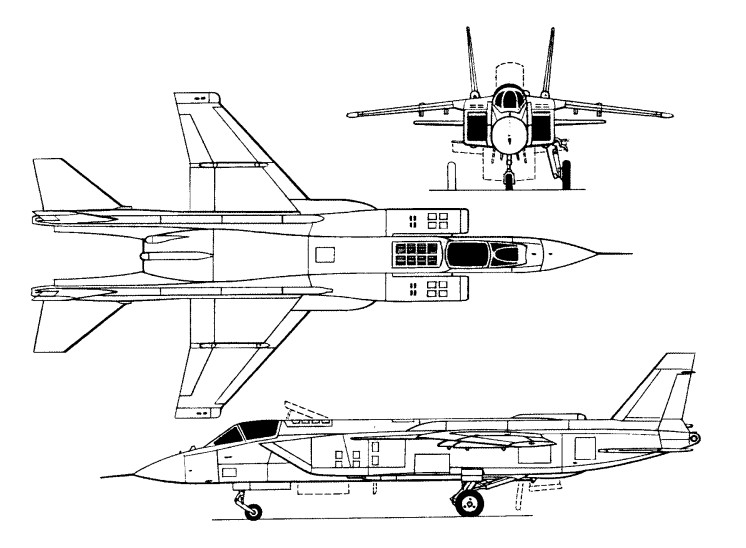
Engine: 1 x R-79V-300, 152.0 kN , 2 x RD-41, 41.8 kN
Max take-off weight: 19500 kg / 42990 lb
Empty weight: 11650 kg / 25684 lb
Wingspan: 10.1 m / 33 ft 2 in
Length: 18.3 m / 60 ft 0 in
Height: 5.0 m / 16 ft 5 in
Wing area: 31.7 sq.m / 341.22 sq ft
Max. speed: 1850 km/h / 1150 mph
Ceiling: 15500 m / 50850 ft
Range w/max.fuel: 2100 km / 1305 miles
Range w/max.payload: 1400 km / 870 miles
Crew: 1
Armament: 1 x 30mm cannon, 1000kg (VTOL) or 2650kg (STOL)
Hardpoints: six
Yakolev Yak-130 / AEM-130

Through a joint programme with Yakolev of Russia, Aermacchi is assisting in developing the Yak/AEM-130 to meet the Russian Air Force’s requirement to replace the L-29 and L-39. The aircraft is equipped with a quadruplex fly-by-wire flight control system and will be required to fulfil a broad range of tasks: from basic flying training to weapons training and aircraft carrier deck training. The aircraft are equipped with wingtip- and pylon mounted AAMs with a roulette and sensor pod also fitted.

The joint Italian/Russian Yak 130 technology development programme ran from April 1996 to December 1999, accumulating some 300hr flying. The two seat Yak-130 fighter/trainer was exported as the AEM-130.
The Yak-130 became all Italian in 1998 and served as a basis for the Aermacchi M-346.
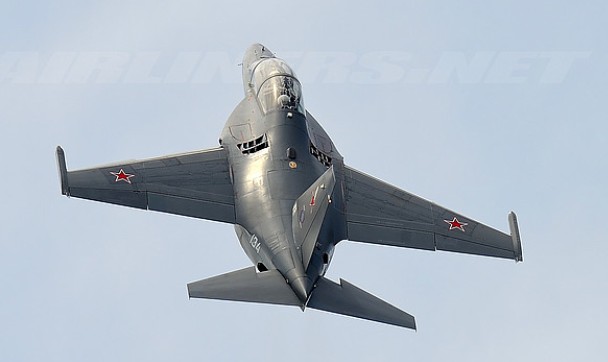
Engine: 2 x Klimov RD-35, 22kN
Max take-off weight: 5400-6200 kg / 11905 – 13669 lb
Wingspan: 10.6 m / 35 ft 9 in
Length: 11.3 m / 37 ft 1 in
Height: 4.8 m / 16 ft 9 in
Wing area: 17.6 sq.m / 189.44 sq ft
Max. speed: 1000 km/h / 621 mph
Ceiling: 12500 m / 41000 ft
Range: 1850 km / 1150 miles
Crew: 2

Yakolev Yak-112
A four-seat light aircraft (first flown October 1992).
Yakolev Yak-58
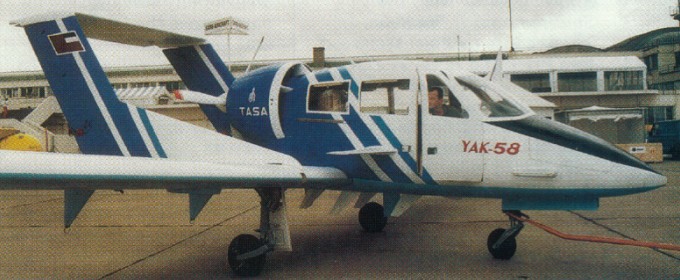
A six-seat business transport with a pusher piston engine (first flown April 1994)
Engines: 1
Seats: 6
 All Aero