The LeO 3 was developed into the LeO 9.
Aircraft
Lioré-et-Olivier No.2 monoplane
Designed and built by Fernand Liore, the 1910 Liore No.2 monoplane featured two tractor propellers driven by one engine.
Span: 9.5 m
Length: 8.2 m
Weight: 350 kg
Lioré-et-Olivier
Etablissments LeO of Levallois-Perret was founded by Henri Olivier and Fernand Liore. Established as agricultural and industrial engineers in 1906, entered aviation 1908. Liore worked with Witzig-Liore-Dutheuil in 1912. Firm built Morane-Saulnier types before and during First World War, producing over 2,000. From 1916 built Sopwith 1-Strutter.
In 1921 started up airline Aeronavale (Societe Maritime de Transport Aeriens), and in 1922 began design and construction of civil and military flying-boats and bombers. An airliner derived from the 1924 bomber served Air Union. Four engined flying-boats developed up to Second World War. Cierva autogiros built under license. LeO 451, built 1939-1940, was best French bomber of period and used for research after war. The Argenteuil factory became part of SNCASE and the Rochefort plant part of SNCASO in 1936.
Linon 1910 monoplane
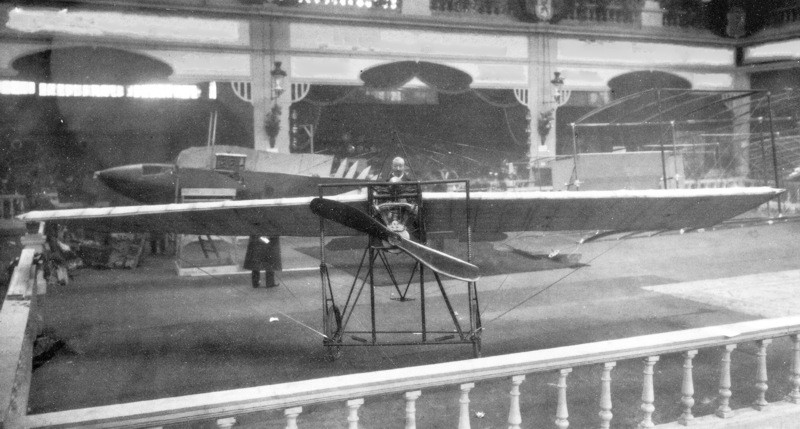
After a visit to the Grande Semaine de Reims in 1909 Linon became interesting in flying and constructed a full scale model, which was exposed on the Brussels salon in the beginning of 1910. After tests of the machine it was modified and fitted with a more powerful three-cylinder Delfosse engine. The machine was shown and flown during the “Semaine de Verviers” from 11 to 17 September 1910, likely by the Italian aviator Darioli.
Linon
The Linon brothers, André and Louis, were active in bicycle production around 1890 – 1900 in Ensival-lez-Verviers [Liège] and diversified into autocar building in the beginning of the 1900s. Their firm was named “Les Ateliers de Constructions Automobiles Linon”. The total production of cars was about 1800 before 1914.
After a visit to the Grande Semaine de Reims in 1909 Linon became interesting in flying and constructed a full scale model, which was exposed on the Brussels salon in the beginning of 1910.
The company disappeared during the German invasion.
Linn Mini-Mustang
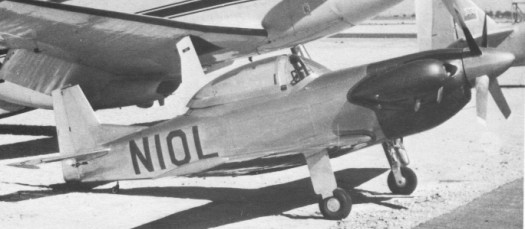
The Mini Mustang was designed and built by Mr. Charles C. Linn and despite the small dimensions, the aircraft featured a retractable undercarriage. The Mini Mustang was built to approximately 45-50% scale of the P-51. The L-1 was the first example built by Mr. Linn and it first flew on 14 January 1962. It won the 1962 EAA Most Popular Aircraft award, but was lost in an accident. To replace the L-1, Mr. Linn then constructed a second example, the L-2 (also named Linns Mustang) with the same N10L registration. This second aircraft differed slightly in having a 4-bladed (instead of 3-bladed) propeller, larger tail surfaces, a smaller engine air intake, longer canopy and it was also a bit shorter with 13.5ft (against 13.833ft). Both aircraft were powered by a 125hp Lycoming O-290-G engine. Plans were marketed for amateur construction, but maybe 2? were built.
Linke-Hoffmann R.II
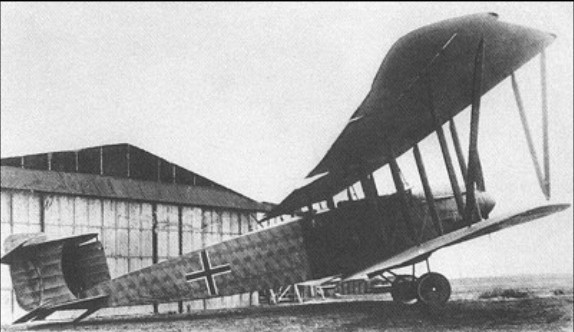
The R.II was a large four-engined bomber with the engines were buried in the fuselage and geared together to drive the single 7m Garuda propeller in the nose. The propeller was geared down to 545 rpm.
Only the one was flown; a second was under construction at the war’s end.
Linke-Hoffmann R.I
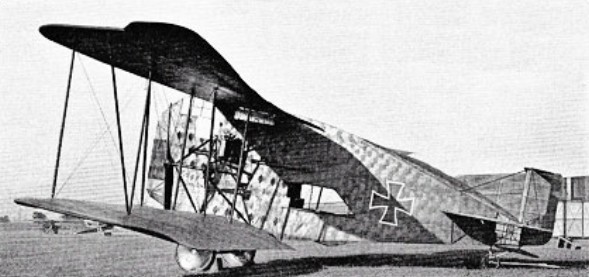
Both R.I prototypes used four 260hp Mercedes D.IVa engines, carried inside the fuselage, powering two chain-driven propellers.
The Linke-Hoffmann R.I was half covered with transparent Cellon in an attempt at partial invisibility. It achieved the opposite effect, partly because the Cellon discoloured rapidly, but mainly because it reflected the sun so strongly.

The two built were R.I serial R.8/15 and the improved R.I serial R.8/16. The first was burnt out in an accident in May 1917and the second was destroyed when the pilot misjudged his height during a normal landing.
Further experimentation with unorthodox propulsion configurations would lead to the R.II.
Linke-Hoffmann Werke
Germany
A railway engineering company of Hundsfeld, Breslau, which entered aviation in 1916 by repairing and building under license Roland and Albatros aircraft. In 1917 completed its first R-plane (R = Riesenflugzeug; giant aircraft) contract. The R.I. later crashed on test. The R.ll was the largest single-propeller aircraft ever built.
LTV L450F
The Schweizer SGS 2-32 also formed the basis of another quiet observation aircraft, the LTV Electrosystems L450F, which first flew in prototype form in February 1970 and was powered by a Pratt & Whitney PT6A-29 turboprop derated to 680shp.

