Luscombe Monocoupe / Velie Monocoupe

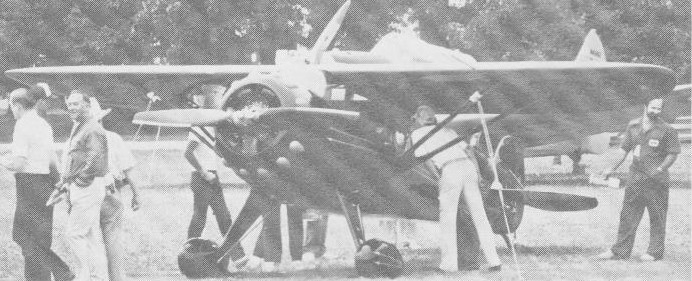
Clipped wing Monocoupe

More known for his carriages, automobiles and racers, and motors, Velie (grandson of John Deere) also capitalized and manufactured the initial 55-65hp Monocoupe aircraft upon acquisition of controlling interest in Central States Aircraft Co in 1927, hence early popular reference to “Velie Monocoupes” signifying not only the powerplant but the constructor.

Mono production

When Velie died of an embolism in Oct 1928, his son took the reins but he, too, suffered a heart attack in Mar 1929 and Don Luscombe took over.

Don A. Luscombe’s first aircraft, the Monocoupe, was built by the Central States Aero Company of Davenport, Ohio. It was a small two-seat sporting monoplane known as the Central States Monocoupe. Powered by a 70 hp engine, it was reputedly able to become airborne within five seconds of starting its take-off run.
Luscombe Airplane Corp

Don A. Luscombe’s first aircraft, the Monocoupe, was built by the Central States Aero Company of Davenport, Ohio. Became in 1928 the Mono Aircraft Corporation of Moline, Illinois, with Luscombe as president and chief engineer.
Luscombe left in 1933 and next year set up the Luscombe Aircraft Engineering Company of Kansas City, producing the Phantom I, the first U.S. metal light aircraft and a very successful design developed by Ivan Driggs from the Monocoupe D-145; 125 were built. Fabrication of parts was farmed out, reducing overhead costs on the production line. Production ceased during Second World War because of metal shortage, but was resumed in 1949. Following the L-4 Model 90 four-seater of 1934 came the 1937-1938 Model 8a, of which 1,100 were built, and the 1940 Silvaire, of which production had reached 6,000 by 1961. The Skybaby and two other low-powered versions were built. The postwar company, based at Dallas, Texas, went bankrupt in 1949, but was revived with finance from Texas Engineering and Manufacturing Company Inc under the old name. The emergency of the 1950s caused suspension of production and the company was bought by Temco Aircraft Corporation, which sold manufacturing rights of the Silvaire Model 8 in 1955 to the Silvaire Aircraft Company.

Luftverkehrs GmbH

Germany
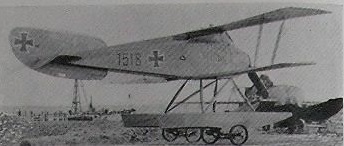
Based at Johannisthal, Berlin; one of the largest German aircraft companies during First World War. Built Farmans under license, its own first design being the B.1 of 1913. An efficient aircraft remaining in service for observation and training for some years, it was the forerunner of all German two-seat observation aircraft of 1914-1918. Developed lengthy series, including very popular C.V and C.VI as well as prototype fighters and bombers. Converted several postwar for service with civil airlines.

Luftsport-Club Friedrichshafen LCF-2

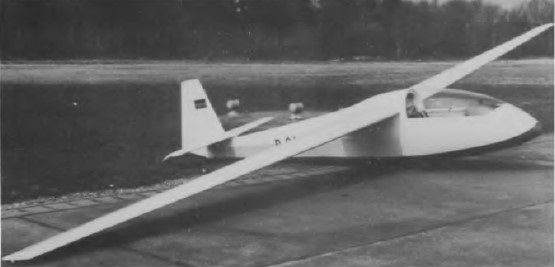
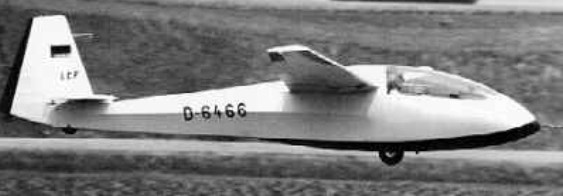
This single-seat Club Class sailplane is intended for use as a trainer, for competition flying and for aerobatics; it was designed in 1971 as a successor to the earlier LO 100 and the prototype was built in approximately 4,000 hours by five engineer members of the Luftsportclub der Zeppelinstadt Friedrichshafen. It first flew on 22 March 1975 and won first prize at that year’s meeting of the CUV or Oskar-Ursinus-Vereinigung, Germany’s equivalent of the Experimental Aircraft Association.

The cantilever shoulder wings are single-spar wooden structures, with Conticell foam ribs and plywood covering; there are Schempp-Hirth air brakes on the wing upper surfaces. The oval-section fuselage is a welded steel tube structure with glassfibre covering of the nose section and fabric covering of the rear half. The plywood tail unit is filled with Conticell foam, and the landing gear consists of a semi-recessed non-retractable monowheel and a tailwheel. The pilot sits under a one-piece flush fitting cockpit canopy.

There were plans for production of the LCF II by Scheibe if sufficient orders for it had been received, but these were dropped.

LCF 2
Wing span: 13m / 42 ft 7.75 in
Wing area: 10sq.m / 107.6 sqft
Aspect ratio: 16.9
Wing section: Wortmann FX-60-126
Length: 6.35 m / 20 ft 10 in
Height: 0.9 m / 2 ft 1.5 in
Empty Weight: 190kg / 419 lb
Gross Weight: 300kg / 661 lb
Water ballast: None
Wing Load: 30kg/sq.m / 6.14 lb/sq ft
Max speed: 174 mph / 135 kt / 250 km/h
Max aero-tow speed: 105 mph
Stalling speed: 33.5 kt / 62 km/h
MinSink: 0.70 m/s / 2.30 ft/sec at 68 kph / 42.5mph / 36.5 kt
Best glide ratio: 30:1 at 53 mph / 85 kph / 46 kt
No. built: 1
Seats: 1

Luenger Beta 1

The Beta 1 was designed by Hans Luenger and Josef Kohler with the intent of being the first US production fiberglass sailplane. The semi boom-and-pod fuselage was composed of two fiberglass half-shells that join top and bottom. It featured a fully-reclined pilot position, T-tail with mass-balanced elevators, fixed gear and Schempp-Hirth speed-limiting dive brakes. The Beta 1 has been donated to the National Soaring Museum.

Wing span: 17m / 55.8ft
Wing area: 13sq.m / 140sq.ft
Aspect ratio: 22.3
Empty Weight: 313kg / 690lb
Gross Weight: 413kg / 910lb
Payload: 100kg / 220 lb
Wing Load: 31.91kg/sq.m / 6.06lb/sq.ft
L/DMax: 38 93 kph /50 kt / 58 mph
MinSink: 0.61 m/s / 2.0 fps / 1.18 kt
Seats: 1
No. Built: 1
Airfoil: Wortmann FX 61-184/160