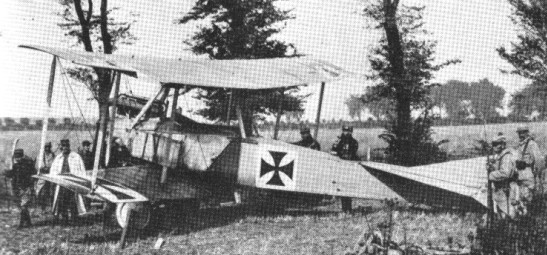
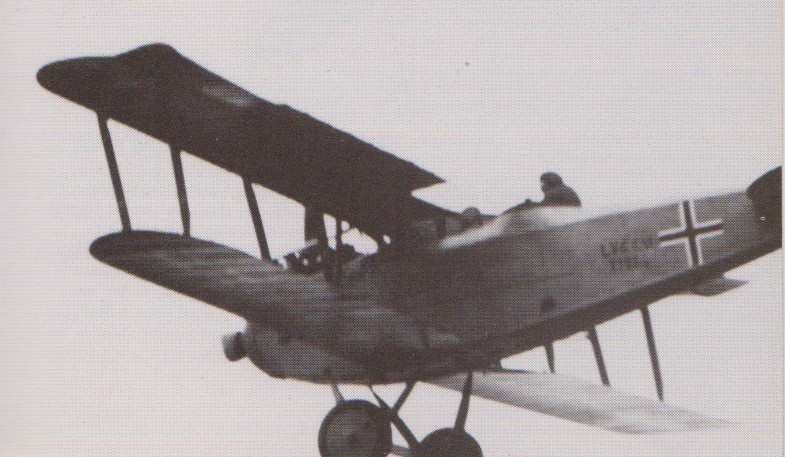
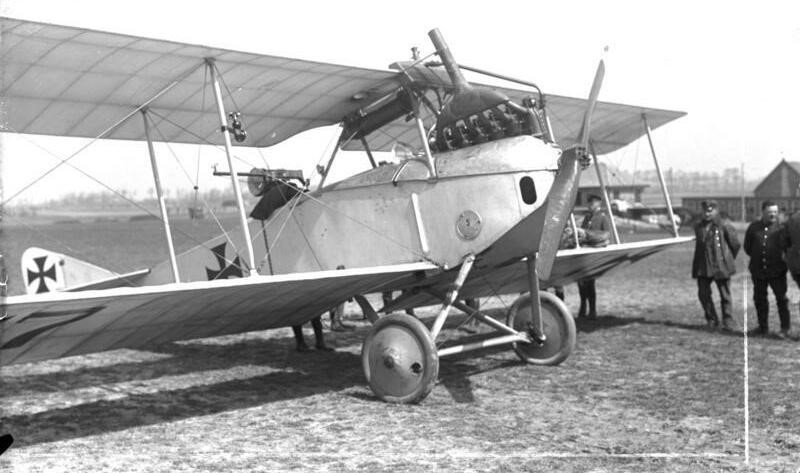
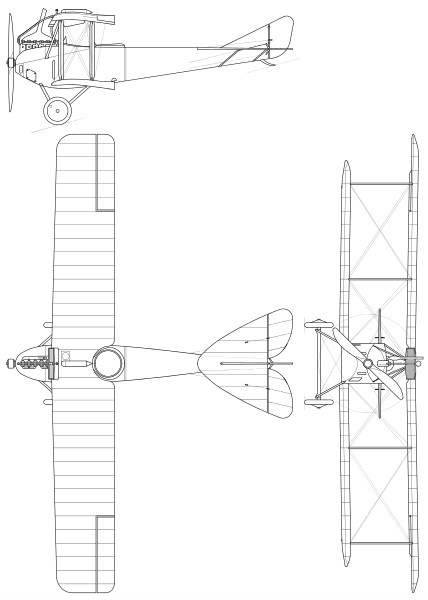
LVG C-V

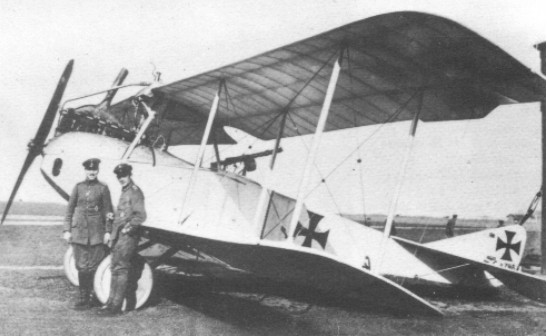
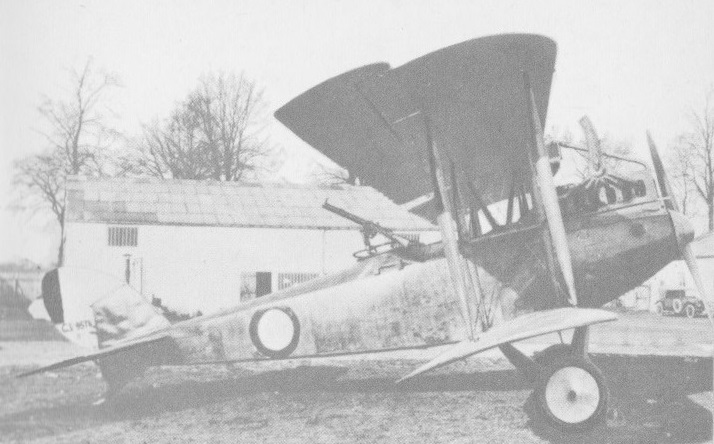
Used for reconnaissance and bombing, a small number of L.V.G.s were in the German air force at the outbreak of war in 1914. Like their British counterparts, they were unarmed and suffered heavy losses. This resulted in the much improved C.V, armed with machine¬guns, which proved a formidable adversary, in spite of the pilot’s exceptionally poor view forward.

A two-bay biplane, the two spar wooden wings were fabric covered. Plywood covered the wooden fuselage, with integral upper and lower tail fins. Fabric covered wooden tailplane. All control surfaces were welded steel-tube construction, with fabric covering. Ailerons were on the top wing only.

About 500 C.V’s and C.VI’s were in frontline service in the summer of 1918.

Engine: One 200 h.p. Benz Bz.IV
Wing span 42.75 ft (13.02 m.)
Wing area: 459.6 sq.ft
Length 26.5 ft (8.07 m.)
Height: 10 ft 6 in
Weight empty 1,860 lb. (843 kg.)
MTOW: 3141 lb
Fuel capacity: 52.5 Imp.Gal
Max speed: 102 m.p.h. (164 km.p.h.) at 6000 ft
Service ceiling: 16,500 ft. (5,000 m.) fully loaded
Endurance: 3.5 hours
Seats: 1 pilot and 1 observer
Armament One fixed Spandau machine gun firing forward, one Parabellum mg rear cockpit

LVG C-1 / C-II

A reconnaissance biplane of WW 1.

C.I

The C.II was developed from the LVG C.I, with the pilot and observer positions reversed, adding a ring-mounted machine gun to the rear. The increase in weight required a larger engine, the Benz Bz.III. Few C.I’s were built before the C.II was introduced. It incorporated structural improvements and a more powerful engine.

C.II

C.I
Engine: Mercedes, 130 hp
Top speed: 97 mph

C.II
Engine: Mercedes D.III, 119 kW (160 hp)
Wingspan: 12.85 m (42 ft 2 in)
Wing area: 37.60 m2 (404.74 sq ft)
Length: 8.10 m (26 ft 7 in)
Height: 2.93 m (9 ft 7.25 in)
Empty weight: 845 kg (1,863 lb)
Gross weight: 1,405 kg (3,097 lb)
Wing loading: 37 kg/m2 (7.6 lb/sq ft)
Maximum speed: 130 km/h (81 mph, 70 kn)
Range: 385 km (240 mi, 210 nmi)
Endurance: 4 hours
Service ceiling: 4,000 m (13,125 ft)
Crew: 2
Armament
1 × flexible 7.92 mm (.312 in) Parabellum MG14 machine gun
1 × fixed, forward-firing 7.92 mm (.312 in) LMG 08/15 machine gun (later production aircraft)
Bomb load: 60 kg (130 lb)

C.II

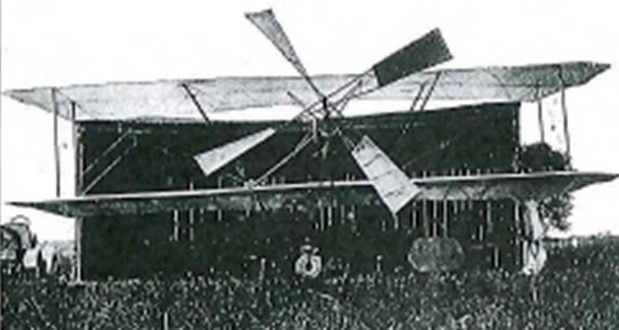
Luttrell 1909 biplane

Samuel Luttrell, a local automobile enthusiast of Rockville, Maryland (or Washington DC), built this tailless tractor biplane in 1909. He tested it with a 50-horsepower engine, driving the four-bladed canvas propeller at about 650 revolutions per minute. The propeller was set on a universal joint and intended to control the vertical and lateral movement of the machine. The strong engine crumpled up the flimsy-looking propeller on the first test, after which a 30 horsepower unit was installed.

Lutskii Rotary-wing

First aircraft design of Б.Г. Луцкий (transcribed as B.G. Lutskii, variously spelled in Germany, France, Austria etc.). The machine is dated as 1909 and described as a “Винтокрылый аппарат”, which can be translated as “Rotary-wing apparatus”.

Luton LA5 Major / Phoenix Aircraft Ltd LA5 Major

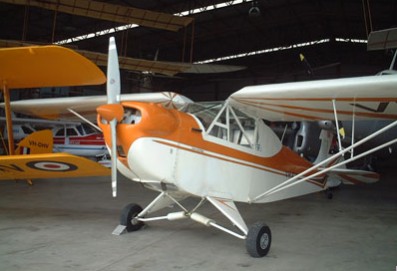
Following the pre-war success of the Luton Minor, Mr. Latimer-Needham designed the two seater Major which first flew on 4 March 1939.

Accommodation is for two per¬sons seated in tandem in an enclosed cabin with a door in the starboard side. Dual controls are fitted. An 11 Imp. gallon fuel tank is fitted behind the firewall. Alternative engines include 62 h.p. Walter Mikron 11, 83 h.p. Agusta GA-70, 55 h.p. Lycoming and 85 h.p. Continental.

A hangar fire at the Phoenix Works in 1943 destroyed the single example of the LA5 Major, a two-seat cabin type, and also spelt the end for the company. C. H. Latimer-Needham founded a new company at Cranleigh, Surrey, in March 1958, appropriately named Phoenix Aircraft Ltd, which acquired the rights for the Minor and Major. Both designs were improved, the first as the LA4A Minor, and built in the UK and in several countries across the world.

The Luton Major was the only British designed two seater aircraft available to amateurs for home building.

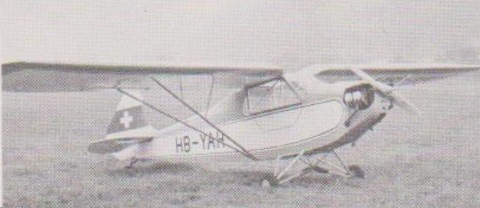
LA.5 Major HB-YAH. Built in Italy, registered and flown in Switzerland

Phoenix Aircraft Ltd. undertook the revision of the Major drawings for amateur construction and the aircraft has since been re-stressed to to permit engine power to 85 hp and gross weight to 1400 lbs and it has been restressed to British Airworthiness Require¬ments. The wing chord is the same as the Luton Minor and the wings fold back for ease of storage and transport.

Engine: Walter Mikron 11, 62 h.p.
Span: 35’ 2”.
Length: 23’ 9”.
Wing Area: 163 sq.ft.
Empty Weight: 600 lb.
Loaded Weight: 1100 lb.
Wing Loading: 6.7 lb/sq. ft.
Max. Speed: 105 mph.
Cruise Speed: 95 mph.
Stall Speed: 40 mph.
Initial Climb: 700 fpm.
Takeoff run 250 ft.
Landing roll 150 ft.
Range: 300 miles.
Fuel capacity 11 Imp.Gal..
Width (wings folded): 11’ 8”.
Seats: 2.

Luton LA3 / LA4 Minor / Phoenix Aircraft Ltd LA4A Minor / Ord-Hume OH-7 Coupe / Parker CA.4

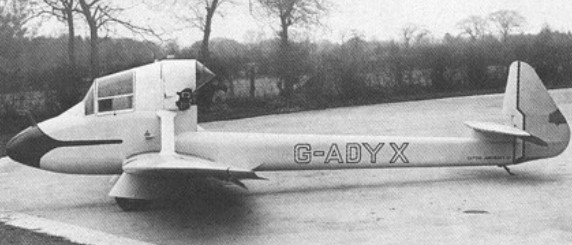
The tandem-wing LA2 never flew, but its fuselage and other components were incorporated into the LA3. The LA3 (also G-AEPD cn LA.3) was built at Barton-in-the-Clay in 1937. It was powered by an Anzani engine. It survived the War in store in Scotland but was destroyed in the 1950s.

The LA3 itself was redesigned for home-assembly as the LA4 Minor. Designed by Mr. C. H. Latimer-Needham, the first was built at the company’s Phoenix Works at Gerrards Cross, Buckinghamshire, and fitted with a 40hp ABC Scorpion, but subsequent models were home-built from drawings and fitted with many different engines.

The Minor is a single seat aircraft with a two piece wooden two spar wing of 5’ 3” chord, attached to a tubular steel pylon on the fuselage. The wings are divided for ease of building, transport and storage. The wing section is RAF 48. The leading edge is plywood covered, the remainder of the wing being fabric covered. The fuselage is a rectangular all wood structure; the sides and bottom being plywood covered, while the top decking behind the cockpit is fabric covered. The under¬carriage incorporates rubber disc shock absorbers for the main legs and optional brakes. The tailwheel is fully castoring.

The first Luton Minor flew in England in 1936 and in 1960 the design was restressed enabling engines up to 55 hp to be fitted. The Minor was designed for the 37 h.p. Aeronca JAP engine, although the 55 hp Lycoming and converted Volkswagen engines may be installed. A 6.5 Imp. gallon fuel tank is located behind the firewall.

A.W.J.G.Ord-Hume designed a modified Luton LA.4 Minor with a totally enclosed cockpit, designated Ord-Hume OH-7 Coupe (previously known as the Luton LA.4C). Construction of the prototype (c/n OH-7, PAL.1401 G-ARIF) was started at Sandown in 1965 and it was nearing competition in early 1975.

Luton Minor G-AFIU built by C.F.Parker was designated Parker CA.4. It was started in 1938 but not finished. It was stored at Peel Green, Manchester.

The design of the Luton Minor was brought up to date by Phoenix Aircraft Ltd., successors to Luton Aircraft Ltd. In 1959-60 the Minor was accredited as one of the finest single seater amateur aircraft in Europe, and the easiest to build.

Gallery

Engine: Aeronca JAP, 37 h.p.
Span: 25’ 0”.
Length: 20’ 9”.
Wing Area: 125 sq. ft.
Empty Weight: 450 lb.
Loaded Weight: 750 lb.
Wing Loading: 6.0 lb. sq. ft.
Max. Speed: 85 mph.
Cruise Speed: 75 mph.
Stall Speed: 37mph.
Initial Climb: 450 fpm.
Range: 180 miles.
Fuel capacity 6.5 Imp.Gal.
Takeoff run: 250 ft.
Landing roll 120 ft.
Seats: 1.
Luton

During the years 1935-1939 Luton Aircraft, UK designed and built aircraft. Having developed from the Dunstable Sailplane Company, the first Luton evolved from the high efficiency sailplane formula. In 1936, Luton Aircraft Ltd of Barton-in-the-Clay, Bedfordshire, flew the Buzzard I. A hangar fire at the Phoenix Works in 1943 destroyed the single example of the LA5 Major, a two-seat cabin type first flown on 4 March 1939, and also spelt the end for the company. C. H. Latimer-Needham founded a new company at Cranleigh, Surrey, in March 1958, appropriately named Phoenix Aircraft Ltd, which acquired the rights for the Minor and Major. Both designs were improved, the first as the LA4A Minor, and built in the UK and in several countries across the world.