A number of significantly modified HP Aircraft RS-15s have been built including Otto Zauner’s One Yankee with his own design of fuselage and tailplane.
Aircraft
Zauner OZ-4
As with many homebuilts, a number of builders have made design changes to their HP Aircraft HP-14. In some cases these have been substantial. Otto Zauner constructed an 18 m. model (called the Zauner OZ- 4) which has been modified substantially to have tip extensions with winglets to give a span of 19.2 m. / 63 ft, and a gross weight of 386 kg./ 850 lb.
Zari Bossi-Mojoli

Powered by a Zust motor and built by the firm of the Zari brothers in 1909. Enea Bossi immigrated to the USA after WWI.
Zara Snipe
1938 saw the flight of the Snipe light aircraft, the first Filipino aircraft, designed and built by Dr.
Gregorio Zara.
Zalewski WZ-V
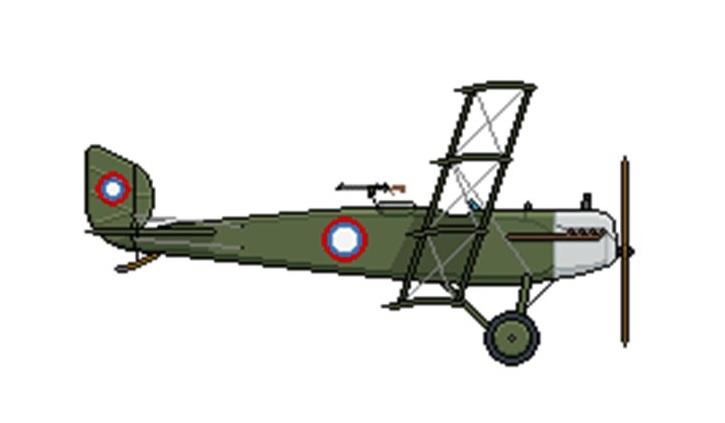
In September 1916 Imperial Russian Army opened a contest for a design of a three-seat army co-operation aircraft. Zalwski designed a quadruplane (which he designated WZ-V) that was to be built at Kiev, but overall situation made it impossible. The designed aircraft had a crew of three (two seating abreast in the front cockpit plus gunner behind them), a wooden construction and 220 hp Renault engine.
Zalewski WZ-I
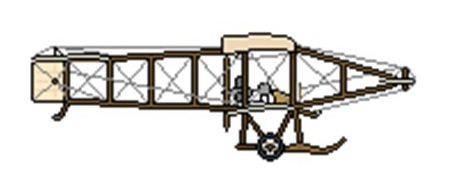
In 1909 the then-17-year old student of engineering Władysław Zalewski begun designing an airplane being essentially a scaled-down Farman. In 1911 he proceeded to construction works but financial constraints caused a break until 1913 when they resumed only to be interrupted again year later by the outbreak of the Great War, this time for good. Interestingly, already built elements managed to survive the war and years later some of them were used in construction of another Zalewski’s aircraft, the WZ-XI/XII.
Zajicek C-2 / C-3 Sport
Built in 1934 by Charles A Zajicek, the C-2 and C-3 Sport were single place, open cockpit monoplanes.
The C-2, N13692, was powered by a 65hp Velie engine and the C-3, N18243, by a 40hp Salmson AD-9.
Zajicek, Charles A
Charles A Zajicek
Berwyn IL.
USA
Circa 1934 airplane builder
Zahn Spectre

The Specter was designed during 1994-96, to build a glider that delivers much better performance than delta wings in fall and finesse rates, with good performance in the high-speed (up to 100 km / h) range.
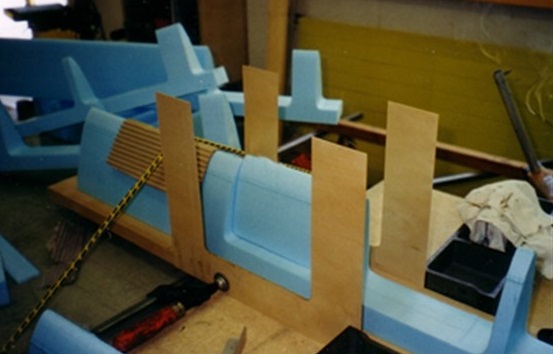
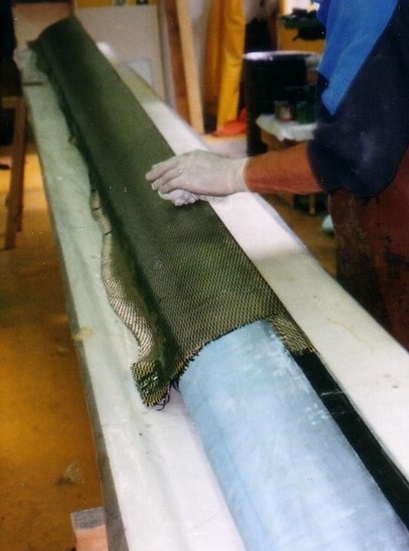
The D-tubes cover 20% of the profile. They were made of carbon / kevlar 200 gr / sq.m, directly on core of foamed 30kg / cu.m hollow, cut with hot wire. Unidirectional carbon beams have been inserted, as well as aluminum plates for riveting / screwing the various fixings: root, ribbed and cable ties.
The wingspan was set at 12.4 m, with a length of 12.4 m. The Worthmann FX 63-137 was designed to take advantage of take-off and low-speed behavior, and for the simplicity of the flaps. This profile has a maximum Cz of 1.7, and good stall characteristics. It equipped pedal-powered planes, but also motor-gliders. The wing tip of 3 degrees is obtained by modifying the back of the profile from half the wingspan of the wing.
To maintain the unique feel of the delta wing, as well as transport and simple assembly, the pilot is installed in a harness. Therefore, a trapezoid and the minimum of aerodynamic controls are required: only spoilers to turn, the rest will be done by displacement of the weight.

The trapeze will be used as an attachment to the lateral structural cables and will not be able, like on the rigid wings, to actuate the spoilers. Handles sliding on the speedbar will control them, using cords passing inside the uprights.
The ribs were also built with a foam-carbon / kevlar sandwich. They are connected to the D-tubes by aluminum fasteners, which also serve to fix the main cables for the median rib. Incident-maintaining cables are attached to the back of the rib by stainless steel fasteners. The ribs are extended with an aluminum tube for the tension of the sail.
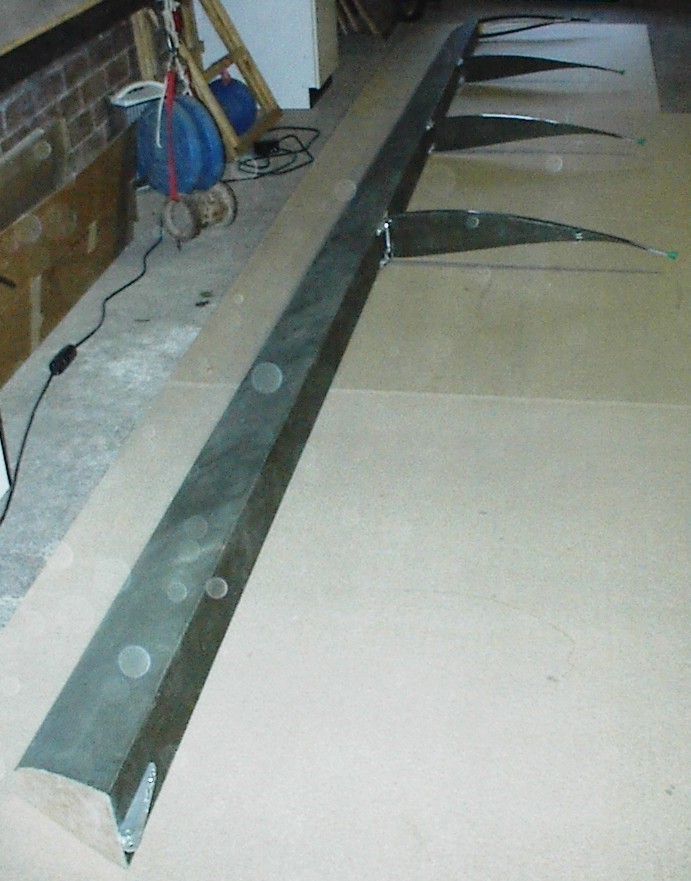
Sail work is dacron 160 gr / sq.m, more than 1km of polyester yarn. The empennage was manufactured in a very classic way, in wood covered with a heat-shrinking filament (Oracover). It is very solid and was a bit heavy: 3.6 kg. The drift consists of fabrics stretched over an aluminum frame and carbon.
The calculations (unfortunately inevitably somewhat imprecise) give a fineness of 18 to 48 km / h and a drop rate of 0.65 m / s to 40 km / h.
In 2002, the prototype was ready for its first tests.
There were various revisions, and the big flight came on October 12th. The rolling behavior was very pleasant, but there is too much stability in pitch.

Zahn renounced the formula of the flying wing, despite its great advantage in free flight: allow an easy takeoff. The formula, which subjects an aerodynamic element (the wing) to perform two distinct functions (ensuring the stability of the aircraft and lift with minimum drag) is a delicate compromise to design and calculate. It imposes profiles with little variation of moments, unsuitable for gliding, and an important twist which makes them work at unfavorable impacts at the tip of the wing.
Wing area: 12.4 m²
Wing span: 12.4 m
Wing profile: Worthmann FX 63-137
Tail surface: 1.5 m²
Hang glider weight: 45 kg
Minimum pilot weight: 60 kg
Maximum pilot weight: 80 kg
Minimum speed: 36 km/h
Maximum speed: 90 km/h
Max glide ratio (L/H): 18
Max glide ratio speed: 48 km/h
Minimum sink rate: 0.75 m/s
Packed length: 6.2 m
Nose angle: 180°
Yvon Perret EViva

The Yuneec EViva was originally designed by Martin Wezel in conjunction with the Czech company Composit and initially intended to be powered by a 50 hp (37 kW) Rotax 503 two-stroke or 60 hp (45 kW) HKS 700E four-stroke powerplant.
The aircraft was designed to comply with the Fédération Aéronautique Internationale microlight rules. It features a cantilever wing, a T-tail, a two-seats-in-side-by-side configuration enclosed cockpit under a bubble canopy, retractable monowheel gear with wing tip and tail casters, and a single electric motor in tractor configuration driving a folding propeller.
The design was purchased by Yuneec, development shifted to China and the aircraft was adapted for electric power.
The aircraft is made from composites. Its 17 m (55.8 ft) span wing has an area of 14.2 m2 (153 sq ft) and upper wing telescopic air brakes as well as flaps. The wing is derived from the Wezel Apis 2 wing. The standard engine fitted is the 40 kW (54 hp) Yuneec Power Drive 40 electric motor, controlled by a Yuneec Power Block 40 400 Amp power controller and powered by two Kokam Lithium polymer battery packs of 31 Ampere-hours (Ah) each (62 Ah total). The engine weighs 23 kg (51 lb), the controller 7 kg (15 lb) and the batteries weigh 67 kg (148 lb) in total. The propeller folds aft into the engine cooling vents when not in use and deploys automatically on engine start. The batteries are charged by a Yuneec E-Charger that can run on 110-240 volts and charge in 3–4 hours.
First flown in 2012, the projected price in 2011 was €91,000.
Powerplant: 1 × Yuneec Power Drive 40 electric motor, 40 kW (54 hp)
Battery packs: two Kokam Lithium polymer packs of 31 Ah each (62 Ah total)
Propeller: 2-bladed folding carbon fibre
Prop diameter: 1.60 m (5 ft 3 in)
Wingspan: 17 m (55 ft 9 in) / 11.6 m with wing tips removed
Wing area: 14.2 m2 (153 sq ft)
Length: 6.9 m (22 ft 8 in)
Height: 2.65 m (8 ft 8 in)
Empty weight: 225 kg (496 lb)
Gross weight: 472.5 kg (1,042 lb)
Maximum speed: 180 km/h (112 mph; 97 kn)
Cruise speed: 160 km/h (99 mph; 86 kn)
Stall speed: 65 km/h (40 mph; 35 kn) flaps down
Never exceed speed: 230 km/h (143 mph; 124 kn)
Endurance: 1.3 hours on batteries
Maximum glide ratio: 38:1
Rate of sink: 0.65 m/s (128 ft/min) at 85 km/h (53 mph)
Wing loading: 33.3 kg/m2 (6.8 lb/sq ft)
Crew: one
Capacity: one passenger
 All Aero