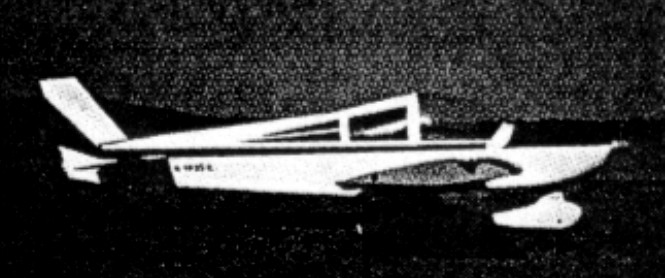
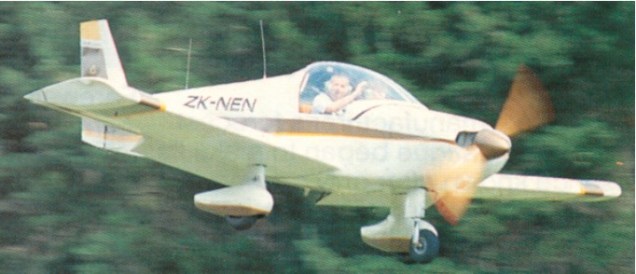
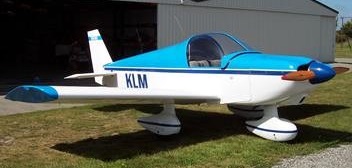
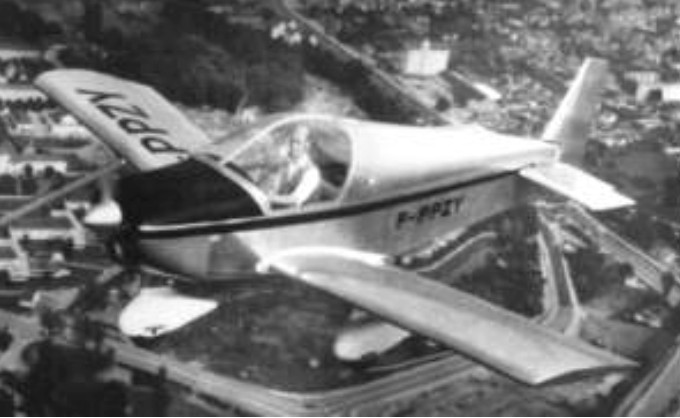
With 100 hp the CH-200 will cruise for four hours at 130 mph carrying two passengers and baggage, while 150 hp and an aerobatic option turns the Zenith into a powerful per¬former. (The Zenith is stressed for engines from 85 to 160 hp). First designed and built in 1974. Two ¬place seating is under a sliding canopy in a fuselage formed by four longerons with stiffened skins, blind riveted to longerons. Five bulkheads carry the top skin. The constant-chord wings have a single cantilevered spar with three sections and electronically-operated flaps. One-piece, all-moving, horizontal and vertical control surfaces constitute the tail.
Price 1982: $8,500 (excludes engine, instruments and paint). Units delivered to June 1981: 450.
Engine: 125-hp Gross Weight: 1500 lbs. Empty Weight: 930 lbs Fuel Capacity: 24 USG. Wingspan: 23 ft Length: 20ft 6in. Wing area: 105 sq.ft Top speed: 151 mph. Cruise speed: 141 mph Stall speed: 54 mph. Climb rate: 1100 fpm Takeoff run (to 50ft): 1400 ft. Landing run (from 50ft): 1400 ft Range: 450 sm. Seats: 2 Design load: +9g.
Engine: Lycoming, 150 hp Max speed: 167 mph. Cruise speed: 152 mph Range: 400 sm. Stall speed: 53 mph ROC: 1700 fpm. Take-off dist: 600 ft Landing dist: 600 ft. Service ceiling: 12,000 ft Fuel cap: 24 USG. Empty wt: 970 lbs Gross wt: 1500 lbs. Height: 6.75 ft Length: 20.5 ft. Wing span: 23 ft Wing area: 105 sq.ft. Seats: 2
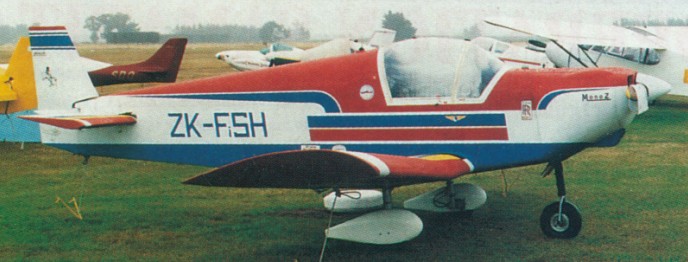
The Mono-Z is a single-place, scaled-down version of the original Zenith first built in 1974. It offers maximum operating economy with VW power at a three gph cruise. Detachable wings leave an 8-foot-wide section for easy road towing, requiring only 20 minutes to install both wings. It is stressed for 9G’s and with 100-hp becomes a powerful aerobatic performer. Engine range from the VW 1600 to 100-hp Continental.
In his spare time, Heintz began to design and build his own aircraft, which he named the Zenith, anagram of Heintz. After a little more than a year’s work, the two-place low-wing Zenith was rolled out and successfully flown on 22 March 1970 as F-WPZY.
Soon after, detailed blueprints and construction manuals of the aircraft were drawn up and offered to the growing number of interested builders and flyers.
Formed 1974 and currently producing the Zenith CH 2000 certificated two-seat Iightpiane (first flown June 1993 and delivered in assembled form from 1994). Also markets the Zenith CH-100 single-seater, Aero CH-150 and CH-180 (aerobatic variants of CH-200), Zenith CH-200 two-seat Iightpiane and Zenith CH-250 long-range version, and Zenith CH-300 (Tri-Z) three/four-seat Iightpiane (as variant of CH 2000), all built from plans and/or kits.
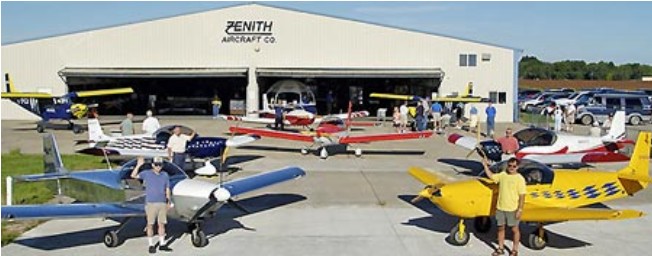
Zenith Aircraft Company is in the exclusive business of designing, developing and manufacturing kit aircraft. The independent, privately-owned company was formed in 1992 in Mexico, Missouri, centrally located in the United States, and is based in leased 20,000+ sq.ft. production facilities at Mexico Memorial Airport. Zenith Aircraft Company has acquired the exclusive rights to manufacture and market Zenair kit aircraft designs from designer Chris Heintz.
Chris Heintz
An aeronautical engineer, Chris Heintz is a graduate of the E.T.H Institute in Switzerland. After serving in the Air Force, Heintz worked for Aerospatiale on the supersonic Concorde jetliner, and later became chief engineer at Avions Robin (France) where he designed several fully-certified two and four seat all-metal production aircraft. In his spare time, Heintz began to design and build his own aircraft, which he named the ZENITH, anagram of Heintz. His all-metal homebuilt aircraft incorporated simple construction methods throughout and after a little more than a year’s work, the two-place low-wing Zenith was rolled out and successfully flown in 1969. Soon after, detailed blueprints and construction manuals of the aircraft were drawn up and offered to the growing number of interested builders and flyers. In 1973, Chris Heintz, his family and the Zenith moved to North America, where Heintz worked for de Havilland (in Toronto) as a stress engineer on the Dash 7 commuter. Chris decided to form his own aircraft company in 1974, and under the name of Zenair Ltd. started to manufacture Zenith kits himself from his two-car garage. Through the company, Heintz has introduced more than twelve successful kit aircraft designs over the years. In 1992, Heintz licensed the kit manufacturing and marketing rights to Zenith Aircraft Company for the STOL CH 701 and the ZODIAC CH 601 designs, and has developed the new STOL CH 801 and the new ZODIAC XL for Zenith Aircraft Company. While Heintz officially retired in 2003, he is still very active as a designer, engineer and consultant.
1996: Huronia Airport, Midland, Ontario L4R 4K8, Canada. PO Box 650, Mexico Memorial Airport, Mexico, MO 65265-0650.
By 1996, Zenair had a production facility in Mexico, Missouri, USA, headed by Sebastion Heintz (son of the designer, Chris Heintz)
Zee Aero (now Wisk), originally under the leadership of Professor Ilan Kroo of Stanford University, developed a proof of concept vehicle with a series of high, vertically-mounted mounted electric propellers. The proof of concept made its first unmanned hover in December 2011, and in February 2014, completed its first transition from hover to forward flight.
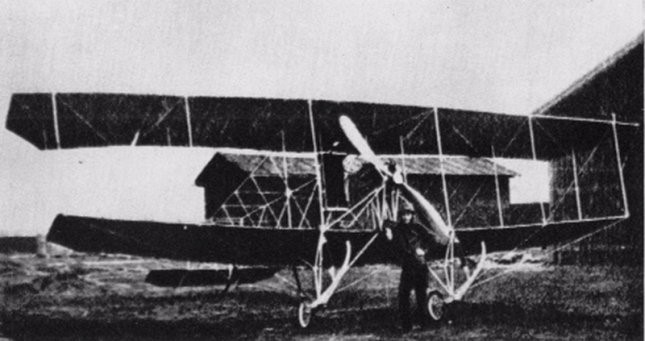
On the initiative of the Association of Technicians at the Technical Association in Warsaw in the autumn of 1909, Czeslaw Zbierański went to Paris to get acquainted with the aviation technique of the time. On his return, he designed a wooden plane using a pulling propeller engine, while the biplanes at that time had pushing propellers. After the approval of the project by Wheeler Zbierański left for France to buy materials. Having encountered a Voisin airplane with a steel tube construction, he decided to build a hull from the tube.
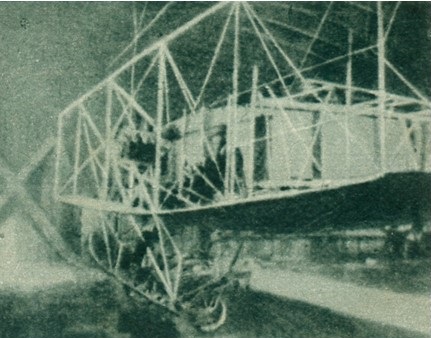
Stanisław Cywiński became Stanisław Cywiński’s co-worker, who in the spring of 1910 adapted the project to steel construction and elaborated on the design. The hull of the aircraft was built in the summer of 1910, in a shed on the premises of E. Krzemiński’s lamp factory at ul. Solec 103 in Warsaw. After the construction of the hangars of the Warsaw Aircraft Association “Awia” on the Mokotowskie Field, they moved in the early autumn of 1910 to the hangar No. 1. There construction was completed. In the autumn of 1910 Cywiński bought the engine for the plane.
The biplane was rectangular, double-girder, wooden construction panels, supported by steel pipe posts and crossed with wires. Canvas cover. Controls were only on the upper wing. Truss lattice made of steel pipes connected by screws. Tubes stiffened by ash rods. Rear hull triangular section. Trusses framed by wires. With fabric covering
In May 1911, while attempting to fly an improper connection of the wires to the spark ignition caused gasoline to burn and burn part of the airfoil. In the summer the plane was renovated.
On September 25, 1911, the plane was flown by Michał Scipio del Campo, flying 15-20 km, at a height of 50-60 m, within 15 minutes. The engine was too heavy and too weak, so the Gnome engine from the Morane-Borel aircraft belonging to M. Scipio del Campo was mounted.
When the Russian army took over at the beginning of 1912, the plane was evacuated by Russian lieutenant Krachowiecki, fictitiously buying it. Cywinski dismantled the engine, and Zbierański donated the craft to the Union of Students of the Lviv Polytechnic. The plane was transported to Cracow in 1912, where it was exhibited in the Oleander area and then stored for over a year. There at the beginning of the war in 1914, it burned down during the fire of the exhibition buildings.
Engine: ENV type D, 29 kW (39 – 40 hp) Wingspan: 10 m Length: 8.5 m Height: 3.3 m Wing area: 31-34 sq.m Gross weight: 240 kg Useful weight: 100 kg Total weight: 340 kg Speed: 70 km / h Flight time: 1 h 30 min
Czechoslovakia The Skoda company was the largest industrial organisation in Czechoslovakia in the 1920s, manufacturing engines of indigenous design alongside license-built Hispano-Suiza and Lorraine Dietrich aero engines, Dewoitine aircraft and Curtiss Reed propellers. Skodovy Zavody had a controlling interest in the Czech Avia company and in Ceskoslovenska Letecka Spolecnost, the Czech airline. Parent company has also made cars, firearms, etc.
This single-seater sailplane was designed and built to Standard Class specifications by Otto Zauner of Vineland, New Jersey, who had previously built from kits and/or plans a Schweizer SGS 1-26, a Briegleb BG 12, a Bryan HP-14 and a Thorpe T-18 ultra-light. The OZ-5’s fuselage and tail unit are of Mr Zauner’s own design but the wings of a Bryan HP-15 are fitted in the shoulder position. The forward fuselage and cockpit tapers to a slim boom carrying the tail, the former being of glassfibre construction to about one-third back along the tail boom; the rest of the boom and the cantilever T-tail are all-metal, the fin and rudder being swept back. There is a retractable monowheel and the pilot sits under a one-piece flush-fitting cockpit canopy. The wings are the same structurally as the HP-15 and of high aspect ratio; they are two-spar all-metal structures with metal skinning and plastic leading edges, and only three ribs in each wing, the spaces between the ribs being filled with plastic foam. Metal fixed hinge flaps are fitted, the ailerons drooping in conjunction with them. Flight testing of the OZ-5 began in 1975.
Span: 49 ft 2.5 in Length: 22 ft 0 in Height: 4 ft 0 in Max pilot weight: 234 lb Max weight: 669.5 lb Max speed: Approx 18 0mph (in smooth air) Max aero-tow speed: 120 mph






 All Aero