Martin’s first design was a side by side two-seat low wing monoplane with a Cirrus Hermes engine. The drawings for the M.1 were prepared during late 1929. Engine runs and other ground tests were made on a completed fuselage which vindicated the chosen arrangement; however, the project was not completed due to lack of funds.
Aircraft
Martin-Baker Aircraft Company Ltd / Martin’s Aircraft Works
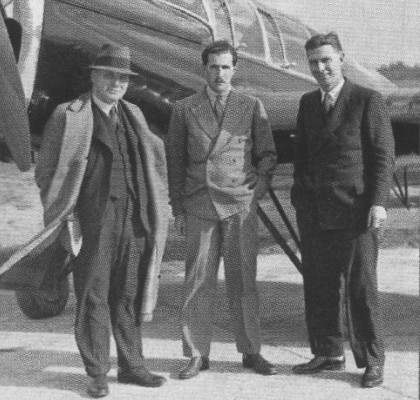
Martin-Baker Aircraft was established on August 17,1934, when Mr James Martin joined forces with Capt Valentine Henry Baker (and Mr Francis Francis, who provided the finance) to form the new company at Higher Denharn near Uxbridge in Buckinghamshire. The three men all became directors of the firm, which initially operated under the name “Martin’s Aircraft Works”.
The first objective was to build the experimental M.B.1 two-seat light aircraft. The original offices and works buildings at Denharn were destroyed by fire on April 26, 1940, but by mid-1941, some new modern buildings had been built to replace them. A July 1941 Air Ministry report noted how the conduct of the company’s affairs was characterised by the usual indifference to accounting detail, often found when technical men with outstanding ideas were financed by a wealthy man, all of whom were following an ideal rather than making a profit. The Ministry found no evidence of slackness or extravagance at Martin-Baker, but an air of quiet efficiency about the offices and factory and all connected with them.
Martin was born in September 1893, Martin went on to become an engineer and inventor, designing and building a wide variety of machines when a teenage. In 1929 Martin established his own engineering firm but when he became chief designer and managing director of Martin-Baker in 1934, aviation became his chief interest.
Valentine Henry Baker was born in August 1888 and served with all three Services in the First World War (during which he was awarded the Military Cross and the Air Force Cross). In 1917 he became a flying instructor, and resulted in the establishment of his flying school at Heston, Baker’s students included several members of the royal family and Arny Johnson. In Martin-Baker his main job was company test pilot.
James Martin had evolved a method of steel-tube construction and built experimental MB.1 two-seat light aircraft to demonstrate construction system, flown March 1935. In 1935, with a company employing 35 people, James Martin called for the latest Air Ministry Specification F5/34, to find out what the RAF would require of a new interceptor fighter. Private venture MB.2 eight-gun fighter with Napier Dagger engine flown 3 August 1938. MB.3 experimental fighter with Napier Sabre first flown 31 August 1942, followed by MB.5 with Rolls-Royce Griffon 83 driving contrarotating propellers, which made maiden flight May 23,1944.
Martin-Baker became a leading manufacturer of ejection seats, having made first live firing on May 11,1945.
Martin Aircraft JetPack
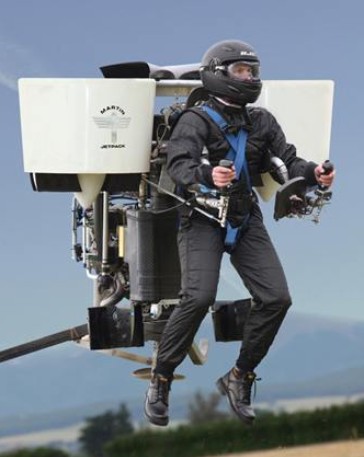
Oshkosh, Wisconsin, 2008, was the launch pad for a world first in personal flight today when Martin Aircraft Company unveiled the ultimate personal flying machine – the Martin Jetpack. Glenn Martin, Inventor of the Martin Jetpack and Managing Director of Martin Aircraft Company, showed the world that sustainable personal flight is now possible.
Glenn has devoted almost 30 years to the research and development of the Martin Jetpack. Glenn and a group of avionic, technical, design and production experts at Martin Aircraft Company have created a jetpack that flies 100 times longer than its predecessor the Bell Rocket Belt.
The Martin Jetpack has a patented fan jet technology, uses regular gasoline, complies with Ultralight regulations and is easy to fly after completion of a unique training program.
In 2005, Prototype 9 achieved sustained flight times, laying the foundation for a viable and successful pre-production prototype to be developed. In 2008 the Martin Jetpack was launched.
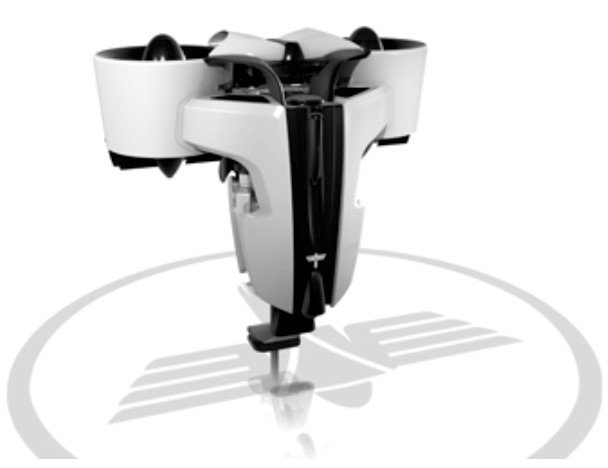
The core of this machine is the fan, its duct and the flow straighteners. These have cost the team countless hours as they pushed the boundaries of the science of ducted fans in a low speed environment. Mr Martin found that while many of the ‘facts’ older designs were based on were as solid as the day they were first committed to the text book, others were due either to the originators trying to simplify the calculations because of a lack of modem processing power, or had a fudge factor to cover steps in the process that didn’t become clear until high quality CFD systems were available.
A long series of experiments with Solidworks 3D CAD-drawn concepts run through CFD (a computer based simulation of a wind tunnel) brought about a series of promising steps forward in efficiency that were checked out on the workshop test rig. The team now have a fan blade that is not only light at roughly 100gm per blade, it also runs at 92 percent efficiency. The best Mr Martin can find elsewhere is the lift fans on the JSF which are published at 87 percent. The team have also worked hard to get the whole ducted fan package efficient across a broad speed range. The 2011 setup has a relatively flat efficiency curve with a small peak at around 60 km/h forward speed. Each fan unit is considered to be torque neutral which means the airflow from the duct is so close to straight that the twist is almost immeasurable, giving gains in thrust.
The fans needed a light, unobtrusive and reliable drive method which led the team to the modem synchronous belt. The latest designs have carbon fibre tensile cord inside the polyurethane belt with nylon facing on the teeth. The power transfer for width is better than for chain and challenges many gear-driven alternatives especially on weight. The major requirement for belts is to keep an alignment of better than half a degree and constant tension. Most belt drives use aluminium housings which shrink and grow with ambient temperatures let alone engine temperatures, so the decision was taken to go to a carbon fibre structure to all but eliminate temperature related dimension changes. The carbon structure also greatly assisted in keeping the alignment within spec.. The final touch was to make sure the drive and driven pulleys were fully supported by bearings on either side: no poor quality over hung shafts would be allowed in this design.
Once the horsepower requirements of the fans were known, a search of all known production engines was made. Power density, brake specific fuel consumption, package size and reliability were recorded, then checked against the requirements. No production engine had the power to weightt ratio needed allied with the high reliability the team demanded. Martin Aircraft sought advice from various companies and found that marine applications, such as outboards, shared many of the operational needs of the aviation world. Both users tend to run at three settings: idle; around 75% continuous; and 100% for extended periods. With this in mind, questions were asked of one specialist, Mercury Marine, to ascertain the level of stress an engine could be placed under and still achieve high reliability. The end result was four gentlemen For reliability and packaging reasons a water cooled V4 two-stroke was chosen. This gives a power pulse every 90 degrees which brings the peak and mean torque at the crankshaft nice and close together, resulting in a smooth output to the fans. To further smooth the power delivery, there is a ‘centre flex’ type rubber coupling before the drive enters the c!rive pulley. The cylinders are from Honda (CR 500 motor crosser), modified by replacing the steel sleeves with aluminium coated with nikasil. The change gives better heat transfer and reduces the engine weight by over 3kg. New heads have been made which have a carbon fibre top cover to keep the water in and the weight down.
The exhaust system is a simple yet brilliant piece of work which through its various interconnections and pipe lengths gives a lesser improvement at peak rpm compared to a full expansion chamber system, but functions well over a very wide band. The torque curve is one of the flattest I’ve seen, which means the horsepower line has no real humps or hollows as the rpm rise. Reliability is vital in a machine that has no wings (just a BRS ‘chute fitted) so the engine team have incorporated all the hallmarks of a reliable engine such as mean piston speeds below 15m/s, bore and stroke ratio kept below 1.15 / 1, and porting size and shape designed to protect the rings as they pass. All based on hard-won data from the marine industry where after tens of thousands of engines they have learnt a thing or two.
The cooling system has a neat (and patented) method of pumping air through the radiator. To understand it, think about blowing air across the top of a milk bottle. The airflow from your breath across the top creates a draw on the air in the milk bottle. The horizontally mounted radiator on thej etpack has ducts that sit on the side of the entry to the ducted fans so that the rush of air going into the fans pulls air through the radiator. The more horsepower applied the more airflow through the fans and therefore more flow through the cooling system. Another simple yet brilliant design.
The first prototype Jetpacks were manually controlled and apparently not hard to fly, but the team have their eye on a market where a high level of automation seems preferable. The fully fly-by-wire system uses the same unit as the Predator UAV for its air speed, gyro, magnometer, GPS and other critical inputs, but the processing and control is done by a dual redundant Martin Aircraft system. When creating it the team were helped immensely by a professor from Bremen University who joined for six months to apply his experience in control systems. He also helped with the creation of a proper flight simulator suitable for training and checking out software changes to the real thing. The fly-by-wire approach allows the operator to simply command the machine to rise or fall, turn left or right, leaving the control units to move the duct vanes and the cruciform, surfaces in the jetstrearn to create directional change while changing the engine output to control height and speed.
Release the controls at any time and the system will maintain height and gradually bring you back to stable hover.
Martin Aircraft has created a concept, not just a one-off machine. The current version suits US Part 103 rules, so it is limited in overall weight, speed and fuel capacity. Accepting these limitations opens up a large private market for the Jetpack. A slightly bigger ‘unregulated ‘ version on the same basic configuration can lift 200kg-plus payloads versus the current 115 kg and stay aloft for over 90 minutes. Still bigger versions exist on paper.
The 12th prototype featured a 200 hp V-4 engine driving two ducted fans. It had been flown to more than 3000 ft and 74 kph. The planned price at that stage was US$150,000 to US$250,000.
Standard Equipment:
Flight and Engine displays
Harness
Ballistic Parachute
Retractable undercarriage
Energy absorbing undercarriage.
Height: 5 ft
Width: 5.5 ft
Length: 5 ft
Structure: Carbon fibre composite
Empty weight: 250 lbs (excluding safety equipment)
Gross weight: 535 lbs
Useful (Pilot) Load: 280 lbs+
Maximum thrust: 600 lbs+
Fuel Capacity: 5 US gallons (as required by FAA Part 103,Ultralight Regulations)
Fuel burn: 10.0 gph
Engine: Martin Aircraft 2.0 L V4 2 stroke, rated at 200 hp (150 kw). Max 6000 rpm.
Electrical system: 12 V DC Battery, starter, 360 w alternator.
Rotor: Carbon / Kevlar composite diameter 1.7 ft
Max: 7058 rpm
Range: 31.5 miles (at max speed of 63 mph as required by FAA part 103).
Hover in ground effect: 8000 ft (estimated)
Hover above ground effect: 8000 ft (estimated)
Martin Aircraft Co
In 1998 the Martin Aircraft company was founded with the specific goal to research and develop a jetpack that could fly 100 times longer than the Bell Rocket Belt (26 seconds). In 2005, Prototype 9 achieved sustained flight times, laying the foundation for a viable and successful pre-production prototype to be developed.
The founder of Martin Aircraft Company and the inventor of the Martin Jetpack is Glenn Martin. Richard Lauder is the company’s Chief Executive.

Based in Christchurch, New Zealand, Martin Aircraft Company is developing the world’s first practical jetpack, the Martin Jetpack. Launched to global acclaim at the 2008 Experimental Aviation Association AirVenture air show in the USA, Martin Aircraft Company planned to fulfil its first customer orders in 2010.
Martin Monoplane Glider
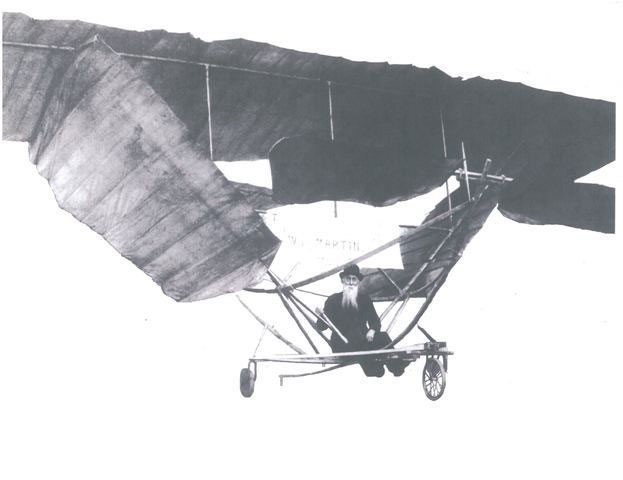
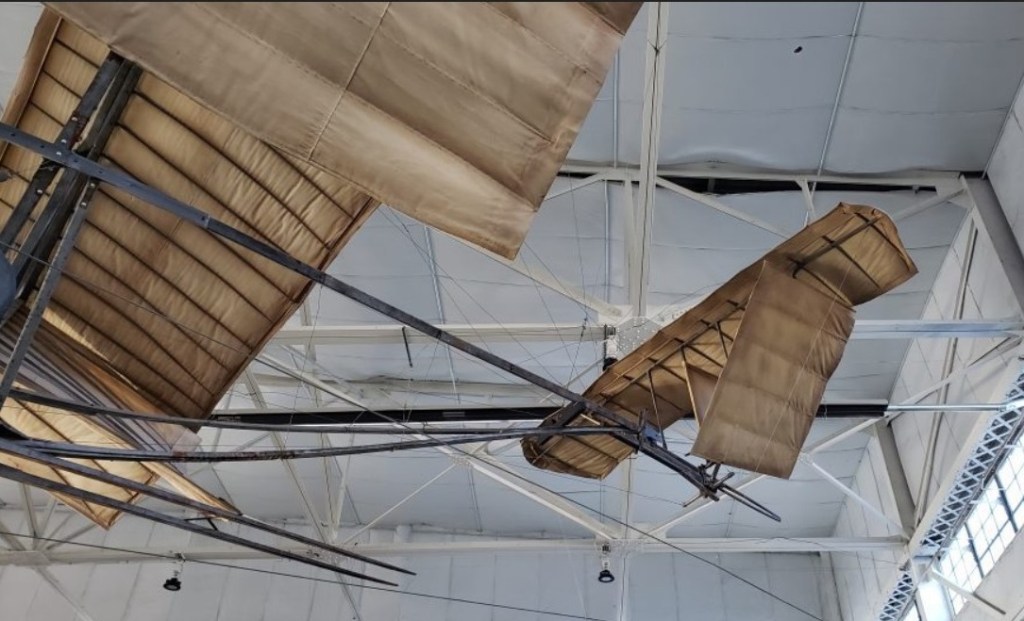
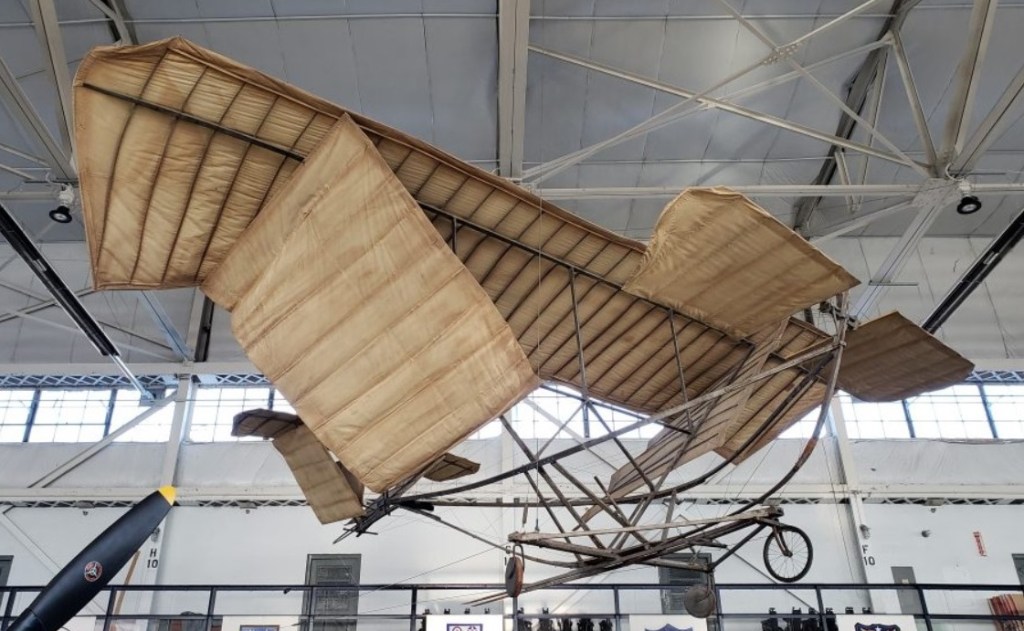
This monoplane was the first of its type in the world, and made many successful flights when towed by a horse or a Ford car. The inventor knew his aerodynamics, and his plane embodied principles of safety that have been generally adopted in plane construction.
On January 12, 1909, snow covered the fields back of the Martin farm, Canton, Ohio, and the device was hauled out and taken to the top of a hill. Old Billy, the farm horse, was hitched to the front of the plane by a long rope. Mr. Martin took his seat in the plane, son George whistled to Billy. The horse started down the hill pulling the plane behind him. It rose from the ground, reached a height of 25 feet and traveled 200 feet before the horse slackened its pace and the plane settled gently back to earth.
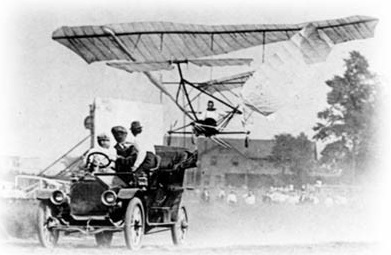
Mrs. Martin then took her seat in the plane and made several successful flights, being the first woman ever to fly in a heavier than air machine. Another son, Charles C. Martin, also went up and said that it came down like a feather. When he shut his eyes, he didn’t know when it struck snow.
Mr. Martin’s experiments had been kept secret, but the trial flights could not be hidden. Neighbors flocked to the field to see for the first time in their lives a human being sustained in the air by a heavier than air machine. Cousin Glenn L. Martin had not yet built the first plane in California.
A photographer came out to take pictures of the flights but became so excited that he failed to operate his photographic apparatus properly and all the plates were ruined!
During successive days more than 100 flights were made. All the members of the family, including the pet dog enjoyed the novel experience. One day one of the sled runners struck a bare spot on the ground and swerved the plane against a fence, damaging it slightly. The flights were suspended for a time.
William H. Martin had his eye on more than the local scene and wanted to get his plane demonstrated in the East, but was handicapped by lack of funds. William A. Hoberdier, who, with his brother, L.A. Hoberdier operated Lyric Amusement Co. of Canton, is credited with having helped finance trips to New York in the Spring of 1909.
Another milestone was established September 21, 1909, when Mr. Martin’s eight-year-old granddaughter, Blanche Martin, made several solo flights in the machine, thus demonstrating its safety. Her hops were 75 feet in length, and it was the first time a child of such age had ever taken to the air in a “heavier than air” machine.
Mr. Martin sought to obtain a motor for his plane and wrote to F.S. Lahm, noted Canton balloonist, then living in Paris. In a letter from Paris, dated March 15, 1909, Mr. Lahm told him that the only successful motor then on the market was exorbitantly priced and advised that a smaller one was to be produced soon. Some used motors were obtainable, but were unreliable.
Twenty years after the plane was built, patented and successfully flown, Mr. Martin offered it to the Smithsonian Institution. After long and careful investigation the Smithsonian institution accepted it as being the first plane of its type, and put it on display next to Lindbergh’s “Spirit of St. Louis.”
In 1936 Dennis R. Smith, when returning from a marble tournament, stopped in at the Smithsonian Institution and saw the Martin plane on display beside Lindbergh’s Spirit of St. Louis.
When he returned to Canton he met William H. Martin on the street and reported seeing his plane at the Smithsonian. Mr. Martin, then an old man of 81, with long white whiskers, and gentle and quiet spoken in manner, had the happiest moment of his life when he knew that his contributions to air pioneering had been memorialized by the preservation of his machine. His patent had run out in 1926, and he took additional satisfaction in knowing that the invention which he had patented was free for the use of all mankind.
When Harry Renkert organized the Canton Aviation Co. in 1938, and acquired the land for the airport, he named it Martin Field in honor of William H. Martin, whose farm adjoined the field.
The McKinley Presidential Library & Museum has graciously put the Martin Glider on indefinite loan to MAPS Air Museum as of February 16, 2002.

Martin, William H.
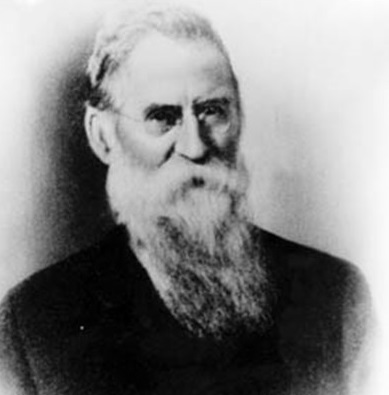
William H. Martin of Canton, Ohio, died in March, 1937. Mr. Martin’s funeral had to be postponed, as international travelers wished to pay their respects to this gentleman who had the courage to stay with his convictions…
William H. Martin’s funeral caravan stretched for five miles…
Martin Slug
With the experience gained from the conversion of Motor Cadet PFA.1385, P.J.Martin began building a definitive motor glider which he call the Martin Slug.
It was given the PFA number 1388 and was to be powered by a VW engine.
Martin 162A Tadpole Clipper
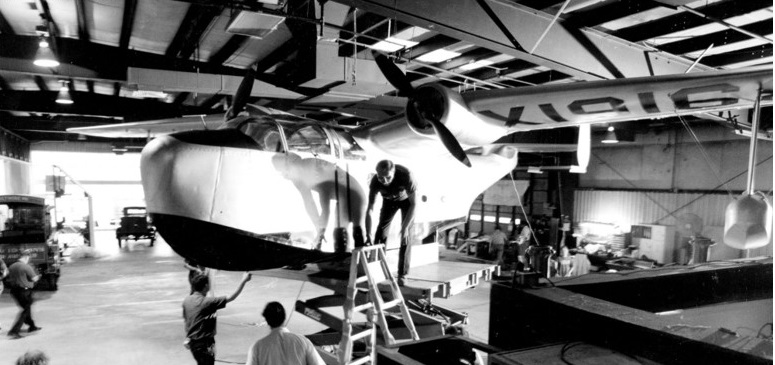
A piloted, three-eighths scale model of PBM flying boat; single-seat test aircraft built to generate aerodynamic data to design and build full-scale Martin PBM flying boat.
The construction was fabric-covered spruce plywood and aluminum.
In 1987, a dedicated and enthusiastic team of volunteers, many of whom were former Martin employees, began an exhaustive restoration of the 162A. After more than 10,000 man-hours of labor, the 162 was ready for display while on loan to the Museum of Industry in Baltimore, not far from where the “Tadpole Clipper” had been built and flown. Portions of the rear fuselage under-surface were left uncovered to illustrate some of the modifications made in the 162A’s hull during the course of its testing.
Wingspan: 43ft 5 5/8in / 13.25m
Length: 28ft 6 1/8in / 8.69m
Height: 12ft 1/8in / 3.66m
Weight: 2819.7 lb / 1279 kg
Martin 1913 Tractor / Scout / Special
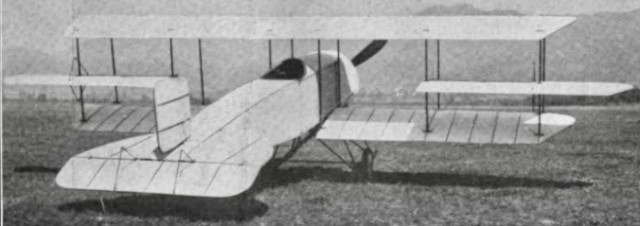
A single-seat biplane with a 90 hp Gnôme rotary engine. It was built for daredevil pilot Lincoln Beachey, but he rejected it on the grounds that it lacked necessary performance.
Martin 1910 Biplane
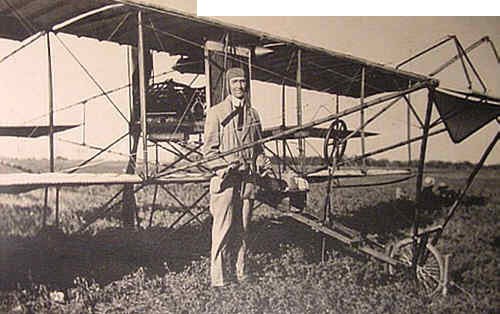
In 1910 Glenn L. Martin built another biplane machine with a slightly larger upper wing, interplane ailerons, a triangular stabilizer at the front rudder and a 50 hp Hall-Scott engine with which he set a few flight records of distance, duration and altitude in 1910 with flights from Newport-Beach to Catalina Island.

