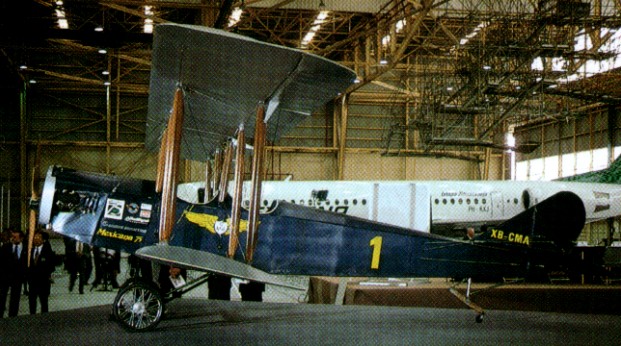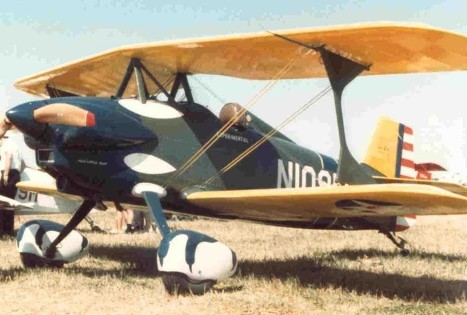
Meyers Little Toot

George W. Meyer was already a well known craftsman and model airplane builder prior to his full size project. He started the Little Toot by drawing it in ½ inch to the foot scaled drawings and proceeded to build a metal, 1/24 scale model of his dreams. The model duplicated what he wanted in the full size airplane including a scale metal engine. Many of the building processes were refined in the small model, prior to starting the full size project in 1952.

The full size airplane performed perfectly on the first flight with only a slight adjustment to the rudder trim tab. The first flight was flown on February 2, 1957 in Corpus Christi, Texas. The pilot for the test flight was a great lady pilot by the name of Pauline Glasson.

All the test hours were flown off and the plane came through with flying colours. The plane was fully aerobatic, and had no bad habits in stall or spin type maneuvers. George originally intended for the Toot to be a one of a kind airplane, but the requests for plans soon overwhelmed that decision so he began to produce plans with all of the modifications incorporated into them that he had made during the project.

The Little Toot took the top award from Mechanic Illustrated for “Outstanding Achievement in a Homebuilt Aircraft” at the 1957 EAA convention in Milwaukee. “Little Toot” also won the Paul H. Poberezny Award two years in a row. Year 1999 and 2000.

The single seat fuselage is an all-metal structure with metal-covered steel tube construction from rear of cockpit forward, and metal monocoque rear of tubular fuselage cockpit forward section. Plans also provide you with an alternate full Tube and Fabric fuselage construction.

It features all wood wings, two 1″ thick spar structure with fabric covering, and NACA 2212 wing section, 8 degrees sweepback on the top wing, and 2.5 degrees of dihedral on lower wing. There is 2 degrees incidence on both upper and lower wings. Braced biplane type with Cabane and I-struts. Fabric covered all metal full-length ailerons on lower wings only. No Flaps. Little Toot has a structure stressed to 10- and 10+ G’s

The original was fitted with a Continental 90-hp engine, but power plant options include 4-cylinder engines of up to 200 hp, or six cylinders up to 250 hp. The Little Toot has an eight-degree sweepback on the upper wing. The straight lower wing carries fabric covered, metal, almost full-span ailerons that give the ship an unusually high roll rate. Fiberglass engine cowlings are now available. A baggage compartment is located behind the pilot seat.

There are two tail type options. A cantilever all aluminum structure, or a tubular 4130 chrome-moly steel, fabric covered. Both have a trim tab in the port elevator. The main gear is fixed cantilever spring steel from Cessna 140/120, or new aluminum gear with integrated brake line, and a steerable tailwheel.
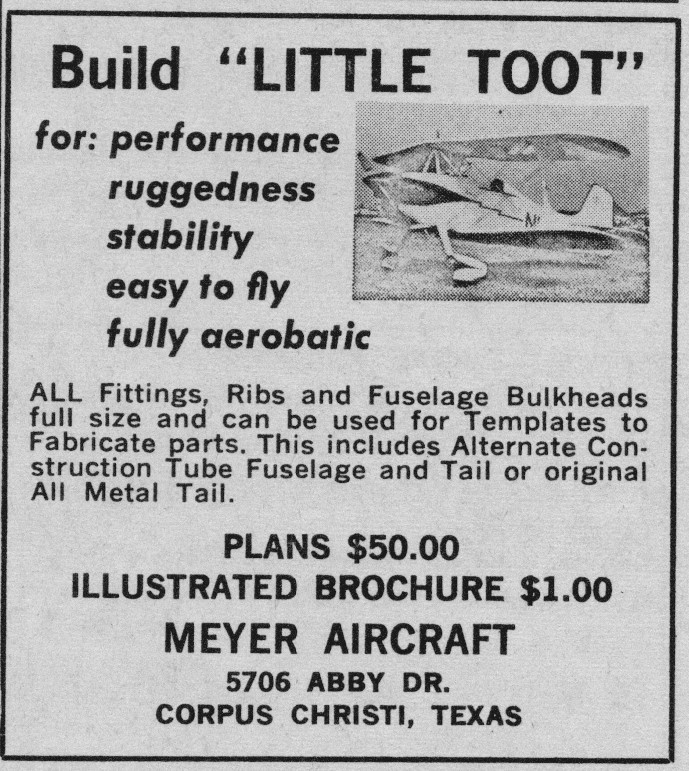
Jan 65

Wing span (both): 19 ft in
Fuselage length: 16 ft 6 in
Total height: 7 ft
Weight empty: 914 lb
Gross weight: 1320 lb
Max wing loading: 10 lb/sq foot
Max power loading: 13.7 lb/sq foot
Fuselage fuel tank: 19 USG
Opt. wing fuel tanks: 18 USG
Total fuel capacity: 37 USG
Roll rate: 120 deg/sec
Vne: 200 Mph
V2min (min takeoff speed): 65 mph
VFTO (Final takeoff speed): 70 mph
VC (most efficient cruising speed): 125 mph
VD (design diving speed): 200 mph
VDF (demonstrated flight diving speed): 160 to 180 mph in aerobatic configuration
VFC (Max speed for stability characteristics): 90 mph
VH (Max speed in level flight at max power): 138 mph
VLOF (Lift-off speed): 55-60 mph
VMC (Minimum control speed in flight): 48 mph
Vmcg (Minimum control speed on the ground): 40 mph
VMO (Maximum operating limit speed): 180 mph
VNO (Maximum structural cruising speed): 138 mph
VR (Rotation speed): 60 mph
VRef (Landing reference speed): 70 mph
VSO (Power off stall speed): 48 mph
VY (Best rate of climb): 100 mph
Max speed at sea level 125 hp: 135 mph
Max speed at sea level 150 hp: 150 mph
Max speed at sea level 180 hp: 165 mph
Normal cruising speed 125 hp: 125 mph
Normal cruising speed 150 hp: 135 mph
Normal cruising speed 180 hp: 145 mph
Max rate of climb 125 hp: 1600 fpm
Max rate of climb 150 hp: 2000 fpm
Max rate of climb 180 hp: 2150 fpm
Range (Standard with wing tanks)125 hp: 260 sm
Range (Standard with wing tanks)150 hp: 240 sm
Range (Standard with wing tanks)180 hp: 220 sm
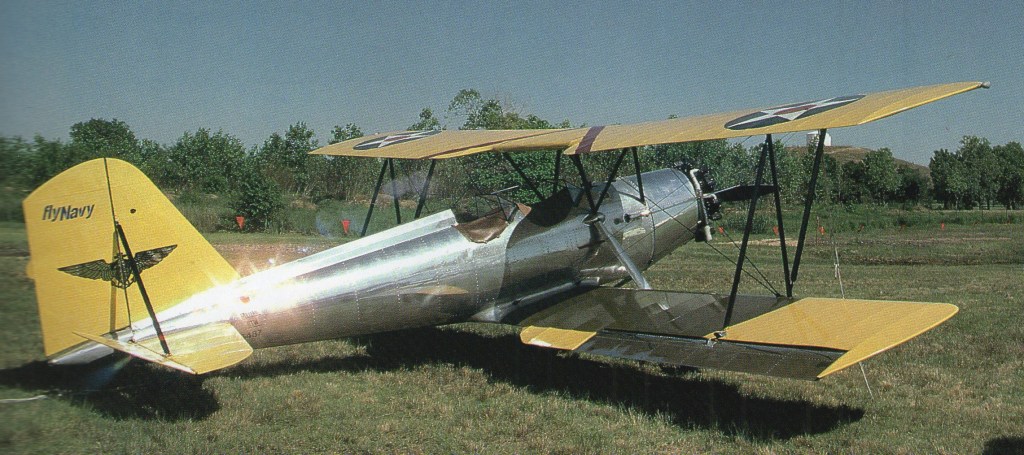
Meyers, George

George W. Meyer was already a well known craftsman and model airplane builder prior to his full size project. He started the Little Toot by drawing it in ½ inch to the foot scaled drawings and proceeded to build a metal, 1/24 scale model of his dreams. The model duplicated what he wanted in the full size airplane including a scale metal engine. Many of the building processes were refined in the small model, prior to starting the full size project in 1952.

The full size airplane performed perfectly on the first flight with only a slight adjustment to the rudder trim tab. The first flight was flown on February 2, 1957 in Corpus Christi, Texas. The pilot for the test flight was a great lady pilot by the name of Pauline Glasson, who is now in her 90’s and still a flight instructor in Corpus Christi. All the test hours were flown off and the plane came through with flying colors. The plane was fully aerobatic, and had no bad habits in stall or spin type maneuvers. George originally intended for the Toot to be a one of a kind airplane, but the requests for plans soon overwhelmed that decision so he began to produce plans with all of the modifications incorporated into them that he had made during the project.

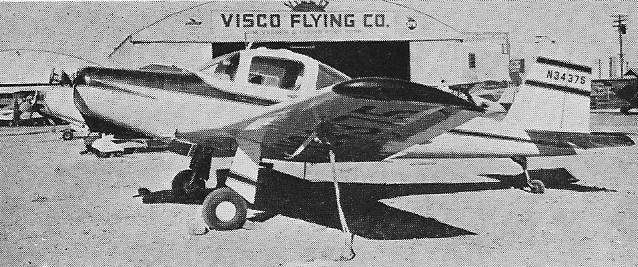
Meyers MAC 125 / MAC 145

MAC 145

Postwar production included MAC 125 and MAC 145 two-seat cabin monoplanes with Continental engines.

The MAC 145, introduced in 1948, is a higher-powered development of the MAC 125-C, the first post-war design of Meyers Aircraft Company. The MAC 145 differs in having a 145 hp Continental C145-2H engine.

Both were side-by-side two-seat cabin monoplane of all metal construction. A small series of MAC 145 were built.

The MAC 125 and MAC 145 developed into the Micco SP 20 and SP 26.

MAX 125
Engine: 125 hp Continental C125
Seats: 2

MAC 145
Engine: 145 hp Continental C145-2H
Wingspan: 30 ft
Wing area: 149 sq.ft
Length: 21 ft 4 in
Height: 8 ft 6 in
Empty weight: 1135 lb
Loaded weight: 1735 lb
Max speed: 166 mph
Cruise: 145 mph
ROC: 950 fpm
Service ceiling: 18,000 ft
Range: 600 mi
Seats: 2

Meyers Aircraft Co

Formed 1936 at Tecumseh, Michigan. Developed OTW- 160 biplane trainer and MEW-165W monoplane trainer for U.S. schools within CAA War Training scheme. Postwar production included MAC 125 and MAC 145 two-seat cabin monoplanes with Continental engines. Meyers 200 four-seat cabin monoplane flown 8 September 1953, deliveries began 1959. Acquired by Rockwell-Standard Corporation 12 July 1965, and marketed Model 200 as Aero Commander 200. Manufacturing rights in this model were acquired in 1977 by Meyers Aircraft Manufacturing Company of Broomfield, Colorado, to build the Meyers 200D.
1980: Meyer Aircraft, 576 Abby Dr, Corpus Christi, TX 78413, USA.

Meteor FL.55 / Super Meteor

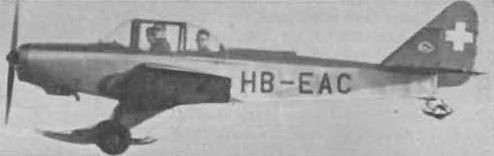
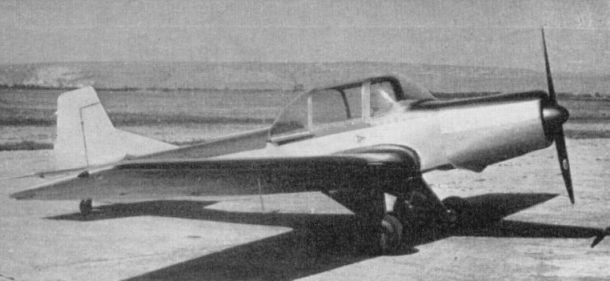
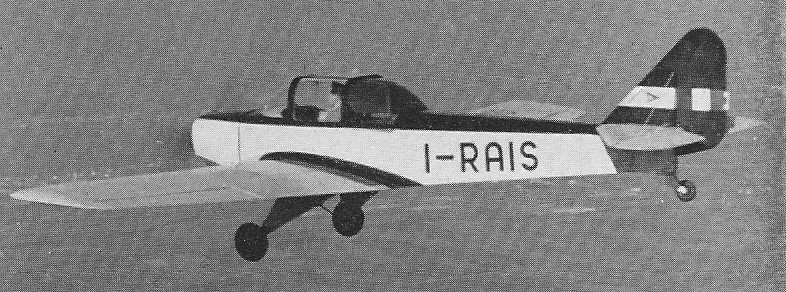
In 1953 Meteor took over the aeronautical designs and equipment of Francis Lombardi & Co. (formerly Azionari Vercellese Industrie Aeronautiche-AVIA) of Vercelli, whose products included the FL.3 of which 566 were built between 1939 and 1948. Meteor redesigned the FL.3 with tubular steel construction, a cut-down rear fuselage and bubble canopy. A total of 37 Meteors of various kinds was built during the period up to 1959 and several of these aircraft were sold as crop sprayers and with ski or float landing gears. The different Meteor models were:

FL.53, two-seat trainer and tourer, powered by a 65 hp Continental A65 engine (8 built).
FL.53BM, basic FL.53 fitted with 90 hp Continental C90-12F engine (4 built).
FL.54, three-seat FL.53 with 85 hp or 90 hp Continental (10 built).
FL.55, four-seat FL.54 with strengthened airframe and 135 hp Lycoming O-290-3 engine (4 built).
FL.55BM, basic FL.55 with modified fin and rudder and 150 hp Lycoming O-320-A1A engine (10 built).

MOUNTAIN RESCUE METEOR 55B version of the Italian Meteor (Lombardi) FL5 series. Four supplied to Switzerland.

FL.55CM, basic FL.55 with 180 hp Lycoming O-360-A1A engine (1 built).

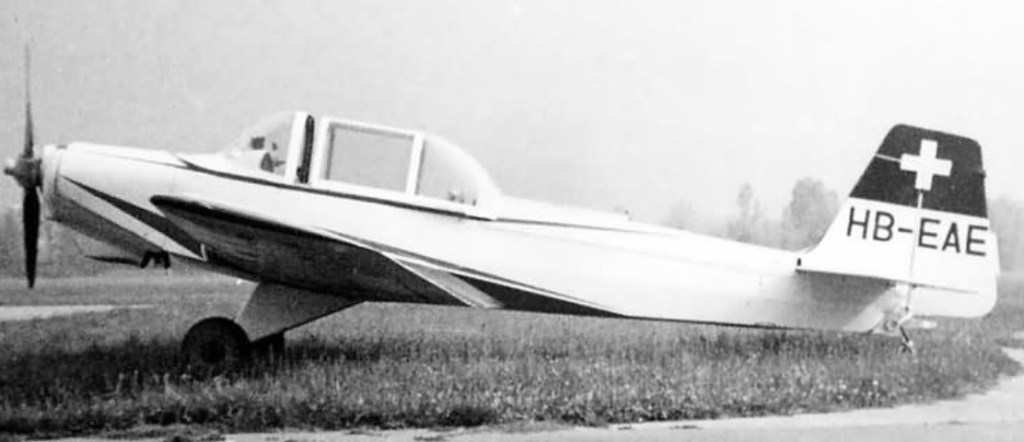
Meteor FL.55CM (HB-EAE c/n 1134)

Super, basic FL.55 with enlarged vertical tail and 220 hp Meteor Alpha engine (1 built).

Meteor Super (220 hp Meteor Alfa 4 engine)

Bis, two-seat Super with 110 hp Meteor Alpha 2 engine (number built unknown).

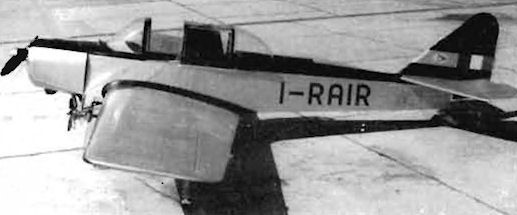
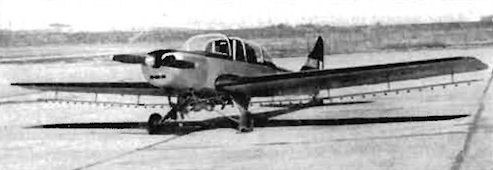
This Meteor FL-55 has been modified in Italy for crop-spraying. Part of the insecticide tank can be seen in the cockpit behind the pilot’s seat.
From Italy comes another form of crop spraying using a wind generator forward of the undercarriage. The aircraft is the Meteor FL55 “Agricolo” I-FULU (150 hp Lycoming).

Meteor F.L.53 / F.L.54

F.L.53 Continental A-65

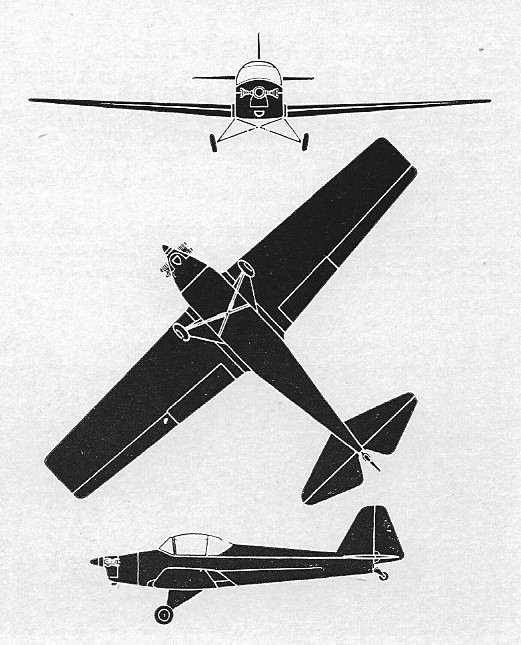
The Meteor F.L.53 is an improved version of the Lombardi F.L.3 built by Meteor S.p.A. of Trieste under licence. The F.L.53 differs by having an all-round vision cockpit canopy and a cut-down rear fuselage.

Engines can include the 75 hp Praga D, the 65 hp Continental A-65, or the 60 hp CAN D-4. The F.L.53 is of mixed construction and the undercarriage is identical to that of the standard Piper Cub.

The F.L.54 is a three-seat model which can be powered by an 85 hp Continental C-85 or 90 hp Continental C-90.

F.L.53
Engine: 65 hp Continental A-65
Wingspan: 33 ft 9 in
Wing area: 152.85 sq.ft
Length: 21 ft 7.75 in
Empty weight: 772 lb
Normal loaded: 1157 lb
MTOW: 1378 lb
Max speed: 112 mph
Cruise: 97 mph
Cruise altitude: 13,120 – 18,700 ft
Seats: 2

F.L.53 CNA D-4