Nieman, Yosif Grigorievich

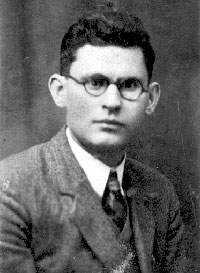
Yosif Grigorievich Nieman (Russian: Иосиф Григорьевич Неман) was born in 1903 in Bielostok, a Polish city in the Grodnienski Governorate into a Jewish family.

In August 1920, during the Civil War, he volunteered for the Red Army. He served as a politician in the department of the 4th Army and then in the political leadership of the Kharkiv Military Region and the Ukrainian Military Region. In 1922 he was demobilized and sent to study at the Kharkiv Technical Institute, which he finished in 1929.

He began his aeronautical career in the construction bureau of KA Kalinin in 1926, participating in the development of the Kalinin К-3, К-4 and К-5 models.

In 1930, he became head of the aeronautical construction chair at the Kharkov Aviation Institute, where he was able to develop his conception of creating airplanes with high aerodynamic characteristics. With the support of the director PP Krasilnikov he organized the aeronautical projection within the research scientific sector (NIS) of the center. The actual projection, proposed by Nieman as a method of preparing future specialists, was based on the work of brigades of NIS students and professors.

In 1930 YG Nieman was selected as JHA’s head of the aircraft construction chair despite not having the necessary scientific degree. He held this post until his arrest in December 1938. From 1944 he returned to occupy the position, this time until his death.

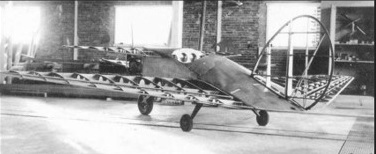
The first JAI project using the Nieman method was called JAI-1 and originated as a diploma paper from the institute.

In March 1933, after the serial production of the JAI-1 was approved, Nieman’s construction brigade received official status. Thereafter it was named the NIS JHA Project Group and received as its base two small rooms on the fourth floor of the aerodynamics corps of the old Technological Institute, near the wind tunnel. Nieman was named lead builder and engineer S. Ya as replacement. Zholkovsky.

As a productive base for the development of the experimental models, the Central Experimental Workshops of the JHA – TsOM JHA (in Russian: Ц ентральные о пытные м астерские (ЦОМ) ХАИ) directed by the engineer Galietko, were organized. Several specialists from KA Kalinin ‘s KB with extensive experience in aeronautical development entered the projection group.

In September 1934, the specialized magazine Samoliot described the JHA aeronautical construction group as a leader in the USSR “in the openness of aeronautical thinking, courage in solving problems and culture in the production of airplanes.”

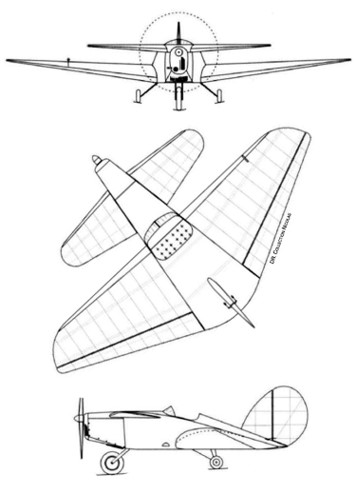
In the course of the years 1932 – 1938 and under his direction, a whole family of high-speed aircraft (for the time) was developed at the JAI, which included civil transport, reconnaissance and bomber aircraft, designed to be developed as part of the practical activity by students and teachers of the institute, among which the models JAI-1, JAI-3, JAI-5, JAI-6, JAI-51 and JAI-52 (Ivanov) stood out.

On August 17, 1933, he was awarded the Order of the Red Star for the creation of the JAI-1 airliner.

Once the JHA-5 project was approved in January 1935, Nieman was appointed lead builder of an OKO-135 design bureau based at the Kharkov Aviation Factory.

The title of Professor was received in 1938 by virtue of his achievements in organizing the educational process.

Four years later, on December 11, 1938, Nieman was arrested and sentenced to 15 years of labor in a camp, charged with “organizing subversion in the factory and being an agent of foreign espionage.” The OKO-135 design bureau continued without leadership, working on improvements to the stock R-10 aircraft.

In May 1939 Nieman was posted to the Tupolev “Sharaga” in the NKVD TsKB -29, where he worked under Myasichev on the development of the Pe-2. A year later he was appointed head of the Tupolev Tu-2 construction brigade.

On July 19, 1941, by resolution of the Presidium of the Supreme Soviet of the USSR, Nieman was released and all charges against him were dropped.

After his release Nieman worked in the OKB at the Omsk Aviation Factory. From 1942 he became Myasichev ‘s replacement at Factory No.22 in Kazan.

He died of leukemia on November 18, 1952, his body being buried in Kharkiv City Cemetery 2.

In November 1952 he was preparing for the defense of his doctoral thesis, which did not take place due to his sudden death.

The Supreme Court of the USSR fully rehabilitated him on November 5, 1955, postmortem.
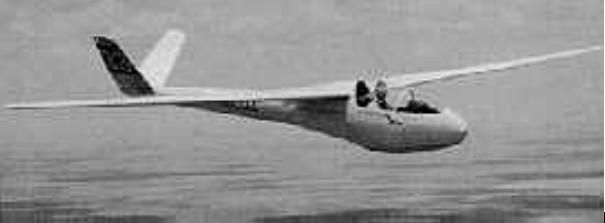
Niemi Sisu 1A

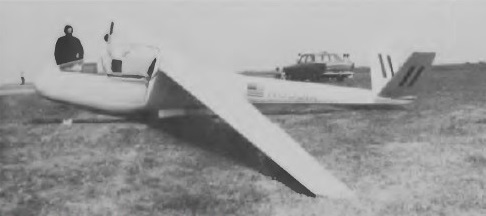
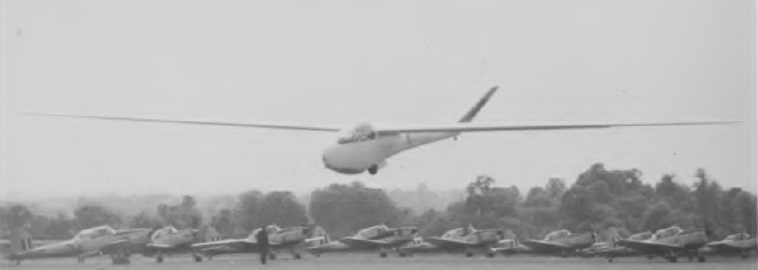
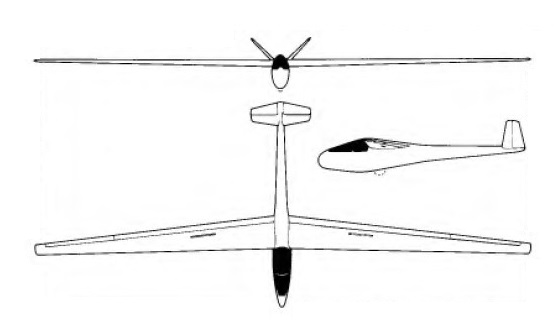
The prototype, designed and built over a period of six years by Convair engineer Leonard Niemi in his garage workshop and known as the Sisu 1, was a cantilever shoulder-wing type of all-metal construction with a laminar flow wing of NACA 65-series section to provide very low drag over a broad speed range, with forward sweep to delay tip stall. The ‘butterfly’-type V-tail has an included angle of 90°. The two-spar wing has an aluminium alloy skin and plate stringers, with glassfibre/foam stiffening in the leading edge and camber-changing flaps. To achieve the smoothness and accuracy necessary for laminar flow, wing contours were filled and sanded, and all control surface hinge lines and joints in the canopy and removable fairings were sealed.

The Sisu 1A was the production version, 10 of which were built by Arlington Aircraft at Arlington, Texas, and later at Greenville, South Carolina, between 1960 and 1965. This version had a lighter wing structure, and featured vented air brakes and large-span slotted flaps. Landing gear consists of a retractable monowheel and a miniature fixed tailwheel; the pilot sits under a flush-fitting two-piece canopy.

Sisu 1A

Flown for the first time on 20 December 1958, this American high performance single seater was noteworthy in being the first sailplane ever to exceed 1,000 km in a soaring flight when flown by Alvin H. Parker, it set up an international straight line distance record of 1,041.52km (647.17 miles) in a flight from Odessa, Texas,.

The Sisu 1 A set three world records for Alvin Parker out of Odessa, Texas: 784 km/ 487.24 miles on 27 August 1963, 1963; free distance 1,041.52 km. /647.17 miles to Kimball, Nebraska, on 31 July 1964; and goal, 930.6 km. / 578.27 miles, 1969. For the free distance flight Parker had an aero-tow to 2000 ft, soared to 14,300 ft and was airborne for more than 10.5 hours.

The Sisu 1A N1100Z, the second 1A to be built, that set the world distance record was donated to the Smithsonian Air & Space Museum and another was donated to the National Soaring Museum.

The type has won the US National Soaring Championships three times, in 1962,1965 and 1967, flown by different pilots (John Ryan, 1962; Dean Svec, 1965; and A.J. Smith 1967). A. J. Smith, winner of the 1967 US Championships, further lightened his ship, and flew his Sisu for a time with wing tip extensions to increase the span from the standard 50ft 0in.

Gallery

Sisu-1A
Span: 15.24 m / 50 ft 0 in
Length: 6.46 m / 21 ft 2.5 in
Wing area: 10.03 sq.m / 108.0 sq.ft
Aspect ratio: 23.1
Airfoil: NACA 65 (3)-418
Empty Weight: 222 kg / 490 lb
Gross Weight: 347 kg / 765 lb
Payload: 125 kg / 275lb
Wing Load: 34.6 kg/sq.m / 7.1 lb/sq.ft
Max speed: 161 mph / 140 kt / 260 km/h (in smooth air)
Stalling speed: 35.5 kt / 68 km/h
Max rough air speed 70 kt (130 km/h)
Min sinking speed: 0.64 m/s / 2.07 ft/sec / 1.24 kt at 55 mph / 47.5 kt / 88 km/h
L/DMax: 37 @ 92 kph / 50 kt / 57 mph
Best glide ratio: 41.4:1 at 62 mph / 54 kt / 100 km/h
No. of Seats: 1
No. Built: 11

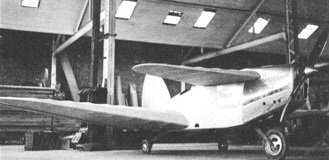
Nicoluer HN.700 Menestrel II

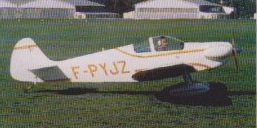
A two-seat version of Menestrel first flown in 1989. The wooden low wing Menestrel is of standard fabric covered wooden construction with a one-piece single spar wing with partly elliptical outer panels. It is available in plans only.

Gallery

Engine: VW, JPX or Limbach, 80 hp
Wing span: 7.8 m / 25 ft 7 in
Wing area: 9.8 sq.m / 105.5 sq.ft
Length: 5.30 m / 17 ft 5 in
MAUW: 510 kg
Empty weight: 290 kg
Max speed: 200 kph
Cruise speed: 187 kph / 115 mph / 100 kt
Minimum speed: 70 kph
Stall: 40 mph / 35 kt
Climb rate: 4.9 m/s
Seats: 2
Fuel consumption: 17 lt/hr
Plan price (1998): 2000 Fttc

Nicoluer

Avions H. Nicoluer
First flew in 1962 the HN.433 Menestrel single-seat monoplane, available for home construction from plans and some components; redesigned HN.434 also offered. HN.500 Bengali first flew 1988 as side-by-side two-seat monoplane, and HN.700 Menestrel II two-seat version of Menestrel, both were available in plans form.

1998:
13, rue de Verdun
F-25000 Besançon
France

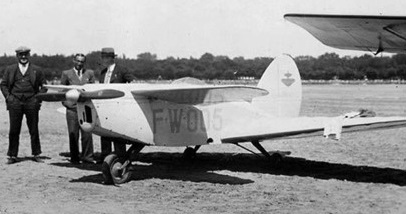
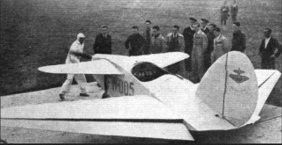
Nicolas-Claude NC-2 Aquilon

The Nicolas-Claude NC-2 Aquilon was a single-seat touring aircraft featuring a low-wing monoplane with canard foreplanes.

In 1936, French engineer Leon Claude (Leon Claude) began designing the aircraft, using the Henri Mignet formula, where the fuselage with a low center of gravity and two tandem wings were to provide the aircraft with sufficient longitudinal stability.

Claude did not have his own funds for the construction of the aircraft, but he managed to captivate the idea of industrialist Jean Nicolas.

The NC-2 was first flown on 5 April 1937 at Auxerre. France, and only the one was built. In the same year, NC-2 took part in the so-called Prototype Tour, held in many cities in France.

Gallery

NC-2 Aquilon
Engine: 1 × Train 4T, 37 kW (50 hp)
Propeller: 2-bladed fixed-pitch
Wingspan: 7 m (23 ft 0 in)
Wing area: 14 sq.m (150 sq ft)
Length: 4.3 m (14 ft 1 in)
Empty weight: 183 kg (403 lb)
Gross weight: 410 kg (904 lb)
Maximum speed: 175 km/h (109 mph, 94 kn)
Cruise speed: 130 km/h (81 mph, 70 kn)
Stall speed: 50 km/h (31 mph, 27 kn)
Range: 850 km (530 mi, 460 nmi)
Service ceiling: 4,000 m (13,000 ft)
Wing loading: 29.2 kg/sq.m (6.0 lb/sq ft)
Seats: 1

Nicholas-Beazley Pobjoy Special / Phantom I / Wittman Phantom / Flagg Phantom / Reaver Special

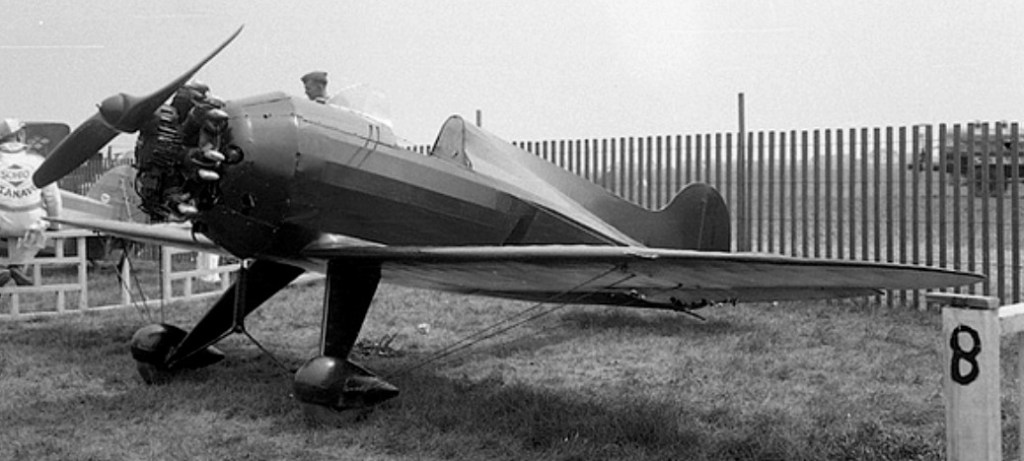
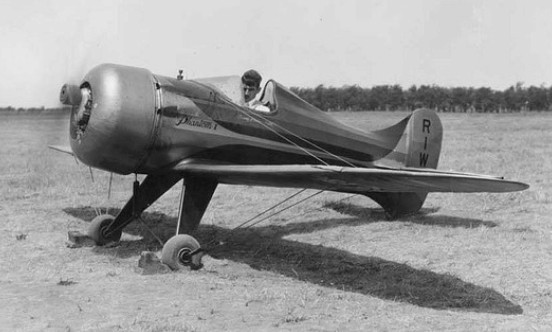
The Nicholas-Beazley Pobjoy Special aka the Nicholas-Beazley Phantom I, aka the Wittman Phantom, aka the Flagg Phantom, aka the Reaver Special was a world record holding air racer of the 1930s

The Nicholas-Beazley Airplane Company had imported a Pobjoy engine with a gear reduction unit for use in its new design the Nicholas-Beazley NB3. Designer Robert T. Jones computed the weight and balance for the setup and proposed a new design as an air-racer. Claude Flagg and H. F. Landis built the aircraft in their spare time under the Marshall Aircraft Laboratories monicker and patented the wing design. The Nicholas-Beazley company conducted the tests and produced the subsequent engineering report on the machine, under the supervision of inhouse chief engineer T. A. Kirkup, who also designed most N.-B.

The fuselage is welded steel with fabric covering. The wings used an early application of lightweight aluminum construction with U shaped cantilever spars with wire bracing and fabric covering. The aircraft used wheels with small tires and without brakes. The cockpit was open and the engine was fully cowled.

The Phantom I was given an “R” license by the federal government and, piloted by Danny A. Fowlie of Morris, Illinois, was entered in the 1930 National Air Races in Chicago from August 23 to September 1.

In 1932 Ownership passed to Air Racer Steve Wittman. A Air Commerce inspector fronted the money, and had Wittman race the aircraft to avoid a conflict of interest. The Pobjoy Special is the only racer Wittman raced that he did not build or design himself. In 1932 the Pobjoy P engine was replaced with a Pobjoy R of 75 hp. The cockpit was also enclosed. In 1933 Wittman lengthened the fuselage by 21 inches, removed the engine cowling and modified the rudder (now called the Pobjoy Special). In 1946 The engine was replaced with a Continental C-85.

In 1937 the Pobjoy Special was flipped on its back. It was rebuilt sold, and stored until the end of WWII. It resurfaced in 1948 as the Reaver Special midget racer, with a 22′ wing and the more powerful 85 hp Continental engine. John Reaver entered the aircraft as the Reaver Special in the new Goodyear Formula One races.

1930 National Air Races – Registered as R1W, pilot Danny Fowlie reached 115 mph placing third in class with a mismatched prop.

1933 Chicago International Air Races – Pilot Steve Wittman wins all races in the 200ci class with a maximum speed of 120 mph.

1934 New Orleans – Wittman wins the 100 km world speed record of 137.513 mph for aircraft less than 440 pounds.

1934 Cleveland Air Races – Wittman wins all races in the 200ci class with a speed of 129.440 mph.

1935 Cleveland Air Races – New owner Percy V. Chaffee wins all races in 200ci class.

In 1936 the 200ci class is eliminated, making the Pobjoy Special obsolete for racing.

1937 St.Louis – Last race of the Pobjoy Special.

Replica:
Turner / Repeat Aviation Nicholas-Beazley Pobjoy Special

Specifications:

Phantom I
Engine: 65 hp Pobjoy P (Niagara II)
Wingspan: 21′ 9″
Length: 12′ 9″ in
Empty weight: 355 lb
Top speed: 200+ mph

Pobjoy Special
Engine: 1 × Pobjoy R Niagara II Radial, 65 hp (48 kW)
Length: 21 ft 9 in (6.63 m)
Empty weight: 355 lb (161 kg)
Capacity: 1

Reaver Special
Engine: 85 hp Continental
Wing span: 22′