Pedal Aeronautics Toucan

Built by Pedal Aeronautics at the Handley-Page plant at Radlett, the Toucan used a Mellinex covered metal tube fuselage of egg-shaped section. Two pilots were seated in tandem under a fully enclosed canopy in the extreme nose.

The mid-set, high aspect ratio wing, was tapered from mid-span. Fitted with a four-unit tails surfaces, with a pusher propellor mounted behind them. A tandem undercarriage was fitted.

It was first flown from Radlett on 23 December 1972.

Wingspan: 123.00 ft
Wing area: 600 sq.ft
Aspect ratio: 25:1
Empty weight: 145 lb

Peck Columbia

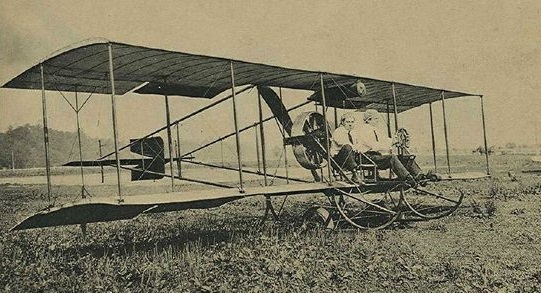
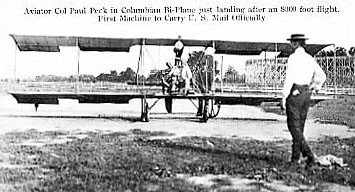
The Columbia Biplane designed by Colonel Paul Peck was fitted with a seven-cylinder, air-cooled rotary rated at 50 hp at 1500 rpm, built by the Gyro Motor Company (Washington), sponsored by, and designed under the direction of Emile Berliner.

A Gordon Bennett Cup entry did not compete.

In American Air Mail Catalogue, Vol 1, 6th Edition, Entry 3: Sep 23-Oct 1, 1911, Garden City-Mineola, NY, International Aviation Tournament. The first official US airmail was flown during the (event) at the Aerodrome on Nassau Boulevard in Garden City. Postmaster General Frank H Hitchcock authorized mail to be flown and Earle L Ovington was sworn in as the first official airmail pilot. T O M Sopwith and Capt Paul W Peck also flew mail during the meet. Ovington flew mail on the first day, and most covers and cards received a circular “Aeroplane Station #1” postmark and a 3-word (“Aerial Special Despatch”) cachet. Covers were postmarked during each day of the meet, but no mail was flown on Sep 29 or Oct 1 due to poor weather conditions. A total of 43,247 pieces of mail was serviced during the meet.
[ibid.] Entry 41: July 19-21, 1912, Coney Island [an amusement park clone in Cincinnati; note roller coaster in background on postcard], Ohio. Paul Beck [spelling error] flew mail each of three days from Coney Island to California, Ohio [the town’s Post Office existed 1865-1935 on the outskirts of Cincinnati, about 1.5 miles from the park]. A Columbia biplane was used and the service was designated as Route 631,003.

Peck Columbian 1912 (postcard)

The heavy Gyro motor was fatal to Peck (and passenger) in his crash on Cicero Field, Chicago on September 11, 1912. Peck held American pilot licence No.57 and had set the American duration record at 4 hours 23 minutes, 15 seconds set on May 24, 1912.

Engine: 50hp Gyro rotary pusher
Wingspan 30’0″
Seats: 1

Pearson-Williams PW-1 Mr Smoothie

Pearson-Williams PW-1 NX94Y

Built by C R “Bud” Pearson and Leland Williams, the 1938 Pearson-Williams PW-1 Mr Smoothie was designed by Rod Nimmo. A racer for the Nationals as Mr Smoothie (piloted by Lee Williams) registered NX94Y.

It originally had retracting gear that was wired down after its mechanism was damaged in shipment to Cleveland by railroad boxcar.

Engine: 825hp Curtiss Conqueror V-12
Wingspan: 24’0″
Length: 26’0″
Seats: 1

Pearce Aeroplane

Replica

New Zealander Richard Pearse, sometime in March 1902 on a remote South Canterbury, New Zealand, farm, got his aircraft into the air powered by an internal combustion engine of his own design. He took off along the road running near his family’s farms at Waitohi, flew about 50 metres before crashing into a tall gorse hedge.

The precise date is not known because the event was not recorded in any official sense, but it was carried out in front of a small group of mainly children.

Pearce’s achievements were not really known about outside his family and the immediate Waitohi area of South Canterbury until his death in 1953 and the discovery of a partly completed aircraft behind the house where he had last lived in Christchurch, NZ.

Pearse had died in Christchurch’s Sunnyside mental hospital and when it came to tidy up his affairs and clear out his house someone realised that there was something significant here.

The discovery of this aircraft led to interest in this unknown, loner of a man and the subsequent revelations of his achievements.

The argument against Richard Pearse is based on the definition of “flight” and the claim that while Pearse may well have designed and built his own aircraft and got it into the air 17 or 18 months before Orville and Wilbur, he had no real control over it – witness the crash into the hedge – and thus he did not have “controlled” flight.

He flew his aircraft many more times – on one occasion flying up the bed of the nearby Opihi River for almost a kilometre and demonstrating real control. He crashed into the river on this occasion after the engine overheated and ran out of power.

Pearse took off from a paddock, aimed at a cliff that dropped off sheer into the riverbed – a drop of 25 metres that would almost certainly have killed or badly injured him if the aircraft hadn’t flown.

Witnesses say they saw the plane flying from the moment it got up enough speed and they saw Pearse turn the plane to fly up the river.

Waitohi (pronounced Wai-tui locally) at the dawn of the 20th century was still remote and really was on the edge of civilisation. And Pearse worked by himself, for himself. One of the other reasons that so little of Pearse’s exploits were known outside the Waitohi area is that many of the farming families in the region were Plymouth Brethren and regarded his attempts at flight as ungodly and ignored them.

When it became obvious that the history of Richard Pearse needed exploring George Bolt went straight to the tip that every farmer has on his farm. Several small parts of what’s understood to have been the first plane were found.

At least two replicas of what’s understood to be Pearse’s first aircraft have been built. Pearse may have worked alone, but he did file his designs with the patent office and it’s from these drawings that both replicas have been built. The first was the work of long-time Pearse investigator and supporter, Aucklander Geoff Rodliffe and it was powered by a modern, conventional microlight engine. Attempts to fly it were thwarted by bad weather and this machine now lies in a dark and dusty corner, out of sight and out of mind at MOTAT in Auckland.

The second was built in Timaru by a team of four people – two working on the aircraft and two building a replica of the original Pearse engine.

Pearce, Richard

By the time the Wright brothers flew their powered aircraft, Richard Pearce had apparently made four flights in total, the later flight covering a distance of some 1000 yards and only ending when his engine began to overheat requiring a precautionary landing.
Pearce remained modest about his achievements, and while he patented his aileron control system, he did not seek notoriety, later stating that he was quite happy for the Wright brothers to claim the glory for that first flight as he did not claim ‘controlled flight’.
Pearce was so intelligent and forward thinking that in some people eyed it put him firmly out side what was considered ‘normal’ at that time, and he spent the last two years of his life committed to Sunnyside Mental Hospital.

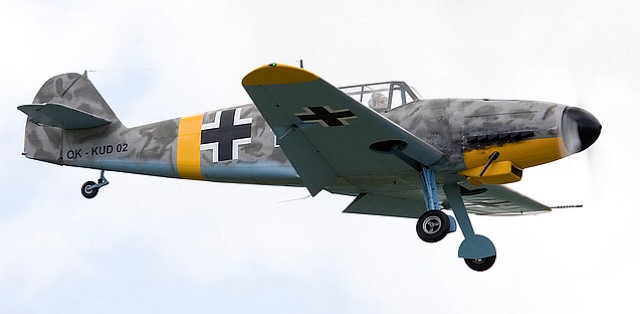
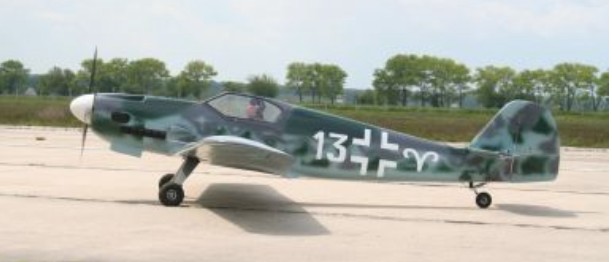
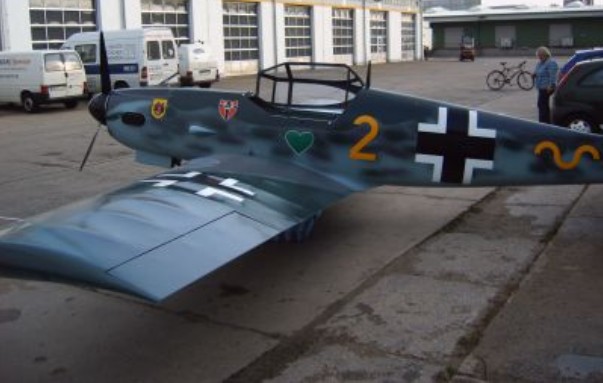
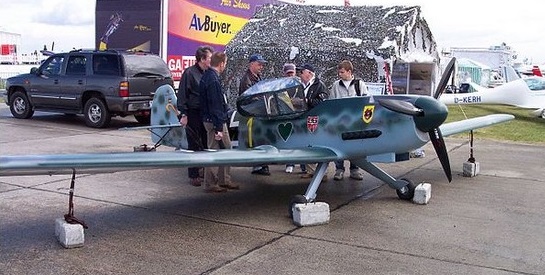
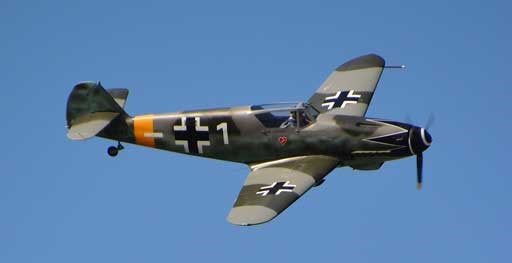
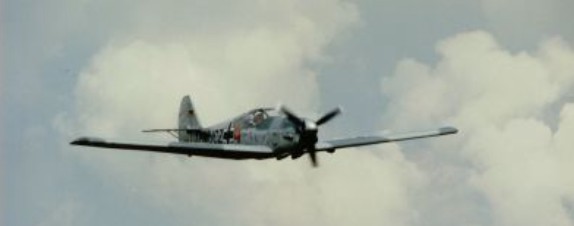
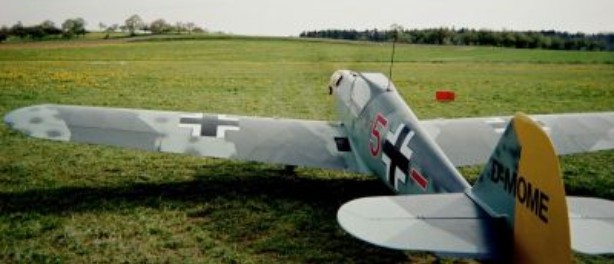
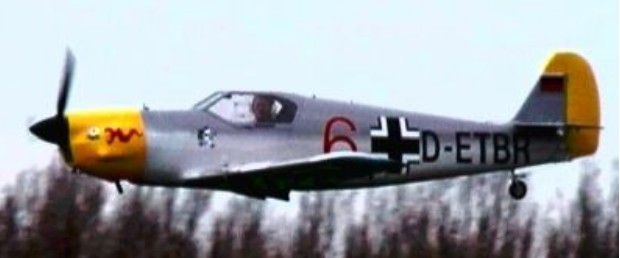
Peak Me 109 UL / Mecklenburger Ultraleicht Flugzeugbau Christian Engelen Me 109 / Classic Planes GmbH Me 109

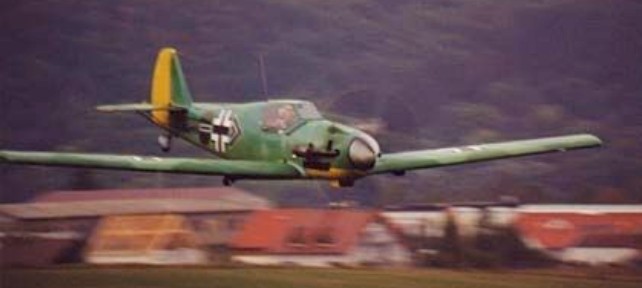
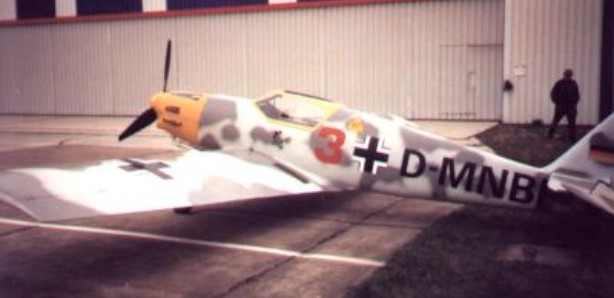
The first 109 flew well, but was not particularly agile. Thus Bek began to build the first form for a plastic 109. Soon finished the first 109 from that form first flew in 1991. The second aircraft, registered D-MYBB, first flew in 1992, but was lost in an accident that same year. Bek’s third prototype, D-MNBP, was flown in about 1994 and resulted in some kits being sold.

The Messerschmitt BF 109 is certified as an ultralight aircraft, after the BfU 84 – LTA UL 2003. From the 1992 form, the new series had its first flight on 17 November 2006, after extensive revision.

The Peak Me 109 microlight Messerschmitt is now available either as a microlight or an experimental kit.

The BF 109 UL is a single-seat GRP low-wing aircraft with one piece wing, and tail wheel landing gear. The retractable main landing gear has a steerable tail wheel. Parachute: BRS 5 UL 1050 Softpack.

The Peak Aerospace Me 109R was originally produced by Peak Aerospace, Mecklenburger Ultraleicht Flugzeugbau Christian Engelen and then by Classic Planes GmbH of Pasewalk.

Bek flew a homebuilt category version of the Me 109 in 1996, powered by a Hirth F30 and later a Subaru automotive conversion, which became the prototype of the Me 109R kit aircraft. Bek then sold the company and the new owner ceased development of the Me 109. In 2003 Christian Engelen purchased the project and continued work on the aircraft, officially re-launching it in 2004. Since then production has continued on a demand basis.

The production version, the Me 109R is made from composites. Standard engines available include the 64 hp (48 kW) Rotax 582 two-stroke, the 70 hp (52 kW) Weber Motor MPE 750 and the 80 hp (60 kW) D-Motor LF26 four-stroke powerplants. The unit cost, assembled, was €40,990 in 2015.

Engine options:
Rotax 582 DCDI 65PS/48KW reduction 1:2,62
Sauer M800UL 70PS/50KW reduction 1:2,66
Jabiru 2200 80PS/54KW direct drive

Propeller:
Helix H50v 3 Blade 1,60m Diameter
Warp Drive 3 Blade 1,65m Diameter

Gallery

Wingspan: 8,20 m
Length: 6,30 m
Height: 1,45 m
Wing area: 10,10 qm
Empty weight: 200-220 kg
MTOW: 322.5 kg (proven to 340kg)
Fuel capacity: 55 lt / 52 usable
Stall speed Vs: < 65 km/h
Va: 120 km/h
Cruising speed Vr: 160 km/h
Maximum speed Vne: 210 km/hr
Range: 600 km (3,5 hr Std. + Res.)
Average consumption: 12-14 lt/hr at 160/170 km/h IAS
Seats: 1

Mecklenburger Bf 109 UL
Stall: 32 kt / 37 mph / 59 kmh
Cruise: 97 kt / 112 mph / 180 kmh
VNE: 113 kt / 130 mph / 210 kmh
Empty Weight: 190 kg / 419 lbs
MTOW Weight: 300 kg / 661 lbs
Climb Ratio: 1100 ft/min / 5.5 m/s

Me 109R
Engine: 1 × Rotax 582, 48 kW (64 hp)
Propeller: 3-bladed Helix-Carbon composite
Wingspan: 8.10 m (26 ft 7 in)
Wing area: 10.53 m2 (113.3 sq ft)
Length: 6.3 m (20 ft 8 in)
Height: 1.5 m (4 ft 11 in)
Empty weight: 190 kg (419 lb)
Gross weight: 322 kg (710 lb)
Fuel capacity: 52 litres (11 imp gal; 14 US gal)
Wing loading: 30.6 kg/m2 (6.3 lb/sq ft)
Maximum speed: 190 km/h (120 mph, 100 kn)
Cruise speed: 175 km/h (109 mph, 94 kn)
Stall speed: 59 km/h (37 mph, 32 kn)
Never exceed speed: 190 km/h (120 mph, 100 kn)
Rate of climb: 6 m/s (1,200 ft/min)
Crew: one
Capacity: one passenger
Aerobatic

Me 109R
Engine: 1 × Rotax 912UL, 80 hp (60 kW)
Gross weight: 500 kg / 1,100 lb
Loading: +6/-4g
Aerobatic

Me 109R
Engine: 1 × MPE 750, 70 to 120 hp (52 to 89 kW)
Gross weight: 500 kg / 1,100 lb
Loading: +6/-4g
Aerobatic

Me 109R
Engine: 1 × D-Motor LF26, 80 hp (60 kW)
Gross weight: 500 kg / 1,100 lb
Loading: +6/-4g
Aerobatic
Peak Me 109 v

V.2

To make the aircraft more agile and reduce the building expenditure, in 1992 Tassilo Bek developed new wings with a majority of GRP structure, and using the Hirth F30 in order to bring the machine to or over the 200 km/h mark. The new wing withstood in the load test, up to a maximum take-off weight of 340 kg. The following machine WNr. 1992 flew. D-MYBB was lost in the same year through accident.

Powered with a Hirth 2704 of 40 hp, the machine reached 190 km/h maximum speed. The simple and reliable retractable landing gear of the 109 was incorporated at that time.

It still flies in close proximity to Jena. The machine is reliable and the wings are of timber construction method with foam material ribs.

V.3

The experiences from the flight behaviour, the structure and the examinations taken place following the accident of D-MYBB flowed immediately into the building of the next machine and the following.

Due to becoming largely popular inquires from prospective customers appeared. With that, Mr. Bek built several kits. First became the factory serial number 3, D-MNBP. This flew for the first time around 1993.
It was sold around Berlin. The construction units and/or kits sold, from which, among other things, the factory serial number 4, D-MCUZ was developed.

Serial number 4 had a Hirth F30 and flew from 1994 to 2003. In the meantime, the French certified the type.

The factory serial number 5 was equipped with a Rotax 582, this engine was intended from the beginning for the re-equipment of other machines like the factory serial number 3 and 4.

Mr. Bek on a strenghtened version, which became certified as experimental, in order would do aerobatics. This machine flew for the first time in 1996 equipped with the F30, shortly after changed to a Subaru autoengine.

The factory serial number 7 received a Rotax 912 and it emigrated in 2005, together with its new owner, to Paraguay.

Peak Me 109 v.1 / Bek Treppenbau Me 109

The ME 109 UL began with Tassilo Bek´s visit in the middle of the 80’s to Oshkosh. Seeing small reproductions of Mustangs and other fighters, hardly back in Germany, he began to sketch his own airplane. After some planning and drafts he began with the work on the first ME 109. Basis was a covered timber frame, with retractable landing gear (operates via crank) in addition, and somewhat larger span of approx. 10.5 m with a length of approximately 7 m. The first prototype, registered D-MBAK, was powered by a Hirth 2704 producing only 40 hp (30 kW) and first flew in 1991. This first 109 flew well, was not particularly agile. This aircraft achieved 190 km/h (118 mph) on its low power output, but Bek started a second prototype based on lessons learned in 1992. Thus he began to build with friendly engineers and craftsmen the first form for a plastic 109.