Piaggio P.7 / Piaggio-Pegna P.c.7

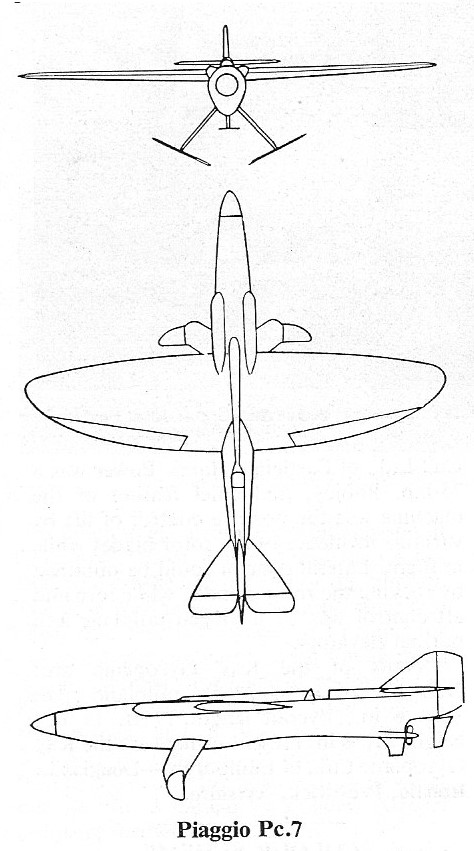
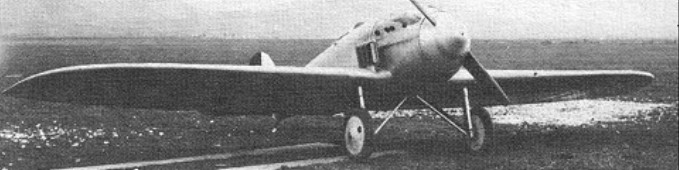
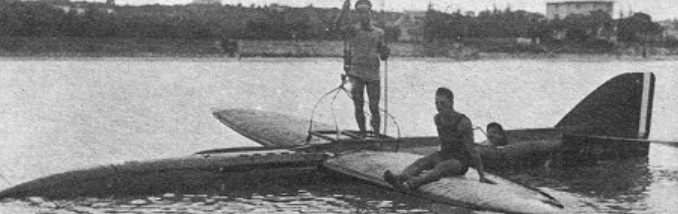
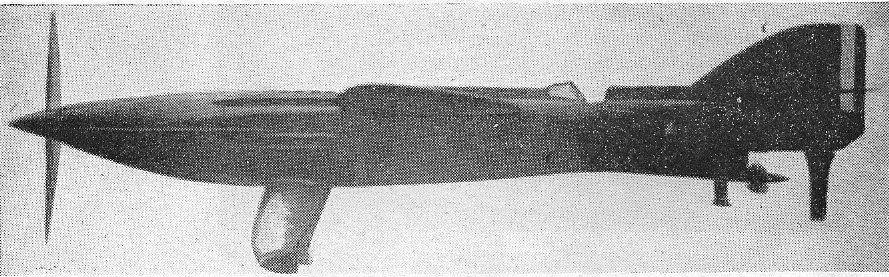
A truly remarkable design, the Piaggio P.7 or Piaggio-Pegna P.c.7 was built for the 1929 Schneider Trophy contest. A cantilever high-wing monoplane with long slender fuselage, it had twin hydrofoils instead of floats and was intended to float with the wing resting on the surface of the water. While water-borne it was to be driven by an ordinary marine propeller connected by a shaft and clutch to the rear of the 723kW Isotta Fraschini Special V.6 engine. Once sufficient speed had been attained to lift the aircraft on to the hydrofoils and the normal tractor propeller was clear of the water, this latter propeller would be clutched-in, the marine propeller disengaged, and a conventional take-off would follow.

In practice, problems with the respective clutches prevented the P.c.7 from ever taking off, and although water trials were conducted on Lake Garda by Dal Molin of the Italian Schneider team, the construction of a second aircraft was abandoned.

Engine: 1 x Isotta-Fraschini Special, 723kW / 850 hp
Wingspan: 28 ft 8.5 in
Length: 29 ft
Height: 8 ft
Empty weight: 3093 lb
Loaded weight: 3709 lb
Max take-off weight: 1738 kg / 3832 lb
Crew: 1

Piaggio P.6

In 1927 two parallel, designs were developed to meet an Italian naval requirement for a two-seat catapult-launched seaplane. One was a small flying-boat, the Piaggio P.6bis powered by a single 194kW Isotta Fraschini V.6 engine mounted between the wings and driving a pusher propeller; the other was the P.6 floatplane with a large central float, two wing-tip stabilising floats, and a 288kW A.20 engine in the nose. The two aircraft had identical wing structure, with rigid strut bracing, and each mounted a single defensive machine-gun, that of the flying-boat in the bow, and the floatplane’s in the rear cockpit.

The P.6ter of 1928 was similar to the P.6, but had an engine boosted to 306kW to provide a maximum speed of 195km/h. Wing span was 13.50m and maximum take-off weight 2360kg. A batch of 15 P.6ter floatplanes was built, and the type was used for a period aboard several Italian capital ships and cruisers.

P.6bis
Engine: 1 x 194kW Isotta Fraschini V.6

P.6
Engine: 1 x 288kW A.20

P.6ter
Engine: 1 x Fiat A.20, 306kW
Max take-off weight: 2360 kg / 5203 lb
Wingspan: 13.5 m / 44 ft 3 in
Max. speed: 195 km/h / 121 mph

Piaggio P.3

The Piaggio P.3 Pegna-designed night bomber of 1923 was a two-bay biplane with the lower wing of greater span than the upper. The biplane tail unit incorporated triple fins and rudders, and four 149kW S.P.A. 6A engines were mounted in tandem pairs on the lower wing, driving two tractor and two pusher propellers. Pilot and co-pilot were seated side-by-side in an open cockpit ahead of the wings, and there were gunner’s cockpits in the nose and amidships, the rear gunner also operating a tunnel gun for ventral defence. At a later stage two 306kW Fiat A.20V engines were installed but the P.3 was not accepted by the Regia Aeronautica for quantity production.

Engine: 4 x S.P.A. 6A, 149kW
Wingspan: 24 m / 79 ft 9 in
Max. speed: 185 km/h / 115 mph

Piaggio P.2

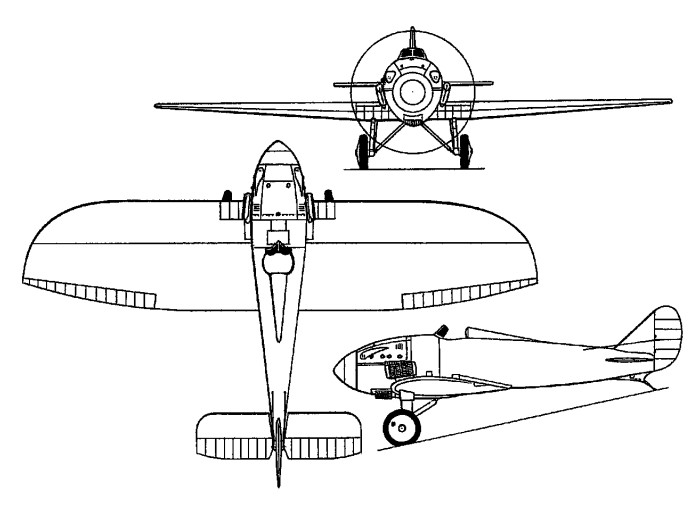
The Piaggio P.2 was the first original design for the company by Giovanni Pegna. Constructed at the Sestri Ponente (Genoa) works in 1923, it was a cantilever low-wing monoplane single-seat fighter with a semi-mono-coque fuselage and fixed, divided landing gear. Twin radiators for the 224kW Hispano-Suiza engine were mounted on the fuselage sides just forward of the pilot’s open cockpit, and armament comprised twin synchronised Vickers 7.62mm machine-guns.

Engine: 224kW Hispano-Suiza
Wingspan: 10.5 m / 34 ft 5 in
Armament: 2 x Vickers 7.62mm machine-guns

Piaggio

SA Piaggio & Co, an engineering and shipbuilding company, produced some Caproni aircraft and parts during the First World War at a Finale Ligure factory, but subsequently abandoned aircraft manufacture until it took over Pegna & Bonmartini in 1923. First product was the Piaggio-Pegna pursuit monoplane with Hispano-Suiza engine. Later was associated with Societa di Costruzioni Meccaniche Aeronautiche in license-construction of Domier Wal flying-boats. Built P.32 twin-engined heavy bomber at end of 1930s and several four-engined P.108 heavy bombers during Second World War.

Resumed aeronautical work in late 1946 with conversion of Dakotas for airline service. Built P.136 five-seat twin-engined amphibian, prototype flying in 1948, followed by a series of trainers for the Italian Air Force; the P.149 was also license-built by Focke-Wulf in Germany. Produced the P.166 executive transport in 1957, with two Lycoming engines and pusher propellers, as with the P.136; P.166-DL3 turboprop variant later developed and produced, with final P.166-DL3-SEM Maritime variant for search and surveillance, coastal patrol and other roles still available in 1998, but only to special order. Signed agreement with U.S. Douglas company in 1961 for joint development of light utility aircraft, first flown in 1964. Designated PD.808 and powered by two Bristol Siddeley Viper turbojets, only a small number was built.

The present Rinaldo Piaggio company was formed in February 1964 as a separate concern, but in 1994 was put under insolvency protection; 51 percent shareholding in the company was purchased by Tushav, a Turkish holding company, in mid-1998, and protection was thereafter lifted. P.180 Avanti twin-pusher turboprop business aircraft flown September 1986, but only 43 production aircraft ordered; turbofan derivative may be developed. Has manufactured components for Aeritalia/Alenia, AMX International, Dassault and Panavia.
In 1998 three Italian industrial families bought the debt-free assets from the Government and formed Piaggio Aero Industries SpA.

In 2024 Italy approved the sale of Piaggio Aerospace to the Turkish unmanned combat aerial vehicle (UCAV) producer Baykar. In 2023, Baykar ranked among the top 10 exporters in Türkiye across all sectors, racking up $1.8 billion in exports. Türkiye dominates 65% of the global unmanned aerial vehicle (UAV) export market, with Baykar alone holding nearly 60% of the market – three times the size of its closest US competitor. In recent years, Baykar has generated more than 90% of its revenues from exports, delivering Bayraktar TB2 UCAVs and Bayraktar AKINCI UCAVs to 35 countries.
Phoenix Dynamo

UK
Bradford company which became Admiralty contractor in First World War for construction of Short 184 seaplanes, Short landplane bombers, Maurice Farman Longhoms and a pair of Armstrong Whitworth F.K.10 quadraplanes.

Later built Felixstowe F.3 and F.5 flying-boats and two Phoenix P.5 Cork flying-boats. Phoenix became part of the English Electric Co Ltd. in 1918 and continued development of flying-boats, initially the P.5 Kingston.

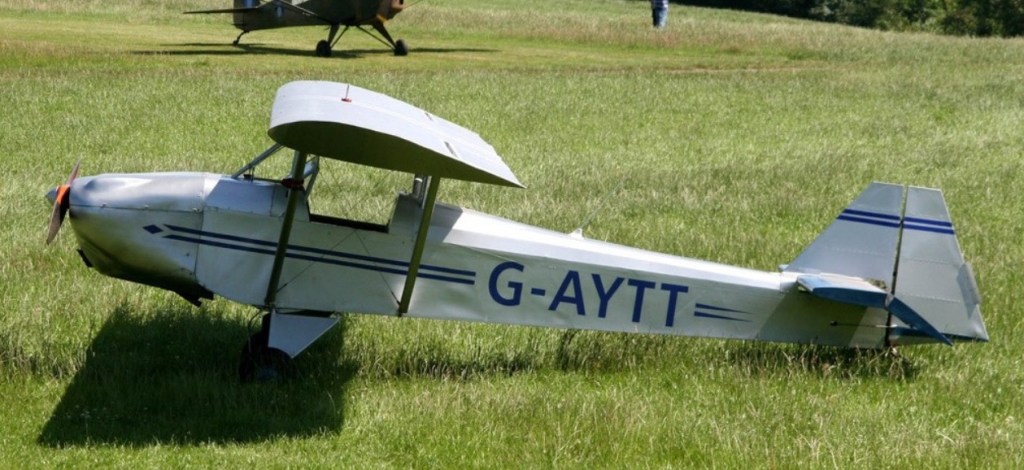
Phoenix Aircraft PM-3 Duet / Luton Minor III

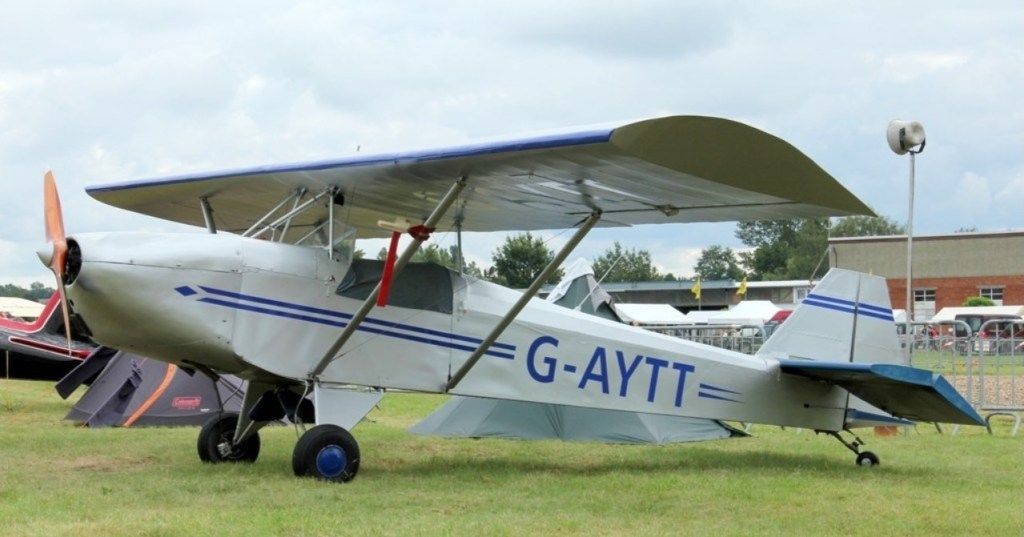
The PM-3 Duet is basically an enlarged Minor airframe. The Minor fuselage is fattened to take two people side-by-side and restressed to take a larger engine. Some modification to the wing and tail surfaces is also involved.

The design was originally designated Luton Minor III but was re-designated the Phoenix PM-3 Duet.

The prototype, G-AYTT PFA.841 was built by A.S. Knowles, who was involved in the type’s development. It first flew, at Fairoaks, on 22 June 1973 with a Continental C90 engine in a Condor cowling.

Gallery

Engine: Continental C90, 90 hp
Cruise: 100 mph
Stall: 35-40 mph

Phoenix Aircraft Ltd

A hangar fire at the Phoenix Works in 1943 destroyed the single example of the LA5 Major, a two-seat cabin type first flown on 4 March 1939, and also spelt the end for the company. C. H. Latimer-Needham (chief designer of Luton Aircraft) founded a new company at Cranleigh, Surrey, in March 1958, appropriately named Phoenix Aircraft Ltd, which acquired the rights for the Minor and Major. Both designs were improved, the first as the LA4A Minor, and built in the UK and in several countries across the world.

In its time the company has dealt with the Luton LA.4/A Minor and LA.5/a Major, the Currie Wot, Luton Group Beta and Jodel D.11.

Phoenix (D&H) Ltd was also involved in research work and built the mock-up of the Syinton-Warren S-31-2 in 1971.

It ceased trading in 1973-4.