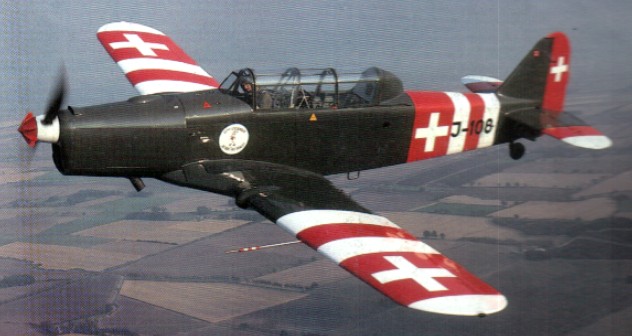
The P-2 first flew in 1945 as a trainer for operation from high-altitude airfields, fitted with night-flying, radio and oxygen equipment.
The first 27 were built as pilot trainers while the balance of 26 were built for weapons and observer training. They were built using many parts from stocks of Bf109 components.
P-2 Engine: 1 x Argus As 410 A-2, 347kW / 465 hp Max take-off weight: 1970 kg / 4343 lb Empty weight: 1520 kg / 3351 lb Wingspan: 11 m / 36 ft 1 in Length: 9.07 m / 30 ft 9 in Height: 2.7 m / 9 ft 10 in Wing area: 17 sq.m / 182.99 sq ft Max. speed: 340 km/h / 211 mph Cruise speed: 305 km/h / 190 mph Range: 865 km / 538 miles Crew: 2
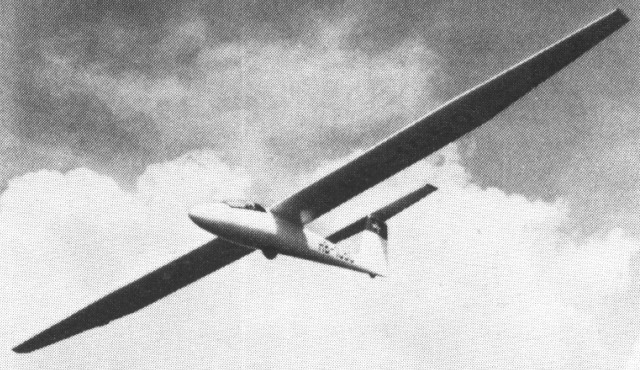
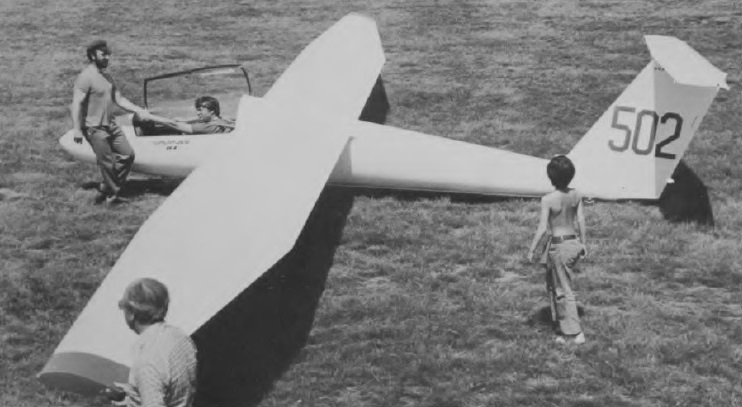
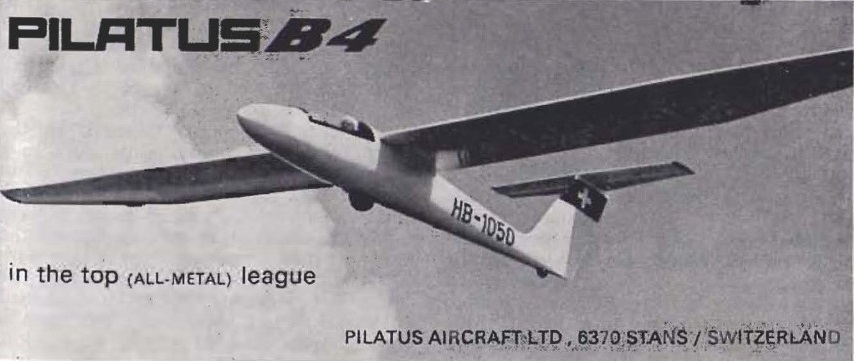
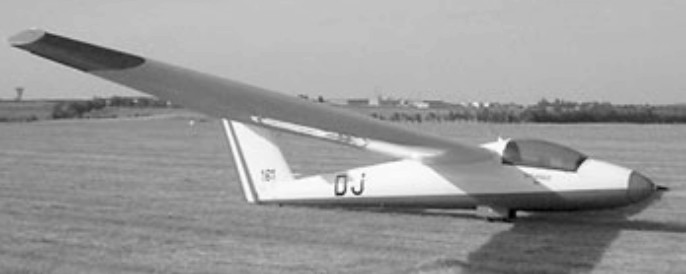
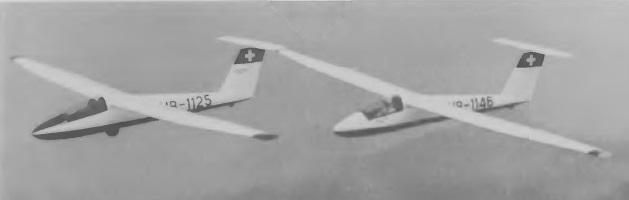
The only glider manufactured by Swiss aircraft manufacturer. First flying in 1972 the Pilatus B4 is an all-metal design to Standard Class specifications. It has full aerobatic capability including inverted maneuvers.
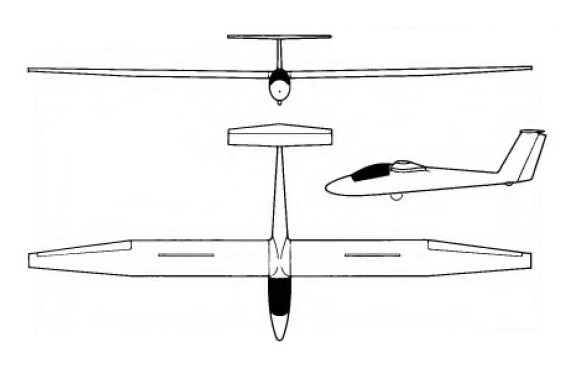
The B4 is a cantilever shoulder-wing monoplane with a T tail; the wings are of light alloy with a U-shaped light alloy main spar and hard PVC foam ribs between the metal ribs; the large skin panels are attached to the main spar by a single row of countersunk rivets, and the ailerons are of similar construction. There are light alloy spoilers in the wing upper surfaces at the 60% chord line. The semi-monocoque fuselage is also of light alloy, with a flush-riveted skin, and the rear fuselage consists of two half-shells riveted together. The light alloy T-tail has PVC ribs and a fixed-incidence tailplane, and the elevator has a bias spring for trimming. The landing gear consists of a non-retractable unsprung Tost monowheel with drum brakes, although a retractable one can be fitted if the customer desires, and there is a fixed tailwheel; small doors enclose the monowheel when retracted. The pilot sits in a semi-reclining position under a sideways-hinging canopy that is jettisonable in flight, and a battery radio and oxygen system are optional.
Pilatus B4-PC11
Certification for full aerobatic manoeuvres was granted in January 1975. Of all-metal construction, the type was designed by Ingo Herbot as a private venture and first flew in prototype form, as the B-4, in 1966; the design was taken over and developed by Pilatus as the B4-PC11, which first flew in 1972. Swiss certification was granted on 12 June that year, and the first delivery was made shortly afterwards. Seventy eight B 4s were sold in 1977, and 320 were in operation.
More than 330 examples of the Standard Class Swiss single-seater had been delivered to customers in no less than 30 countries by March 1978, and the production rate was as high as 7-8 aircraft per month.
On 19 June 1978 Pilatus announced the sale of all manufacturing and sales rights in the B4 to the Japanese firm of Nippi – Nihon Kikoki Kabushiki Kaisha (or Japan Aircraft Manufacturing Co Ltd) so as to be able to concentrate on production and development of the PC-6 Turbo-Porter and PC-7 Turbo-Trainer.
The first Nippi-built B4-PC11 AF was rolled out on 1 June 1979 and initial production was to be at three per month after Japanese certification. The first Nippi-built B4-PC11 AF made its maiden flight on 25 November 1979. Pilatus was to continue the product support of Swiss-built examples.
Number of aircraft built to 6/30/81 400.
Pilatus B4-PC11
Pilatus B4 Wing span: 49 ft 2.5 in Length: 21 ft 6.5 in. Seats: 1 Wing loading: 5.13 lb/sq.ft. Aspect ratio: 16.1 Max TO wt: 770 lb. Empty wt: 506 lb Useful load: 264 lb. Max speed: 130 kt Rough air speed: 130 kt. Stall: 30 kt Lift to drag: 35 @ 46 kt. Sink: 2.1 fps @ 39 kt.
B4-PC11 Wing span: 15.0 m / 49 ft 2.5 in Length: 6.57 m / 21 ft 6.5 in Height: 1.57 m / 5 ft 1 in Wing area: 14.04 sq.m / 151.1 sq ft Wing section: NACA 643 618 Aspect ratio: 16.0 Empty weight: 230 kg / 507 lb Max weight: 350 kg / 772 lb Water ballast: None Max wing loading: 24.93 kg/sq.m / 5.1 lb/sq ft Max speed: 129.5 kt / 240 km/h Stalling speed: 33.5 kt / 62 km/h Min sinking speed: 0.64 m/sec / 2.1 ft/sec at 39 kt / 72 km/h Max rough air speed: 129.5 kt / 240 km/h Best glide ratio: 35 at 46 kt / 85 km/h
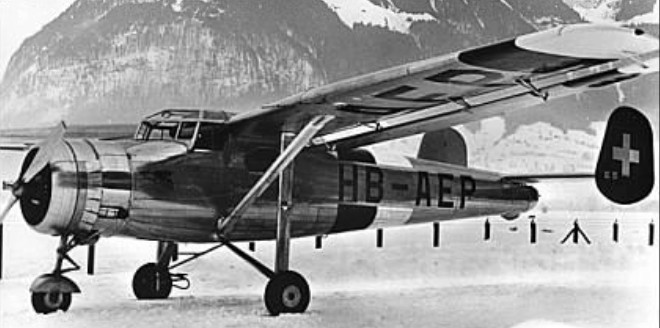
First product of Pilatus Flugzeugwerke AG was a four/six-seat light transport designated Pilatus SB.2 Pelican, a braced high-wing monoplane with fixed tricycle landing gear, powered by a 336kW Pratt & Whitney Wasp Junior radial engine. The pilot and co-pilot/navigator were seated in a separate compartment forward of the wing leading edge, with a main cabin below the wing which could be arranged to accommodate two to four passengers according to layout. The Pelican, which was first flown during 1944, failed to gain any commercial interest.
SB-2 Engine: 1 x Pratt & Whitney Wasp Junior, 336kW Wingspan: 15.5 m / 51 ft 10 in Max. Speed: 250 km/h / 155 mph Crew: 2 Passengers: 2-4
Formed as Pilatus Flugzeugwerke AG in 1939, as a subsidiary of the Oerlikon armaments company. First aircraft was SB-2 Pelican six-seat light transport of 1944, but prototype only built. Followed by P-2 advanced trainer, produced in quantity for the Swiss Air Force in late 1940s, and the P-3 advanced trainer from 1953. Series production of the P-3 followed for the Swiss Air Force, and six went to the Brazilian Navy. In May 1959 Pilatus flew the first PC-6 Porter STOL monoplane with a Lycoming piston engine; this type has been in continuous production ever since, later developments using Astazou, Garrett, and most recently Pratt & Whitney Canada PT6A turboprop engine as the PC-6/B2-H4 Turbo Porter. Pilatus also signed a license agreement for production of Turbo Porters by Fairchild-Hiller in U.S.A. Also undertook Mirage production and maintenance work for the Swiss Air Force.
Became known as Pilatus Aircraft Ltd, based at Stans, Switzerland,.the product range encompassing the PC-7 Turbo Trainer (first flown August 1978 in production form), PC-7 Mk II (M) Turbo Trainer (first flown September 1992), the PC-9 (M) Advanced Turbo Trainer (first flown May 1984) with the highest engine power of the range and also selected in 1995 for U.S. military service as the Raytheon/Beech T-6A Texan II, and the PC-12 utility and business turboprop transport (first flown May 1991 and also available in military form). Also, in 1979 Pilatus took control of the LJ.K.’s Britten-Norman Ltd company, becoming Pilatus Britten-Norman, but sold this company in July 1998.
Pilatus Aircraft Ltd., the Swiss aircraft manufacturer, has sold all manufacturing and marketing rights to the B 4 all metal, aerobatic glider to Nippi, Japan Aircraft Manufacturing Company. The glider license was sold because of a lack of space in the Pilatus factory, where much room is devot¬ed to production of the PC 7 Turbo Trainer. Seventy eight B 4s were sold in 1977, and 320 were in operation. The first Japanese airplanes were expected in April 1979.
The take-over of the assets of Britten-Norman by Pilatus Aircraft was finalised on 34 January 1979 when the necessary documents were signed. To conclude the deal, Pilatus – itself a member of the Oerlilon-Buehrje Group – set up a British subsidiary, Pilatus Britten-Norman Ltd, and this company has acquired the B-N assets which include the Bembridge factory, the complete Islander / Trilander production hardware (plus stock materials) located at the Fairey SA factory in Gosselies, Belgium and the exclusive production and marketing rights for all Britten-Norman products.
In July 1998 Pilatus sold Britten-Norman to private investment company Litchfield Continental Ltd.
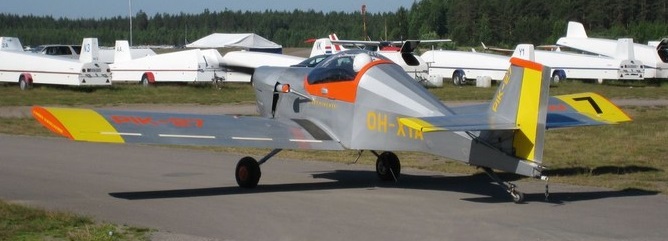
The Pik-27 design was begun by DI Aki Suokas with the objective of operating costs at a reasonable level, but not at the expense of safety. The design was to require minimal maintenance and only the necessary systems were included.
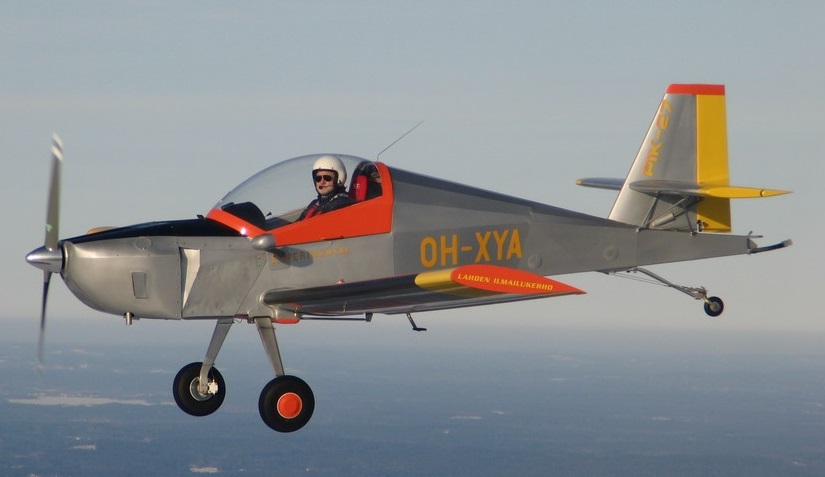
The prototype OH-XYA bears the excess weight of a prototype and it was anticipated the next would be at least 30-40 pounds lighter. The prototype weight includes a 70 m tow rope with a built-in reel.
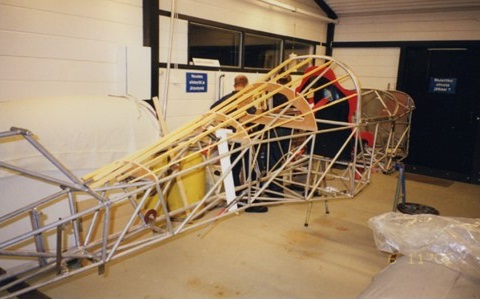
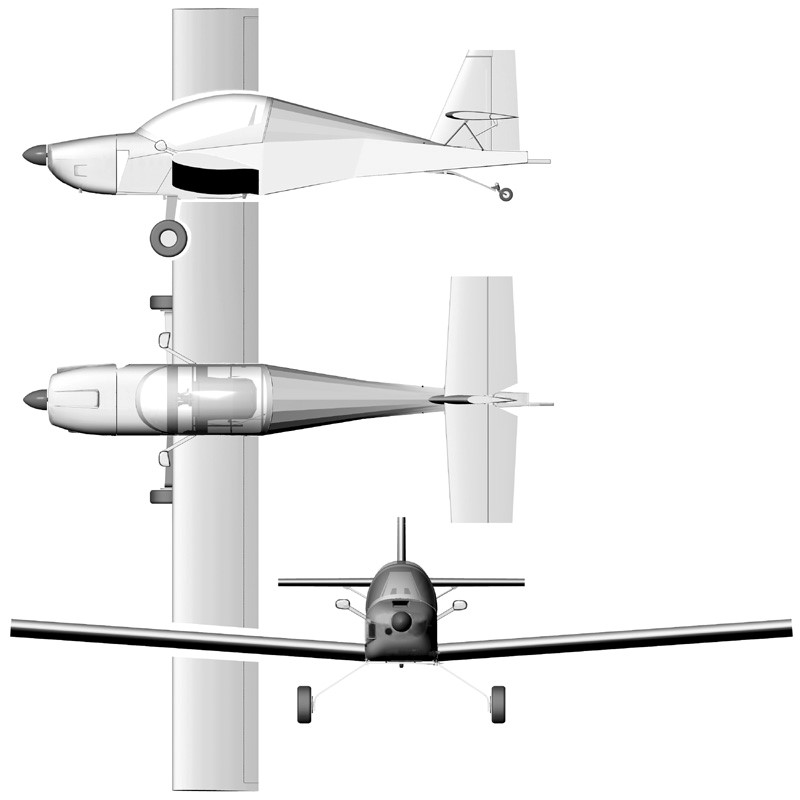
The PIK-27 low-wing monoplane has GRP wing construction and a fabric-covered SAF2205 steel-tube fuselage. The material has a very high elongation at break (25%), which improves the chances of settlement in the event of an accident. Another plan was for a 4130 fuselage.
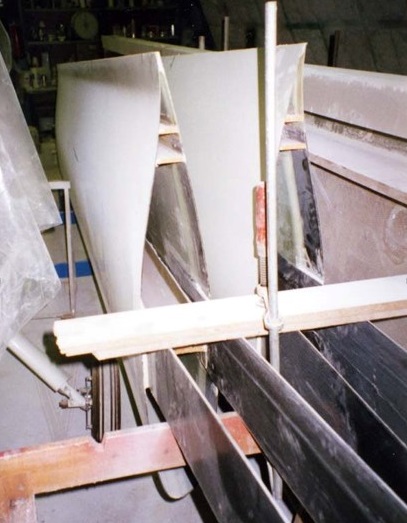
The wings were traditional glider technology of glass reinforced PVC foam laminate surfaces, with fuel tanks in the wing.
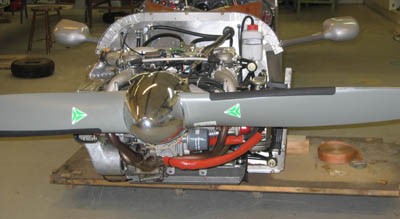
The Windcraft Oy built prototype (OH-XYA) was first flown December 2006, powered by a 115 hp Rotax 914. The Rotax 914 is a supercharged engine, meaning it does not lose power as density increases. The Rotax 914 maintains full power for flight level 150.
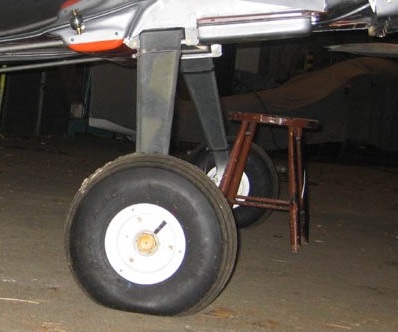
The undercarriage and brakes are the same style as the Cessna 172. The landing gear is quite high for a large propeller optimized for low speeds. The propeller has a diameter of 1.95 meters.
The Pik-27 was offered as kit and fits the US LSA definition (FAR CR 1.1). The wings and tail have to be molded. Wings can be joined by the builder if the transportation of a 9 m long package is difficult. The frame could not be deliver welded.
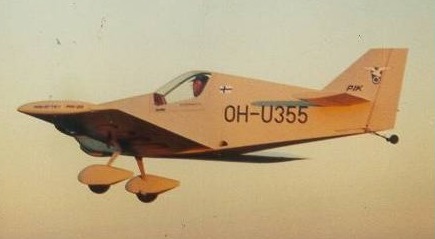
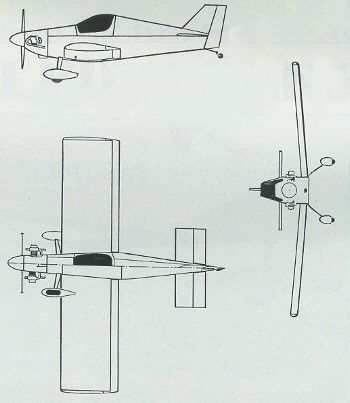
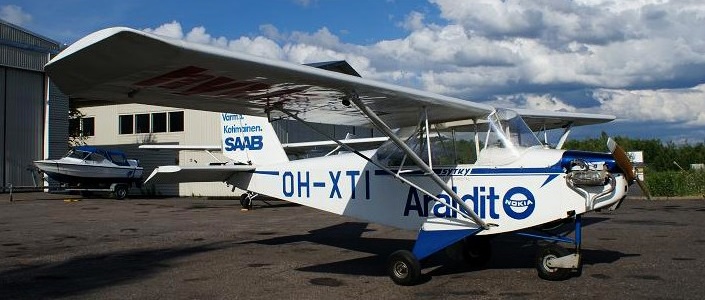
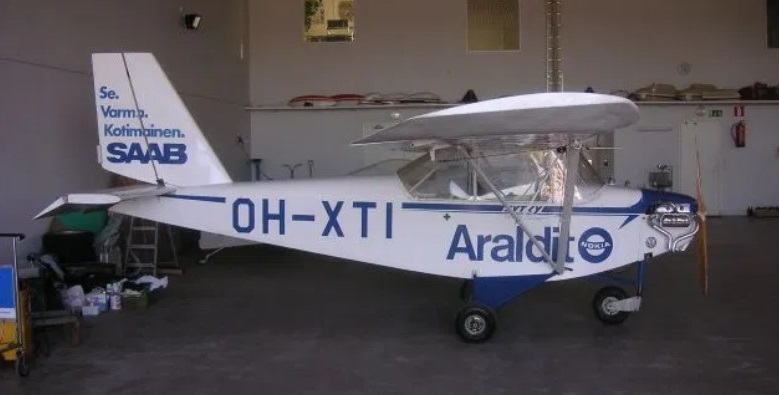
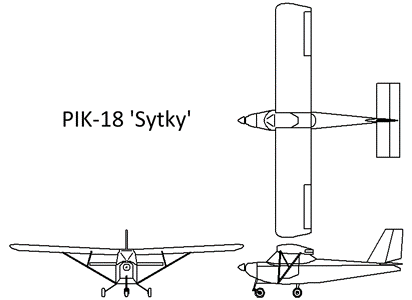
The PIK-26 Mini-Sytky is a single-seater ultra-light aircraft. The structure is entirely wood, except the wing and rudder which are cut from PVC foam. The one-piece wing attaches with two bolts to the main arch of the frame and its rear spar to the lower part of the backrest. Hinged flaps are fitted. The wing can be detached from below, leaving the frame resting on the landing gear.
The cockpit features a sidestick.
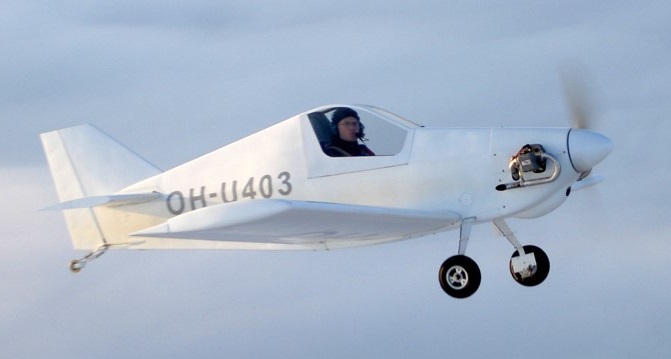
Designed by Kai Mellén and first built in 1996, at least four ave been built: OH-U355, OH-U356, OH-U403, and OH-U404. .
Mini-sytky OH-U403 Engine: Mosler MMCB HO2, 35 hp Propeller: 48 “(122cm) x 38 “(96.5 cm) Wing span: 5.24 m Wing chord: 1.15 m Wing area: 6 sq. m Airfoil: GAW-2 Length: 4.33 m Height: 1.22 m Load limit: +3.8, -1.5 g Empty Weight: 144 kg Gross Weight: 250 kg Fuel capacity: 27 lt / 20 kg Useful Load: 106 kg Luggage capacity: 5 kg Vne: 190 km/h Top Speed 3250 rpm: 180 km/h Cruise@3000rpm: 160 km/h Stall w/flaps: 55 kph Stall clean: 60 km / h Maximum flap speed: 120 km / h Maximum manoeuvre speed: 125 km / h Fuel Consumption: 7-8 lt/hr Rate of Climb: 3.2 m/s Takeoff Distance: 170 m Landing Distance: 250 m TO to 15 m: 600 m Landing dist from 15 m: 500 m Climb speed: 100-110 mph Endurance: 3.25 hr Range: 475 km Wing loading: 41.6 kg/sq.m Seats: 1 Wheel track: 1.21 m Wheelbase: 3.27 m Rudder: 0.22 sq.m Vertical stabilizer: 0.56 sq.m Vertical stabilizer profile: NACA 0011 Rudder: 0.38 sq.m Rudder profile: NACA 0009 Aspect Ratio: 4.56 Didedral: 4 degrees Aileron movement: – 35, + 27 Flap deflection: 16 deg Rudder movement: + – 28 deg Elevator movement: 20 deg up, 12 deg down Tires: LAMB 11.400-5 (6ply) Wheels: 5 ” AZUZA Brakes: AZUZA, mechanical
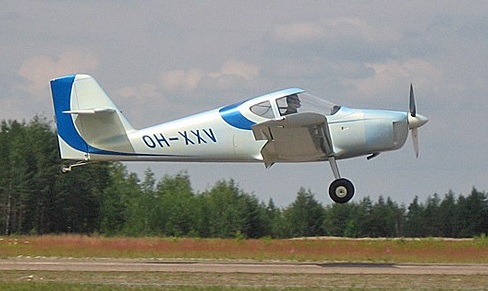
The 1983 PIK-25 Varttimarkka (Quarter Mark) was a 2-seat ultralight of GRP construction. Powered by a VW HO4 engine the project was abandoned.
In 2007 the project was completed privately by Jarmo Hakala of the Finnair flying club and registered OH-XXV.
PIK-25 OH-XXV Engine: 1 x 100/120 hp WV 1.9 TDI JH1 Wing span: 8.8 m Length: 6.6 m Empty weight: 595 kg MTOW: 850 kg Fuel capacity: 240 l Cruise 75% (75hp): 115 mph (less than 2000 ft) Stall speed: 65 mph Stall speed with flaps: 55 mph 3.8G max Fuel consumption 75% (75hp): approx. 14 l / h
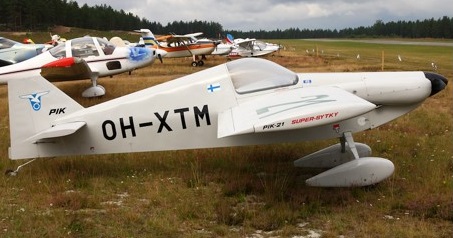
The 1981 PIK-21 Super-Sytky is a mid-wing monoplane Formula V racer, powered by a 53 hp VW-1600 engine. A Tavastia College student project of wooden construction, the two built, OH-XTM & OH-XMR, have a wing span of 5.3 m.
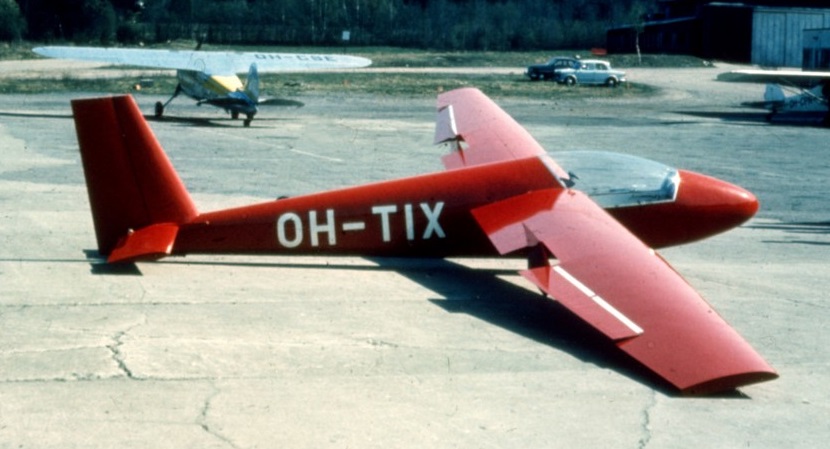
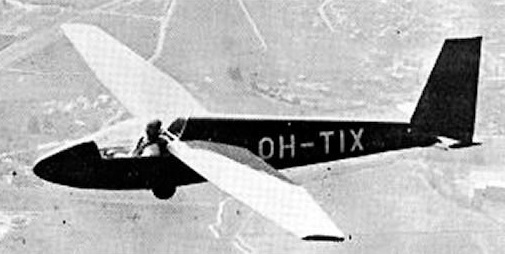
The 1966 PIK-17a Tumppi (‘Shorty’) was a single-seat shoulder-wing sailplane of wooden construction. With a Wortmann luminaire wing profile, the max speed was 235 km/h.
PIK-17A
The 1968 PIK-17b Tintti (Thermal Updraught) was of GRP construction.