pres: Storm Archer
175 Broadway
New York NY.
USA
Built the Pioneer BS-2 in 1929.
pres: Storm Archer
175 Broadway
New York NY.
USA
Built the Pioneer BS-2 in 1929.
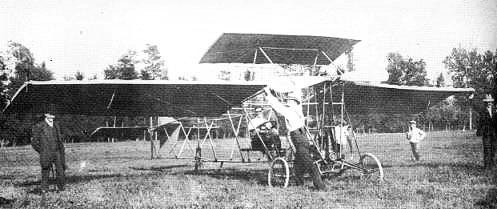
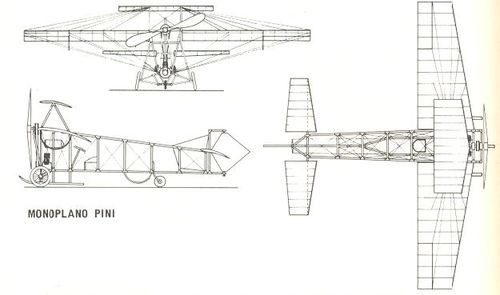
In 1908 Enrico Pini (born in Milan in January 1889), was in Paris during time when Wilbur Wright presented their airplanes. He became excited and remained influenced by aviation. He abandoned his normal activities and followed the American aviator, with such interest as to attract attention and sympathy of Wilbur Wright, who wanted to reward him by taking him as a passenger in a short flight. Then Pini decided to build himself an airplane, he designed one, a monoplane-biplane that best met his needs for aesthetics rather than technical ones.
In Milan, Enrico Pini had a brother, engineer Adolfo Pini, who was five years elder, he was an electrical engineer and occupied a responsible position at the Edison Electric Company. Bothe brothers started to build a full size machine according to Enricos drawing and with help of Adolfos fundings (this sum was to be used for the expenses of his marriage, which was therefore postponed), Adolfo even resigned from Edison`s company to dedicate himself fully to the project.
The brothers built the machine at the Bezzi`s factory, he was an industrialist, who owned an electric motor factory. Designed Enrico Pini, its planes were so arranged as to widely separate a large rectangular monoplane wing, then to add a small horizontal plane above the gap. All year 1909 was dedicated to the creation of the airplane, the assembly of which took place in the hangar of Societa Restelli, which built the Rebus engines, located in Piazza d’Armi nuova. In turn, the uncle and godfather of the two brothers Adollo, wanted to help them by providing them with the engine unit, a three-cylinder fan-type Anzani fan of about 25 HP, the kind used by Bleriot in his famous crossing of the Channel.
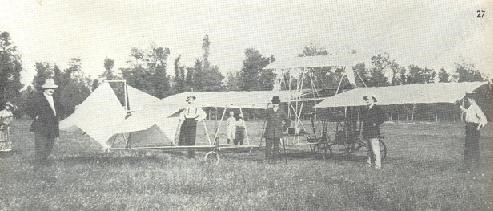
At the end of 1909, on 15th November, it was inaugurated in Milan the first exhibition of Italian Air Force “1a Esposizione Italiana d’Aviazione” organized by the Gazzetta dello Sport, at the vast halls of the Splendido Corso Hotel. The Pini brothers exhibited the model of their aircraft that was awarded by the jury with a bachelor’s bronze medal. In the spring of 1910 finally they began testing, pilot was Enrico, but at first the machine rarely reached the desired speed, it was only taxiing, the engine was underpowered. They made some improvement of undercarriage. With the daily trials and modifications aimed at improving the performance of complex propulsion and weight reduction, the device gradually lengthened its hops up to make small flight in height ranging between 50 and 80 cm from grass surface and a length variation from 200 to 500 meters.
Unfortunately the financial means of the two brothers were soon at the end, in view of their uncle would not hear of poor results to come to the aid; they tried to borrow, but even this was limited by the lack of trust that was fed to the success of the company (Bezzi was the same creditor to over six thousand liras) and therefore the tests had to be suspended and the two unfortunate inventors, despite all the sacrifices and renunciations that were subjected to succeed in their intent, reluctantly abandoned their aviation activities. The autumn saw the device removed and deposited in a cellar and was eventually sold as scrap.
A manufacturer from Milan, Ercole Marelli, which had seen the equipment of the Pini brothers had been appreciated, rather than the qualities of the aircraft itself, the brilliant and original construction, the engineer then offered a job in his company. Enrico Pini, after the bitter disappointment, continued in his business with bold new initiatives, and finally, helped by luck managed to form a solid financial position.
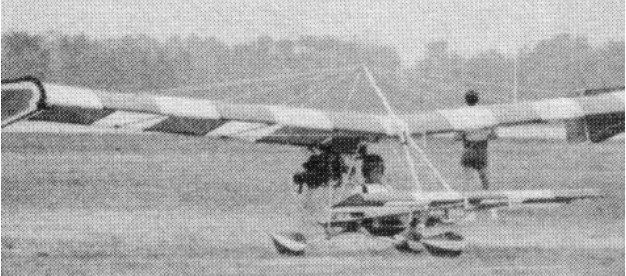
Side mounted joy stick, nosewheel steerable through joystick. Construction: Aluminium, Dacron
Engine: Cuyuna ULII-02 (429 cc) 33 hp
Static thrust: 250 lb
Wing span: 26 ft
Wing area: 130 sq.ft
Height: 6 ft 11 in
Length: 14 ft 2 in
Empty wt: 240 lb
Max wt: 550 lb
Fuel cap: 5 USG
Stall: 22 mph
Max speed: 63 mph
Vne: 75 mph
Climb rate: 600 fpm @ 35 mph
Design limit: +6, -4g
Glide ratio: 8-1
Wing loading: 4.23 lbs/sq.ft
Power loading: 15.71 lbs/hp

The 1931 Pilgrim KR-135 (ATC 415) was based on the Kreider-Reisner 21 series. Three were built; [NC248V, X311H, and NC963V. X311H was used as a test bed for Fairchild’s 100hp experimental Ranger 6-375 engine.
Engine: 125hp Fairchild (Ranger) 6-390
Wingspan: 27’0″
Length: 21’6″ Useful load: 590 lb
Max speed: 116 mph
Cruise: 93 mph
Stall: 51 mph
Range: 380 mi
Seats: 2
The 1931 Pilgrim KR-34 (ATC 2-372) was a modified Fairchild KR-34, three-place open cockpit biplane, powered by a 120hp General-Moore engine. Only one was produced.
Circa 1936, Pilgrim built an FC-2, two-place open cockpit biplane, powered by a 220hp Wright engine and registered NR6692.
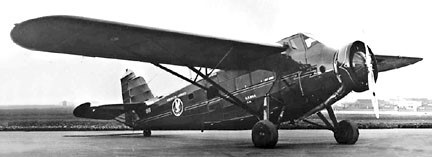
Designed by Virginius E. Clark, the 1931 100, 100-A or American Pilgrim was essentially a Fairchild product, descended from Fairchild 100.
The Pilgrim 100-A received ATC 443, 2-365.
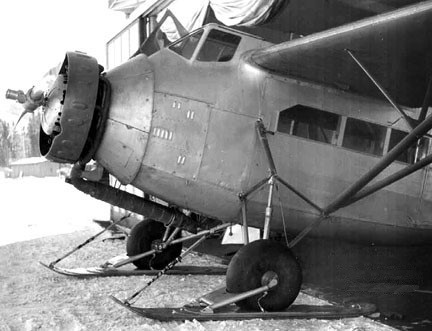
The 1932 100-B was powered by Wright R-1820 Cyclone B engines and received ATC 470. Ten were built, of which six went to American Airways, and four to the Army as Y1C-24.
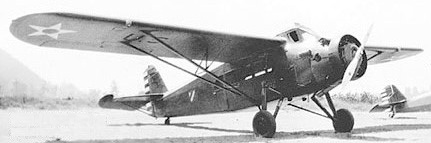
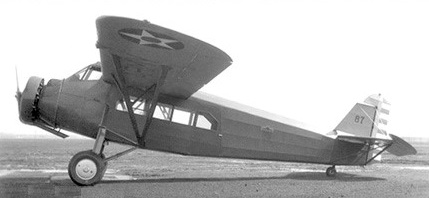
Priced at $28,750, sixteen P&W Honet-engined Pilgrim 100As and six Wright Cyclone-engined 100B were built, all of which went to American Airlines, later passing to Alaskan Airways.
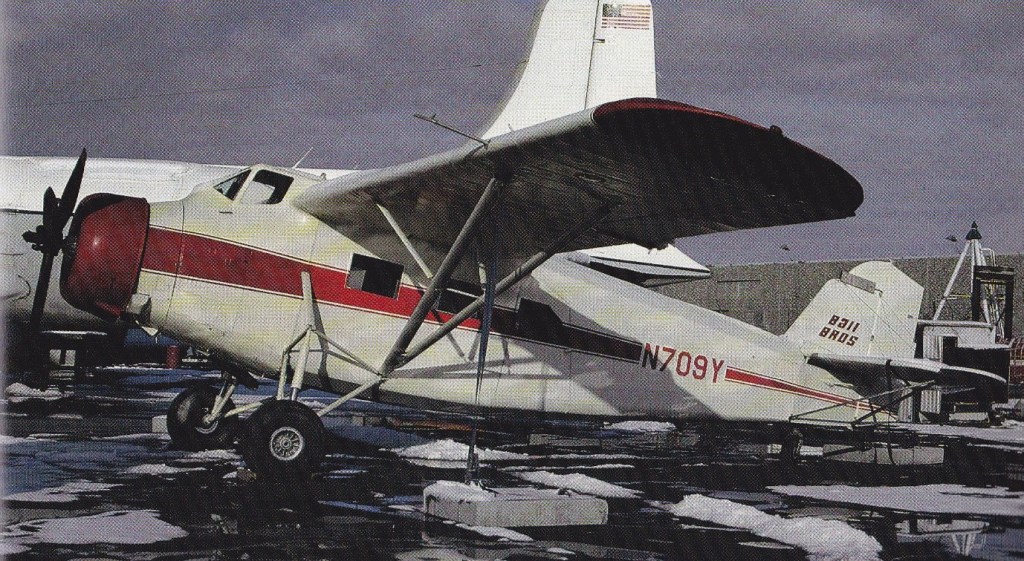
100 / 100-A / American Pilgrim
Engines: 575hp P&W Hornet B
Wing span: 57’0″
Length: 38’1″
Useful load: 3388 lb
Max speed: 136 mph
Cruise: 118 mph
Stall: 65 mph
Range: 400-500 mi
Seats: 10
100-B
Engines: 575hp Wright R-1820 Cyclone B
Length: 39’2″
Useful load: 3313 lb
Max speed: 135 mph
Cruise: 118 mph
Stall: 65 mph
Range: 510
Seats: 10
1931:
American Airplane & Engine Corp (Fairchild)
Farmingdale NY.
USA
1931: Acquired by General Aviation Mfg Corp.
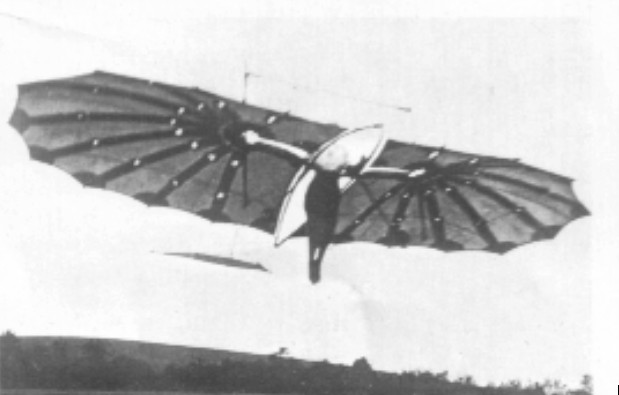
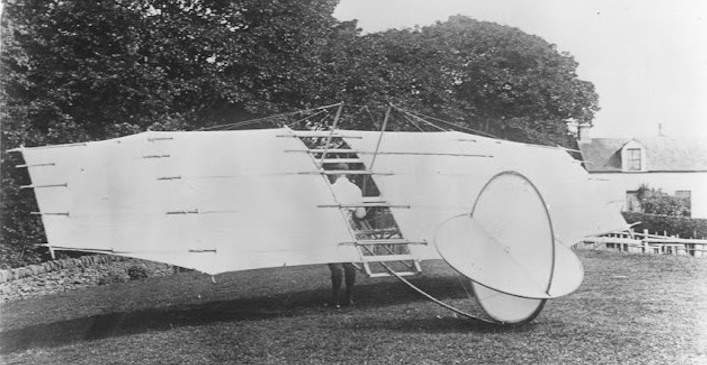
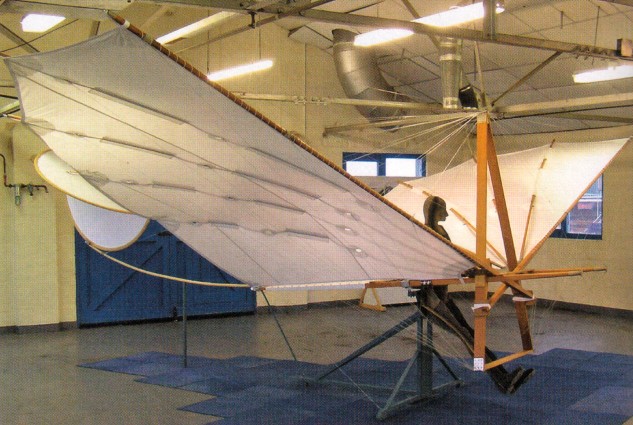
Pilcher added bicycle wheels and a tow launch to his ‘Hawk’ for swifter starts, and more than 100 separate pieces of piano wire to hold the wings in shape. Many successful flights were made.
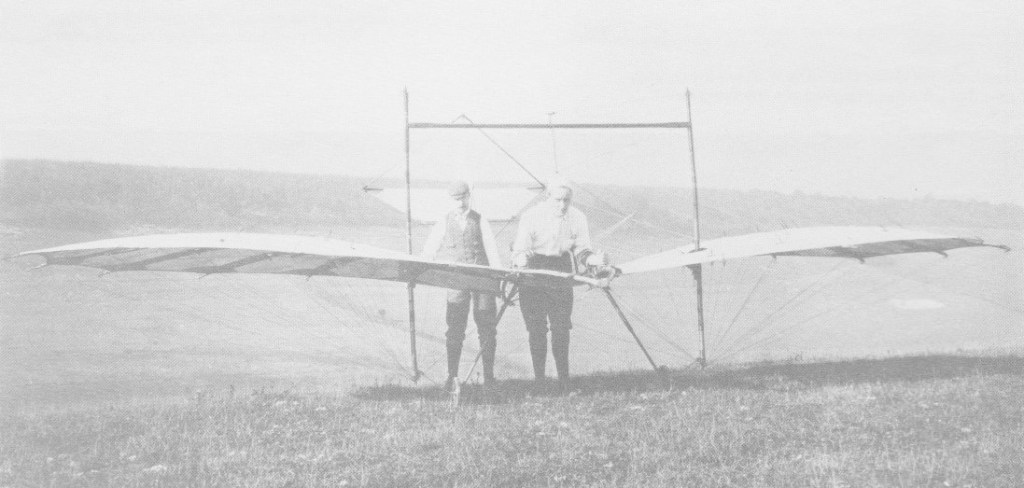
Percy Pilcher crashed and was killed in the Hawk on 2 October 1899.
First flight: 1896
Wing span: 7.1m / 23ft 4in
Length: 5.6m / 18ft 6 in
Weight: 23 kg / 50 lb
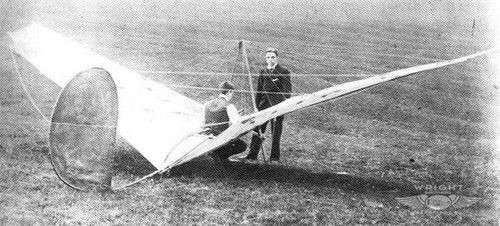
In 1893 Pilcher had been appointed assistant lecturer in Naval Architecture and Marine Engineering at Glasgow University, and it was there, inspired by Otto Lilienthal, that he designed his first glider, the Bat, in 1895 and tested it at Cardross. In 1896 he made his first glides, under Lilienthal’s tuition. This was the second form of Bat, with a bisecting circular fin and tailplane. Longer flights were made, some under tow when the wings’ dihedral was reduced.