Pisarenko OPV-1

By 1923 Victor Pisarenko had become one of the best Soviet flight instructors, but in the fall of that year he also made his debut as an aircraft builder and became the first Soviet amateur builder.

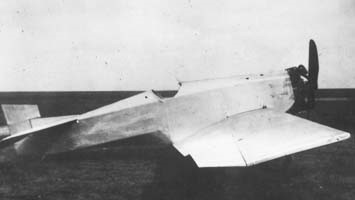
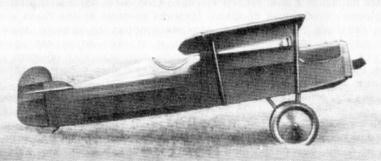
With the help of several students, Pisarenko built a single-seater light aircraft in the workshops of the Kacha Flight School, Sevastopol, which had the privilege of being the first Soviet aircraft with a low cantilever wing. This plane received the name VOP-1, an acronym for Victor Osipovich Pisarenko – 1 (Russian: Писаренко ВОП-1).

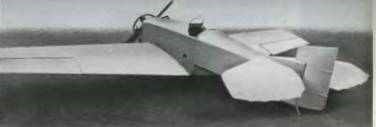
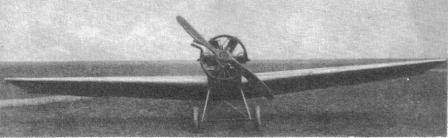
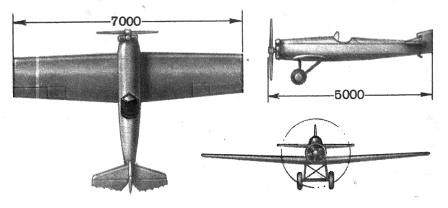
The VOP-1 was conceived as a cantilever low-wing monoplane built in wood. The one-piece wing with a trapezoidal shape on the plane used a profile selected by the author himself. With a surface area of 10 square metres, it had a double-beam structure and was completely covered by a thin layer of plywood.

The fuselage was built with a wooden structure and had a plywood covering with angular lines. In its central part, behind the engine, the open cockpit for the pilot was located.

The tail was of the monoplane type with the rudders covered in fabric.

The landing gear was conventional, fixed and had a tail skid.

A 35 hp Anzani engine obtained in the workshops themselves was used as the power plant.

The VOP-1 was built in the school’s workshops in Sevastopol and many of its parts were taken from old discontinued models. On November 27, 1923 Pisarenko flew for the first time. This flight was followed by several others.

During the test flights, carried out by Pisarenko himself, the plane was stable in flight and responded well to the controls. With its 35 hp engine, the plane reached a speed of 120 km/h.

Powerplant: One 35 hp Anzani
Wingspan: 7.50 m
Wing area: 10.00 m²
Length: 5.00m
Empty weight: 222 kg
Normal takeoff weight: 322 kg
Weight of fuel + lubricant: 20 kg
Wing loading: 32 kg/sq.m
Power load: 9.2 kg/hp
Total load capacity: 100 kg
Top speed: 120km/h
Cruising speed: 100 km/h
Practical ceiling: 1200 m
Accommodation. 1

Pisarenko T / VOP-T

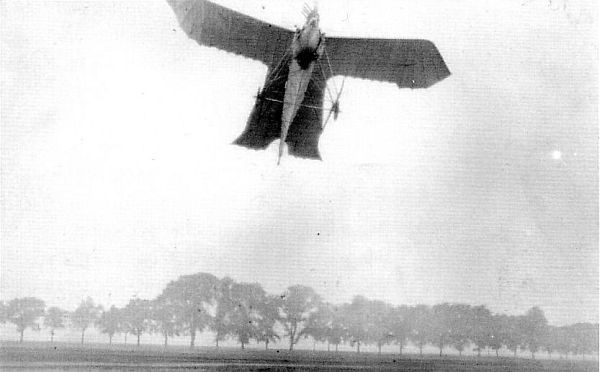
After moving to the Serpukhov Higher School of Air Combat, Shooting and Bombing (Strelbom), Pisarenko, with the help of cadets, began construction of his second aircraft. This model was called VOP-T (Víctor Osípovich Pisarenko – Trenirovochni (coach)) (Russian: Писаренко-Т or ВОП-Т).

The Pisarenko-T was conceived as a parasol-braced wing single-seat monoplane. As a distinctive feature of this model we can point out its unconventional wing profile, with flat upper and lower surfaces, a curved leading edge and a flattened tail. In general, a strange wing with a sharp leading edge was obtained.

The wing, with a double spar structure, had parallel wooden supports that fixed it to the sides of the fuselage. The covering was plywood.

The Pisarenko-T was powered by a 150-hp Hispano-Suiza engine driving a two-blade wooden propeller.

The plane was built at the Serpukhov school and was ready in 1925.

Pisarenko prepared the plane for its first flight and when it was ready, he went to the head of the school for permission. The plane had been built with hardly any calculations and its pilot was only authorized to race down the runway. Pisarenko disobeying, took the flight back and headed for Moscow, landing at the Central Aerodrome in Jodinka. Once there, before the authorities could react and ban him, he made a second flight, executing several high school piloting tricks that included inverted flight and several rolls.

Once the second flight was completed, Pisarenko never flew his plane again, nor did he request permission to do so.

The success of his model led to Pisarenko soon receiving an application to build a training aircraft with funds from the VVS leadership. He began to work in this direction, but the appearance of the excellent trainer Polikarpov U-2 soon made him leave the company.

Powerplant: One 150 hp Hispano-Suiza engine
Accommodation. 1

Pisarenko, Victor Osipovich

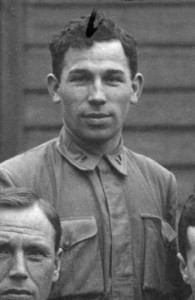
Victor Osipovich Pisarenko (Russian: Виктор Осипович Писаренко) was born in 1897 in Belarus. In 1915, during World War I, he finished technical courses and joined a telegraph battalion. After the October Revolution he voluntarily enrolled in an aviation squadron, beginning as a motorcyclist and later as a mechanic.

In 1920 he received the rank of pilot-observer (corresponding to navigator). He participated in the Civil War, fighting on different fronts. In 1921, after passing new navigator courses, he was assigned to the 13th Aviation Brigade in Kazan. In this unit and under the direction of PJ Mezheraup, he took part in combats on the Northern front against the White Finnish troops that occupied the Karelian Isthmus.

In 1922 he entered the Kacha Aviation School, finishing it a year later with excellent results, so it was decided to keep him there as a flight instructor. In he built the VOP-1 light aircraft in the school workshops, which would become the first Soviet monoplane with a low cantilever wing. On November 27, 1923, this plane rose for the first time and in the following days he would perform another set of flights. In January 1924 the VOP-1 would be transferred to Moscow, where he would end up making several hundred flights.

A short time later Pisarenko would go on to work as an instructor at the Serpujov Higher School of Air Combat, Shooting and Bombing (Strelbom), leading the flight brigade. In this center in 1925 he would build his second self-designed model known as the Pisarenko-T, which was characterized by its original wing profile. After receiving the approval only to run the plane down the runway, Pisarenko disobeyed, remounted the flight and headed for Moscow, landing at the Central Aerodrome. Once there he made a second flight, executing several high school piloting tricks. He planned to build a two-seater training version with financing from the UVVS, but the appearance of the Polikarpov U-2 put a stop to these plans.

Since 1925 by decision of the head of the VVS P.I. Baranov, Pisarenko went to work as a test pilot at the NOA (acronym for Nauchno Opytni Aerodrom or Experimental Scientific Aerodrome), predecessor of the NII VVS. In this period he would participate in tests of the I-4 (ANT-5) fighter in 1927, Heinkel HD-37 (I-7) in 1928, R-5 in 1929 and R-7 (ANT-10) in 1930.

From July 27 to August 9, 1926 with second crew member BV Stierligov, he would make a record Moscow – Kharkov – Rostov-on-Don – Sevastopol – Kiev – Moscow flight, with a total range of 3,000 km.

On July 20, 1928, during the NII VVS spin performance tests of the Heinkel HD-37 fighter, the plane went into a flat spin and Pisarenko found no way out of it. For some time he was unable to leave the aircraft and when he did he was only 300 meters from the ground. The parachute was slow to open and the pilot hit the ground hard, fracturing his leg. As it became known later, in the translated document delivered by the manufacturers, the exit methods were ignored.

On July 21, 1929 Ya. I. Alksnis and VO Pisarenko made a non-stop flight on the Moscow – Sevastopol route in an R-5, covering 1,276 km in 5 hours and 30 minutes.

From September 1930 he began working at the VVS flight inspection as a senior assistant to PJ Mezheraup.

In 1931 Yakov I. Alksnis was appointed Head of the VVS. Coming from the Alksnis ground troops, he decided that he had to learn to fly. The piloting classes were taught by Pisarenko.

He died on September 9, 1931 in a plane crash in an R-5 over the Bryansk region. He and PJ Mezheraup were carrying out an inspection flight in adverse weather conditions. With the fog, visibility decreased and they ended up hitting the tops of some trees. The remains of both crew members were found several days later. The burial took place in the building of the Zhukovski Aeronautical-Military Academy.

His remains rest in Moscow’s Donskoi Cemetery.

Piquerez 1909 biplane

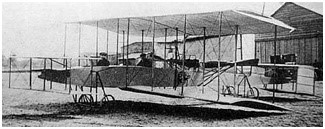
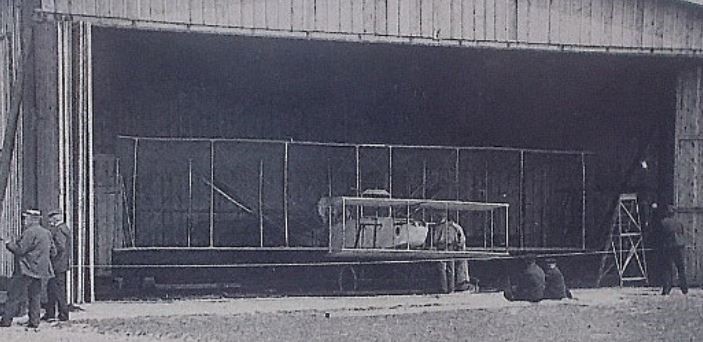
Charles de Piquerez was an explorer who asked de Pischoff and Koechlin in December 1908 to build him a large biplane. The design had an engine in the middle of the fuselage, driving two pusher propellers via chains. Elevator(s) were mounted in the front and the end of the fuselage. Crew one pilot and a passenger. The biplane flew in at Issy-les-Moulineaux, France, in April and May 1909 but not very successfully, so it was radically redesigned as a monoplane (also with two pusher propellers), but alas this was not a great success too.

Powerplant: 1 x 40 hp 4-cylinder Dutheil and Chalmers engine.

Pipistrel Taurus G4

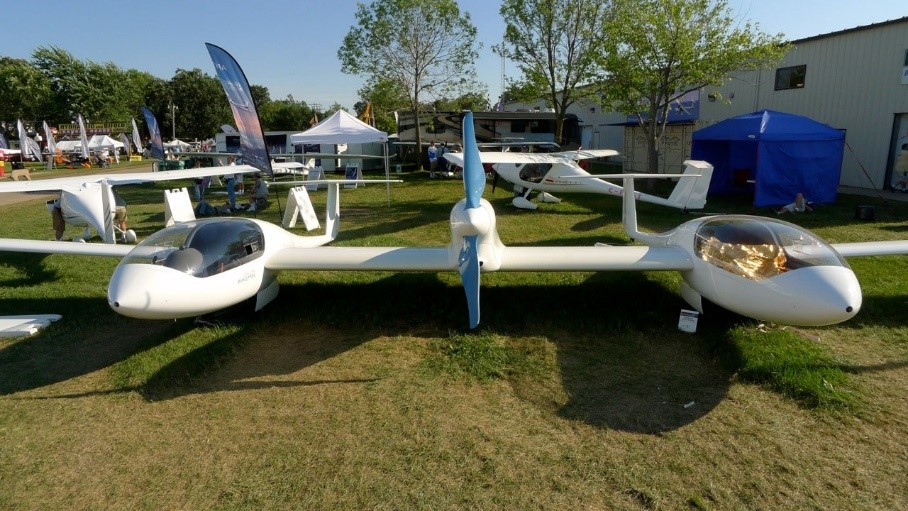
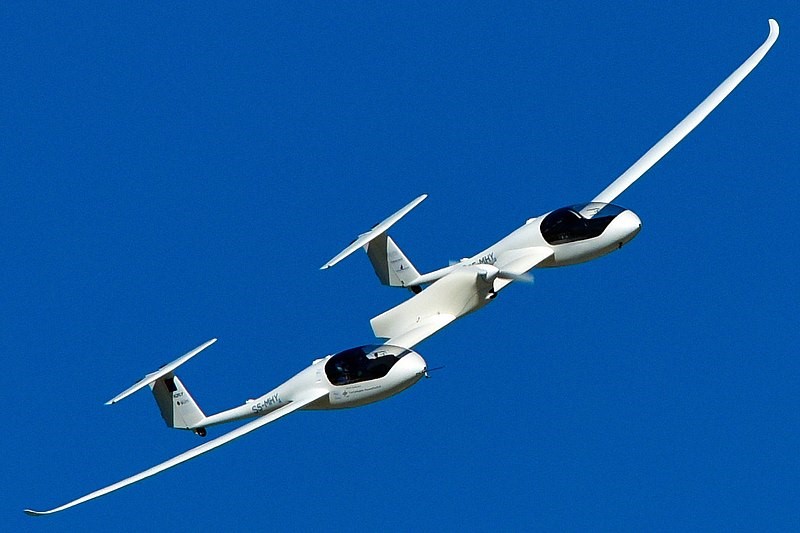
The Taurus G4 is a test bed to develop a high-power electric propulsion system. It features twin fuselages, room for four and an electric motor.

The Taurus G4 was built entirely in house, and mostly of carbon fiber with some Kevlar here and there. It is essentially a pair of Pipistrel’s Taurus self-launch glider fuselages joined by a single wing.

Mounted between the fuselages is a 150 kilowatt (200 horsepower) electric motor. It is the most powerful electric motor seen thus far in an all-electric airplane design. The Taurus G4 carries more than 1,100 pounds of lithium polymer batteries. There is more than 75 kilowatt-hours available via the company’s proprietary management system.

The airframe is very light. Although the aircraft weighs roughly 2,350 pounds empty, nearly half of that is the battery. Maximum takeoff weight is 3,300 pounds.

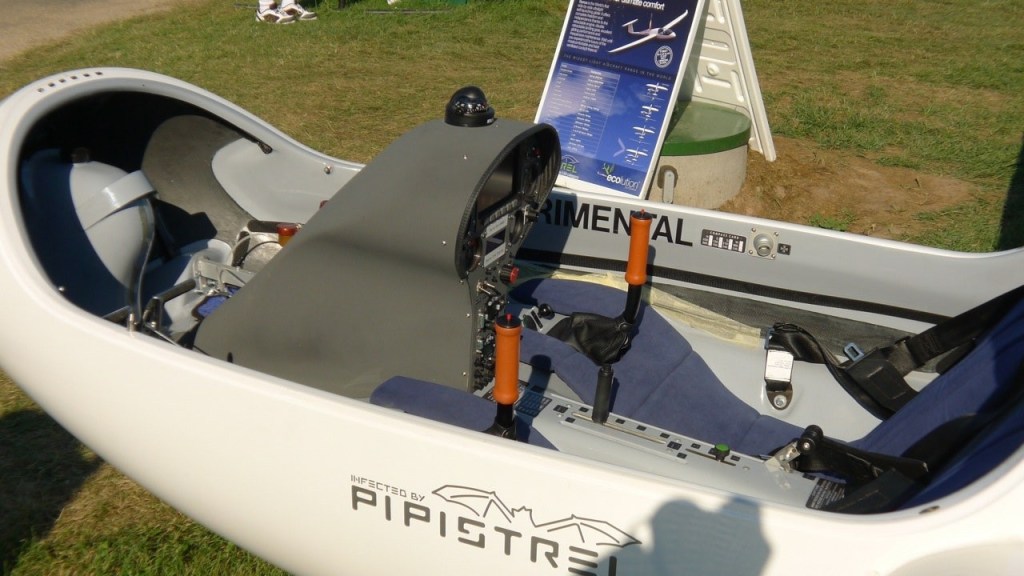
The right fuselage of the Taurus G4 contains the cockpit with dual controls.

The airplane was designed and built in the course of four months. The G4 was built specifically for the NASA/CAFE Green Flight Challenge. Its sizing and aerodynamic features, as well as the power train and battery capacity were matched to the requirements. The competition is aimed at developing highly fuel-efficient, yet practical, aircraft. Competitors must fly at least 200 miles in less than two hours while averaging at least 200 seat miles per gallon. With its four seats, the Taurus G4 has a distinct advantage if Pipistrel can meet the performance requirements.

The airplane is purely a demonstrator, with no plans for production. Pipistrel is using the G4 to develop the motor, battery and power management system for a more traditional design.

It was designed by DLR Institute of Engineering Thermodynamics of the German Aerospace Center, based on the Pipistrel Taurus G4, the German Aerospace Center / DLR HY-4 is a four-seat hydrogen fuel cell powered aircraft. It made its maiden flight on 29 September 2016 from Stuttgart Airport.

DLR HY4

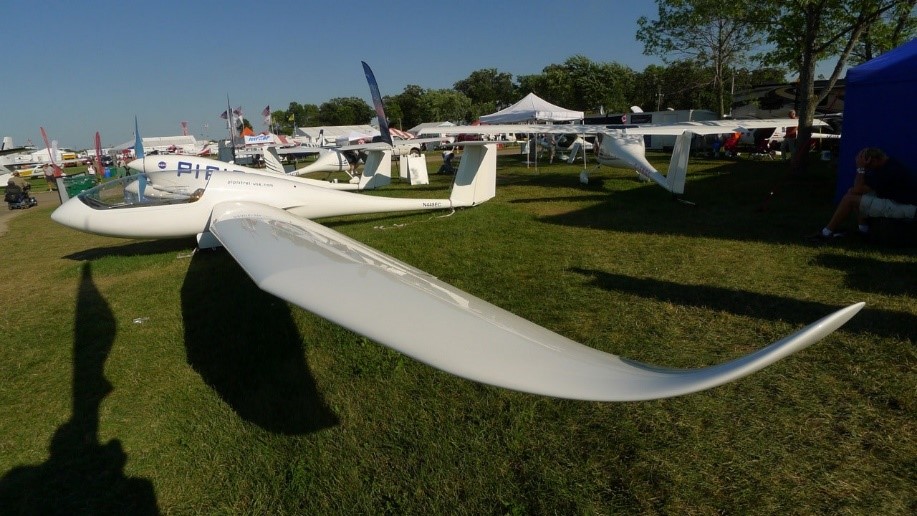
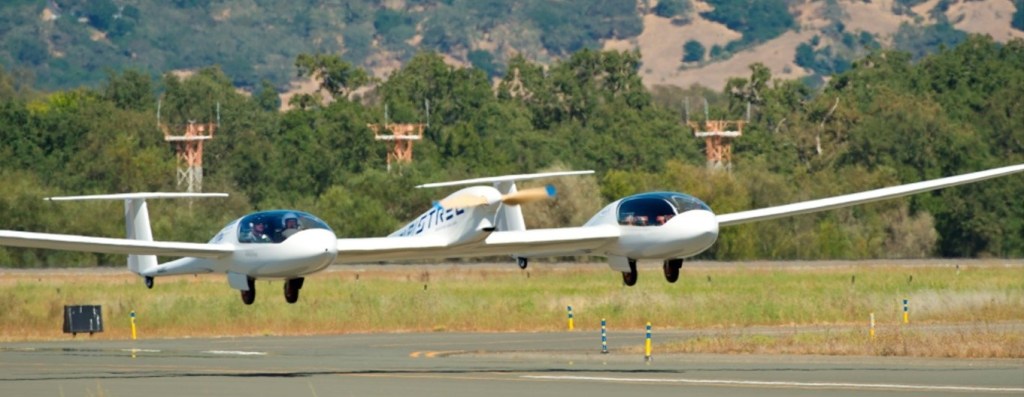
In late September 2011, Google sponsored the CAFE Green Flight Challenge at the Sonoma County Airport in Santa Rosa, California. Three aircraft competed and two met the challenge requirements to fly 200 miles in less than 2 hr and use less than the energy equivalent of one gallon of fuel per passenger. The first place prize of $1.35 M was won by the Pipistrel-USA.com team led by Jack Langelaan of State College, Pennsylvania. Pipistrel’s new, twin-fuselage plane was created by combining two Taurus G2 fuselages, connected by a 5-m-long spar. A 145-kW brushless electric motor, developed for Pipistrel’s new 4-seat Panthera aircraft, is mounted between the passenger pods and drives a 2-m-diameter, two-bladed propeller in a tractor configuration. The Taurus G4’s full wingspan is about 21.36 m (75 feet) and it flew 200 miles nonstop while achieving 403.5 passenger mpg.

Pipistrel Taurus G4 at the CAFE/NASA green flight challenge, September 2011.

Pipistrel Alpha Trainer / Alpha Electro

Alpha Electro

Pipistrel’s S-LSA Alpha Trainer debuted 2012 and has sold well. Price: US$90,900 (fully equipped Alpha Trainer w/ballistic chute).

At the end of 2017 the Pipistrel Alpha Electro trainer was officially released to customers with significant success. This aircraft has an endurance of 1 hr plus a 30 min reserve, short take-off distance, and 1000+ fpm climb. The Alpha Electro is also designed to recover 13% of the energy upon each approach.

Pipistrel’s Alpha Electro (UL/LSA in Australia) electric airplane has obtained certification.

Pipistrel Sinus

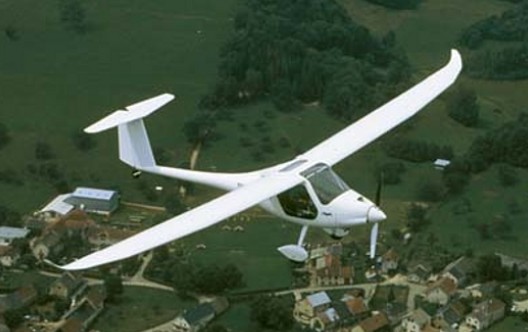
In 1995, Pipistrel d.o.o. Ajdovščina presented a two-seat ultralight aircraft with a wing-span of 15 meters, aimed also at glider pilots. The aircraft was the Sinus.

The Sinus team aimed at a two-seat composite-built aircraft with 15 meters of wingspan, which requires 100 meters of runway to take-off and reaches 200 km/h in horizontal flight, all on a 50 HP engine. The aircraft was is constructed according to EASA CS-22 rules (classic gliders), although it fits into the microlight category, with seats in side-by-side configuration.

The L/D ratio of the aircraft was be close to 1:30, which makes it a decent glider and provides extra safety in case of engine failure, since the engines for microlights are not certified, and must present Short Take-off and Landing (STOL) characteristicts. The aircraft is equipped with airbrakes, which enable the pilot do descent rapidly and use a high angle of approach onto typical ultralight airfields. The empty weight of the whole aircraft was not to exceed 285 kgs.

The small Pipistrel team developed their own airfoil and wing shape as well as a propeller with feathering capability, all drastically decreasing the drag and providing for a satisfactory glide ratio.

When the Sinus flew for the first time she was a subject of aviation magazines around the World and glider pilots began placing orders. They were willing to trade the imperfect glide ratio for the low cost of flying, freedom and independence from glider tow.

Sinus took the World Champion 2001 title, triggered a wave of imitators.
Fully composite construction with a 15-meter wing span, which provide for a glide ratio touching 1:30, the Sinus is equipped with high-tech features such as flaperons, airbrakes and variable-pitch propeller, and can be had in both tricycle or tail dragger undercarriage configuration. Sinus comes in two variants, the 503 and 912 with corresponding Rotax two- and four- stroke engines. Fast cross country flights to destinations 1000 km and further away doing more than 200 km/h (110 kts) are a reality with Sinus, even while burning around 10 liters of automotive fuel (mogas) or avgas per hour.

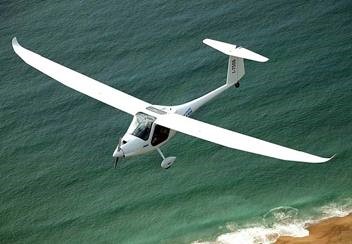
The Pipistrel Sinus is a ULM certified composite two seater motorglider. The vario propeller with in flight adjustable pitch and possibility to set it in the feather position transform the Pipistrel Sinus in a real low resistance glider. All options are included in the basic 2009 price: 46900 EURO.

Electric starter, recycling fuel pump to fill the wing tanks, warning lights for fuel minimum level, cockpit hot air heating system, main wheel fairings, all engine and flight instruments, etc. The cabin is properly insulated from noise and very comfortable. The seats are ergonomic with an adjustable head rest. The pedals have wheel brake levers on them, are adjustable in flight and made in stainless steel. All controls are easy to use and reach from both seats, and both seats have pedals and sticks.

Sinus was the absolute winner of the World Championship in 2001 and came runner-up in 2005. In 2004 Sinus was the first light aircraft to fly around the World. Since then, our owners have performed remarkable long-range flights including a non-stop flight from Pisa to Lisbon, Athens – Nordkapp flight and the first ever light aircraft Australia – New Zealand crossing!

The Sinus entire cabin area is encased with energy absorbing structures made from Kevlar fibre. The Sinus can also be equipped with the ballistic parachute rescue system. Including honeycomb techniques, Titanium and Magnesium are used on parts of the aircraft.

The wing tanks have the fuel cap on top, as well as a visual check for the fuel level. The main landing gear is profiled, made of composite. The main wheels have strong hydraulic disk brakes. Back wheel is controlled by pedals. The airbrakes allow landing the Sinus in very short distances over high obstacles. Disassembling and assembling is very simple like on normal gliders, all wing control connections are automatically locked on annexation of the wings.

Pipistrel has delivered more than 1,000 aircraft worldwide. All Sinus models can be had as 51% EAB (Amateur-Built Experimental) kits (400 hours est.) too. Price 2014 US$97,450.

Sinus 503
Engine: Rotex 503 UL DCDI 2V 50hp at 6000 rpm
Wing span: 14.97 m
Wing area: 12.26 sq.m
Aspect ratio: 18.3
Airfoil: IMD 029-b, (Orlando, Venuti)
Empty Weight: 265 kg / 584 lb
MTOW Weight: 472 kg / 1041 lb
Stall: 34 kt / 39 mph / 63 kmh
Cruise: 92 kt / 106 mph / 170 kmh
VNE: 121 kt / 140 mph / 225 kmh
Climb Ratie: 600 ft/min / 3.2 m/s
Glide Ratio: 1:28
Take-off distance (50ft obstacle): 710 ft / 215 m
Landing distance (50ft obstacle): 660 ft / 200 m
Cockpit width: 44 in
Seats: 2

Sinus 912
Engine: Rotax 912 UL2, 80 hp at 5800 rpm
Propeller: Pipistrel VARIO
Wing span: 14,97 m
Length: 6,6 m
Height: 1,70 m
Wing area: 12,26 sq.m
Airfoil: IMD 029-b, (Orlando, Venuti)
Rudder area: 1,1 sq.m
Tail area: 1,63 sq.m
Aspect ratio: 18,3
Positive flaps: 9 deg, 18 deg
Negative flaps: 5 deg
Center of gravity: 20% – 39%
Empty weight: 285 kg
Empty weight light version: 275 kg
Max take off weight (MTOW): 450 kg / 472.5 kg / 544kg
Fuel tanks capacity: 2 x 30 l / 2 x 50 l
Useful fuel: 2 x 27 l / 2 x 45 l
Stall with flaps: 34 kt / 39 mph / 63 km/h
Stall without flaps: 66 km/h
Cruising speed (75% power): 108 kt / 124 mph / 200 km/h
Max. Horizontal speed : 220 km/h
Vne: 121 kt / 140 mph / 225 km/h
Max speed with airbrakes out: 160 km/h
Max speed with flaps down: 130 km/h
Manoeuvring speed: 141 km/h
Best climb speed: 120 km/h
Max climb rate (450 kg): 6,5 m/sec
Climb rate at 140 km/h: 1300 ft/min / 6,3 m/sec
Min.sink speed: 90 km/h
Min.sink (prop. 90 deg.): 1,03 m/sec
Max. Sink with airbrakes: 5,5 m/sec
Best glide ratio speed: 95 km/h
Best glide (prop. 90 deg.): 1:27
Glide at 150 km/h (prop 90 deg): 1:18
Take off run ( 450 kg): 88 m
Take off over 15 m obstacle (450 kg): 148 m
Service ceiling ( 450 kg): 8800 m
45° – 45° roll time: 4,2 sec
Fuel consum. At cruis. Speed: 9,2 l/hour
Endurance (std tanks): 5,8 hours
Range distance: 1200 km
Max load factor permitted ( x 1,8): +4 g – 2 g
Max load factor tested: + 7,2 g – 7,2 g
Cockpit width: 44 in
Seats: 2
2009 Price: 57900 EURO