Potez XV

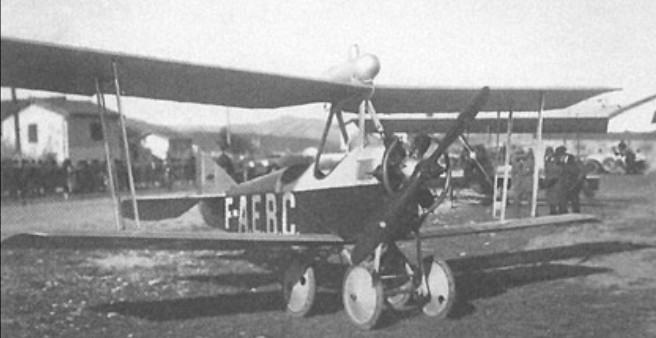
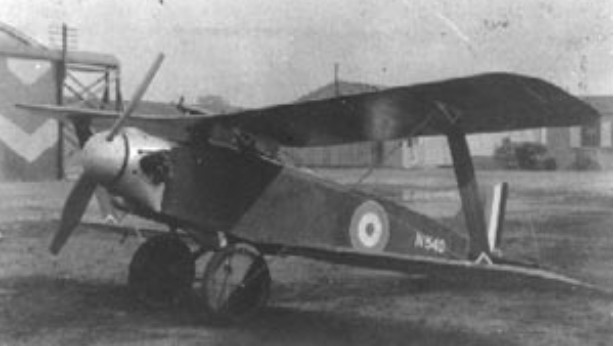
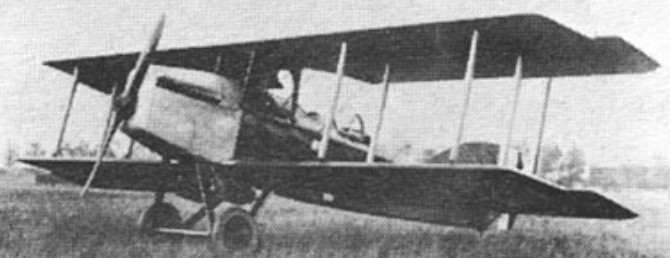
A successful private venture design by Louis Coroller, the Potez XV two-seat observation biplane was displayed at the Paris Salon de I’Aeronautique in 1921. Powered by a 276kW Lorraine 12D engine, later replaced by a 224kW Renault 12Fe, the Potez XV prototype performed well and gained official approval in the H.2 (two-seat observation) category. Large orders were received from the Aeronautique Militaire and first deliveries began towards the end of 1923. Series aircraft had the Lorraine 12Db engine and retained the configuration of the original machine, with conventional cross-axle landing gear, and were largely of wooden construction with metal panelling covering the forward fuselage and fabric over the remainder.
The Potez XV was exported widely, eight going to Denmark, 12 to Spain, 120 to Romania and 30 of a slightly modified version, designated Potez XVII, to Bulgaria. In addition, a sample batch exported to Poland was followed by 135 aircraft licence-built in that country.

Potez XI

Designed to meet the demands of a CAP (Chasse Armee Protection) 2 requirement formulated in 1919 by the newly-appointed Directeur de l’Aeronautique, General Duval, the Potez XI was a two-seater intended to fulfil bomber intercept and tactical reconnaissance at Army Corps level, and escort fighter tasks.

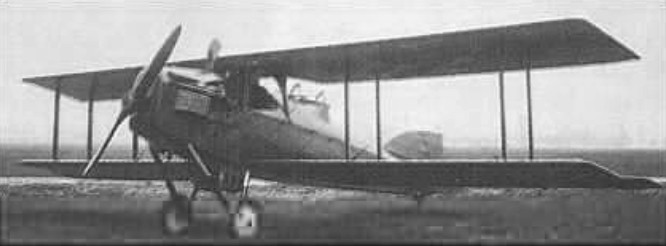
The specification called for the use of a turbo-supercharged engine, and the Potez XI, which appeared in 1922, was powered by a 370hp Lorraine-Dietrich 12D water-cooled 12-cylinder engine equipped with a Rateau turbo-supercharger. Competing with the Hanriot HD.15, the Potez XI had a fabric-covered light alloy structure and was an equi-span two-bay biplane with over-hung ailerons on the lower wing.

Armament comprised two fixed forward-firing 7.7mm machine guns and two similar weapons on a swivelling mount in the rear cockpit. The inadequacies of then-current steels to withstand prolonged operation of exhaust-driven turbo-superchargers led to cancellation of the CAP2 programme and development of the Potez XI was discontinued.

Max take-off weight: 2000 kg / 4409 lb
Empty weight: 1350 kg / 2976 lb
Wingspan: 12.70 m / 42 ft 8 in
Length: 9.08 m / 30 ft 9 in
Wing area: 46.20 sq.m / 497.29 sq ft
Max. speed: 220 km/h / 137 mph

Potez VIII

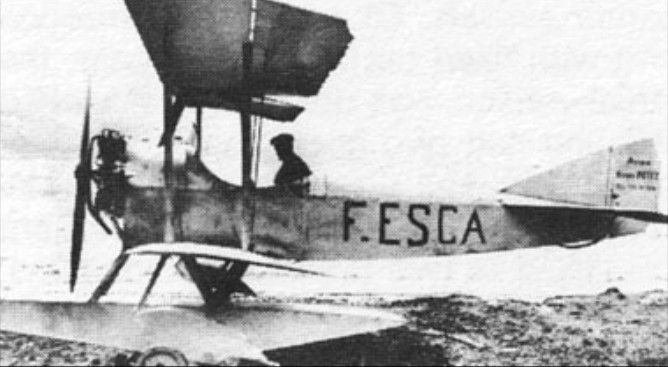
The prototype Potez VIII two-seat tourer/ elementary trainer was first flown on 9 April 1920, powered by a specially designed Potez engine, the 37kW Potez A 4. A light unequal-span biplane, the Potez VIII had four-wheel landing gear, the tailskid being used for landings only. The A 4 engine was a complete failure and plans were made to produce 100 series aircraft powered by the 52kW Anzani 6Ab radial. Versions built included the Potez VIII A of 1922 with the 60kW Anzani 6 A3 engine and two-wheel conventional landing gear; five were built, two of them later being converted to Potez VIII configuration and one as the Potez VIII H central-float seaplane, built especially for a wealthy Marseilles businessman.

Engine: 1 x Anzani 6Ab radial, 52kW
Max tak-off weight: 470 kg / 1036 lb
Loaded weight: 240 kg / 529 lb
Wingspan: 8.0 m / 26 ft 3 in
Length: 5.72 m / 19 ft 9 in
Wing area: 20.0 sq.m / 215.28 sq ft
Max. speed: 142 km/h / 88 mph
Ceiling: 4000 m / 13100 ft

Potez, Henry / Societe d’Etudes Aeronautiques

Founded in 1916 as Societe d’Etudes Aeronautiques at Aubevillers. Made series of two-seat biplanes, notably SEA 4 reconnaissance aircraft and SEA 7, the latter a “limousine” first flown December 1919. Built a two-seat tractor biplane, the Type 4C.2.

Post-war the company became known as Henry Potez and established itself as a major French aircraft manufacturer with a long series of civil and military aircraft.

Starting in 1920 and starting with a small 50 hp engine derived from the automobile, the Potez company manufactured a range of engines of various powers from 60 hp to 410 hp, including a series based on the Anzani radial engine, whose company Potez bought, based in Courbevoie.

In France, the Socialist Government of the so called Popular Front brought all the companies building military aircraft, aero engines and ar¬mament under its control in 1936. The im¬mediate result was the socialized oblivion of such established companies as Marcel Bloch, Bleriot, Nieuport, Potez, Dewoitine, Hanriot and Farman within half a dozen nationalized groups or Societies Nationales, named ac¬cording to their geographical location (Nord, Ouest, Centre, Midi and so on).

In 1937 Potez, with Liore-et-Olivier, and Romano, became part of the nationalized French aircraft industry in the SNCAN group.

At that time it was producing the 56 twin-engine light transport, the 63 fighter-bomber and the Potez-CAMS 141 four-engine reconnaissance flying-boat, together with prototypes of the 661 12-passenger four-engine monoplane and the Potez-CAMS 160 six-engine flying-boat, a scale model of the proposed Type 161 transatlantic flying-boat.
For 16 years the company was not involved in aviation, but in 1953 produced the Potez 75 single-engine twin-boom ground-attack aircraft, built by SNCAN. A contract for 500 for the French Army was awarded in 1956, but was canceled later because of military cutbacks.

Took over Air-Fouga in 1958, and continued production of that company’s Magister jet trainer. Built two prototype turboprop transports, Potez 840, flying first in 1961. Proposed versions were 841 with PT6A engines and 842 with Astazou Xs, but production did not proceed beyond six aircraft. Also built Paris III twin-jet executive aircraft developed by Morane-Saulnier. Potez was absorbed by Sud Aviation in 1967, which in turn became part of Aerospatiale in 1970.
Post, Tooma & Org PTO-4

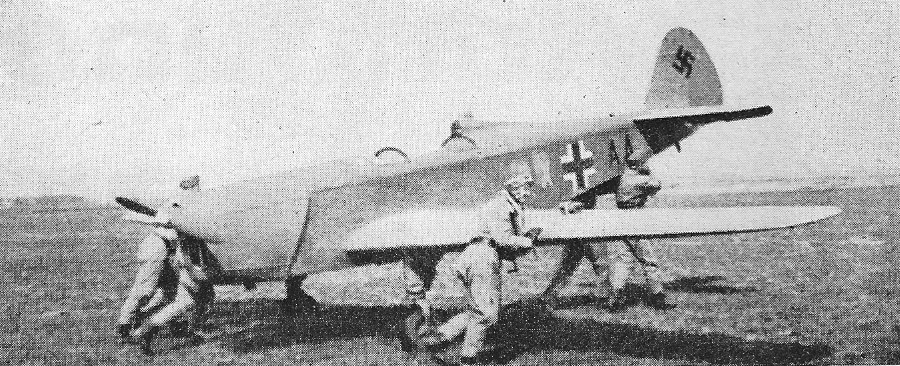
In 1938, the Estonian aviation engineers Voldemar Post, Rein Tooma and Otto Org, previously responsible for the PON-1 trainer, designed and built the PTO-4 training aircraft. It was a two-seat low-winged monoplane powered by a De Havilland Gypsy of 120 hp, with a fixed undercarriage that could be fitted with wheels or skis. The aircraft could fly at a maximum speed of 245 km per hour and had a ceiling of 5,000 meters. On 12 October 1938, the PTO-4 was taken into service of the Air Force.

The Estonian Air Force received two PTO-4s (serial numbers 161 and 162), one with an open cockpit and the other an enclosed cockpit. Six examples were in civil use, of which five were used by the Eesti Aeroklubi (EAK), a flying club controlled by the Estonian Military.

Four examples surviving from the Soviet occupation of Estonia (1940–41) were operated by the German Luftwaffe, being operated by a unit manned by Estonian volunteers (initially called Sonderstaffel Buschmann and later 1./SAGr.127) based at Reval-Ülemiste airfield. They were operated as training and liaison aircraft as well for coastal patrol over the shores of the Baltic.

Posnansky White Knight PF-1

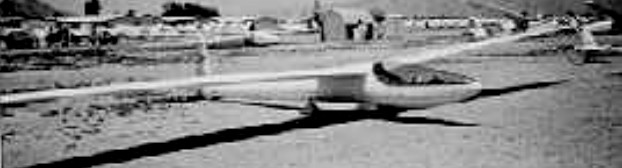
The White Knight was designed in 1963 while Posnansky was a student in Switzerland, but later has been substantially modified. It has a faired fixed landing gear and speed limiting dive brakes on both upper and lower surfaces, a center of gravity tow hook and a side-mounted control stick. The ship’s similarity in looks to the Swiss FFA Diamant is evident: it was designed during the same period when the predecessor to the Diamant was under development in Switzerland, and while that aircraft first flew with Schleicher Ka-6 wings, the White Knight used Schleicher Ka-8 wings.

Wing span: 15m / 49.2ft
Wing area: 14.21sq.m / 153sq.ft
Aspect ratio: 15.9
Empty Weight: 195kg / 431lb
Payload: 104kg / 229lb
Gross Weight: 300kg / 660lb
Wing Load:21.11kg/sq.m / 4.3lb/sq.ft
L/DMax: 34
Airfoil: NACA 64-415
Seats: 1
MinSink:0.61 m/s / 2.0 fps / 1.18 kt
No. Built: 1
Structure: glass/ foam sandwich fuselage, spruce spars, birch ply ribs, fabric cover.

Portsmouth Aerocar Major

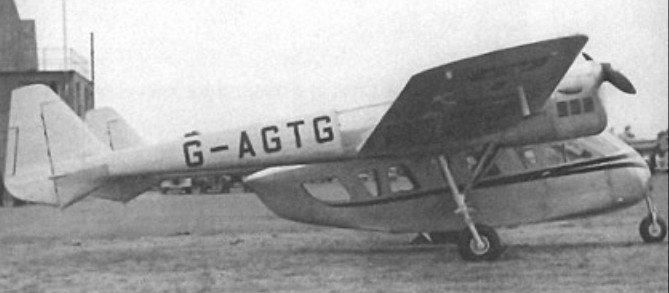
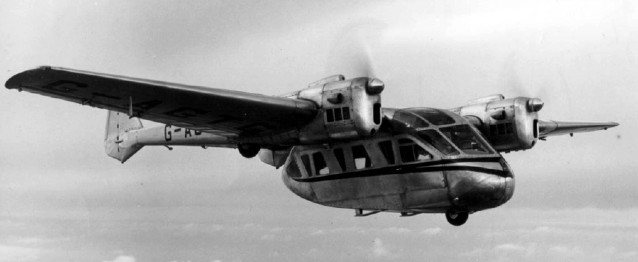
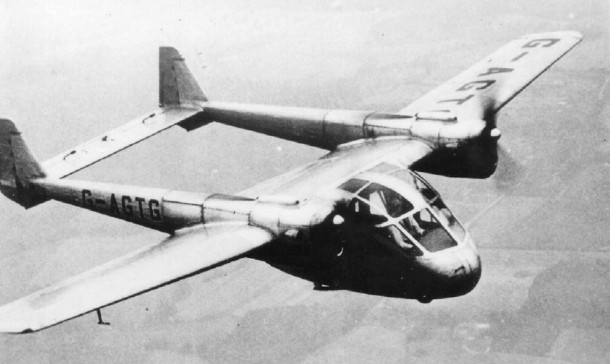
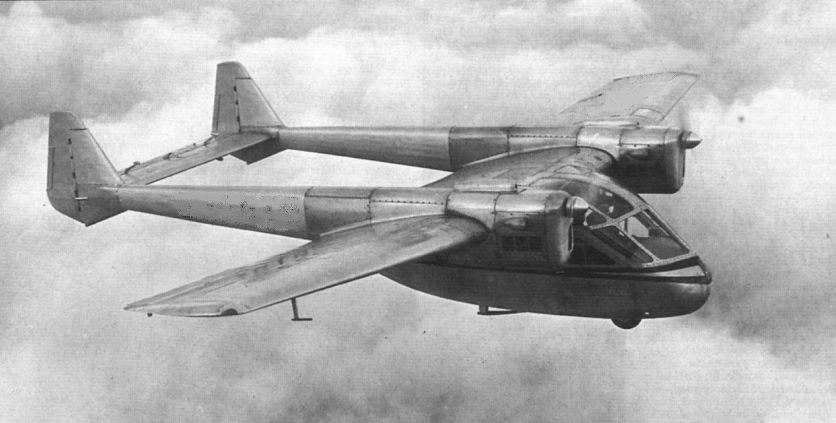
The prototype Portsmouth Aerocar Major G-AGTG was flown on June 18, 1947 when it was exhibited at the1947 SBAC Show held at Radlett, UK.

It was powered by two Blackburn Cirrus Major Series III engines of 155hp each. The retractable undrcarriage was pneumatically operated, and the manufacturer envisioned both ski and float versions as well. The pod and boom layout and its multi-role capability attracted much interest, despite the fact that the prototype was somewhat under powered or over weight. But after a promising start, financial backing for full development and production was not forthcoming, and by the latter part of 1948 the Aerocar project was abandoned following re-structuring of the Portsmouth Aviation Company. It was scrapped in 1950.

Gallery