Engines: 2 x Turbomeca Astazou XVI, 940 shp
Seats: 16/20
Wing loading: 47 lb/sq.ft
Pwr loading: 6.7 lb/hp
Max TO wt: 12,500 lb
Empty wt: 8450 lb
Equipped useful load: 3750 lb
Payload max fuel: 678 lb
Range max fuel/ 75% cruise: 1067 nm/4.3 hr
Range max fuel / 55% cruise: 1459 nm/ 7 hr
Service ceiling: 25,000 ft
75% cruise: 245 kt
55% cruise: 210 kt
Vmc: 90 kt
Stall: 77-91 kt
1.3 Vso: 100 kt
ROC: 2600 fpm
SE ROC: 700 fpm @ 99 kt
SE ceiling: 16,000 ft
Cabin press: 6.5 psi
Fuel cap: 3072 lb
Aircraft
Riley Rocket
Jack Riley kept semi retiring between his aviation ventures, wanting to have only a small business, but was soon back in full force with the Riley Rocket. The Cessna 310 was fitted with under wing exhaust along with airfoil nacelles to house the 290¬hp Lycoming engines. Three blade props (among the first on light twins) were used, and extra fuel tanks extended the range. A one piece windshield and extended cabin area were also part of the conversion.
Riley Twin Navion
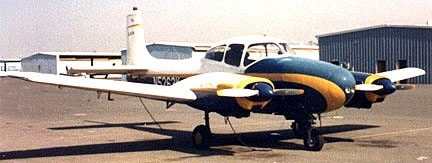
A 1953 Riley project was to convert the Navion to a twin. The Twin Navions started with two 140 hp engines and graduated to 150s and finally to 170s. He built 15 of the airplanes at his Fort Lauderdale, Florida facility, and 85 others for a total of 100 were built in Greenville, Texas, by Temco (later the “T” in LTV). Temco production of Riley Twin Navions was under a contract with Jack Riley, who handled sales, engineering, and tooling.
Planes were produced by both Riley and Temco on a production line basis in 1953-54, where the first 20 had 140hp Lycoming O-290-D2As, later 150hp 0-320s in larger cowlings as standard for all Twin Navions up to the introduction of the D-16A (or Riley 55).
In December 1953, Temco acquired the Riley Twin Navion program
Riley / Advanced Aircraft Corp
Based at Fort Lauderdale, Texas, company specialized in conversions of existing types to improve performance. In 1953 converted Ryan Navion to twin-engine configuration as the Twin Navion with Lycoming engines, and by 1961 was producing a conversion of the Cessna 310 known as the Riley 65 Rocket. Later aircraft which received Riley conversions included the D.H. Dove and Heron, the Cessna 340 and 414, and, in 1975, the Handley Page-built Jetstream. Became Riley Turbo Sales Corporation, and Riley Turbostream Corporation in 1970 and Riley Aircraft Corporation 1979. Purchase by Advanced Aircraft Corporation in 1983. Advanced Aircraft Corp in Orlando, Florida, was formed in July 1983 and took over the facilities of Riley. Subsequently, Riley International Corporation formed to continue Riley conversions.
Rikugun Ki-93
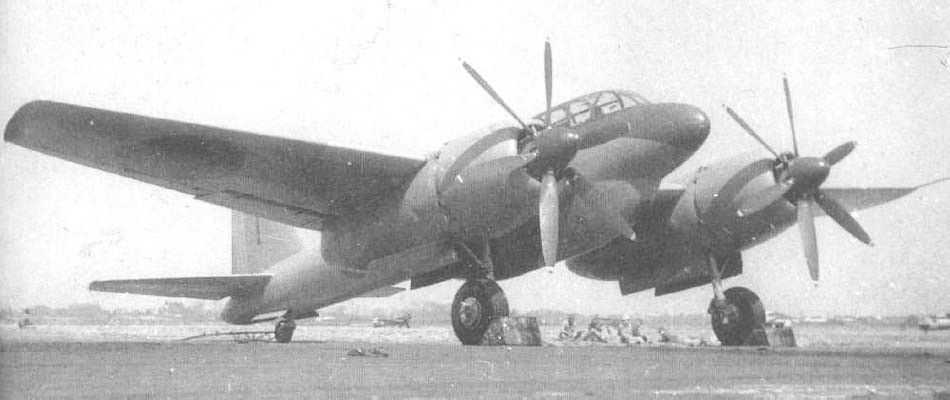
In the summer of 1941, by order of Koku Hombu at the Rikugun Kokugijutsu Kenkyujo Army Aviation Research Institute, research began on the creation of a heavy twin-engine fighter. A team of specialists from several Japanese aircraft manufacturing companies was created at the institute. It was initially assumed that the new aircraft would be a single-seat long-range escort fighter. However, in July 1942, the design team was disbanded, and the engineers from its various companies were recalled to solve more urgent tasks.
It was decided to retask the machine as a heavy multi-purpose attack fighter designed for operations at low and medium altitudes and at the same time capable of hitting heavily armored ground and surface targets. To speed up work, several engineers from the 1st Army Aviation Arsenal located in Tachikawa were sent to the institute. Based on new tasks, it was decided to equip the aircraft with a cannon, large for aviation, 57-mm Ho-402 caliber, specially developed for this aircraft by Nippon Special Steel Dr. Masaya Kawamura.
The development of a new automatic gun, which received the designation No-402, went in parallel with the Ki-93 project. At the same time, Nippon Special Steel worked closely with Rikugun. The entire project of the attack aircraft was built around this gun, and the gun was created for the aircraft project. The No-402 cannon was located in a ventral gondola.
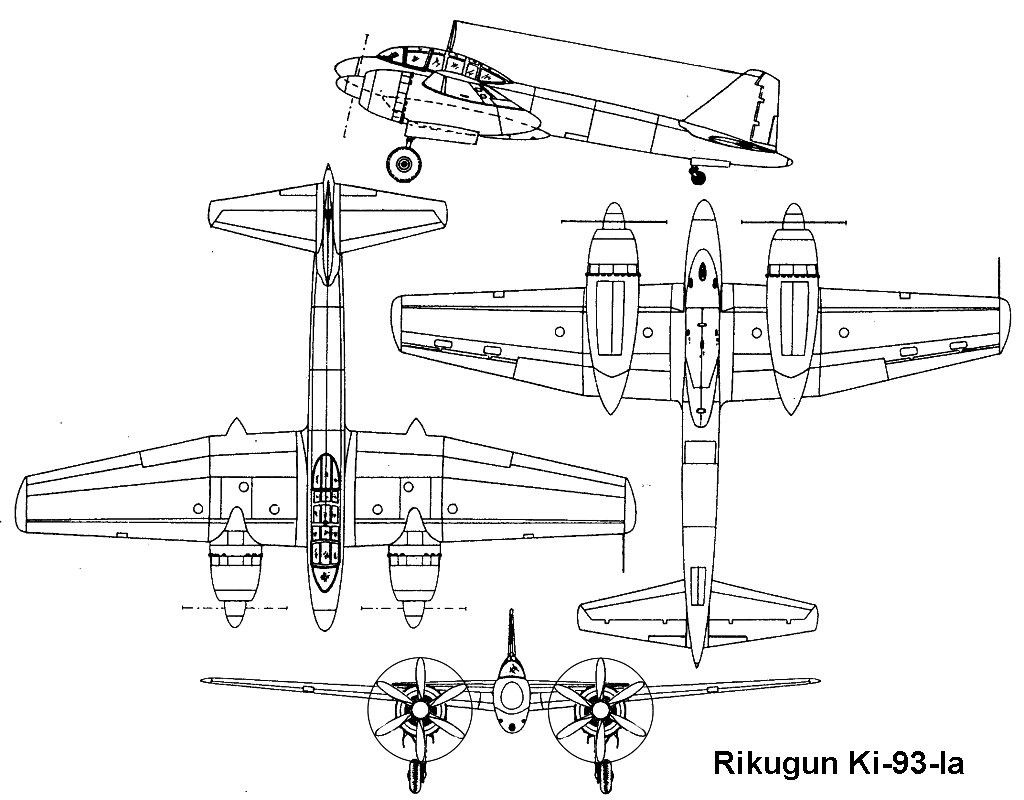
The Ki-93 was a low-winged monoplane of all metal construction, with the crew of two sitting in tandem under a canopy at the front of the fuselage, and a ventral gondola slung under the fuselage to accommodate large cannons. The wing was of laminar flow section.
On February 22, 1943, the new aircraft project was approved by Koku Hombu and received the designation Ki-93.
By the time the Ki-93 had already begun to take shape, the military situation in Japan was already very difficult. Japan suffered from the almost daily B-29 raids, and the US invasion of Japan loomed ever more clearly on the horizon. It was urgently necessary to seek means of fighting both the almost invulnerable B-29s and the anticipated Allied invasion fleet. As a result, the Ki-93 could become one and the other. When Rikugun Kokugijutsu Kenkyujo set about shaping the final look for the future Ki-93, the idea came up that the aircraft being designed could solve both anti-bombing and anti-ship missions equally well. In both cases, the aircraft had to be well protected in order to keep inevitable damage from both defensive fire of bomber machine guns and anti-aircraft artillery of ships. Therefore, it was supposed to build two versions of the Ki-93 in parallel. First, the Ki-93-I Co. is a heavy interceptor fighter. The second Ki-93-I Otsu is an anti-ship attack aircraft. Initially, it was planned to install Mitsubishi Ha-211 engines on the aircraft, but subsequently both models were equipped with two 18-cylinder air-cooled Mitsubishi Ha-214 engines, each of which developed 2,400 horsepower, for the most efficient removal of tremendous moment from engines equipped with six-bladed propellers 3.8 m in diameter
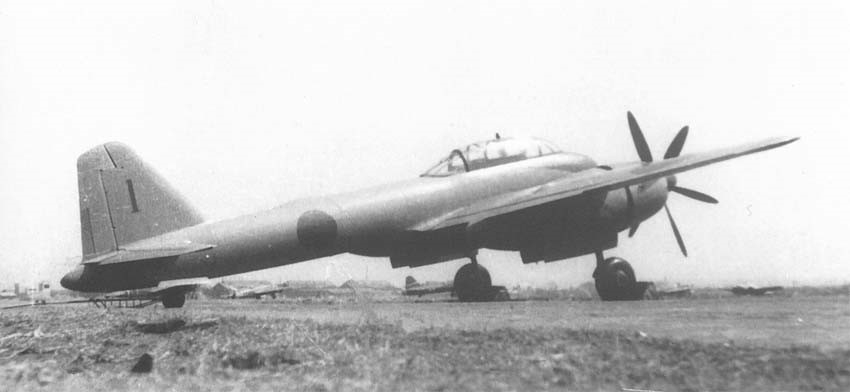
To ensure maximum survivability, the pilot was protected by five 12 mm armor plates. Two armor plates protected the cockpit in front, two on the sides and one on the back. Glazing of the cockpit was made of 70 mm bulletproof glass. The rear gunner was also protected by 12 mm of armor from the tail side of the aircraft. In addition, the fuselage fuel tanks were designed, had automatic fire extinguishing means, and were also protected by 8 mm armor. Each engine also had local armor protection. Defensive armament consisted of one 12.7-mm machine gun Ho-103, located in the rear of the cabin under the movable section of the flashlight. The difference in the two versions of the Ki-93 was the type of gun mounted in the lower gondola.
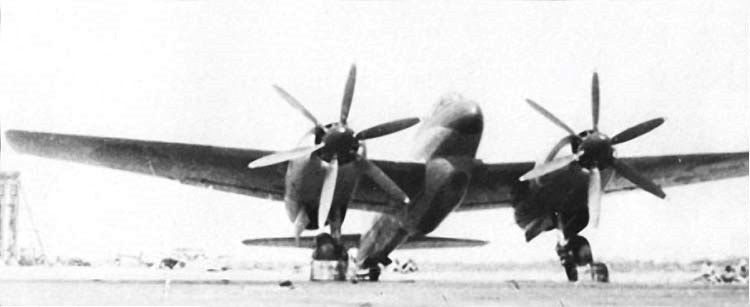
The Ki-93-I Co. was equipped with a 57-mm Ho-402 cannon with 30 rounds, reinforced with two 20-mm No-5 guns. It was expected that the 57-mm gun No-402 is capable of inflicting enough damage in one shot, guaranteed to destroy the B-29. But-402 had a rate of 80 rounds per minute, firing 2.7-kg shells with an initial speed of 700 m / s. For Ki-93-I Otsu, they provided weapons from the latest automatic 75-mm gun No-501, the total mass of which was 450 kg, the rate of fire reached 80 rounds / min, the initial projectile speed 500-550 m/s.
In addition to the Ki-93-I gun, the Otsu had to carry two 250 kg bombs. In the manufacture of prototypes, it turned out that it was not possible. This was due to a greater than expected weight of equipment. In order to somehow rectify the situation, the ammunition load of the No-402 gun had to be reduced from 30 to 20 rounds. Additional difficulties were brought by the undeveloped Na-214 engines, which lacked the declared power. As a result, the first prototype in the Ki-93-I Co. configuration was completed only in March 1945. On 8 April 1945 pilot Lt. Moriya of the Koku Shinsa-bu (Air Examination Department) with 2nd Lt. Ikebayashi in the second seat, first flew, from Tachikawa airport. During the tests, the armament was absent.
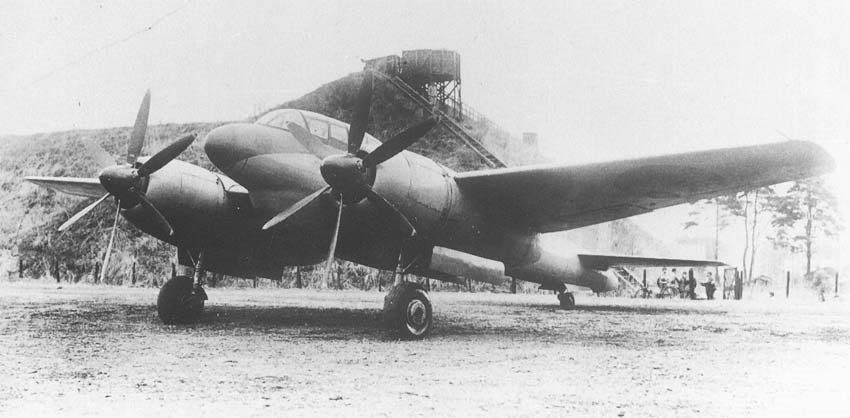
The first 20-minute flight turned out to be the last. When landing with too high landing speed, undershot the runway,and the left landing gear broke, resulting in severe damage to the left wing, prop, engine and landing gear. The only flight noted good controllability, good flight characteristics, and all on-board equipment worked flawlessly.
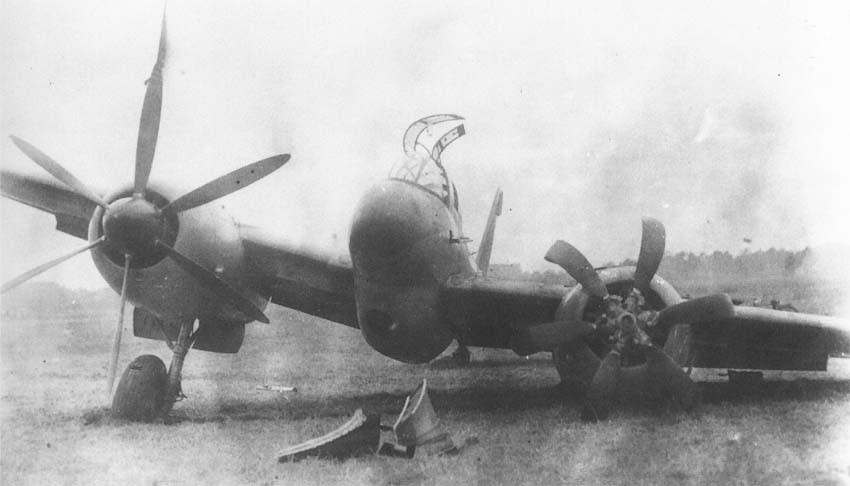
The prototype was returned to the factory for repair, which took four weeks. When the aircraft was ready for re-testing, an American bombing raid on the city of Tachikawa, completely destroyed the aircraft.
The second prototype Ki-93-I Otsu on the eve of the surrender of Japan was in the final stages of assembly.
After the raid on Tachikawa, it was evacuated to the Takahagi airfield in Saitama Prefecture, complete the assembly and make a test flight. Here, the incomplete prototype was captured by the Americans. After the war, he was taken to the United States as FE-152 at Middleton Air Material, where it was studied in September 1946. On 18 September 1946 was it was transported to Park Ridge, where all trace was lost after 1949.
Ki-93-Ia
Engines: 2 × Mitsubishi Ha-214 1, 1,470 kW (1,970 hp)
Propellers: 6-bladed VDM, 3.80 m (12 ft 6 in) diameter
Wingspan: 19.00 m (62 ft 4 in)
Wing area: 54.75 m2 (589.3 sq ft)
Length: 14.215 m (46 ft 8 in)
Height: 4.85 m (15 ft 11 in)
Empty weight: 7,686 kg (16,945 lb)
Gross weight: 11,440 kg (25,221 lb)
Crew: 2
Guns:
1× 57 mm Ho-401 cannon in ventral gondola
2× 20 mm Ho-5 cannon in wing roots
1× 12.7 mm Ho-103 machine gun on flexible mounting in rear cockpit
Estimated performance
Maximum speed: 624 km/h (388 mph, 337 kn) at 8,300 m (27,200 ft)
Cruise speed: 350 km/h (220 mph, 190 kn) at sea level
Range: 3,000 km (1,900 mi, 1,600 nmi)
Service ceiling: 12,050 m (39,530 ft)
Time to altitude: 9 min 3 sec to 6,000 m (19,700 ft)
Rihn DR-109
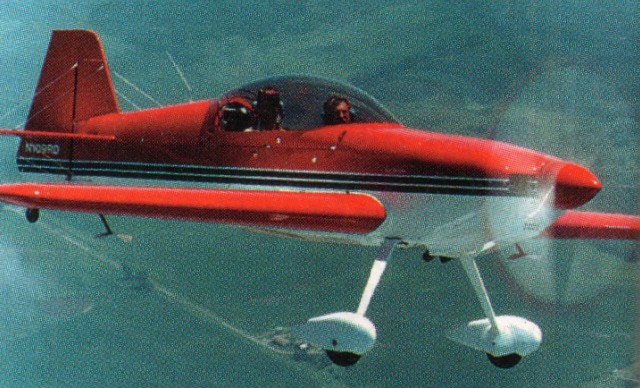
Dan Rihn’s Rihn 109 is a two-place tandem designed for aerobatic training, unlimited competition and airshow performances. Capable of handling Lycoming engines from 200 to 300 hp, the new design is said to feature excellent visibility, featherweight controls, a roll rate in excess of 360 degrees/second, and a load limit of +/- l0 G.
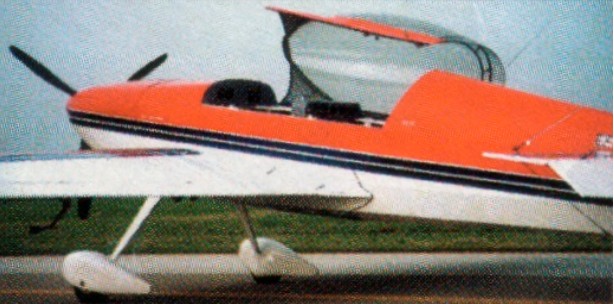
Construction of the DR-109 is a welded steel tube fuselage and tail group with fabric covering, fibreglass cowl, plywood covered wings, and a one piece spring steel gear. The wings feature Douglas Fir box spars and plywood ribs. The seats are adjustable in both the forward and rearward positions.
The Rihn 109 is designed with gyroscopic manoeuvres in mind.
Aircraft Spruce was selling the 109 in seven subkits. In 1996 the cost for the complete kit was US$50,000.
Engine: Lycoming, 200 hp
HP range: 200-300
Height: 5.5 ft
Length: 22 ft
Wing span: 24 ft
Wing area: 114 sq.ft
Fuel capacity: 30 USG
Empty weight: 1260 lb
Gross weight: 1950 lb
Top speed: 205 mph
Stall: 59 mph
Cruise: 168 mph
Range: 500 sm
Takeoff dist: 600 ft
Landing dist: 1500 ft
Seats: 2
Landing gear: tailwheel
Rihn One Design 107
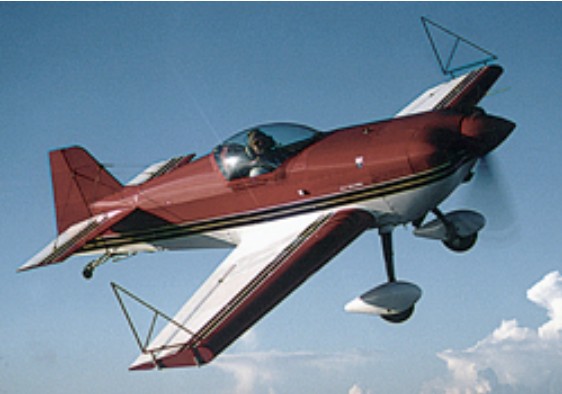
Designed by Dan Rihn as a plans built aircraft for single class competition aerobatics.
Created by Dan Rihn as an economical answer for pilots wishing to fly Basic through Advanced aerobatics, the One Design features quick, easy construction and excellent performance. Wings for the One Design are all wood, the fuselage is steel truss, covered with aluminum sheet from the firewall to the rear of the cockpit. The turtle deck is also aluminum and the lower half of the aft fuselage is fabric covered. The tail is fabric covered. A one piece aluminum spring gear is used for the main wheels and a steerable tailwheel is used.
Power for the One Design is obtained from a 0-360 and modified with an inverted oil system, high compression cylinders and fuel injection. Stressed for +/- 10 Gs, the One Design has a max. level speed of 184 mph, and cruises with a 75% power setting at 160 mph.
Aircraft Spruce & Specialty Company offers a complete set of plans for the single seat aerobatic aircraft.
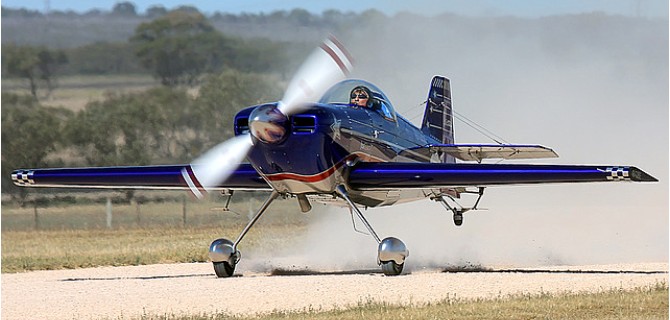
Engine: Lycoming AEIO-360, 180 hp
HP range: 150-200
Height: 5 ft
Length: 17 ft
Wing span: 19.3 ft
Fuel cap: 20 USG
Empty wt: 740 lb
MTOW: 1140 lb
Top speed: 195 mph
Cruise: 160 mph
Stall: 63 mph
Range: 350 sm
ROC: 2000 fpm
Seats: 1
Undercarriage: tailwheel
Engine: Lycoming AEIO-320
Wing span: 5.88 m
Wing area: 6.9 sq.m
MAUW: 517 kg
Empty weight: 336 kg
Fuel capacity: 76 lt
Max speed: 314 kph
Cruise speed: 257 kph
Minimum speed: 101 kph
Climb rate: 10 m/s
Seats: 1
Fuel consumption: 35 lt/hr
Plan price (1998): $300
Kit price (1998): $50,000
Rieseler R.IV/23
AC-pi
Sportflugzeugbau Rieseler built a single-engine single-seat light sporting parasol monoplane with a two cylinder Haacke engine which was put into production by Stahlwerk Mark at Breslau. A two-seat version, the R.IV/23, was subsequently developed.
Rieseler, Sportflugzeugbau
Germany
Established at Berlin/Johannisthal Aerodrome after First World War, Sportflugzeugbau Rieseler built a single-engine single-seat light sporting parasol monoplane with a two cylinder Haacke engine which was put into production by Stahlwerk Mark at Breslau. A two-seat version, the R.IV/23, was subsequently developed.
Rieflin Headless Aeroplane Co Hydro-aeroplane 1912
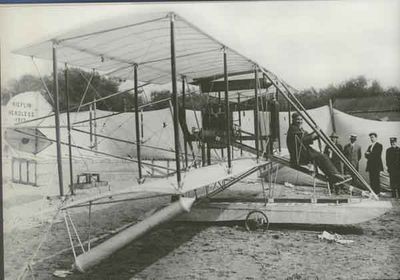
The Rieflin Headless Aeroplane Co Hydro-aeroplane of 1912 set a world’s record for sustained hydro-aeroplane flight over water when piloted by Fred C. Eels on June 25, 1912 over Irondequoit Bay, New York, seventy-three miles in 1:21:00, at an average speed of fifty-four miles per hour. Eells’ flight was cut short when his supply of gasoline gave out and he dropped his machine to the bay. The best previous record for sustained flight was forty-six miles.