Ruschmeyer

Ruschmeyer Aircraft Production Kg

Germany
Established 1987, developed the R90 four-seat touring and IFR training monoplane of composites construction, first flown in 1991 and certificated 1992. Original R90- 230 RG version with 230 hp engine and retractable undercarriage is to be joined by the R90-180 RG with a 180 hp engine and retractable undercarriage, the R90-230 FG with 230 hp engine and fixed undercarriage, and R90- 300 T-RG with a supercharged 300 hp engine and retractable undercarriage. The R90-420 AT is a turboprop proof-of-concept model, first flown 1993 and used at present only as a factory aircraft.

Rusavia Polikarpov U-2

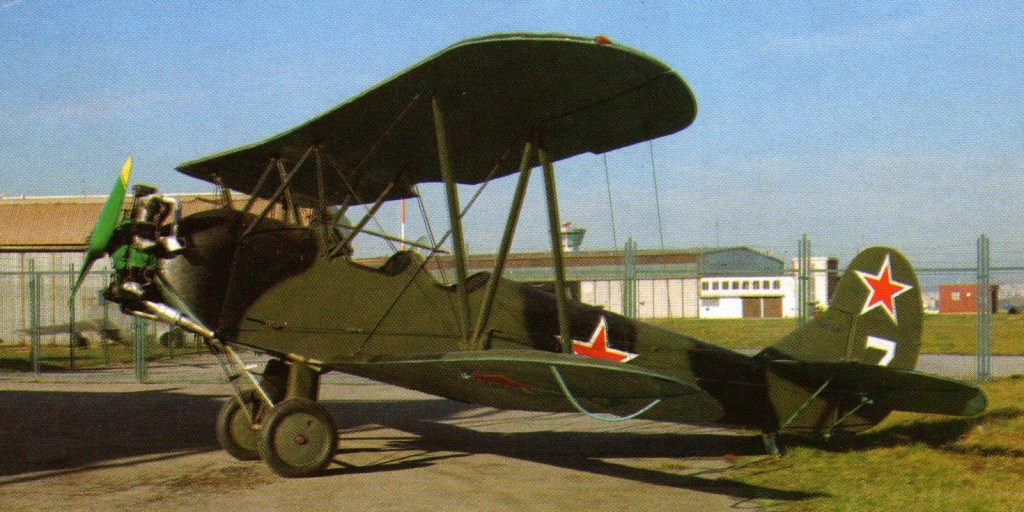
During the first flights in 2004, the Shvetsov M-11FR radial was damaged and needed to be overhauled. Albatros Aviation Services carried out the recent engine rebuild, using many hard-to-find original parts.

Slovak Republic-based Polikarpov U-2 replica ‘White 7’ (OM-LML) took to the air again after the engine overhaul on October 11, 2007. This machine was built by Rusavia in Moscow and was gifted to the Museum of Aviation collection at Kosice by Russia in August 2004.

Ruppert Composite Archaeopteryx

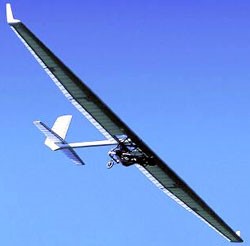
Designed by Roger Ruppert, the 1998 Archaeopteryx was conceived as a conventional glider configuration for foot launch. Primary targets were set to minimize the mass, allowing slowest possible flight speeds and providing good manoeuvrability based on a friendly stall behaviour as well as outstanding high-speed flight performances with full fairing on the cockpit. The concept permits a safe foot launch also in nil wind conditions. Excellent climb rates and an efficient riding out of extremely weak and slim thermals (microlift) are possible.
No. Built: 1

Wing span: 13.6 m / 44.6 ft
Wing area: 12.8 sq.m / 138 sq.ft
Gross Weight: 160 kg / 353 lb
Aspect ratio: 12.07
L/D Max: 24
MinSink: 0.44 m/s | 87 fpm
Hang glider weight: 40 kg
Minimum pilot weight: 70 kg
Maximum pilot weight: 110 kg
Minimum speed: 29 km/h
Maximum speed: 140 km/h
Packed length: 6 m
Seats: 1

Rupel Flying Machine

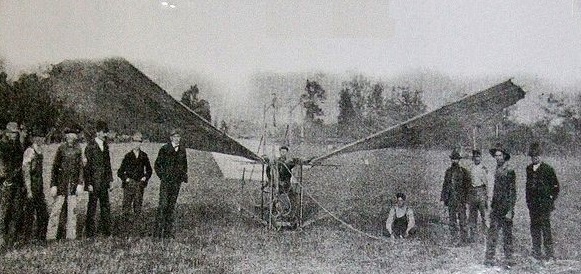
Albert Rupel in his Flying Machine

This machine was tested in October 1904, pulled by an automobile, but when the car reached a moderate speed the plane lifted, but a gust of wind tipped a wing so that the wheels on the opposite side were crushed. As a substitute, ordinary boards like skis were used, but then the car stalled without getting the plane off the ground, so horses had to be used. A team of draft horses pulled the rope and caused the plane to soar as high as the tree tops. Its builder Albert Rupel of Indianapolis, Indiana died of lockjaw less than a year later after stepping on a nail, before he could test it with a proper engine.

Rumpler C.IV / 6B 2 / Pfalz C.I

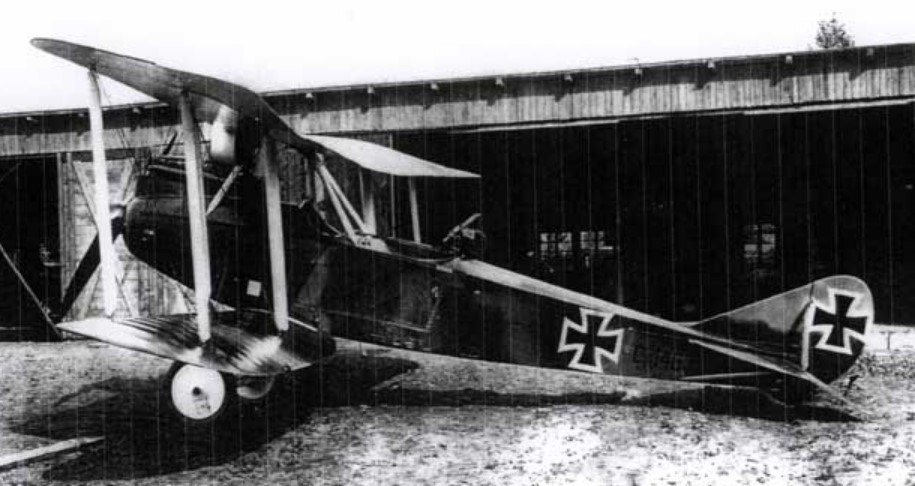
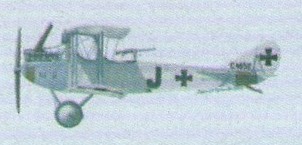
The Rumpler C.IV was a German single-engine, two-seat reconnaissance biplane. It was a development of C.III with different tail surfaces and using a Mercedes D.IVa engine in place of the C.III’s Benz Bz.IV. The Rumpler 6B 2 was a single-seat floatplane fighter variant with a 120 kW (160 hp) Mercedes D.III engine built for the Kaiserliche Marine (Imperial Navy).

For a two-seater reconnaissance aircraft, Rumpler C.IV had an excellent performance, which enabled it to remain in front-line service until the end of World War I on the Western Front, as well as in Italy and Palestine. Its exceptional ceiling allowed pilots to undertake reconnaissance secure in the knowledge that few allied aircraft could reach it.

300 aircraft were licence-built by Pfalz Flugzeugwerke as the Pfalz C.I, differing in ailerons on all four wings. From February 1917 they were renamed Rumpler C.IV (Pfal).

Replica
Slingsby T.58 Rumpler C.IV

Rumpler C.IV
Powerplant: 1 × Mercedes D.IVa, 190 kW (260 hp)
Propeller: 2-bladed fixed-pitch
Wingspan: 12.66 m (41 ft 6 in)
Wing area: 33.5 m2 (361 sq ft)
Length: 8.41 m (27 ft 7 in)
Height: 3.25 m (10 ft 8 in)
Empty weight: 1,080 kg (2,381 lb)
Gross weight: 1,530 kg (3,373 lb)
Maximum speed: 171 km/h (106 mph, 92 kn) at 500 m (1,640 ft)
Endurance: 3½-4 hr
Service ceiling: 6,400 m (21,000 ft)
Crew: 2 (pilot and observer)
Guns: 1 × fixed, 7.92 mm (.312 in) LMG 08/15 and 1 × 7.92 mm (.312 in) Parabellum MG14 machine gun
Bombs: 100 kg (220 lb)
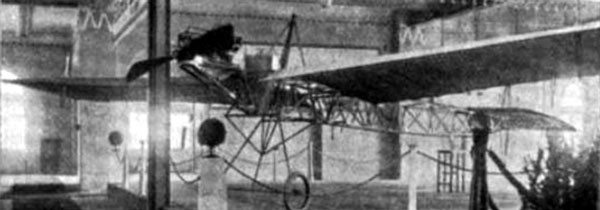
Rumpler Wassertaube

Sea based training aircraft, Germany, 1911

Length : 32.808 ft / 10.0 m
Wingspan : 49.213 ft / 15.0 m
Wing area : 387.504 sq.ft / 36.0 sq.m
Max take off weight : 1808.1 lb / 820.0 kg
Weight empty : 1323.0 lb / 600.0 kg
Max. weight carried : 485.1 lb / 220.0 kg
Max. speed : 49 kts / 90 km/h
Cruising speed : 43 kts / 80 km/h
Wing load : 4.72 lb/sq.ft / 23.0 kg/sq.m
Range : 92 nm / 170 km
Engine : Argus 100 PS, 99 hp
Crew : 2

Rumpler GmbH

E. Rumpler Luftfahrzeugbau

Germany
Founded before First World War as E. Rumpler Luftfahrzeugbau, with the company’s works and flying school based at Berlin/Johannisthal airfield, and with a military flying school at Monchelberg. Began production with license construction of Etrich Taube monoplane, but subsequently became famous for a series of armed biplane reconnaissance aircraft in First World War, including the C.I, CIV and C.VII. Went into liquidation about 1919 owing to lack of work.

Ruixiang / Liaoning Ruixiang RX1E

RX1E

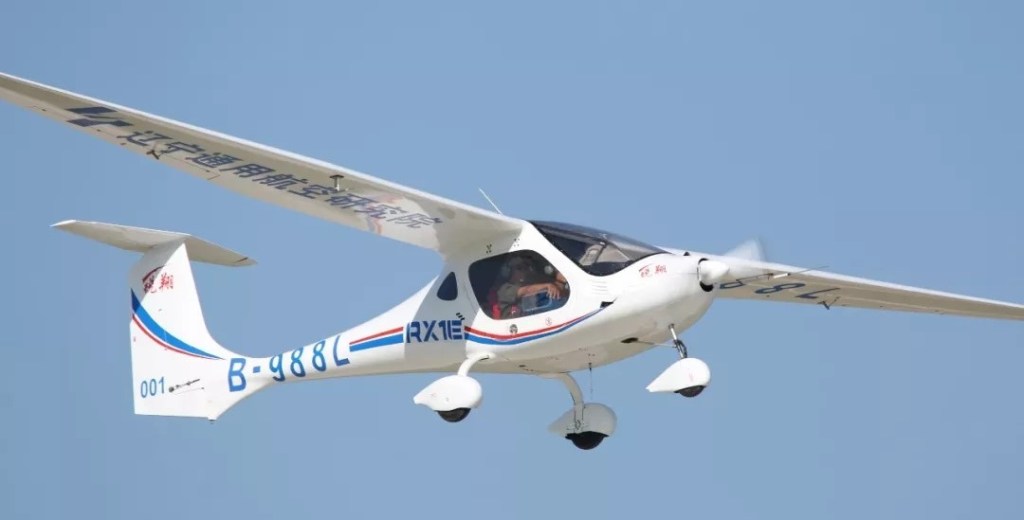
The RX1E aircraft is China’s first two-seater general aircraft developed by Liaoning Ruixiang General Aircraft Manufacture Co. Ltc. The aircraft used pure lithium batteries and permanent magnet motor to drive the propeller.

The whole machine structure made of composite material. The side-by-side two-seater aircraft belonged to the category of light sport aircraft, and debuted at the 2012 Zhuhai airshow. The cabin opens on both sides to facilitate boarding passengers.

The RX1E aircraft is equipped with mechanical flight instruments and electronic digital display power meters.

On November 1, 2017, at Fakucaihu Airport in Shenyang, the first flight of the Ruixiang Extended Range Electric Aircraft (RX1E-A) was successful. On October 19, 2018, RX1E-A aircraft has obtained the Model Design Certificate (TC) issued by China Civil Aviation Administration.

RX1E-A

RX1E
Engine: A37K154, 30KW
Propeller: LGAA
Wingspan: 14.5m
Wing area: 12 sq.m
Length: 6.61 m
Maximum take-off weight: 500 kg
Maximum load: 162 kg
Maximum speed: 150 kph
Cruising speed: 120 kph
Ceiling: 3000 m
Endurance: 1 hr
Load factor: +4g/-2g
Seats: 2

RX1E-A
MTOW: 600 m
Maximum Landing Weight: 600 kg
Payload: 160 kg
Max Level Speed: 160km/h
Stall Speed: 82km/h
Cruising Speed: 110km/h
Load factor: +4g/-2g
Service Ceiling: 3000 m
Endurance: 90 min
Range: 180 km
Takeoff run: 330 m
Landing Run: 380 m