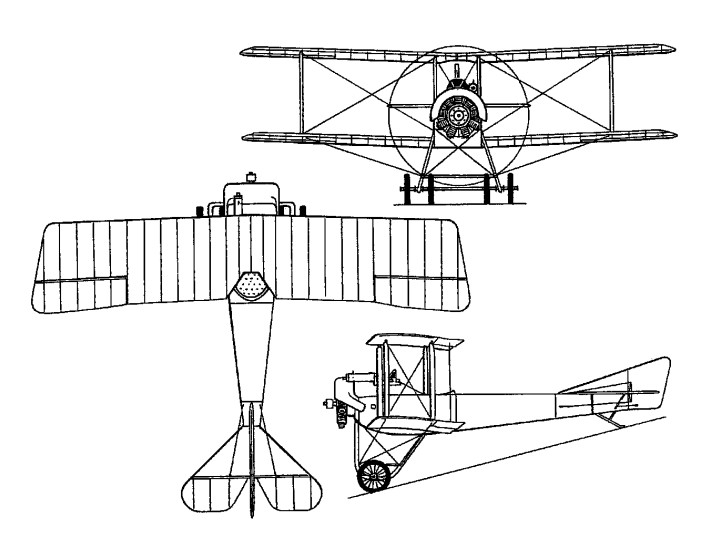
During the First World War most Russian squadrons flew French-designed aircraft, many of them built under licence. Sikorsky’s single-seat S-13 and S-14 biplanes were probably not completed. Three two-seat S-16s were built as trainers for bomber crews of the Squadron of Flying Ships in 1915, followed by about twenty-four more as two-seat S-16-2 and single-seat S-16-3 bomber escort and reconnaissance scouts with 80hp Gnome engines in 1916-17. A machine-gun was mounted under the top wing, firing clear of the propeller, until Engineer Lavrov invented an interrupter gear for a fuselage-mounted gun.
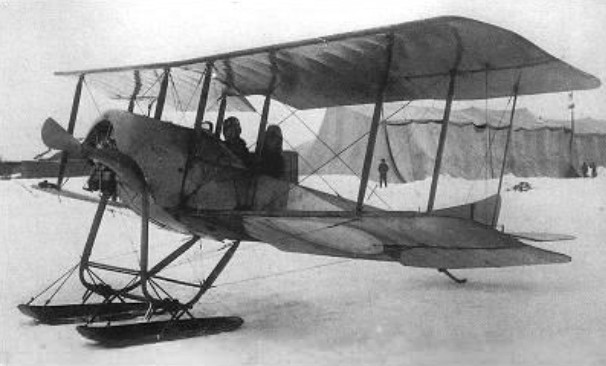
For winter operation, a number of S-16s were flown on skis in place of the standard four-wheel landing gear; at least one was fitted with twin floats in 1916. Contemporary accounts show that pilots enjoyed the stability, manoeuvrability and delicate controls of the S-16s, but they were outclassed by German fighters of the time.
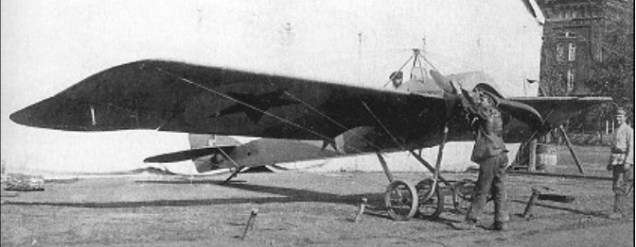
The S-12 was built at the suggestion of George Yankovsky as a lighter, single-seat version of the S-11 with an 80hp Gnome. He looped it in September 1913, the first time a Russian aircraft had performed this manoeuvre, and set a Russian height record of 3680m shortly afterwards. Most of the dozen or so S-11s that were built survived the war, and served in the earliest Soviet Air Force units during the Revolution. Several were still operational in 1922, mostly with an 80hp Le Rhone engine.
Developed from the larger and heavier S-9, the 1913 S-11 Polukroogly (half-round) had a conventional wooden fuselage and 100hp Gnome Monosoupape engine. It was initially equipped with ailerons that were operated by steel tubes inside the wing. Trials revealed that they were not efficient, so they were replaced by wing warping. The pilot and observer sat side-by-side, with controls only for the left seat. A top speed of 100km/h, stalling speed of 70km/h and take-off run of 75m were good enough to gain the S-11 second place in the 1913 military competition for a reconnaissance aircraft; but it was not ordered into production.
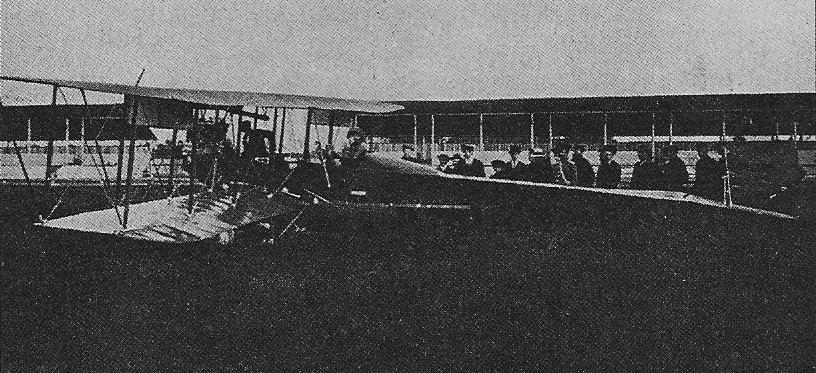
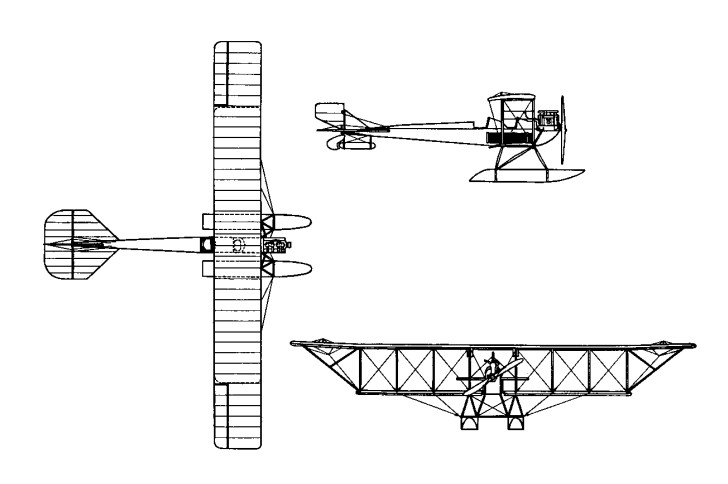
Constructed in Kiev, this 100 hp Argus-powered biplane was used by Igor Sikorsky to set new Russian flight records in November 1911, even setting a world-record with his design – a distance record with two passengers.
S-6A
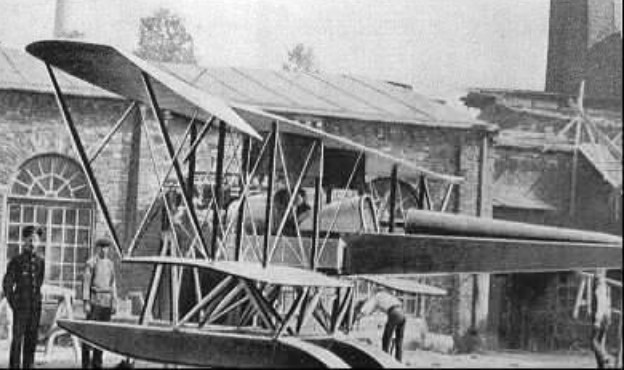
S-10
Under the designation S-10, about sixteen production versions of the S-6B were built by the RBVZ. The majority were delivered as twin-float seaplanes for service with the Baltic Fleet, from the summer of 1913 to 1915, with 100hp Argus or Gnome Monosoupape engines. Some were deployed on the world’s first operational seaplane carriers.
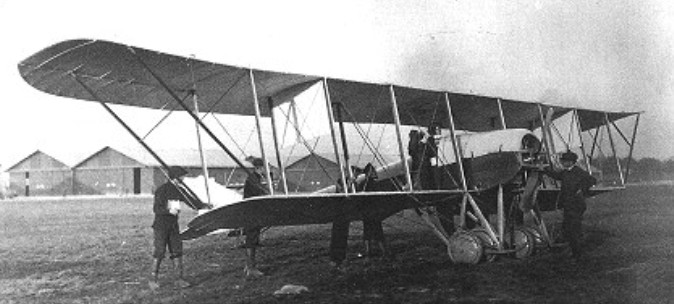
S-10
A special Competition S-10 landplane, with 80hp Gnome engine, was built for the 1913 military aircraft competition. The wing span was increased to 16.75m, with outer panels that could be folded for storage. The two seats were placed side-by-side, and the control wheel could be swung from pilot to co-pilot during flight. Production test pilot Alechnovich set a Russian record by flying it 500km in 4 hours 56 minutes, and it took first prize in the 1913 competition although it lacked the speed and manoeuvrability of the S-6B. After its span had been reduced to 13.70m and a 100hp Monosoupape installed, it served as a trainer with the Baltic Fleet.
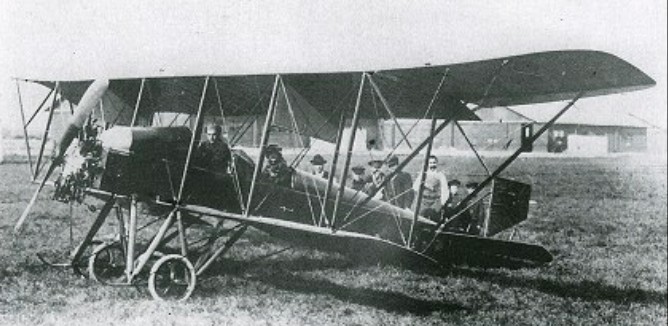
S-10
The S-10A’s span of 13.7m and two seats in tandem set the standard for all S-10 seaplanes, and its 125hp (de-rated to l00hp) Anzani engine gave it better speed and rate of climb than the Competition S-10. Its flying characteristics were less good, preventing it from gaining first prize, but it set a new Russian height record of 3420m, piloted by Gleb Alechnovich. Modified to have a 100hp Monosoupape and floats, it was assigned to the Baltic Fleet.
Engine: 1 x 100hp Argus Wingspan: 16.9 m / 55 ft 5 in Length: 8.0 m / 26 ft 3 in Height: 4.1 m / 13 ft 5 in Wing area: 45.0 sq.m / 484.38 sq ft Max. speed: 90 km/h / 56 mph
Russia The large Russian engineering company, Russo-Baltic Waggon Works, based at St Petersburg, was only partly concerned with aircraft production. It was responsible for the construction of the ll’ya Muromets series of four-engined bombers, designed by Igor Sikorsky, which equipped Russia’s Eskadra Vozdushnykh Korablei (Squadron of Flying Ships) in First World War. Largest of the series was the Type IMYe2, with a wingspan of 34.50m and a gross weight of 7,000kg. The Sikorsky S-16 reconnaissance biplane was also built.
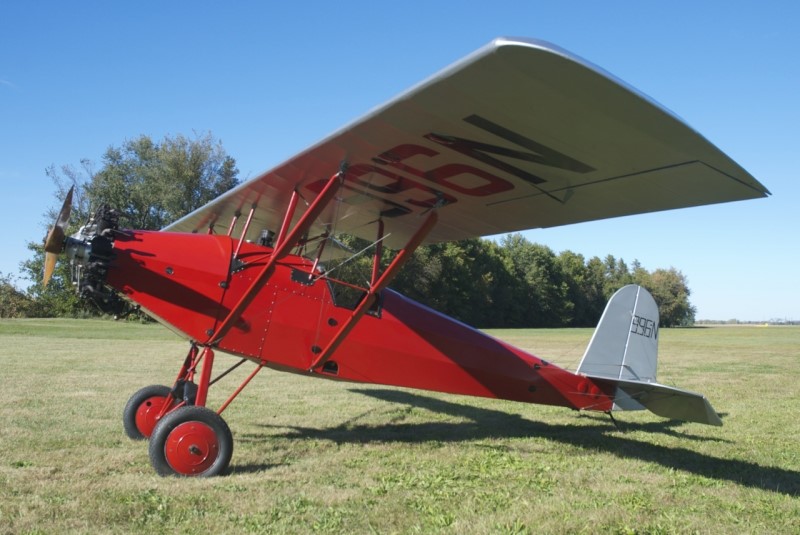
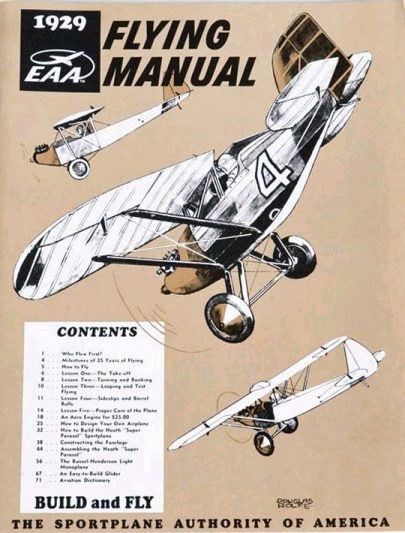
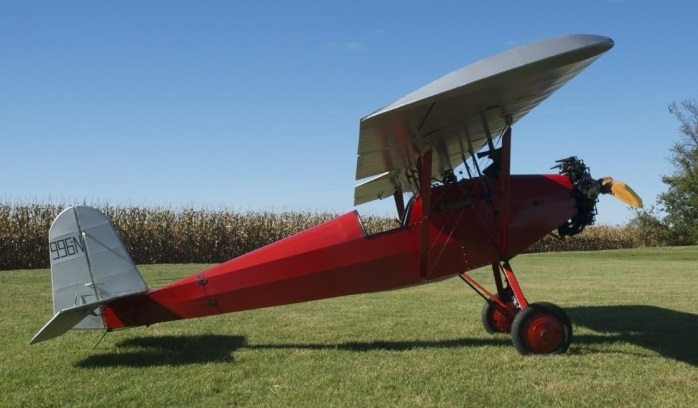
The Russell Light Monoplane is a plans-built design dating to 1929, when the plans could be obtained through Flying & Glider Manual, The Sportplane Authority of America and other publications.
Salmson powered Russell
It was intended to use a converted 4-cylinder Henderson motorcycle engine for power and built of wood with wire bracing. Covered with fabric, the Russell was relatively easy and inexpensive to build though it was never intended for tall people to fly it as it is really small.
1929 Flying & Glider Manual. The Russell-Henderson Light Monoplane is shown lower right on the cover.
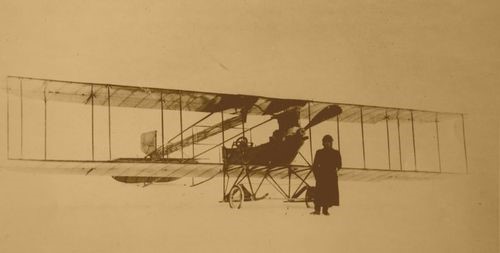
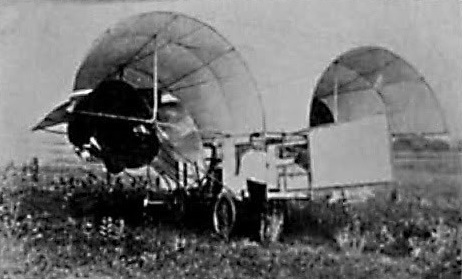
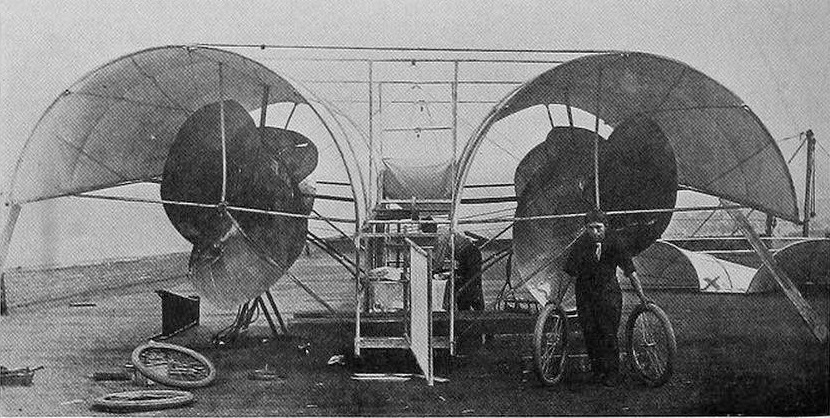
The Fritz Russ Flyer of 1910 was an American flying machine with wings in the form of half cylinders and immense helical spirals, or screws, set within them.
Aircraft” – October 1910 – page 296 “The Johnstown Aero Company, of Johnstown, Pa., have purchased the patent rights of the Fritz Russ flyer and are building men-carrying machines of that type. The ship is of novel design, being 39 feet long and 22 feet wide in rear and tapering to a point in front like a boy’s dart. It is constructed throughout of seamless steel tubing and is fitted with an Elbridge engine driving four spiral screw propellers.”