RWD RWD-1 / Warsaw University of Technology RWD 1

The RWD-1 was the first aircraft constructed by the RWD team of Stanisław Rogalski, Stanisław Wigura and Jerzy Drzewiecki in the Aviation Section of Mechanic Students’ Club of Warsaw University of Technology. It was designed in late 1927. The plane was built with a financial help of the LOPP organization. One prototype was built for static trials, and one flying prototype (registration SP-ACC), completed and flown by the designer Jerzy Drzewiecki in September 1928.

Wooden construction single-engine high-wing cantilever monoplane, conventional in layout. The fuselage rectangular in cross-section, narrowing in upper part, plywood covered. Single-spar one-part trapezoid wings, covered with canvas and plywood in front. Cantilever empennage, covered with plywood (stabilizers) and canvas (rudder and elevators). The crew of two sat in tandem. The crew cockpits were open on the sides in upper part, and had individual doors (first cockpit – on the right, second one – on the left). A 2-cylinder air-cooled 40 hp ABC Scorpion II boxer engine (34 hp nominal power) was in front, driving two-blade wooden propeller Szomański (1,5 m diameter). Conventional fixed landing gear, sprung with a rubber rope, with a rear skid. Fuel tank in fuselage front (fuel consumption 9 l/h).

Its unusual feature was a unique, fish-shaped fuselage, similar to early Messerschmitt’s designs (M17). Two crewmen sat in tandem inside the fuselage and had only side openings in its upper part. In front of the pilot’s head there was an upper part of the fuselage, supporting wings, limiting his view forward, though its profile was thin. This shape was repeated in following RWD designs. The aircraft was evaluated as a quite good design, with an original construction. It had high glide ratio of 12, and its payload was bigger than its empty weight. It was not built in any quantities, but gave a basis to further more successful RWD designs: RWD-2, RWD-3, RWD-4, RWD-7, and, partly RWD-5.

The prototype took part in the 2nd Polish Light Aircraft Contest in 1928, but did not complete it due to engine breakdown. In 1929 it undertook a raid around Poland. It was scrapped in winter of 1929/1930.
Description

RWD-1
Engine: 1 × ABC Scorpion II, 40 hp (53.6 kW)
Length: 6 m (19 ft 8 in)
Wingspan: 9.8 m (32 ft 2 in)
Wing area: 13.6 sq.m (146.3 sq.ft)
Height: 1.7 m (5 ft 7 in)
Empty weight: 206 kg (453 lb)
Loaded weight: 417 kg (918 lb)
Maximum speed: 135 km/h (84 mph/h)
Cruise speed: 115 km/h
Stall speed: 65 km/h
Range: 500 km (310 mi)
Service ceiling: 1,950 m (6,396 ft)
Rate of climb: 1.8 m/s, 108 m/min (354 ft/min)
Wing loading: 30.5 kg/sq.m (6.3 lb/sq.ft)
Take-off run: 100 m
Landing run: 130 m
Crew: One, pilot
Capacity: One, passenger / second pilot
RWD

RWD was a Polish aircraft construction bureau active between 1928 and 1939. It started as a team of three young designers, Stanisław Rogalski, Stanisław Wigura and Jerzy Drzewiecki, whose names formed the RWD acronym.

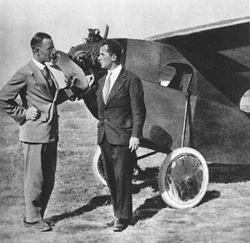
Jerzy Drzewiecki and Jerzy Wedrychowski by the RWD-7

They started work while studying at Warsaw University of Technology. In December 1925, with some other student constructors, they set up workshops at the Aviation Section of Mechanics Students’ Club (Sekcja Lotnicza Koła Mechaników Studentów), where they manufactured their first designs. From 1926 they designed several aircraft alone (Drzewiecki JD-2 and WR-1), in 1928 they joined forces as one team, starting with RWD-1 sportsplane. Apart from building planes, J. Drzewiecki was a test pilot of their designs, while S. Wigura flew as a mechanic in competitions. In 1930 the team was moved to new workshops at Okęcie district in Warsaw, near the Okęcie aerodrome, today’s Warsaw International Airport, founded by the LOPP paramilitary organization. On 11 September 1932, Stanisław Wigura died in an air crash in the RWD-6 during a storm, but the RWD name continued to be used for new designs (according to a popular story, the letter W now de facto stood for engineer Jerzy Wędrychowski, but he was not a designer). In 1933, Rogalski, Drzewiecki and Wędrychowski founded the company Doświadczalne Warsztaty Lotnicze (DWL, Experimental Aeronautical Works) in Warsaw, which became a manufacturer of further RWD aircraft. Apart from Rogalski and Drzewiecki, in a construction bureau worked designers Tadeusz Chyliński, Bronisław Żurakowski, Leszek Dulęba and Andrzej Anczutin and several engineers, including Henryk Millicer.

At first, the RWD team designed and built light sportsplanes. Early designs RWD-2 and RWD-4 were built in small series and used in Polish sports aviation, including their debut at the Challenge 1930 international contest. Their next designs performed particularly well in competitions – the RWD-6 won the Challenge 1932 and RWD-9s won the Challenge 1934 international contest. The sportsplane RWD-5 was the lightest plane to fly across the Atlantic in 1933. Three types saw mass production: the RWD-8, which became the Polish Air Force basic trainer, the RWD-13 touring plane and the RWD-14 Czapla reconnaissance plane (1938).

Other important designs were the RWD-10 aerobatic plane (1933), RWD-17 aerobatic-trainer plane (1937) and RWD-21 light sport plane (1939). World War II prevented further development and serial production of later RWD designs, and put an end to the RWD construction bureau and the DWL workshops.

Ruthenberg Schwingenflieger

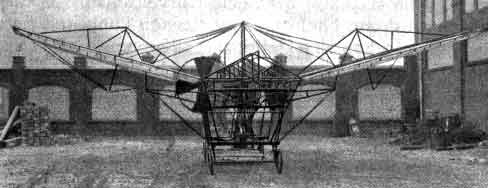
Ruthenberg built a flapping wing monoplane (‘Schwingenflieger’ in German) in 1909. In his complex construction the wings were moved (flapped) by rods moved by an engine which was mounted in the fuselage. The same engine also drove two pusher propellers in contrary motion. The undercarriage was fitted with a four wheel undercarriage. To make the tests of this machine less dangerous a small balloon was mounted in the fuselage, which as was said could lift the machine almost on its own. Tests revealed that the machine did not leave the ground.

Rutan SkiGull

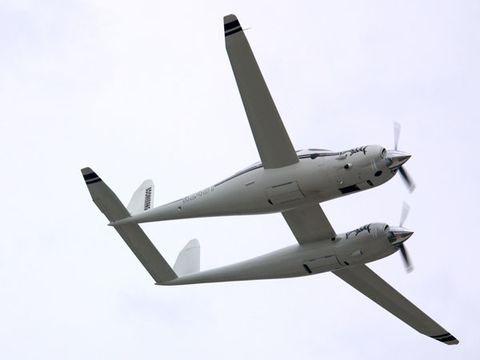
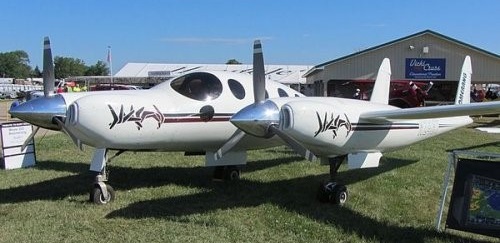
Burt Rutan has designed and buil the SkiGull, his own light aircraft concept. The SkiGull is a small amphibious aircraft that fits in a single-car garage, after having folded its wings. The plane has a single engine located directly above the cockpit that is itself suspended from the wings in a gondola-like cabin.

The SkiGull has a retractable, flexible ski system. The skis provide five times the shock absorption deflection of a typical land plane, making it possible for the SkiGull to operate in considerably rougher environments than most other seaplanes. This includes the ability to perform water landings on beach waves and ocean crests.

Small wheels protrude from the bottom of the skis, making it possible to land on surfaces such as snow or grass.

According to Rutan, the SkiGull’s all-composite structure means he can avoid conventional structural design and fabrication methods. No specific details have been made available yet, he does give a hint: “For now all I can say is that its structure is more like nature than conventional.”

“It will be the last time I design and build an airplane, since I want to enjoy this one for myself,” said the 72-year-old Rutan.

Rutan SpaceShipTwo

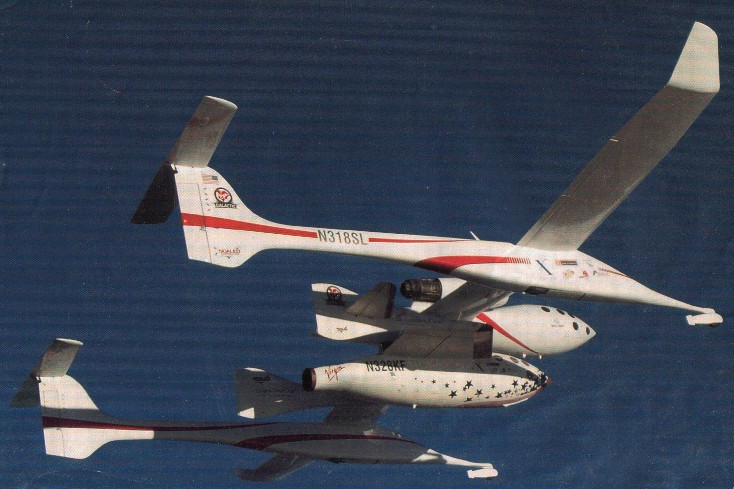
The six passenger SpaceShipTwo is carried aloft by WhiteKnightTwo.

Virgin Galactic’s SpaceShipTwo made its second successful powered flight on 5 September 2013 from Mojave Air and Space Port in California.

SpaceShipTwo, funded by billionaire Richard Branson, was carried to an altitude of 42,000 feet attached to the “mothership” and then climbed to 69,000 feet under its own power before descending back to Mojave.

“In addition to achieving the highest altitude and greatest speed to date, the test flight demonstrated the vehicle’s full technical mission profile in a single flight for the first time … All of the test objectives were successfully completed,” the company said.

Rutan SpaceShipOne

Burt Rutan leads one of 27 teams from seven countries competing for the US$10 million (NZ$16 million) X Prize, to be given to the first private entrepreneur who can put three people into sub-orbital space and do it again with the same equipment within two weeks by the end of 2004.

The team is funded by Microsoft co founder Paul Allen.

SpaceShipOne will piggyback aboard a mother aircraft known as the White Knight, to an altitude of 48,000 feet (14,600 metres). On release, SpaceShipOne’s 18,000 lb thrust rocket engine burns for 80 seconds, accelerating the aircraft at three times the force of gravity to reach Mach 3.2 (3860kph) by the time the engine burns out at 160,000 ft (48,700m). Coasting the rest of the way, losing power and slowing down. At 200,000ft, the pilot and passengers in the future experience weightlessness, which lasts three to four minutes as the spacecraft attains its maximum altitude of 340,000ft, virtually stops, then falls back to 200,000ft (60,000m), when it begins to feel the atmosphere once again. The key is to decelerate gently in the upper atmosphere by controlling the angle during descent and maximising drag, making for a much safer and more comfortable ride.

SpaceShipOne, the rocket plane funded by Microsoft cofounder Paul G Allen, appeared to top its required altitude within minutes of firing its rockets in 2004. The plane took, off from a desert runway slung to the belly of a carrier plane with a test pilot at the controls. It was released at about 13,800m and fired its rockets to climb to an altitude of 100km.

Rutan Voyager

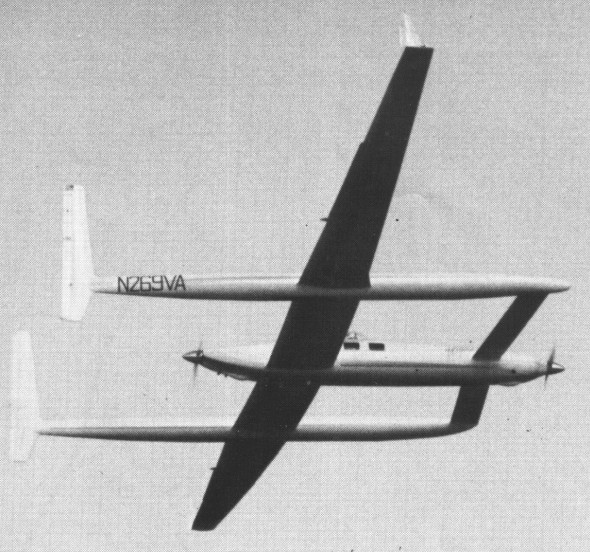
The configuration selected was a twin engine pusher-tractor tandem wing vehicle with twin booms connecting the tip of the forward wing through the center wing terminating at the vertical fin. The cabin was only large enough to accommodate the crew of two and provisions for the estimated 9 day flight.

Structural sample testing was conducted as the first step in the program to determine the lightest materials and fabrication processes available appropriate to the vehicle requirements. It was determined that .010-inch graphite tape skins, with 1/4-inch Nomex honeycomb core would provide adequate structure, and, with suitable application of film adhesive, would also be an adequate fuel barrier. The spars were made from graphite tape and Nomex cores, and were autoclave-cured by an outside vendor.

The result was an airplane with a structural weight/gross weight fraction of only 9%; significantly lower than any existing man-rated airplane. This was key to the Voyager’s success, because the amount of fuel carried, in relation to the vehicle’s takeoff weight, had the strongest influence on range.

Making its first public debut, at the Oshkosh Fly-in on 29 July 1984, was Rutan’s Voyager. The previously-secret aircraft has been under development for more than three years in the Rutan Aircraft Factory in Mojave, California. The Voyager was designed by aeronautical engineer Burt Rutan, 40, for one special mission: very long range flight. “When we started the analysis, the numbers showed that it might be possible to fly completely around the world non-stop. No one has ever tried it before,” Rutan said, “so that became our goal.”

Carbon fibre and Kevlar comprise the major part of Voyager’s struc¬ture, allowing a wing span of 110.8 feet with an aspect ratio of 33.8. The spars are made from solid, oven-cured, carbon graphite, while the skins are thin carbon fibre sheets over a nomex paper honeycomb core, with no metal anywhere in the basic structure other than fasteners.

The engines are mounted in tandem, one on each end of the fuselage. It is now planned that the front engine will be shutdown and its propeller feathered after enough fuel has burned off to allow the rear engine to sustain flight. Mounted between the canard and main wing are three streamlined bodies: the fuselage (33 feet in length) and two outrigger tanks for fuel.

The structural weight of the Voyager is only 938 pounds yet the take-off weight for the global flight will be 11,236 lbs, more than six times its empty weight of 1,858 lbs. Sixteen separate fuel tanks scattered among the wings, canard, booms and fuselage, contain 1,489 United States gallons of fuel weighing 8,934 lbs, leaving just 534 lbs for the crew of two and support equipment. The final landing weight of the aircraft is expected to be only 2,300 pounds. The pilot sits within a bubble canopy above and to the right of the cabin, which contains a stretcher and an area of relative privacy for the off-duty crew member. Comfort is important, as pilots Jeana Yeager and Dick Rutan expect to spend two weeks on their 25,000 mile flight. Their intended flight path will take them across southern United States, in a curve parallel with the northern coast of Brazil, of f the tip of South Africa, across the southern Indian Ocean and north again over Australia and the Pacific and back to California. Keeping to the oceans will eliminate any political problems associated with over flying potentially hostile countries, and Australia can be relied on to be friendly.

The aircraft’s fuel capacity is 1489 gallons, carried in 17 tanks and metered by only one gauge; the crew will use one seat and one bed during the thirteen day flight, flown at between 12 and 15,000 feet on a cruise of around 110 knots; only 3.2 lbs of paint were used on the exterior; there is only one brake, on the nosewheel, and only one rudder, on the left hand fin. July 1984 the Voyager flew 11,593 miles (almost half way around the world) over a closed circuit course along the Californian coast during a test run.

Dick Rutan made history in 1986 when he and copilot Jeana Yeager made the first non-stop, non-refuelled flight around the world. Their aircraft Voyager was designed by Dick’s brother, Burt. Dick and Jeana took off with 1490 gallons of fuel on board and returned home after flying 26,680 miles non-stop with 18 gallons to spare. The flight took 9 days, 3 minutes and 44 seconds.

Rutan Voyager Around the World Article

Rutan Voyager
Length: 32.48 ft / 9.9 m
Height: 10.171 ft / 3.1 m
Wingspan: 110.892 ft / 33.8 m
Wing area: 362.747 sq.ft / 33.7 sq.m
Aspect ratio: 33.8
Max take off weight: 9695.4 lb / 4397.0 kg
Weight empty: 2683.5 lb / 1217.0 kg
Max. weight carried: 7011.9 lb / 3180.0 kg
Max. speed: 130 kts / 240 km/h
Landing speed: 70 kts / 130 km/h
Cruising speed: 86 kts / 160 km/h
Service ceiling: 16404 ft / 5000 m
Wing loading: 26.65 lb/sq.ft / 130.0 kg/sq.m
Range: 23719 nm / 43928 km
Engine: Continental IOL-200, 81 hp
Crew: 2