Saunders-Roe A-17 Cutty Sark

A-17C

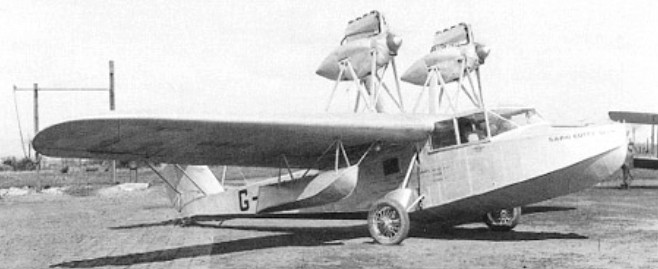
Saro or Saunders-Roe produced the Cutty Sark four-seat cabin flying-boat (or amphibian) as its first new design after formation in 1928. It was adopted for flying-boat and navigational training by Air Service Training Ltd (two 112kW Armstrong Siddeley Genet Major engines) and was exported as a coastal-reconnaissance aircraft (de Havilland Gipsy Major engines).
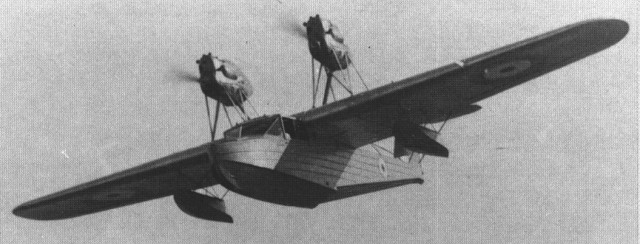
A-17MK

A-17C
Engines: 2 x Armstrong Siddeley Genet Major I, 104kW
Max take-off weight: 1769 kg / 3900 lb
Empty weight: 1236 kg / 2725 lb
Wingspan: 13.72 m / 45 ft 0 in
Length: 10.46 m / 34 ft 4 in
Height: 3.4 m / 11 ft 2 in
Wing area: 29.73 sq.m / 320.01 sq ft
Max. speed: 172 km/h / 107 mph
Ceiling: 2745 m / 9000 ft
Range: 507 km / 315 miles

Engines: 2 x Cirrus Hermes, 104 hp
Seats: 4
Saunders-Roe

In 1928 pioneer pilot/constructor A. V. Roe (later Sir) acquired an interest in S. E. Saunders Ltd and firm was reconstituted as Saunders-Roe. First new product was Cutty Sark flying-boat, with Fokker-type wing, built in small numbers; also larger Cloud (1931) of which RAF had 16.

Most successful product was twin-engined London biplane flying-boat of 1934 which served with RAF until 1941. Shrimp two-seat four-engined aircraft was built to serve as research vehicle for larger types. Company built the Supermarine Walrus and Sea Otter in quantity. SR/A1 of 1947 was world’s first jet-propelled flying-boat fighter, but was not ordered into service. Princess ten-turboprop commercial flying-boat of 1952 was a great technical achievement, but never entered service. SR.53, first flown in 1957, was experimental turbojet/rocket interceptor which demonstrated climb of about 15,240m/min.

1955

Cierva joined Saunders-Roe in 1957.

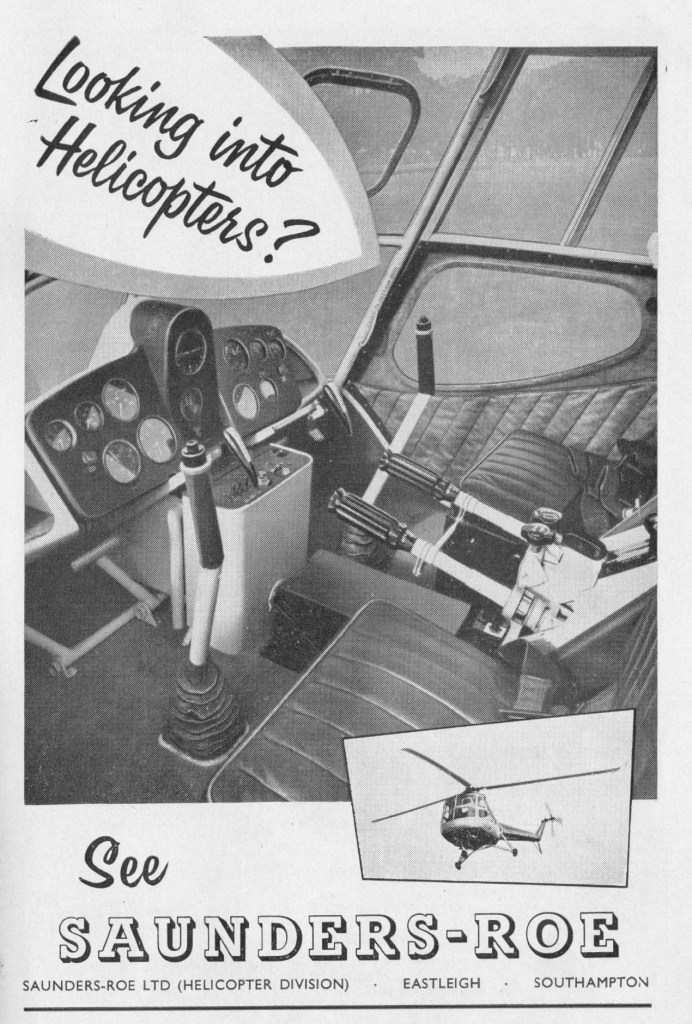
Promising SR.177 development was abandoned despite international interest. Company entered helicopter field in early 1950s with small Skeeter (originally Cierva), though in 1928 S.E. Saunders had made Isaaco Helicogyre (which never flew) for the Air Ministry. Five-seat P.531 built 1958, but in 1959 company was acquired by Westland Aircraft, which developed the P.531 as the Wasp/Scout.

Saunders A-10

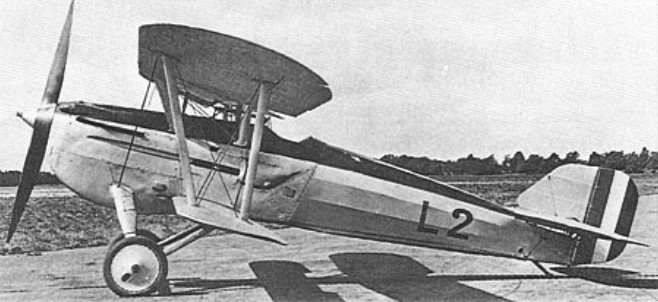
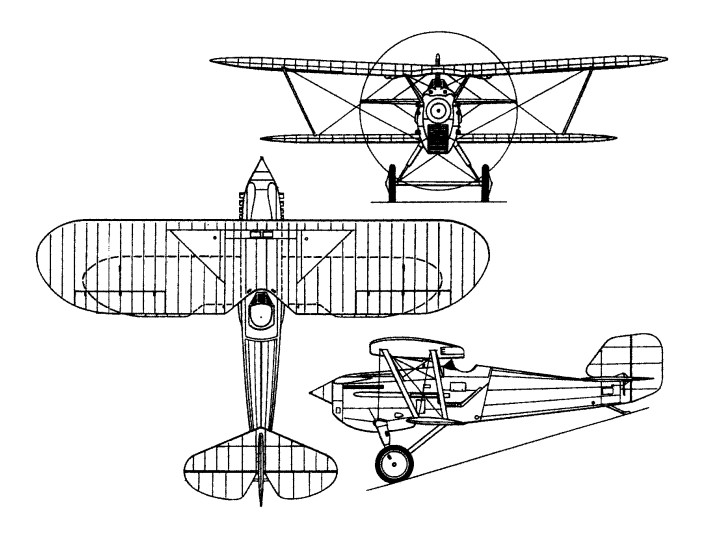
Having specialised in flying boats for a decade, in 1926 S E Saunders Limited began the design of a land-based single-seat all-metal fighter sesquiplane. This, the A.10 proposal, featured what was, for its time, the unusually heavy armament of four 7.7mm machine guns, power being provided by a 480hp Rolls-Royce F.XI 12-cylinder Vee-type engine. After revising the design in 1927 to comply with Specification F.20/27, Saunders built a prototype which flew on 27 January 1929.

Saunders A-10 Article

Possessing an all-metal structure with fabric covering and all four guns located in the fuselage, the A.10 suffered handling and performance shortcomings which led to numerous modifications, including fuselage lengthening. It was assessed at the A&AEE against other F.20/27 contenders and also for F.10/27 (which called for six-gun armament), but it aroused little enthusiasm and was struck off Air Ministry charge in November 1933 – by which time its manufacturer had become Saunders-Roe Limited.

Max take-off weight: 1633 kg / 3600 lb
Empty weight: 1213 kg / 2674 lb
Wingspan: 9.75 m / 32 ft 0 in
Length: 7.44 m / 24 ft 5 in
Height: 2.97 m / 10 ft 9 in
Wing area: 25.36 sq.m / 272.97 sq ft
Max. speed: 322 km/h / 200 mph

Saunders A.10

Saunders, S. E. Ltd

UK
Based at Cowes, Isle of Wight. Originally built boats, and later hulls for fast motor boats and some of earliest flying-boats (e.g. Sopwith Bat Boat). Especially famous for “Consuta” copper-sewn plywood construction.

In 1913 received order for B.E. biplanes. During First World War built under subcontract Avro 504 landplanes, Short 184 floatplanes and Norman Thompson and Felixstowe F.2A and F.5 flying-boats.

Began own design, first of which was T.1 two-seater (1917) with detachable wings for ship-board stowage. Aircraft built postwar included the Kittiwake seven-passenger twin-engined wooden amphibian of 1920 with camber-changing gear on wing leading and trailing edges; Medina ten-passenger twin-engined wooden flying-boat of 1926; and Valkyrie three-engined military flying-boat of 1927 with developed form of Linton-Hope hull.