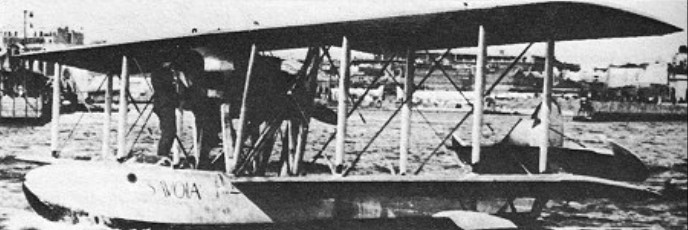
Savoia-Marchetti SM.79 Sparviero

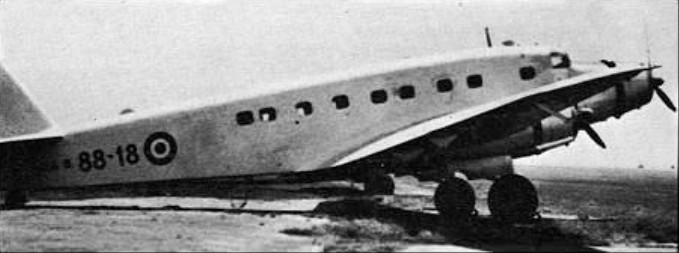
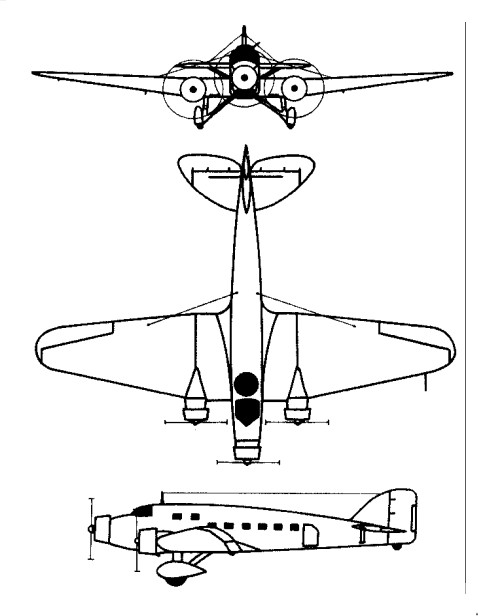
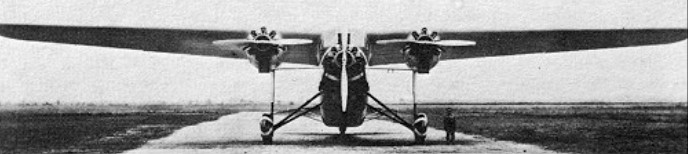
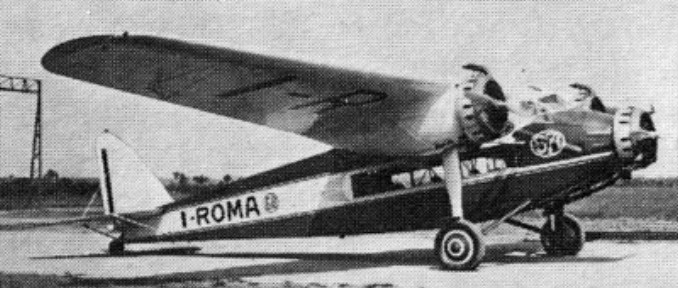
Developed from an eight-seat commercial airliner of 1934, the three-engine Savoia-Marchetti S.M.79 Sparviero entered service as a conventional medium bomber with the Regia Aeronautica in 1937, and served operationally with the Aviacion del Tercio alongside the Nationalist forces during the Spanish Civil War.

Savoia-Marchetti S.M.79 Sparviero Article

In 1937 the S.M.79 embarked on trials at Gorizia as a torpedo bomber, being equipped to launch a single 450mm naval torpedo from an offset rack under the fuselage. The following year trials with paired torpedoes led to the adoption of the S.M.79-II aircraft as standard torpedo bomber equipment. Following Italy’s entry into the war in June 1940, when Sparvieri (Sparrowhawks) equipped 14 stormi based in Italy, Sicily, Sardinia and Libya, the aircraft was constantly in action in the anti-shipping role, its first action being an attack by 19 S.M.79s of the 9° and 46° Stormi on French shipping off the Riviera coast on 13/14 June.

During the invasion of Crete S.M.79s of the 92° Gruppo and the 28la Squadriglia were active against Allied shipping in the Aegean, after which most aircraft were redeployed to Libya for operations against British naval forces and convoys in the Central Mediterranean as well as the naval base at Malta. Among the ships of the Royal Navy sunk by S.M.79s in the Mediterranean were the destroyers HMS Husky, HMS Jaguar, HMS Legion, and HMS Southwall, while the battleship HMS Malaya and the carriers HMS Indomitable and HMS Victorious were all struck by torpedoes launched by the Italian torpedo bombers; the majority of these ships were hit during the attacks on the Operation ‘Pedestal’ convoy which sailed with 14 merchant ships and heavy escort for the relief of Malta. Among the famous Italian pilots of the Sparviero were men such as Capitani Buscaglia, Cimicchi, di Bella and Melley, An improved version was the S.M.79-III without the ventral gondola but with a forward-firing 20mm cannon.
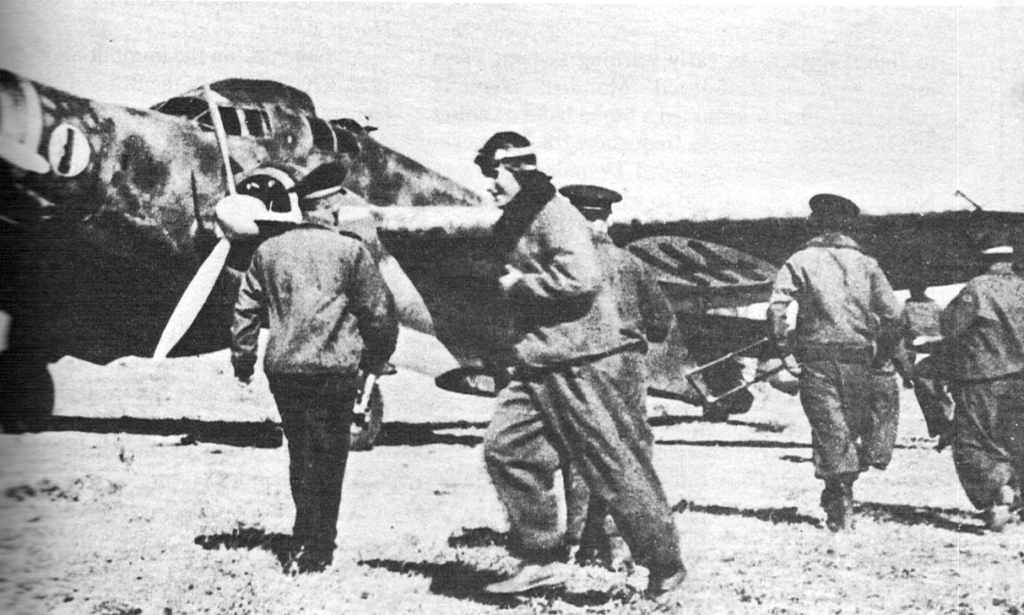
Savoia Marchetti SM.79 10 October 1942

The SM.79 was blooded in the Spanish Civil War as a level bomber with four gruppi of the Italians’ Aviazione Legionaria and 3-, 4-, 5- and 6-G-28 of the Nationalists’ Agrupacion Espanola. Total deliveries to Spain were some 135 SM.79-ls, and as they pulled out at the end of the war the Italians donated 80 of their surviving aircraft to the victorious Nationalists. In the war the SM.79-ls had proved decisive, for they comprised one of the few homogeneous forces able to undertake an effective offensive role, in this instance long-range bombing without the need for fighter escort because of their performance and good defensive firepower. The Sparviero also proved reliable, and remained in service with the Spanish air force for many years after World War II.

The aircraft suffered from poor servicing facilities, and it was unusual for even as much as half the available strength of Sparvieri to be fit for operations at any given time. Nevertheless the S.M.79 was acknowledged as being among the best torpedo aircraft to serve in the Mediterranean theatre during World War II.

Gallery

Savoia Marchetti SM 79 Sparviero
Engines: 3 x Piaggio P XI R C 40, 986 hp
Length: 53.15 ft / 16.2 m
Height: 13.451 ft / 4.1 m
Wingspan: 69.554 ft / 21.2 m
Wing area: 664.139 sq.ft / 61.7 sq.m
Max take off weight: 24916.5 lb / 11300.0 kg
Weight empty: 16758.0 lb / 7600.0 kg
Max. weight carried: 8158.5 lb / 3700.0 kg
Max. speed: 234 kt / 434 km/h
Cruising speed: 173 kt / 320 km/h
Service ceiling: 22966 ft / 7000 m
Wing loading: 37.52 lb/sq.ft / 183.0 kg/sq.m
Range: 1890 nm / 3500 km
Range (max. weight): 1075 nm / 1990 km
Crew: 5
Armament: 4x MG
Bombload: 2200kg

SM.79-l Sparviero
Type: four/five-seat medium bomber
Powerplant: 3 x Alfa Romeo 126 RC 34, 582 kW (780 hp)
Span: 21.2m (69ft 6.7 in)
Length: 15.80m (51ft l0in)
Height: 4.3 m / 14 ft 1 in
Wing area: 61.7 sq.m / 664.13 sq ft
Empty weight: 6800 kg / 14992 lb
Max T/O weight: 10480 kg (23,100 lb)
Max speed: 267 mph at 13,125 ft
Ceiling: 6500 m / 21350 ft
Operational range: 1,180 miles
Armament: 1 x 7.7-mm (0.303-in) and 3 x 12.7-mm 0.5-in) m¬g
Bombload: 1250 kg (2,756 lb) internally
Crew: 5
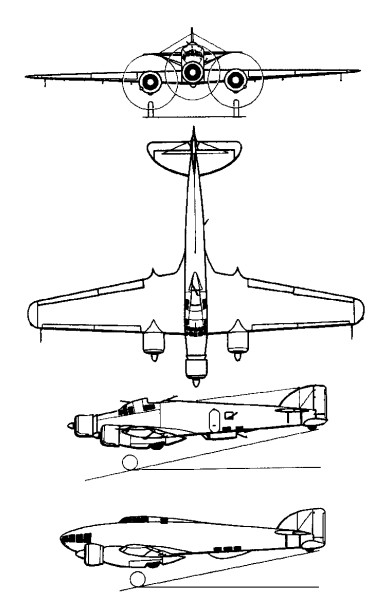
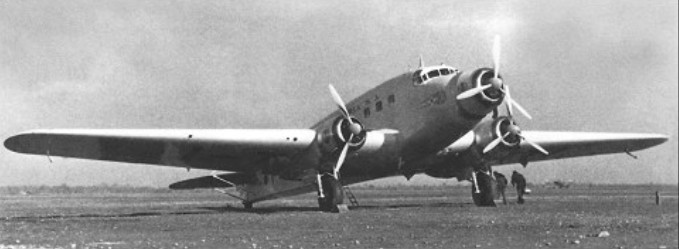
Savoia-Marchetti S.M.79 Sparviero

Savoia-Marchetti SM.75 Marsupiale

A twenty-four-seat passenger transport powered by three 559kW Alfa-Romeo 126RC.34 radial engines. The S.M.75 prototype flew in November 1937. Production for military and civil use continued until 1943, 90 machines being delivered to the Italian authorities and five exported to Hungary. The latter were finally converted for military use with dorsal and ventral gun turrets. A number of Italian S.M.75s were also militarised.

SM.75
Max take-off weight: 13000 kg / 28660 lb
Loaded weight: 9500 kg / 20944 lb
Wingspan: 29.68 m / 97 ft 5 in
Length: 21.6 m / 71 ft 10 in
Height: 5.1 m / 17 ft 9 in
Wing area: 118.6 sq.m / 1276.60 sq ft
Max. speed: 363 km/h / 226 mph
Ceiling: 6250 m / 20500 ft
Range: 1720 km / 1069 miles

Savoia-Marchetti S.74

The Savoia–Marshetti S.74 designed and constructed for the Italian airline Ala Littoria. The S.74 could carry between 20 and 27 passengers in the lower compartment with panoramic windows, while the cockpit crew were five metres up. Navigator and radio man were seated in the enclosed nose.

The prototype, I-URBE, was first flown in November of 1934. Only three were built and they saw service from 1935.

Savoia-Marchetti S.73

First flown in 1934, the S.73P was a long-range commercial transport powered by three 522kW Piaggio Stella IXRC or other engines of similar output. Accommodation provided for 18 passengers. Deliveries to commercial operators began in 1935.

Savoia-Marchetti S.73 Article

Many were impressed by the Regia Aeronautica as troop transports during World War II, although a specific military version was produced as the S.73M.

Sabena relied on a fleet of Fokker F.VIIb/3ms until they were replaced by Savoia-Marchetti S.73s.

Gallery

Engine: 3 x Alfa Romeo 126 RC.10, 597kW
Max take-off weight: 10800 kg / 23810 lb
Loaded weight: 7300 kg / 16094 lb
Wingspan: 24.0 m / 79 ft 9 in
Length: 18.37 m / 60 ft 3 in
Height: 4.45 m / 15 ft 7 in
Wing area: 92.2 sq.m / 992.43 sq ft
Max. speed: 325 km/h / 202 mph
Ceiling: 7000 m / 22950 ft
Range: 1000 km / 621 miles
Crew: 4
Passengers: 18

Savoia-Marchetti S.73

Savoia-Marchetti S.72

The S.72 prototype bomber/transport flew in 1932. Powered by three 410kW Pegasus II radials, it followed the popular high-wing, fixed landing-gear formula of the time. An altitude record with 5,000kg payload was established in June 1934.

The Nanking Chinese government bought 20 production aircraft with defensive dorsal turret and ventral step machine-gun posts, but nothing was heard of them in action against the Japanese.

Max take-off weight: 12800 kg / 28219 lb
Loaded weight: 6800 kg / 14992 lb
Wingspan: 29.68 m / 97 ft 5 in
Length: 19.95 m / 65 ft 5 in
Height: 5.5 m / 18 ft 1 in
Wing area: 118.5 sq.m / 1275.52 sq ft
Max. speed: 295 km/h / 183 mph
Ceiling: 8000 m / 26250 ft
Range: 2000 km / 1243 miles
Armament: 1 x 20mm cannon, 6 x 7.7mm machine-guns, 1000kg of bombs

Savoia-Marchetti S.71

Eight-passenger commercial monoplane of 1930 powered by three 179kW Walter Castor, 253kW Walter Pollux II, or 276kW Piaggio Stella VII engines. Several were produced.

Max take-off weight: 4600 kg / 10141 lb
Loaded weight: 2900 kg / 6393 lb
Wingspan: 21.2 m / 70 ft 7 in
Length: 14 m / 46 ft 11 in
Height: 4.1 m / 13 ft 5 in
Wing area: 60 sq.m / 645.83 sq ft
Max. speed: 235 km/h / 146 mph
Ceiling: 6000 m / 19700 ft
Range: 1600 km / 994 miles

Savoia-Marchetti SM.66

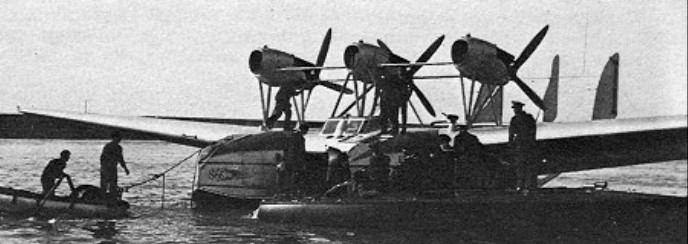
First appearing in 1931, the S.66 prototype was a larger development of the S.55 accommodating 14 passengers and powered by three A.22R engines. The Savoia-Marchetti S.66 was powered by three 750 h.p. FiatA 24R engines. Each of its twin hulls could seat up to nine passengers, while the cockpit was in the wing centre section.

Production aircraft were fitted with 522kW Fiat A.24R engines, raising accommodation to 18. S.66s entered commercial service and at least one was taken on charge by the Regia Aeronautica.

Around 25 were built.

Max take-off weight: 10950 kg / 24141 lb
Loaded weight: 7450 kg / 16425 lb
Wingspan: 33 m / 108 ft 3 in
Length: 16.65 m / 55 ft 8 in
Height: 4.9 m / 16 ft 1 in
Wing area: 126.7 sq.m / 1363.79 sq ft
Max. speed: 238 km/h / 148 mph
Ceiling: 5350 m / 17550 ft
Range: 1200 km / 746 miles

Savoia-Marchetti S.65

The Schneider Trophy never experienced any casualties during competition, but several pilots were killed training for the races. Italy had five casualties: Vittorio Centurione in 1926 in a Macchi M-39; Giuseppe Motta in 1929 in a Macchi M-67; Tomasso Dal Molin in 1930 in a Savoia S.65; Giovani Monti and Stanislao Bellini in 1931 in a Macchi MC-72.

Savoia-Marchetti S.62 / American Aeronautical Corp S-62

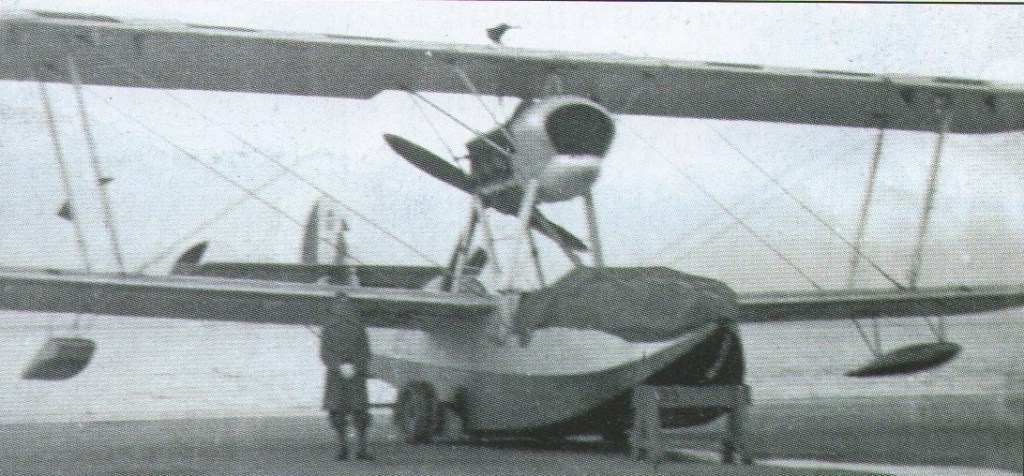
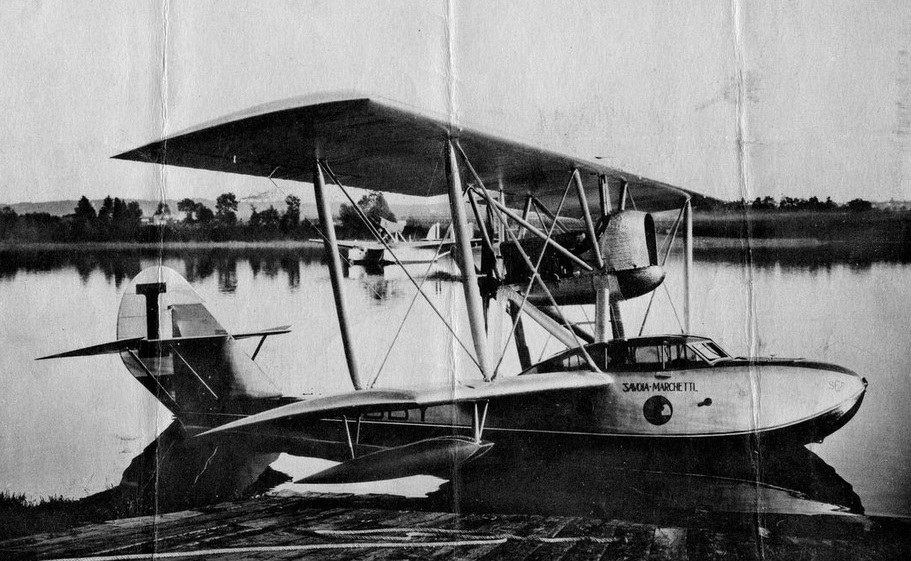
First flown in 1928, the type served with the two units and operated mainly as military flying-boats with the Regia Aeronautica, although commercial examples were produced, the initial S.62 and later S.62bis were powered by 372.6kW R1 and 559kW Isotta-Fraschini Asso engines respectively. As a three-seat reconnaissance aircraft, it was armed with Lewis machine-guns in the nose cockpit and two more in a midships cockpit. The S.62bis had the open midships position replaced by a twin-gun turret.

A four seat reconnaissance bomber and around 40 were built under licence in Spain with 600 h.p. Hispano-Suiza 121B engines.

The Savoia S-62 flying boat had entered service with the VVS RKKA under the designation MR-4, was successfully produced in the Russian Taganrog workshops.

American Aeronautical Corp licence built one S-62 in 1928 c/n 6202. ATC 2-320 was issued in 1931. Equipped with a 500 hp engine it was configured for commercial operations with a seven place cabin.

American Aeronautical Corp S-62

S.62
Engine: 1 x Isotta-Fraschini Asso 750, 634kW
Max take-off weight: 5030 kg / 11089 lb
Loaded weight: 2630 kg / 5798 lb
Wingspan: 16.66 m / 55 ft 8 in
Length: 12.26 m / 40 ft 3 in
Height: 4.19 m / 14 ft 9 in
Wing area: 69.5 sq.m / 748.09 sq ft
Max. speed: 220 km/h / 137 mph
Ceiling: 4900 m / 16100 ft
Range: 2000 km / 1243 miles
Armament: 4 x 7.7mm machine-guns, 600kg of bombs

American Marchetti S-62
1928
3 seat armed scout
One built in the US
Engine: Isotta-Fraschina, 500 hp
Prop: 2 blade wooden fixed pitch
Wingspan: 54 ft 8 in
Length: 40 ft 3 in
Wing area: 748 sq.ft
Empty weight: 5798 lb
Loaded weight: 11,089 lb
Useful load: 2530 lb
Max speed: 137 mph
Cruise: 118 mph
Stall: 49 mph
Ceiling: 16,100 ft
Range: 530 mi
Seats: 8
Armament: 3 x .30 Lewis machine guns

Savoia-Marchetti S.62

Savoia-Marchetti S.59

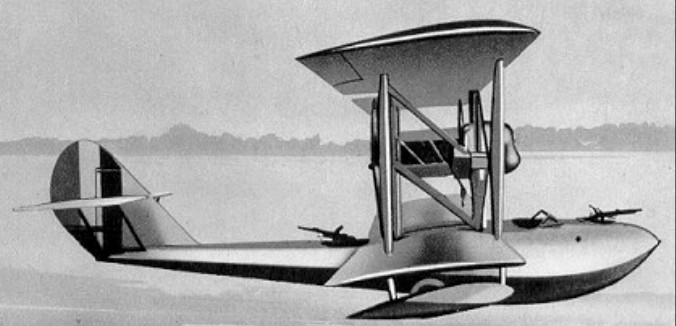
This 1925 biplane flying-boat was produced in two forms: the standard S.59 with a 298kW Lorraine-Dietrich engine and the S.59bis with a 372.6kW Isotta-Fraschini Asso 500Ri engine. Examples of both versions went into commercial and military service during the 1920s.

S.59bis
Max take-off weight: 2950 kg / 6504 lb
Loaded weight: 1950 kg / 4299 lb
Wingspan: 15.5 m / 51 ft 10 in
Length: 10.36 m / 34 ft 0 in
Height: 3.5 m / 12 ft 6 in
Wing area: 60 sq.m / 645.83 sq ft
Max. speed: 200 km/h / 124 mph
Ceiling: 4550 m / 14950 ft
Armament: 1 x 7.7mm machine-gun, 280kg of bombs