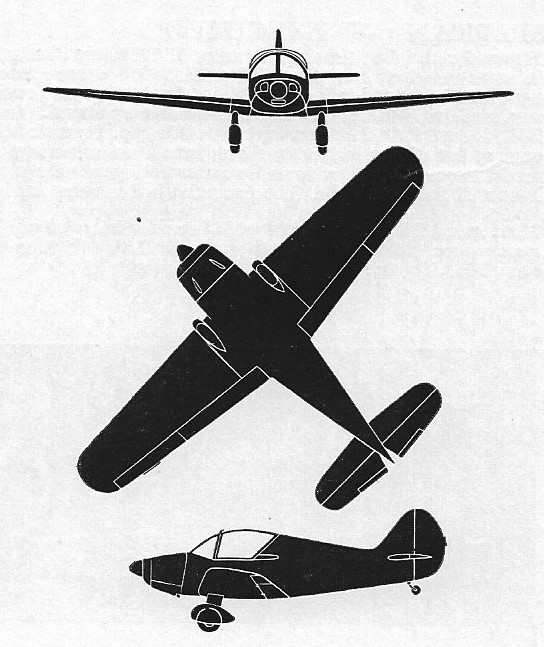
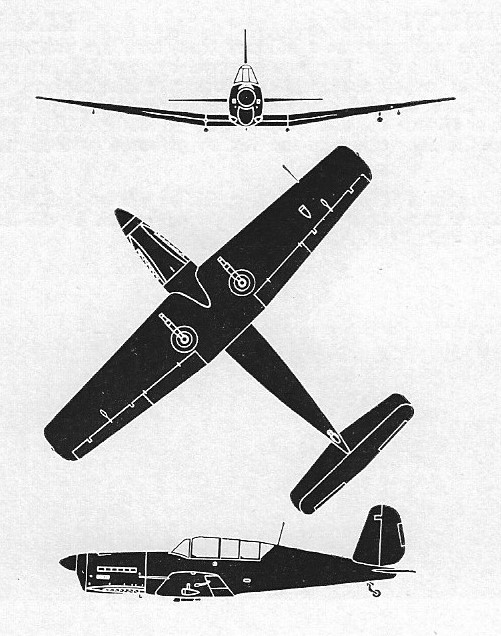
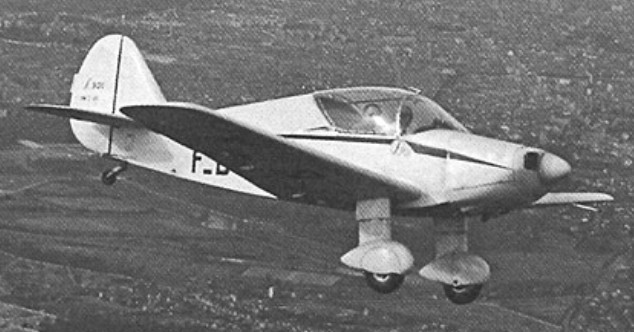
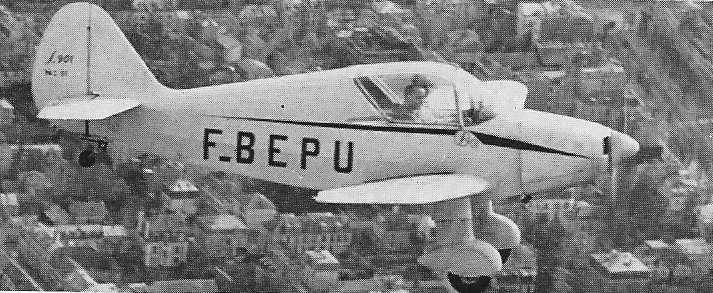
SIPA S.90 / S.91 / S.92 / S.93 / S.94 / S.901 / S.902 / S.903

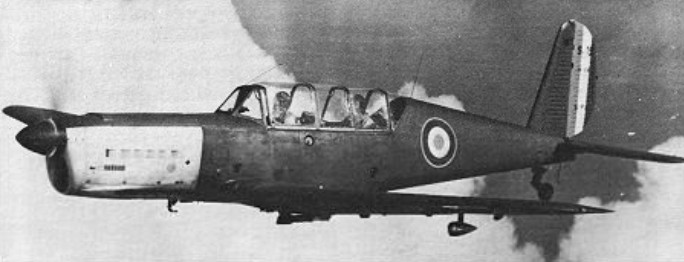
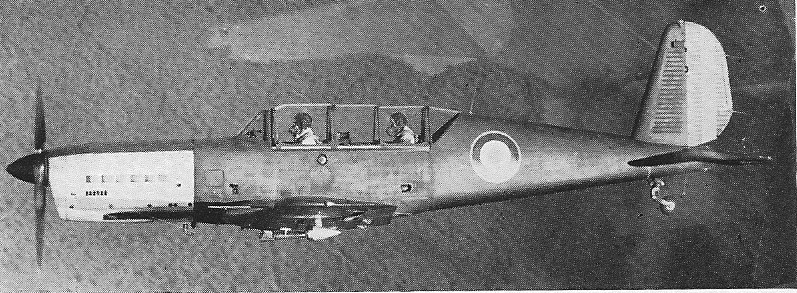
Yves Gardan is the engineer who, in 1947, designed the SIPA 90, winner of the two seater 75hp Concours, beating 13 other competitors and prompting an order for 100 from the govern¬ment Service de l’Aviation Legere et Sportive (115 were built).

S.901

The S.901 is the production version.

Numerous experimental versions were built.

S.90
Engine: 75 hp Mathis 4G-69

S.91
Engine: 85 hp Continental C85-12F

S.92
Engine: 85 hp Mathis 4GB-62

S.93
Engine: 75 hp Salmson 5AQ-01

S.94
Engine: 90 hp Continental C90-8F

S.901
Engine: 1 x Mini 4 DC 30 or DC 32, 56kW
Max take-off weight: 600 kg / 1323 lb
Empty weight: 366 kg / 807 lb
Wingspan: 8.75 m / 29 ft 8 in
Length: 5.75 m / 19 ft 10 in
Height: 1.75 m / 6 ft 9 in
Wing area: 11.2 sq.m / 120.56 sq ft
Max. speed: 200 km/h / 124 mph
Cruise: 109 mph
ROC: 492 fpm
Ceiling: 4000 m / 13100 ft
Range: 500 km / 311 miles

S.902
Engine: 85 hp Continental C85-12F

S.903
Engine: 90 hp Continental C90-12-F

S.901

SIPA SIPA-300

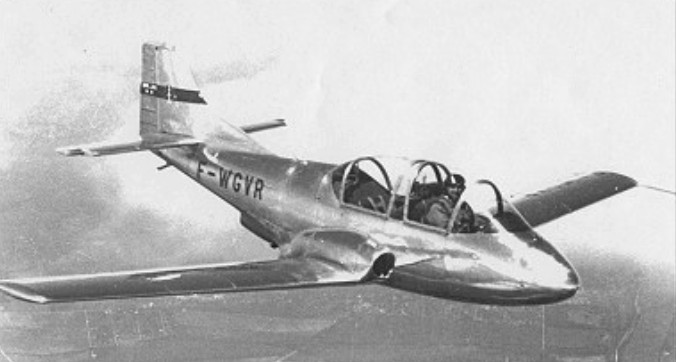
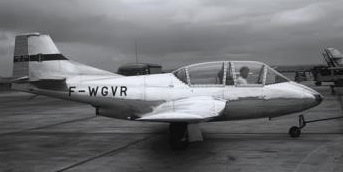
In 1954 Yves Gardan designed the SIPA 300 single jet engine tandem two seater ab-initio jet trainer. The construction of the prototype was launched on the basis of a contract awarded by the SALS.

SIPA-300 Article

First flown on September 4, 1954, by Max Fischl, it was powered by a 0.712kN Turbomeca Palas.

After thirty hours of flight testing by the manufacturer, the Sipa-300R entered the CEV Brétigny sur Orge April 4, 1955. On July 28 of the same year, it had accumulated 75 hours of flight and 99 landings.

This prototype was destroyed during a test spin on Sept. 26, 1955. No serial production was considered.

Fuel was in two tanks, one of 70 lt in the central wing and the other, 150 lt, housed in the fuselage.

Gallery

Engine: Turboméca Palas I, 160 kg
Wingspan: 8.02 m / 26 ft 4 in
Length: 6.71 m
Height: 2.50 m
Wing area: 9.8 m²
Empty weight: 524 Kg
Max weight: 880 Kg
Max. speed: 360 km/h / 224 mph
Cruise speed: 312 Km / h
ROC: 4,6 m / s
Ceiling: 5000 m
Range: 400 – 700 miles

SIPA S.300

SIPA SIPA-200 Minijet

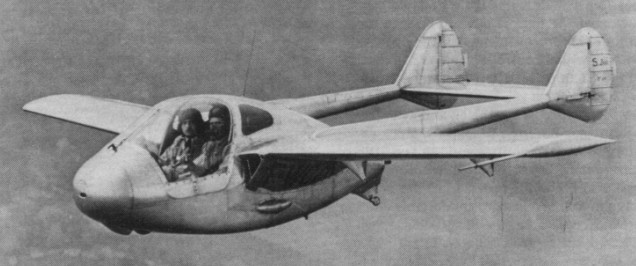
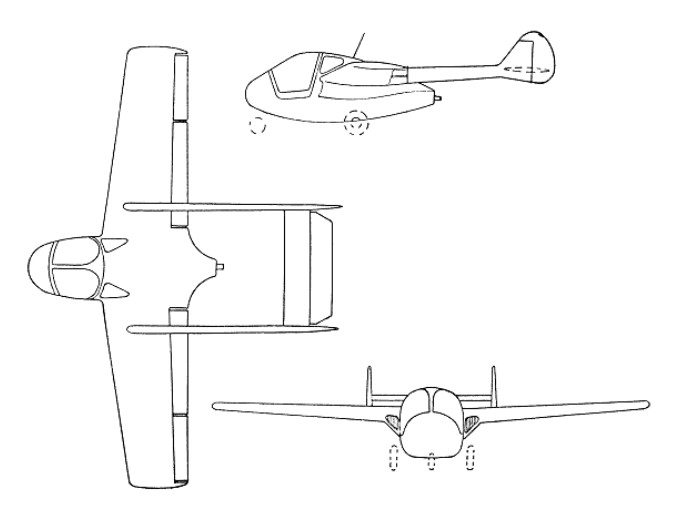
In 1949 Yves Gardan created the SIPA 200 Minijet, a single jet engine light two seater capable of 250 mph (400 kph) maximum level speed with 358 lb (160 kg) static thrust. It was distinctive in its twin-boom configuration and short, tubby nacelle housing the engine and cockpit.

SIPA-200 Minijet Article

The SIPA 200 was built at the request of the French government, which was evaluating new aviation concepts as part of the progressive build-up of France’s postwar aircraft industry.

The monoplane cantilever wing has a laminar profile. The undercarriage is of tricycle. It has been designed and manufactured by ERAM. The main gear retracts completely into the body. The front landing gear remains slightly out, providing protection to the cockpit in case of landing gear retracted. There is a retractable rear stand that protects when landing.

Kerosene fuel is held in 2 x 60 lt tanks in each wing, and one central reservoir of 120 lt in the fuselage. A total capacity of about 240 lt.

Although its extreme height is given as 6ft, the wings are at waist level, the cabin roof very little higher, and the underside of the fuselage just a few inches clear of the ground. The second prototype fins and rudders are very slightly modified; the original Y control-column was replaced by two separate sticks, and a full blind-flying panel was now installed, and five-point seat harness. All instruments are on a vertical panel, and flap, undercarriage, fuel and trim controls and indicators are on a console down the centre of the cockpit, between the two pilots.

To climb in, one ducks under the open roof panel and then wriggles down and back into the seat. Once in, there is just enough room for elbows and plenty for the legs. The view is reasonable over the instrument panel, good to the sides and poor everywhere behind the three to nine o’clock sectors.

To started up; select petrol on, oil on, pressed the starter for two seconds, then further pressed the igniter button and at 10,000 revs released these two buttons, switched to kerosine, and opened the throttle. Taxi is about 25,000 revs, using toe-operated hydraulic brakes for steering. The noise is distinctive but neither loud nor penetrating.

Takeoff uses 15 deg of flap and 35,000 revs against the brakes and the take-off is about 400 yd. By the time the undercarriage is pumped up, the speed has gone from 70 to 100 kt and climb is between 200 and 300 m/min (990 ft/min).

The S.200 made its first flight on 14 January 1952 at the hands of Roger Launay. Early test flights revealed that it was underpowered and performance fell short of expectations, and it was unable to compete with contemporary types such as the Fouga Magister.

The second prototype Minijet, unlike the first prototype, is fully aerobatic at its take-off weight of 1,675 lb.

The flaps are double slotted but so arranged that, when retracted, both slots are shrouded by the wing under-skin. The approach is about 80 kt. The flap selector was left “down” and one full stroke of the pump lowered 5 deg of flap to some 30 deg. More than this is available but is never required.

It stalls at about 50 kt, cruises at 150 kt at 1,500 ft at 31,500 r.p.m., and climbs at almost 1,500 ft/min. Although there is nothing “hot” about it, it does behave like a jet aircraft.

Besides the two prototypes, a pre-production batch of five has been ordered by the French Government Secretariat for Light and Sporting Aviation. Furthermore, NATO training authorities have shown interest in the Minijet as a possible basic trainer. Seven prototypes were built. All except one (No.5) were assigned to the Training Service Aviation and based in Saint Yan.

Gallery

Specifications:

Prototype N ° 1
Engine: Turbomeca Palas I, 150kg / 330 lb thrust.
Wingspan: 7.20 m / 24 ft 7 in
Length: 5.12 m / 17 ft 10 in
Height: 1.78 m / 6 ft 10 in
Wing area: 7.90 m²
Empty weight: 488 kg
Max weigh: 824 kg
Wing loading: 85 kg / m²
Max speed: 185 kt / 400 km/h / 249 mph
Cruise: 195 kt
Stall speed: 55 kt
Ceiling: 8000 m / 26250 ft
Range: 500 km / 311 miles
Seats: 2

Prototypes N ° 2 of 7
Engine: Turbomeca Palas I, 160kg
Wingspan: 8.00 m
Length: 5.12 m
Height: 1.75 m
Wing area: 9.62 m²
Empty weight: 488 kg
Max weight: 825 kg
Max speed: 240 kt
Stall speed: 70 kt
SIPA S.10 / S.11 / S.12 / S.111 / S.121

The S.10 was the French version of the Arado Ar.396, built as the company’s first post-war product. Twenty-eight produced.

The S.11 (50 built for the French Air Force) and S.111 were modified versions of the S.10 two-seat advanced trainer, fitted with Renault 125 engines (440kW SNECMA S-12-SO2-3H, French-built Argus As 411).

SIPA S.12

The S.12 was similar to the S.11 but was constructed entirely of metal; 52 S.12s were built for the French Air Force together with 58 S.121 lightweight derivatives. For use in Algeria, a number of S.111s and S.121s were modified to carry rockets and bombs for ground attack under the designations S.111A and S.121 A.

Sipa 121 trainer

S.12
Engine: 580 hp SNECMA 12S-02
Empty weight: 4107 lb
Loaded weight: 5126 lb
Max speed: 224 mph
Cruise: 199 mph
ROC: 1476 fpm
Wingspan: 36 ft 1 in
Length: 30 ft 7.5 in
Height: 8 ft
Wing area: 197.1 sq. ft

SIPA S.12

SIPA / Societe Industrielle Pour I’Aeronautique

Formed 1938 and until 1940 was manufacturing parts under subcontract for Liore et Olivier, Amiot, and Morane types and overhauling Mureaux aircraft. First postwar production aircraft was S.10 (French version of Arado 396, for which the company had wartime responsibility).
Developed versions were built in quantity. SIPA 901 (derived from S90 of 1947) flew 1948 and ordered by Government for Service de I’Aviation Legere et Sportive. Minijet, flown in 1952, was world’s first all-metal 2-seat light jet; SIPA 300 was more conventional jet trainer.

In 1954 Max Fischl was SIPA test pilot.

Later trainers and light aircraft included Coccinelle 2-seater, and 5-seat turboprop Antilope. Company was associated with production of Caravelle, Mirage, Alouette, and Concorde, and specialised in furnishing and equipping airliners.

Taken over by subsidiary of Aerospatiale.

Sinfield Honeybee

The forerunner of the Hummer, the Honeybee is a single seat, taildragger-type ultralight. The fuselage is a wooden box girder, and the wing is built from aluminum tube, covered with cloth. There are no control surfaces in the wing. Power is supplied by a 20-hp JLO 395-cc, single-cylinder engine, turning a wooden pusher propeller. Cruising speed is about 40 mph, with stalling speed at about 30 mph. Takeoff speed is approximately 20 mph, and the one-gallon fuel supply lasts for 45 minutes at full throttle. The aircraft can be broken down into small components for easy storage.

Engine: JLO 395cc, 20 hp
Cruise: 40 mph
Stall: 30 mph