Smith, W. Termite

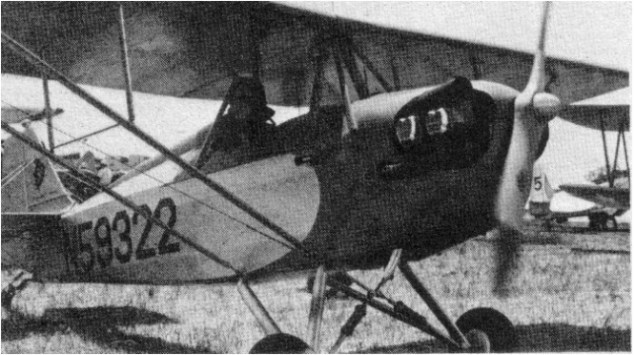
The original circa 1955 Termite N7939A, designed by Wilbur Smith, was powered by a 36-hp Aeronca engine, but since then other engines such as the 38-hp Continental and the 65-hp Lycom¬ing have been used.

The Termite is a single-seat sporting monoplane with a braced parasol-type wing Its wing struc¬ture is built with two wood spars, an aluminum leading edge and fabric covering aft of the front spar. The fuselage is an all-wood structure with plywood covering from the rear of the cockpit forward and fabric covering aft. The tail section is also fabric covered. The Termite’s landing gear is a Piper Cub type.

Engine: 40hp Continental
Wingspan 23’6”
Length 15’l”
Gross Wt. 658 lb
Empty Wt. 432 lb
Top speed 95 mph
Cruise 83 mph
Landing mph 38
Climb rate 450 fpm
Ceiling 6000 ft
Takeoff run 350 ft
Landing roll 400 ft
Range 150 sm
Smith / Mike Smith Aero Inc

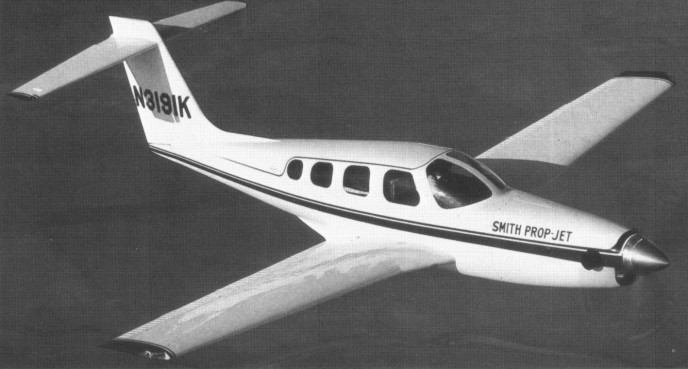
Produced Super Interceptor two-seat turboprop lightplane, expected to be followed by six-seat Lightning Model 400 with turboprop driving tail-mounted propeller, but instead followed by XP-99 Prop-Jet as conventionally-configured, pressurized six-seater with nose turboprop (first flown 1982).

1978: Mike Smith Aero Inc,
Johnson City KS.
USA.

1986: Acquired by Prop-Jets Inc.

Smith, J. 1929 monoplane

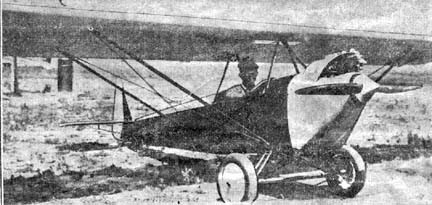
Circa 1929 J W Smith of Cicero IL. USA, built a single-place, open cockpit, high-wing monoplane.

The monocoque fuselage was made from red fiber paper rolled into shape and riveted. The wings were steel-tubing framed—the first-ever wing to have metal ribs. The fuselage hung below the wing with a pivoting arrangement somewhat like that which George Spratt would champion much later.

According to William B Stout, “Its one bad habit was changing shape from day to day as the humidity increased or decreased.”