Formed 1966 out of Morane-Saulnier as subsidiary of Sud-Aviation, to develop and produce group’s light sporting and business aircraft. Known as Socata Groupe Aerospatiale, products including the TB30 Epsilon tandem two-seat piston-engined trainer (first flown December 1979), Rallye lightplane in four-seat 235F form, TB9 Tampico Club 4/5-seat lightplane (first flown March 1979), TB10 and more powerful TB200 Tobago 4/5-seat Iightplanes for basic/instrument flight training and cross-country flying among their many uses (first flown February 1977 and March 1991 respectively), TB20 and TB21 Trinidad 4/5-seat lightplanes with higher-powered piston engines for advanced instrument training among other roles, TBM 700 pressurized and turboprop- powered business aircraft (first flown July 1988), Omega tandem two-seat turboprop military trainer (first flown April 1989), TB360 Tangara twin piston-engined lightplane (first flown February 1997) based on U.S. Gulfstream American GA-7 Cougar, new MS 180 Morane and MS 250 Morane 4/5-seat lightplanes expected to fly by 2000 and featuring SMA MR turbocharged piston engines, tandem two-seat MS 300 Epsilon Mk 2 turboprop-powered basic and primary military trainer that is expected to fly in year 2000, and HALE high-altitude long-endurance communications and electronic intelligence platform, based on TBM 700 but with 48m wingspan (expected to fly in year 2004). Company made components under subcontract for wide variety of aircraft, including Magister and Concorde, and current work includes components for Eurocopter helicopters, Airbus and ATR airliners, Dassault Falcon bizjets, Lockheed Martin Hercules freighter, and CFM56 engine.
Aerospatiale’s light aircraft division Socata (Societe de Construction d’Avions de Tourism et d’Affaires) makes use of computerised milling machinery, when not in use for military or other contracts.
Nord-Aviation, Sud-Aviation and SOCATA joined to form Aerospatiale in 1971.
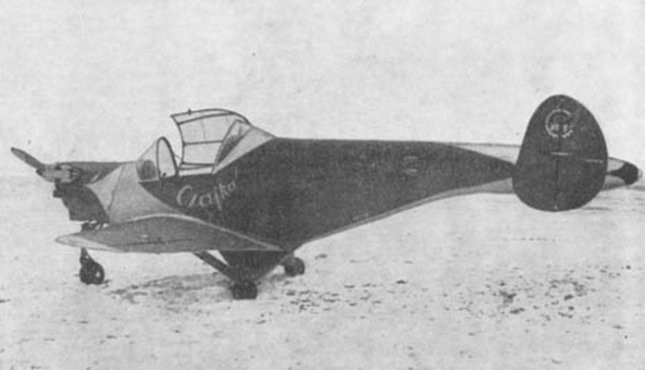
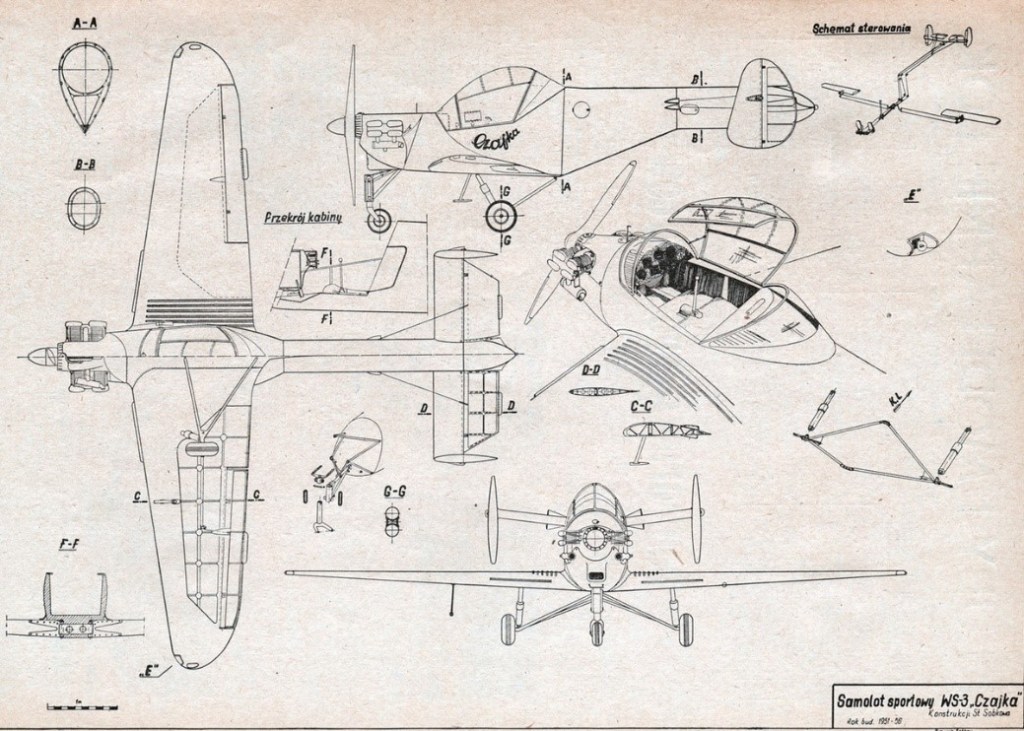
In 1949, Stanisław Sobkow started to construct an amateur plane, which he called WS-3 “Czajka”.
Single-seat, self-supporting low-wing wooden structure. The wing is divided, with a trapezoidal contour, with rounded ends and with a slant backwards, the end of the wings is elliptical. The wing had a working caisson and two girders. The rear part of the wing is covered with canvas, at the fuselage and at the ends of the wings with plywood. Slotted ailerons, covered with linen. The wooden fuselage had a rectangular cross-section in the front part, passing into a rounded tail part. Half-shell frame and longitudinal structure covered with plywood. Covered cabin. Horizontal control with a rectangular contour with a rise. Covering the fins with plywood, the rudders with cloth. The spreading of the rudders made them act as aerodynamic brakes. Three-wheeled chassis with a front wheel, fixed.
The construction was started in 1951. The woodwork was made in the carpentry workshop of Spółdzielnia Rzemieślnicza in Kielce, Poland, and metal details were made by the workshops of the Kielce Aeroclub, at the airport in Masłów, where the construction of the airframe was completed in mid-April 1956. The engine received from the Board of the League of Friends of the Soldier. Although “Czajka” was an amateur construction, only aviation materials were used for its construction. During the assembly of the plane of his idea, S. Sobkow used many ready-made structural elements from the glider and the factory plane. The works were completed on April 15, 1956.
After the taxiing tests carried out in the spring of 1956, on August 26, 1956, WS-3 “Czajka” made its first flight. The plane was also demonstrated at air shows, once at the Aeroclub in Kielce, once at the Workers’ Aeroclub in Mielec, arousing the understandable interest of the public, and above all, aviation hobbyists. This amateur, light and small plane was the first, thoroughly successful structure of this type, built in Poland after World War II. It was proved easy to fly, and of simple construction.
Up to 1959, “Czajka” spent about 20 hours in the air in about 70 flights. The constructor tried to legalize his activity, but the Institute of Aviation he did not respond to applications and letters for approval. The documentation sent there has not been checked. As a result, the designer was forced to stop using his plane, which was pushed behind the hangar.
In 1960 “Czajka” was completely destroyed. At that time, the construction and piloting of own aircraft were strictly forbidden in Poland. That is why a commission burned down the structure, which – apart from arsonists – was convinced by all to be successful. The structure that Stanisław Sobkow had been building for 6 years, putting 15,000 man-hours into it, was thoughtlessly destroyed.
Engine: Praga D, 55 kW (75 HP) max, 44 kW (60 HP) nominal Span: 8.2 m Wing area: 10.0 m2 Length: 6.4 m Height: 2.2 m Empty weight: 320 kg MAUW: 470 kg Useful load: 150 kg Max speed: 195 km / h Cruising speed: 150 km / h Stall speed: 80 km / h ROC: 3.3 m / s Ceiling: 3300 m Range: 450 km Endurance: 3 hr
Stanisław Sobkow was born in 1924, probably in Lviv. When he was a boy, his parents often took him to the Lviv airport. He admired the acrobatics there. Fascinated by this sight, he began to build wooden models of airplanes.
In 1939, as a 16-year-old young man, he tried to build a glider (probably named WS-1) and a small amateur WS-2 aircraft according to his own designs. However, these plans were interrupted by the war.
After World War II, Stanisław Sobkow worked as a technician at WSK-Okęcie . Despite the many and various difficulties that prevailed after the end of the war. In 1951 he started building an amateur plane, which he called WS-3 “Czajka”. The works were not completed until 1956. In the summer of 1956, “Czajka” made the first flight. Sobków’s plane was also demonstrated at the air shows in Kielce and Mielec. Unfortunately, the construction and piloting of own aircraft were strictly forbidden in Poland at that time.
Fortunately, the burning of “Czajka” did not break Stanisław Sobków, who again started working on a new structure. It was a helicopter named WS-4 “Świerszcz”. Its construction was completed in 1967.
Stanisław Sobkow also developed other constructions, such as a 3-seater snowmobile, a motor boat, the “Żbik” tricycle (that is, the conversion of the “Komar” moped into a 4-seater vehicle!) And a modification of the “Syrena-103” car.
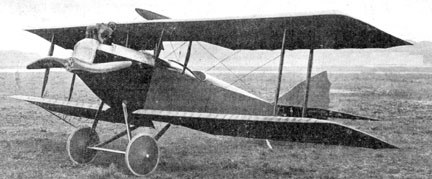
The 1921 Snyder-Macready Baby Bomber designed by O H Snyder was a single-place, open cockpit biplane, powered by a chain-driven 18hp Indian engine The Indian motor which had previously been in the builder’s motorcycle. The propeller was driven through a chain and sprocket reduction gear.
The landing speed was 20 mph and the plane usually stopped within 40 feet after touching the ground.
Of all-wood construction, it was popular with home-builders of the time, with plans published in magazines.
Snow Aviation International Inc was founded 1990 to develop twin-turboprop commercial SA-204C STOL passenger/cargo transport and military SA-21 OAT derivative.
Snow Aviation International Inc was founded 1990 to develop twin-turboprop commercial SA-204C STOL passenger/cargo transport and military SA-21 OAT derivative.
By 1955 plans were under way for the S2 model, to be joined by the S2B, a 450 hp version, with the pilot sitting behind the hopper. This first flew in August 1956. The smaller model, the S2A, was fitted with the Continental W670-6A radial engine of 220 hp and 74 of these were built by the Snow Aeronautical Corporation. Only 17 of the larger 450 hp S2B were built and this was followed by the Snow S2C-450, still an open cockpit aircraft with distinctive overturn protection incorporating a larger hopper and a wing span increased to 44 feet, 7 inches. The empty weight was 2940 lbs and loaded, 5700 lbs. Some 215 were built, at least half with the 600 hp P&W R-1340-AN1 which increased the loaded weight to 6000 lbs.
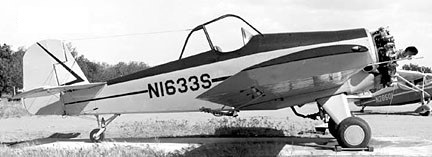
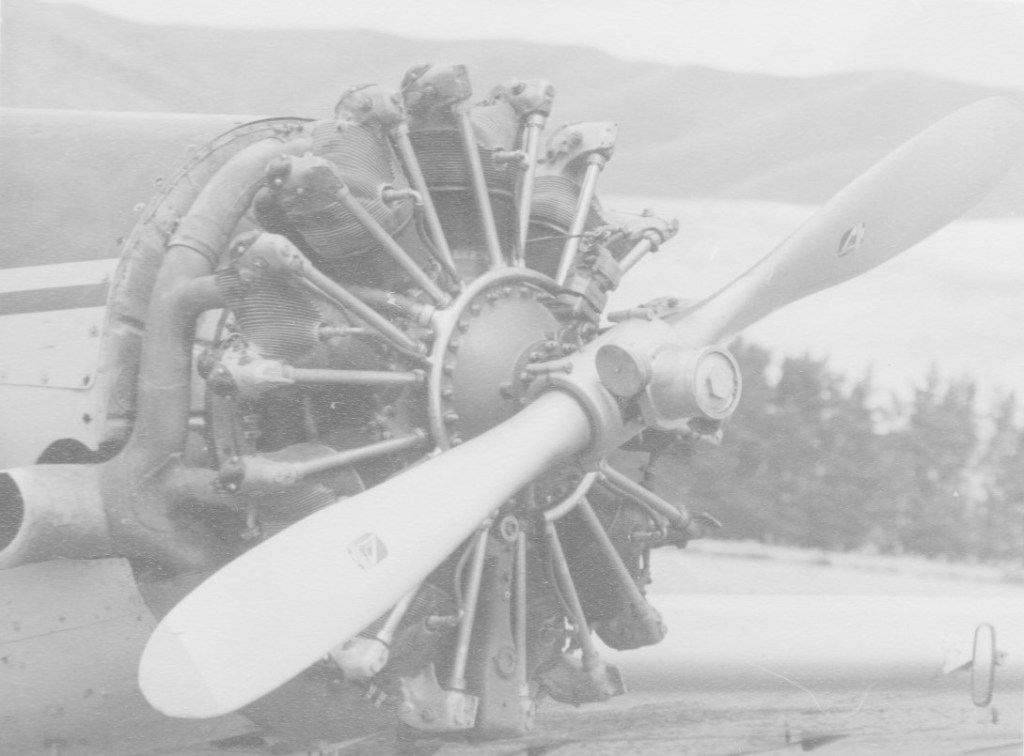
The first Snow S2C appeared in 1960, a follow-on aircraft to the similar Snow S2B of which nineteen were produced. Both were powered by the 450-hp R-985. At that time Snow were also building the S2A which was produced until 1962. A smaller aircraft, the pilot sat in front of the hopper. Some S2C aircraft had the wingtips removed and were fitted with large end plates.
Snow S-2C N1633S
Around 260 Snow S2Cs were built, firstly powered with a 450hp P&W R-985-AN-1, first flying on 12 April 1961, a 600-hp P&W R-1340-AN-1 version first flying on 12 May 1961. From 1962 until production was superseded by the Aero Commander-Snow S2D-600 in 1965. Until this point all aircraft were built with open cockpits.
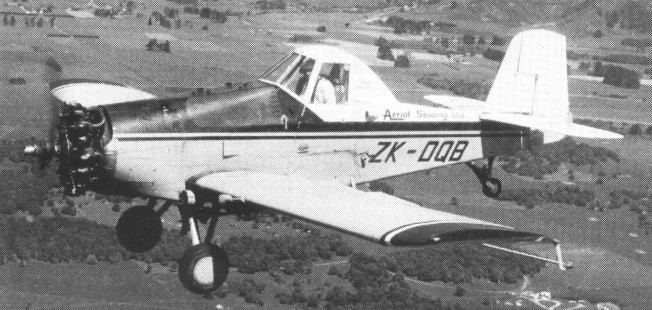
In 1965 the Snow Corporation was taken over by Aero Commander and a new model, the S2D-600, was flown in 1965. It was the first with the new enclosed cockpit, setting the lines for the later Thrushes and with a larger hopper. Snow also modified the aircraft to incorporate a loader driver seat directly behind the pilot’s and facing rear.
Aero Commander built 105 S2D-600’s. The S2D was fitted with an even larger hopper suitable for rice sowing and fertiliser spreading and this became the Rockwell S2R-600 Thrush in 1968.
Rockwell Thrush Commander
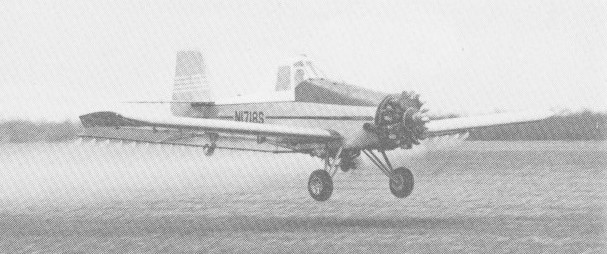
Re-engining became popular. Besides the R-1340 version, Rockwell introduced the S2R Thrush 800 fitted with a Wright R-1300B1 radial of 800 hp. In 1975 two US Ag operators, Marsh in Arizona and Ayres in Georgia, fitted Garrett and Pratt & Whitney turbines to Thrush aircraft. Marsh had previously fitted a Garrett TPE-331 Pre-Century of 575 shaft horse power to an open cockpit 1965 model Snow S2C and it was first flown on 9 July 1973. It is the first known conversion, known as the Marsh S2R-T Turbo-Thrush, of an agricultural aircraft in the United States; N1674S, #600-1250C (the 250th ag¬plane built by Snow), was later sold to Plexico as XB-ETQ. Another conversion by Serv-Aero Engineering was to fit the 1200 hp Wright R-1820-71 piston radial. In 1977, the Ayers Corporation, of Albany, Georgia, purchased the Thrush Commander line and continued to build the S2R, with the same constructors serial sequence, finally ending at 2582R.
A new sequence was started by Ayres with the 750 hp P & W PT6A-34AG with constructors numbers beginning with 6001, and incorporating one major change, the fitting of a 500 US gallon hopper. The 5000 sequence was used for the 100 or so 800 hp Wrights built by Rockwell.
Once Ayres had taken over, one of the new versions was named the Bull Thrush, powered with a 1200 hp Wright R-1820-97 and fitted with a 500 US gallon hopper. One of the new features was a Dual Cockpit variant, being denoted by a DC at the end of the constructor’s number. From this time Ayres were to start a whole new series of constructors numbers, prefixed by S2R, followed by engine model fitted and then a number, in most cases, starting at -001. As example, S2R-1340-… (600 hp), S2R-1820-… (1200 hp), S2R-RS3-… (PZL R83, 595 hp) and S2R-T34-… (750 hp).